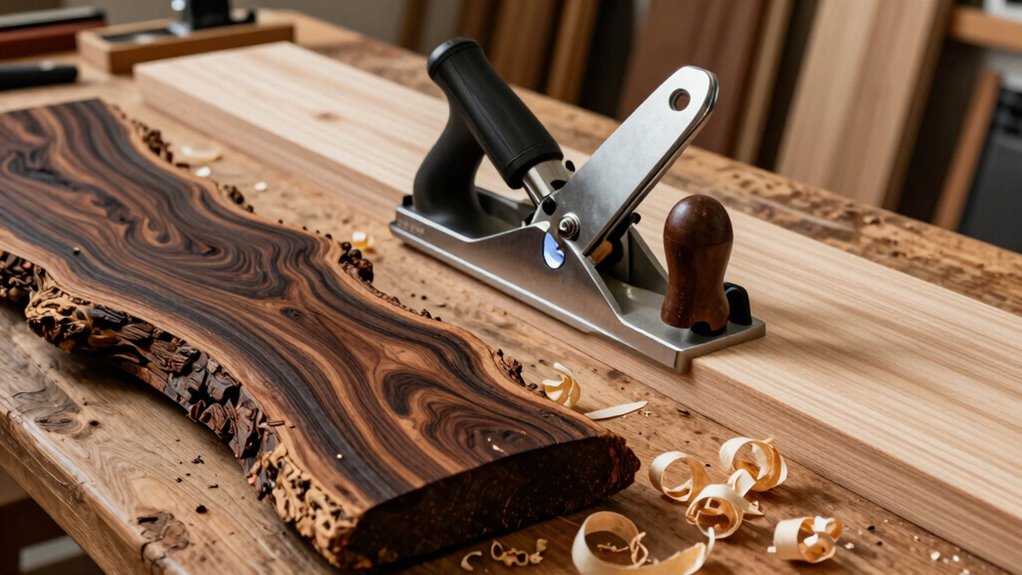

When choosing planers for hardwood versus reclaimed lumber, you should consider the unique challenges each type presents. Hardwood generally mills smoothly, while reclaimed lumber can harbor hidden debris that dulls blades quickly. Make sure to keep your blades sharp and clean for ideal performance. Regular maintenance and inspection are essential, as they help your tools last longer and work more efficiently. Keep exploring to discover effective techniques tailored for each type of wood.

Get business pricing on tools and workshop supplies
- Business-only prices and quantity discounts
- Tax-exempt purchasing
- Multiple users, one account, clear invoices
Key Takeaways
- Blade Maintenance: Expect blades to dull faster with reclaimed lumber due to hidden debris; sharp blades are crucial for both hardwood and reclaimed wood.
- Material Differences: Hardwood is typically cleaner and more predictable, while reclaimed lumber may contain contaminants that affect planing performance.
- Routine Checks: Conduct frequent inspections on planers when working with reclaimed lumber to ensure optimal performance and prevent unexpected issues.
- Replacement Frequency: Be prepared to replace blades more often when working with reclaimed materials to maintain efficiency and quality results.
- Education and Sharing: Learn and share specific maintenance techniques for each type of wood to improve overall tool care and project outcomes.
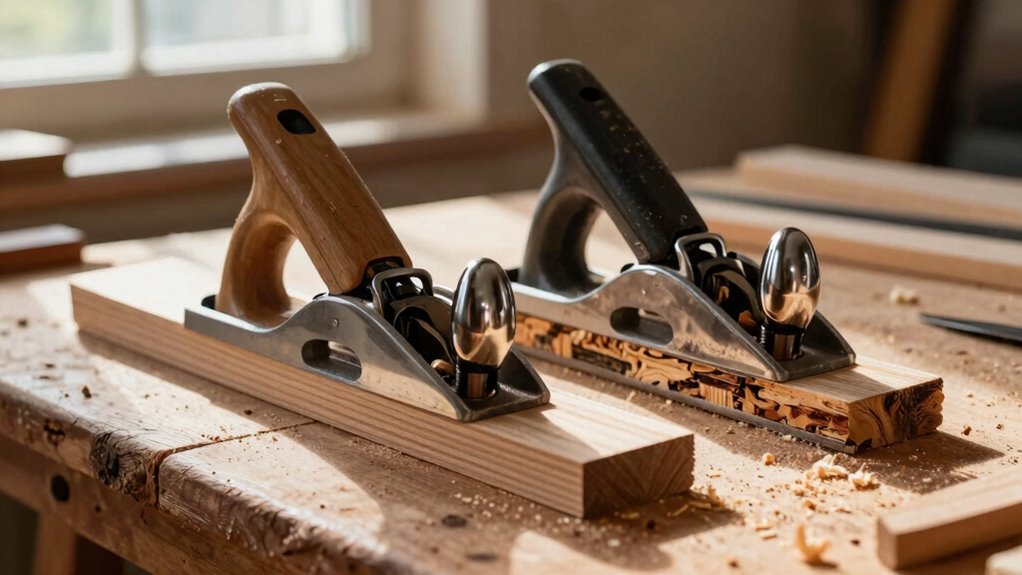
When it comes to maintenance tips, both types of planers require regular upkeep. Keep your blades sharp and clean to maintain peak performance. With reclaimed lumber, you might find that your blades dull faster due to hidden debris. So, it’s wise to check your equipment frequently and replace blades as needed. Additionally, understanding appliance maintenance can help extend the lifespan of your planer and ensure consistent results over time. Proper equipment care can also prevent costly repairs and downtime. Regularly inspecting your machine and following recommended gadget maintenance practices tailored for woodworking tools can further optimize your results. Being familiar with vehicle maintenance principles can also inform your approach to maintaining your planer, ensuring it operates efficiently. Developing good tool maintenance habits can significantly improve your woodworking projects and make your tools last longer.
As an affiliate, we earn on qualifying purchases.
Frequently Asked Questions
What Is the Difference Between a Planer and a Jointer?
A planer and a jointer serve different purposes in woodworking. A jointer types help flatten and square edges, ensuring pieces fit together seamlessly. On the other hand, a planer features blades that reduce the thickness of lumber, giving you uniform thickness across boards. You’ll find that using both tools in tandem can help achieve smooth, straight surfaces and precise dimensions for your projects. Knowing their functions will enhance your woodworking experience.
Can I Use a Hand Planer for Reclaimed Lumber?
Absolutely, you can use a hand planer for reclaimed lumber! Imagine transforming rough, weathered wood into a smooth masterpiece with just a few strokes. Hand tools like these are perfect for lumber preparation, especially when dealing with reclaimed pieces that carry history. You’ll enjoy the control and precision they offer, allowing you to tackle imperfections and reveal the wood’s natural beauty. Don’t underestimate the power of a hand planer; it’s a craftsman’s best friend!
How Often Should I Sharpen My Planer Blades?
You should sharpen your planer blades every 8 to 12 hours of use, but it really depends on the material you’re working with. For softer woods, you might stretch that a bit, while reclaimed lumber could dull them faster. Regular blade maintenance is key to achieving a smooth finish, so keep an eye on performance. If you notice tear-out or rough edges, it’s time to sharpen those blades sooner.
Is It Necessary to Use a Dust Collection System?
Yes, it’s necessary to use a dust collection system. Imagine working in a beautiful workshop, but dust clouds obscure your vision and compromise your health. Effective dust control benefits you by keeping your space clean and reducing respiratory issues. Without it, you risk inhaling harmful particles, which can lead to long-term health problems. Prioritizing a dust collection system not only enhances your workspace but also protects your well-being for years to come.
What Thickness Can a Planer Handle for Hardwood?
A planer typically handles hardwood thicknesses up to 6 inches, depending on its capacity. When choosing a planer, consider the maximum thickness it can accommodate, as this affects your projects. If you’re working with thicker pieces, you might need a more powerful model. Always check the specifications to verify it meets your needs, especially if you plan on using various hardwoods in your work. You’ll want that versatility for your projects!
Conclusion
When it comes to choosing planers for hardwood versus reclaimed lumber, remember that each type has its own character, like characters in a novel. The smoothness of a fresh page or the rustic charm of weathered text both tell a story. So, embrace the uniqueness of your materials and let your chosen planer reveal their true beauty. Whether you’re crafting a masterpiece or a simple piece, the right tool can transform your vision into reality.
Halloween Picks
halloween
As an affiliate, we earn on qualifying purchases.