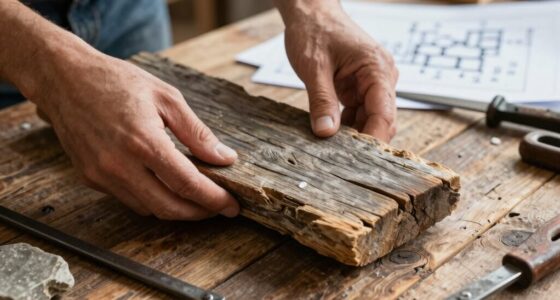
When working with reclaimed wood, carefully inspect for hidden nails using a magnet or metal detector, and remove or hammer them out safely. Test for lead paint with a reliable kit, especially on pre-1978 wood, and follow safety protocols if found. Check for mold, rot, and insect damage through visual and smell tests. Always wear protective gear and use proper tools; staying vigilant helps guarantee your project remains safe. Continue to uncover essential tips for a secure, successful build.

Get business pricing on tools and workshop supplies
- Business-only prices and quantity discounts
- Tax-exempt purchasing
- Multiple users, one account, clear invoices
Key Takeaways
- Thoroughly inspect reclaimed wood for nails, staples, and metal debris using a magnet or metal detector before working.
- Test for lead-based paint with reliable kits and follow safety protocols if lead is detected.
- Check for mold, rot, or insect infestation through visual and olfactory inspection to identify hidden hazards.
- Always wear protective gear such as gloves, eye protection, and masks during inspection and removal of hazards.
- Prioritize safety by properly disposing of hazardous materials and ensuring a well-ventilated workspace throughout the project.
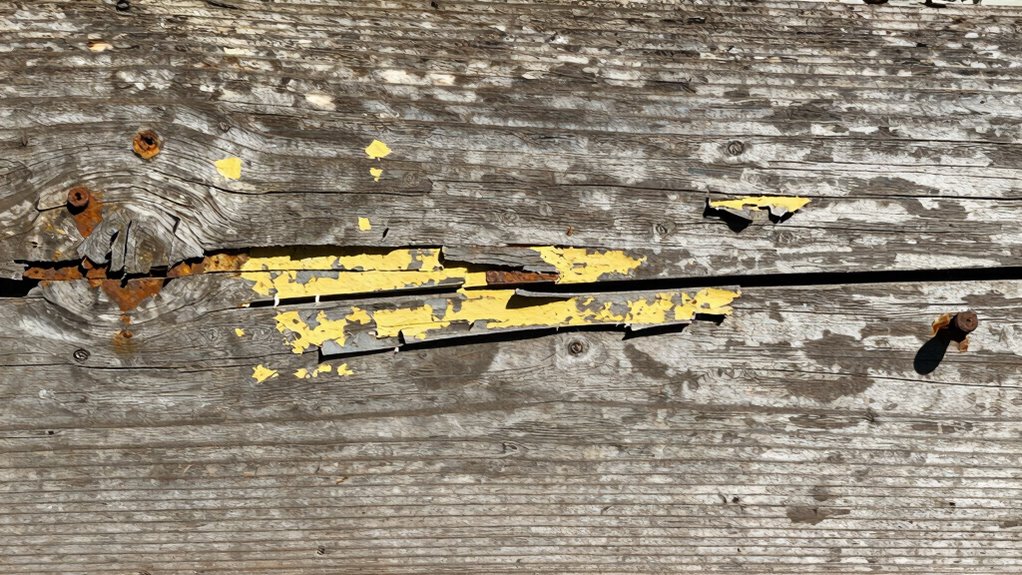
Reclaimed wood can add rustic charm and sustainability to your projects, but it’s essential to prioritize safety when working with it. One of the first steps is to carefully inspect the wood for nails and other metal objects. Nail detection is crucial because protruding or hidden nails can cause injuries or damage tools. Use a strong magnet or a metal detector specifically designed for woodworking to scan the entire piece thoroughly. This helps uncover embedded nails or staples that might be missed at first glance. Removing or hammering down any detected nails before cutting or sanding reduces the risk of injury and prevents damage to your equipment. Always wear protective gloves and eye gear during this process to avoid splinters or flying debris, especially when prying out stubborn nails.
Beyond physical hazards, you also need to consider chemical risks like lead-based paint. Lead testing is vital because many older reclaimed wood pieces, especially those from pre-1978 buildings, may have been painted with lead-based coatings. Exposure to lead dust or chips can pose serious health risks, particularly if you’re sanding, stripping, or cutting the wood. To ensure safety, invest in a reliable lead testing kit or have a professional conduct testing. A quick swab or paint chip analysis can confirm whether lead is present. If lead is detected, you’ll need to follow strict safety protocols, including proper disposal, wearing a respirator, and working in a well-ventilated area. In some cases, it might be best to avoid using the wood altogether or to have it professionally stripped of lead paint before proceeding. Additionally, understanding the potential for hazards in older wood can help inform your safety measures.
While inspecting for nails and testing for lead, don’t overlook other hidden hazards. Check for signs of mold, rot, or insect infestation, which can compromise both safety and the integrity of your project. Use your senses—look for discoloration, smell for mustiness, and feel for soft spots. If you’re uncertain about any hazard, consult a professional for a thorough assessment. Remember, safety is about more than just avoiding immediate injuries; it’s about protecting your health in the long run. Always follow proper procedures when handling reclaimed wood, and don’t rush the inspection process. Taking these precautions ensures that your project remains safe, sustainable, and truly worth the effort, allowing you to enjoy the beauty and character of reclaimed wood without unnecessary risks.
magnet for detecting nails in reclaimed wood
As an affiliate, we earn on qualifying purchases.
As an affiliate, we earn on qualifying purchases.
Frequently Asked Questions
Can Reclaimed Wood Be Safely Used Outdoors?
Yes, reclaimed wood can be safely used outdoors if you properly treat it. You should apply weather-resistant finishes and sealants to protect against moisture, rot, and insects. Additionally, consider wood treatment options to enhance durability and prevent decay over time. Regular maintenance is essential to keep the wood in good condition. With these precautions, reclaimed wood makes a beautiful, eco-friendly outdoor feature that lasts.
Are There Specific Certifications for Reclaimed Wood Safety?
Yes, there are specific certifications for reclaimed wood safety. Look for certification standards like the Forest Stewardship Council (FSC) or the Sustainable Forestry Initiative (SFI), which guarantee the wood meets safety and environmental criteria. Safety certifications, such as those from the American National Standards Institute (ANSI), also verify that reclaimed wood has been tested for hazards like lead paint or hidden nails, giving you peace of mind in your project.
How Can I Identify Hidden Pests in Reclaimed Wood?
To identify hidden pests in reclaimed wood, closely examine the surface for small holes, frass, or sawdust, which indicate pest infestation. Use a flashlight to look for signs of hidden insects, such as webbing or larvae. Tap the wood gently; hollow sounds can signal internal damage. If you suspect pests, consider a thorough inspection by a pest control professional to guarantee there are no concealed infestations before use.
What Are the Best Disposal Methods for Hazardous Reclaimed Wood?
You should dispose of hazardous reclaimed wood through proper chemical treatment, ensuring harmful substances are neutralized or safely contained. Check with local waste management regulations for specialized disposal procedures. Recycling options are often available for treated wood, such as designated hazardous waste facilities or certified recycling centers. Avoid landfill dumping, as it can contaminate the environment. Always prioritize safety and environmental responsibility when disposing of hazardous reclaimed wood.
Is There a Recommended Lifespan for Reclaimed Wood Products?
Think of reclaimed wood as a timeless story, not a ticking clock. While there’s no strict lifespan, proper wood preservation can extend its beauty and strength for decades. Aging guidelines suggest inspecting regularly for wear and hazards, especially if exposed to moisture or pests. With careful maintenance, you can keep your reclaimed wood looking and performing beautifully, turning it into a cherished piece that ages gracefully like fine wine.
Conclusion
By staying vigilant and thoroughly inspecting reclaimed wood, you’re like a guardian protecting your loved ones from hidden dangers. Spotting nails, lead paint, and other hazards guarantees your project remains safe and beautiful. Remember, reclaimed wood is a treasure chest—filled with history and character, but it also hides risks. With careful attention, you can reveal its beauty without opening the door to accidents. Safety isn’t just a step; it’s the foundation of your masterpiece.
Fall yard work Picks
leaf blowers
As an affiliate, we earn on qualifying purchases.