TL;DR

Get business pricing on tools and workshop supplies
- Business-only prices and quantity discounts
- Tax-exempt purchasing
- Multiple users, one account, clear invoices
Hunker describes a DIY bird feeder made from a repurposed glass jar, a wooden spoon perch and wire for hanging. The report recommends regular cleaning and careful placement near or far from windows to reduce collision risk; it does not provide tested performance or safety data for the design.
Hunker has published instructions for turning a Mason jar or other repurposed glass food jar into a hanging bird feeder, using a wooden spoon as a perch. The project offers a small-scale way to reuse household materials, while the report stresses that the feeder needs regular cleaning and should be placed with window-collision risks in mind.
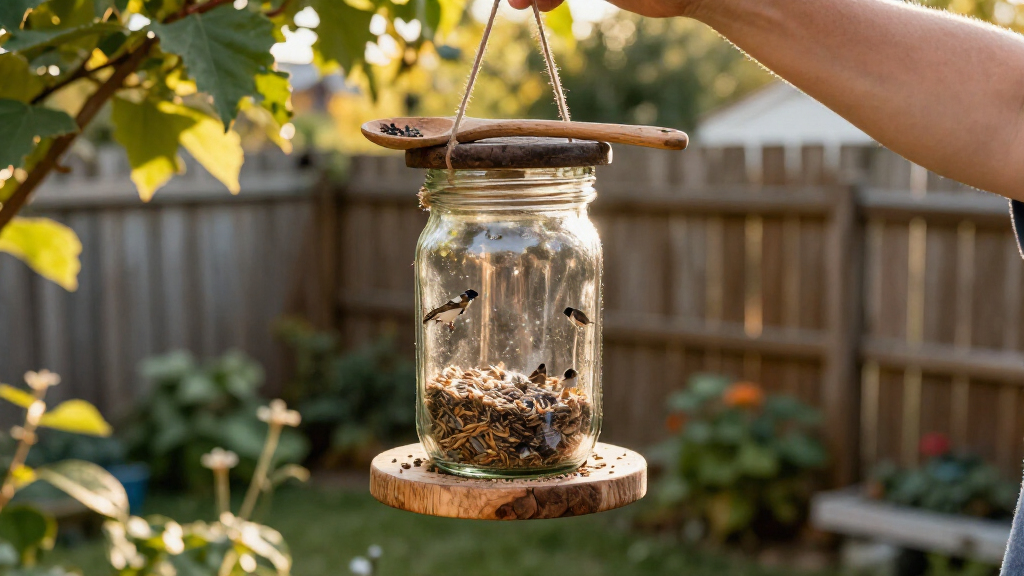
The design places the spoon lengthwise against the jar, with its bowl extending beyond the jar’s open end. That exposed bowl serves as a perch and feeding spot. Garden wire wrapped around the jar is described as a way to keep the spoon in place; jute, aluminum wire and wooden beads are used to decorate and form a hanging handle.
Hunker’s materials list includes a glass jar, wooden spoon, glue gun, scissors, paint brushes, jute, garden wire, bendable aluminum wire and two decorative wooden beads, along with bird seed. The report suggests painting the jar after attaching the spoon and wrapping the wire, then waiting for the paint and glue to dry before adding the handle and hanging the feeder. It does not give measurements, load limits or a particular seed type.
The article presents the project as suitable for a compact outdoor space and says the jar can be accessed for cleaning. It advises cleaning the feeder regularly, especially in colder periods when more birds may visit. Its placement guidance is to locate the feeder either within three feet of a window or 30 feet away, and to keep native plants and, where possible, nearby trees around the feeding area for shelter.
A Small Feeder With Ongoing Care
The project combines reuse with a practical garden feature: a jar that might otherwise be discarded becomes a container for seed, while the spoon provides a resting place. For readers with limited outdoor space, the compact hanging design may be easier to accommodate than a larger feeder. The report also frames it as a decorative project, but its function depends on more than appearance.
Regular cleaning and responsible placement matter because feeders can draw birds into a concentrated area and put them near windows. Hunker’s advice gives readers basic steps to account for those issues, but the article does not establish how well this particular construction withstands weather or repeated use. The practical takeaway is to treat it as a DIY project requiring upkeep, not a maintenance-free garden accessory.
Products Worth Considering

Philips Hue Secure Wired Video Doorbell, 2K Resolution, Wide Angle View, Integrated Hue Lights, Two-Way Audio, Infrared Night Visibility, Bl

Philips Hue Festavia 130-Foot Indoor/Outdoor Smart String Lights, 500 LEDs

Philips Hue Festavia Globe Outdoor String Lights, 32 Bulbs, 91 ft
As an affiliate, we earn on qualifying purchases.
How the Jar Design Works
The instructions are attributed to Anna King of makinghomematters, whose version is described in Hunker’s report. Rather than relying on a purpose-made feeder tray, the design uses the open end of a sideways jar as the seed outlet and a spoon bowl as the perch. Wire and jute secure and suspend the assembly, while paint and beads add decoration.
Hunker says a Mason jar or repurposed glass food jar can be used, and suggests the project may use materials already on hand. It also mentions a commission notice for purchases made through links. The supplied report does not include independent testing, a cost estimate, or a comparison with commercially made feeders, so its description of affordability and ease should be understood as the source’s characterization rather than a verified assessment.
“that’s something you’ll need to do regularly”
— Hunker
Durability and Build Details Not Given
The report does not specify jar dimensions, wire gauge, glue type or a tested method for confirming that the spoon and handle will remain secure outdoors. It also gives no information about how the feeder performs in rain, wind or freezing conditions. Readers should not assume the design has been evaluated for weather resistance or structural reliability.
The source does not identify a recommended seed blend, cleaning solution or exact cleaning schedule. Its window guidance is presented as practical advice, but the supplied material does not cite a study or explain how the distances were determined. The article also does not report whether the feeder has been tested with particular bird species or whether painted surfaces affect bird use.
Assembly, Placement and Maintenance
Anyone following the instructions can assemble the jar, spoon and wire components, let the glue and paint dry, add seed and hang the feeder. Before filling it, check that the jar is firmly secured and that the hanging point is stable. Choose a location that follows the report’s window-distance guidance and provides nearby natural cover where available.
After installation, the next step is ongoing observation and care: check the feeder regularly, refill it as needed and clean it routinely, with particular attention during periods of heavier use. Hunker does not announce a follow-up test or provide additional performance data, so the durability and upkeep needs of a completed feeder will depend on its materials, exposure and use.
Key Questions
What materials does the jar bird feeder require?
Hunker lists a glass jar, wooden spoon, glue gun, scissors, paint brushes, jute, garden wire, bendable aluminum wire, two wooden beads and bird seed. Paint suitable for glass is optional in the design described.
How does the spoon work in the feeder?
The spoon is attached lengthwise to the jar, with its bowl projecting from the open end. Hunker describes the bowl as a perch where birds can rest and eat.
Where should the feeder be placed?
The report advises placing it either within three feet of a window or 30 feet away, and suggests keeping native plants nearby and trees close enough to offer shelter where possible.
Does the feeder need regular cleaning?
Yes. Hunker says to clean it regularly, particularly when more birds are visiting in colder weather. The report does not provide a specific cleaning schedule or cleaning method.
Has the design been tested for outdoor durability?
The supplied report does not provide testing results or details about performance in rain, wind or freezing temperatures. Its long-term durability is not established by the information provided.
Source: hunker.com