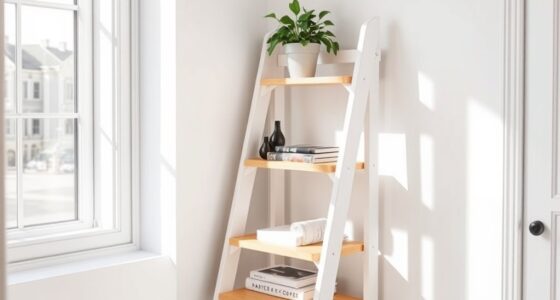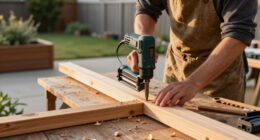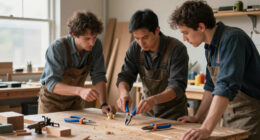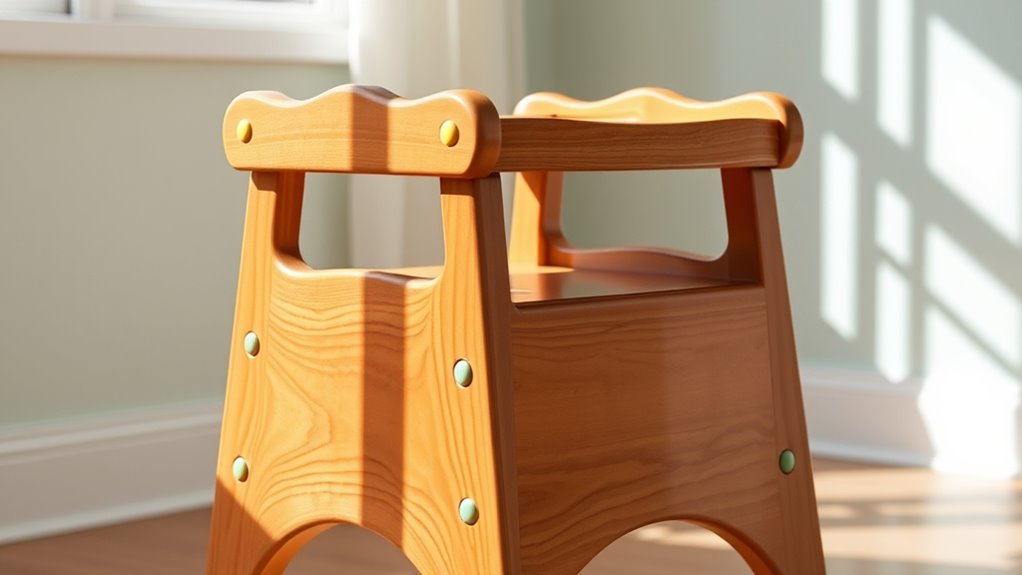
To create a safe kids’ step stool with safety rails, choose sturdy materials like maple or oak, ensuring the finishes are smooth and non-toxic. Design rounded edges and secure safety rails at appropriate heights for firm grip, while adding non-slip surfaces. Make sure your design follows safety standards and is stable enough to support children’s weight. For detailed tips on construction and safety features, keep exploring to build a reliable and household-safe step stool.

Get tools and workshop supplies delivered free — and shop member deals
- Fast, free delivery on millions of items
- Access to Prime Big Deal Days deals on October 6–7
- Prime Video, Amazon Music and more included
Key Takeaways
- Select sturdy, non-toxic materials like maple or oak for durability and child safety.
- Design rounded edges and secure safety rails at appropriate heights to prevent injuries.
- Ensure the step surface has non-slip textures or rubber mats for added stability.
- Adhere to local safety standards and weight capacity guidelines during design and construction.
- Use secure attachment methods for rails and verify structural stability to prevent wobbling or tipping.
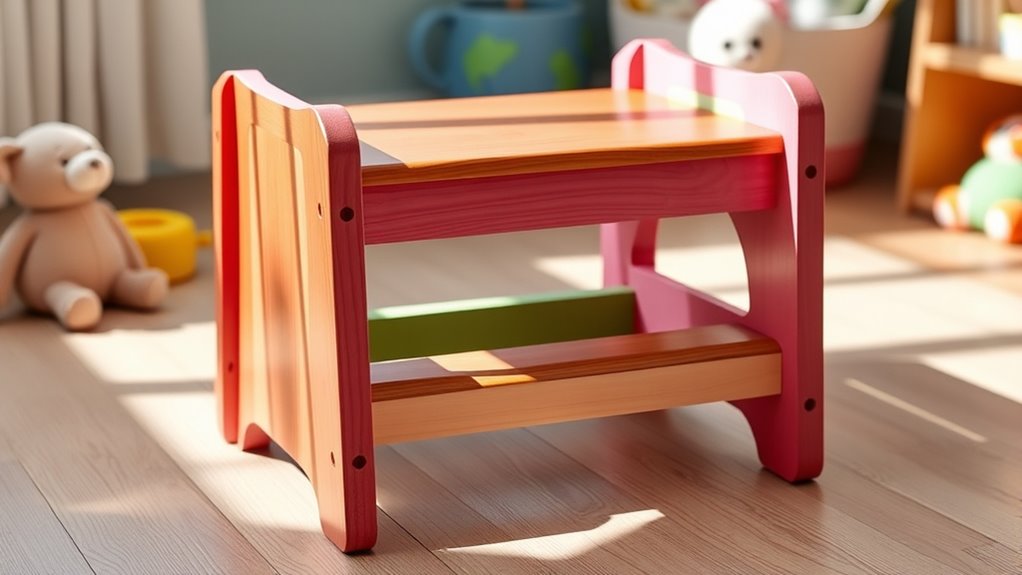
Creating a kids’ step stool with safety rails is a practical project that helps children reach high surfaces safely and independently. When you start designing or building this step stool, choosing the right materials is vital. You want materials that are sturdy enough to support your child’s weight, durable to withstand daily use, and safe for a household environment. Opt for solid wood, like maple or oak, which provides strength and longevity, or high-quality plywood with a smooth finish to prevent splinters. Avoid cheap or soft woods that might warp or break easily. For the safety rails, consider using rounded, smooth materials that won’t cause injury if your child bumps into them. Additionally, look for non-toxic finishes or paints that meet safety standards, guaranteeing no harmful chemicals are exposed during use.
Speaking of safety standards, adhering to them is essential when creating a kids’ step stool. These standards guide you in selecting materials and designing features that minimize risks. For example, the finished edges should be rounded or beveled to prevent cuts or scrapes, and the overall structure should be stable without wobbling or tipping over easily. The step surface needs to have a non-slip texture or a rubber mat to prevent slipping, especially if it’s used in a bathroom or kitchen environment. The safety rails themselves should be securely attached at appropriate heights, providing a firm grip without creating pinch points or loose parts. When you follow safety standards, you guarantee that the stool isn’t just functional but also minimizes the chance of accidents or injuries.
It’s also wise to double-check local safety regulations or guidelines for children’s furniture during your planning process. These might specify height limits, weight capacity, or other design features that help keep your child safe. Incorporate these standards into your project from the start rather than trying to retrofit safety features later. When selecting materials, make sure they are compliant with safety certifications, such as ASTM or EN standards, which verify their safety and durability. Furthermore, considering project planning and structural integrity early on can help prevent issues during construction or future use.
Ultimately, your goal is to create a sturdy, stable, and safe step stool that your child can use confidently. Proper material selection and strict adherence to safety standards will give you peace of mind, knowing that your project prioritizes your child’s safety without sacrificing functionality. With thoughtful planning and careful execution, your DIY kids’ step stool will become a trusted helper around your home, encouraging independence while keeping safety at the forefront.
kids safety step stool with rails
As an affiliate, we earn on qualifying purchases.
As an affiliate, we earn on qualifying purchases.
Frequently Asked Questions
What Materials Are Safest for Children’s Step Stools?
You should choose solid, natural wood or BPA-free, non-toxic plastic for your child’s step stool. Make certain it has non-slip feet to prevent slipping and stability during use. Rounded edges are essential to minimize injury risk and ensure safety. These materials and features work together to create a safe, durable, and child-friendly step stool that promotes independence while keeping your little one protected.
How Do I Ensure the Safety Rails Are Securely Attached?
To verify safety rails are securely attached, you should double-check the secure attachment, tighten all bolts firmly, and use appropriate fasteners designed for the material. Test rail stability by gently applying pressure to confirm it doesn’t wobble or come loose. Regularly inspect the attachment points, re-tightening or replacing hardware as needed. This proactive approach guarantees the rails stay stable, providing a safe and reliable safety feature for your kids’ step stool.
Can I Customize the Step Stool’s Height Easily?
Yes, you can customize the step stool’s height easily with DIY adjustments. To do this, incorporate adjustable legs or removable spacers that allow you to change the height as needed. Make sure to secure all parts firmly during height adjustment to maintain safety. Using simple tools, you can modify the stool’s height quickly, ensuring it suits your child’s growing needs and provides a safe, customized step-up solution.
What Weight Limit Should the Step Stool Have?
Did you know kids’ step stools are tested to hold up to 150 pounds? For safety, choose a stool with a weight capacity that surpasses your child’s needs, ideally around 200 pounds. This ensures durability factors are met, preventing accidents. Always verify the weight limit before use to keep your little one safe and secure while climbing. Durability and proper weight capacity are key for a sturdy, reliable step stool.
Are There Any Maintenance Tips for Long-Lasting Safety?
To guarantee your kids’ step stool stays safe long-term, follow regular cleaning routines with mild soap and water to prevent dirt buildup. Check for any loose screws or damaged parts and replace them promptly to maintain stability. Keep the safety rails clean and inspect for wear. This proactive approach helps you spot issues early, extending the life of your stool and keeping your child safe during every use.
Conclusion
So there you have it—your very own kids’ step stool with safety rails, because apparently, little adventurers need extra protection to reach the cookie jar. Who knew that a bit of wood and some screws could turn into a fortress of safety? Now, your kid can climb with confidence, and you can breathe easier, knowing they’re not launching themselves into the universe. Happy building—and may your DIY skills be as sturdy as your child’s curiosity!
Halloween Picks
halloween
As an affiliate, we earn on qualifying purchases.