When choosing a finish nailer for your furniture and trim work, start by evaluating your project needs. Consider the type of nails to use, typically 15 to 16 gauge for strong bonds. Check for safety features like contact trip mechanisms to enhance control. Decide between pneumatic or battery-powered options based on your workspace. Finally, match the nail size and type to your project’s scope for best results. Stick around to discover more tips for a flawless finish!

Get tools and workshop supplies delivered free — and shop member deals
- Fast, free delivery on millions of items
- Access to Prime Big Deal Days deals on October 6–7
- Prime Video, Amazon Music and more included
Key Takeaways
- Assess the specific requirements of your project to determine the appropriate type of finish nailer needed for furniture or trim work.
- Choose the correct nail gauge (15 to 16) to ensure sufficient holding power for baseboards and crown molding.
- Prioritize safety features, such as contact trip mechanisms, to prevent accidental firings during use.
- Evaluate power source options, considering pneumatic for performance or battery-powered for portability and convenience in tight spaces.
- Match the nailer type to your project scope, recognizing how nail gauge affects strength, appearance, and overall stability.
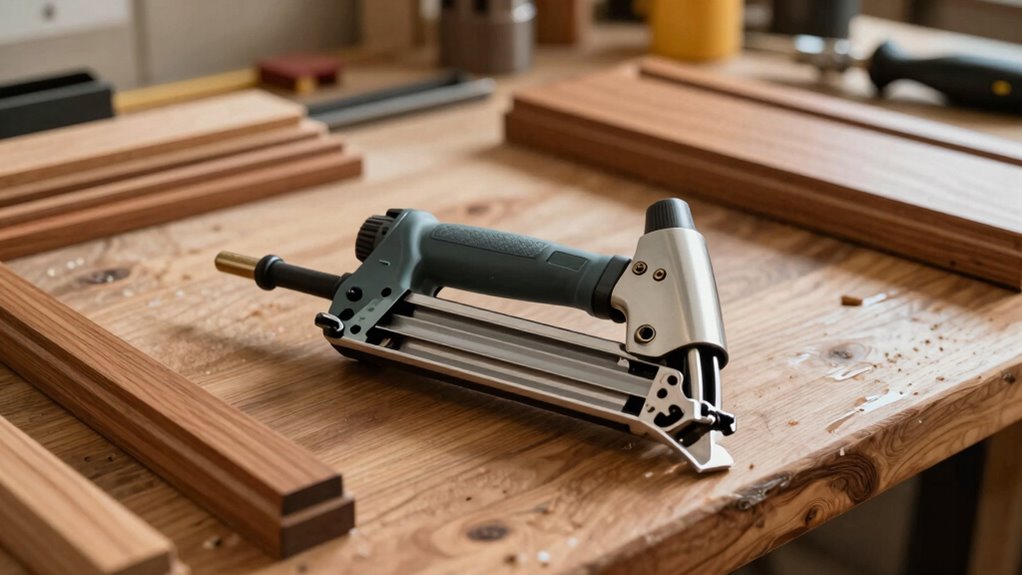
When you’re tackling a woodworking project, how do you decide if a finish nailer is the right tool for the job? It’s vital to evaluate your specific needs and the materials you’re working with. Finish nailers can be game-changers for furniture and trim work, but they aren’t the only option. You might also consider other nailer types, like brad nailers or pin nailers, depending on the job’s requirements. Each type has its advantages, but finish nailers deliver a balance of power and precision that’s hard to beat for larger trim pieces and furniture assembly.
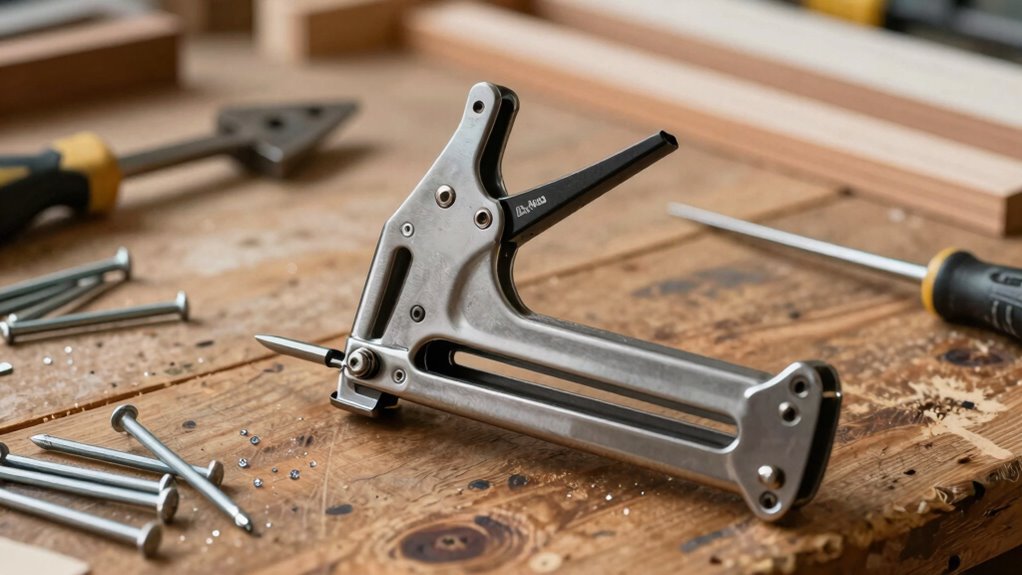
One of the first things to look at is the size of the nails you’ll be using. Finish nailers typically use nails ranging from 15 to 16 gauge, which are thicker than those used by brad nailers. The size matters because thicker nails provide more holding power, especially for heavier pieces. If you’re attaching baseboards or crown molding, a finish nailer is often your best bet. It’ll guarantee that everything stays in place while you work, giving you the confidence to move forward with your project.
Consider the nail size; finish nailers use 15 to 16 gauge nails for superior holding power in heavier applications like baseboards and crown molding.
Safety features are another important consideration. When using any nailer, you’ll want to verify it has adequate safety mechanisms to help prevent accidental firing. Many modern finish nailers come equipped with features like contact trip mechanisms, which require you to press the tip against the work surface before firing. This not only minimizes the risk of misfires but also allows for better control during your work. Always make it a point to read the manual and familiarize yourself with the safety features of your specific model.
Think about the power source, too. Pneumatic finish nailers are popular for their consistent performance, but battery-powered models are gaining traction due to their portability and ease of use. If you’re working in a tight space or don’t want to deal with hoses, a cordless option might suit your needs better. Additionally, understanding the different types of nailers can help you choose the most suitable tool for your project. It’s also helpful to consider the nail gauge and its impact on the strength and appearance of your finished work. Being aware of the available nail sizes can help ensure you select the right nails for your specific application. Moreover, understanding the different nailer types can help you match the tool to your project’s scope and complexity.
Ultimately, choosing a finish nailer boils down to the specifics of your project. Consider the materials, the size of the nails, and the safety features that’ll keep you secure while you work. If you take the time to evaluate these factors, you’ll find the right tool that’ll make your woodworking projects smoother and more enjoyable.
finish nailer for furniture and trim
As an affiliate, we earn on qualifying purchases.
As an affiliate, we earn on qualifying purchases.
Frequently Asked Questions
What Is the Difference Between Finish Nailers and Brad Nailers?
Finish nailers use larger nail types, typically 15- or 16-gauge, making them ideal for heavier projects like cabinets and trim. They provide strong holding power, which is essential for structural integrity. On the other hand, brad nailers use smaller 18-gauge nails, perfect for lighter tasks such as securing thin moldings or delicate projects. Knowing the difference helps you choose the right tool for your project’s suitability, ensuring a cleaner, more professional finish.
Can I Use a Finish Nailer for Hardwood?
Yes, you can use a finish nailer for hardwood. It’s great for attaching trim or molding to various hardwood types like oak or maple. Just make sure you choose the right nail depth; using nails that are too short might not provide a strong hold, while overly long nails can split the wood. Always adjust your nailer settings based on the specific hardwood and the thickness of the material you’re working with.
How Do I Choose the Right Nail Size?
To choose the right nail size, focus on nail length and nail gauge. Generally, for trim work, a 1.25 to 2.5-inch nail length works best. Use a higher gauge for finer materials to avoid splitting, while a lower gauge offers more holding power for thicker woods. Always match the nail size to your project’s specific requirements, ensuring a secure fit without damaging the material. Trust your instincts and experiment as needed!
Are Cordless Finish Nailers Reliable for Furniture Projects?
Cordless finish nailers can be a game-changer for your furniture projects. With their ease of use, you’ll find they’re quite dependable, as long as you keep an eye on battery performance. You don’t want to find yourself mid-project with a dead battery! Additionally, make sure to choose the right nail depth for your materials, ensuring strong joins that’ll stand the test of time. They’re worth considering for your next build!
What Safety Gear Should I Wear When Using a Finish Nailer?
When using a finish nailer, you should always wear safety goggles to protect your eyes from flying debris. Ear protection is also a must, as the noise can be loud. Don’t forget about sturdy work gloves to shield your hands from accidental punctures. A dust mask can help if you’re working with materials that produce dust. Following these safety precautions and using the right protective equipment keeps you safe while you work.
Conclusion
In the grand tapestry of woodworking, finish nailers are your trusty sidekicks, subtly holding everything together without stealing the spotlight. They may not be the loudest tools in the shed, but their precision and finesse elevate your furniture and trim work to new heights. By embracing these tools, you’re not just nailing pieces together; you’re crafting a masterpiece that whispers elegance and durability. So, let these quiet champions do their magic, and watch your projects come to life.
Fall Picks
fall essentials
As an affiliate, we earn on qualifying purchases.