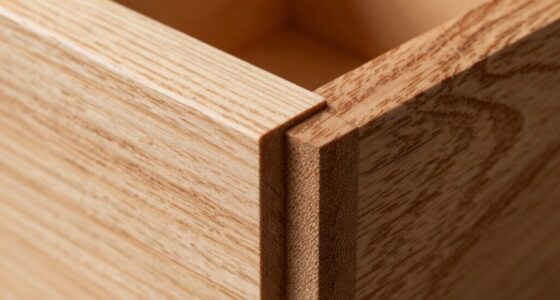
To make a dado feel strong before gluing, focus on achieving precise cuts and guaranteeing the grain runs parallel to the joint face, which boosts resistance against pulling forces. You should also guarantee a tight, gap-free fit and use sharp tools for clean, accurate cuts that promote better surface contact. Selecting high-quality, properly dried wood with consistent moisture content will improve joint stability. Mastering these factors will give you a solid, dependable fit—if you want to know more, keep exploring these key points.
Key Takeaways
- Proper grain orientation along the joint face enhances inherent strength and stability.
- Sharp, clean cuts ensure precise fit and optimal load distribution.
- Achieving a snug, gap-free fit increases joint solidity before gluing.
- Selecting high-quality, defect-free, and properly dried wood improves initial strength.
- Correct moisture content maintains stability and prevents weakening of the joint.

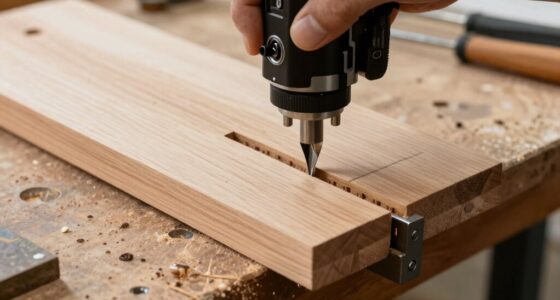
Before gluing a dado joint, it’s fundamental to evaluate its strength to guarantee a secure and durable connection. This step isn’t just about fitting pieces together; it’s about understanding how different factors influence the overall stability of the joint before the glue even comes into play. One of the most important considerations is grain orientation. When you cut a dado, pay attention to the direction of the wood grain. If the grain runs parallel to the joint face, it naturally provides more resistance against forces that might pull the joint apart. Conversely, if the grain runs perpendicular or is inconsistent, the joint could feel weaker and more prone to splitting under stress. Making certain the grain orientation is optimized for the joint design enhances its inherent strength, making it feel solid and reliable even before gluing. Additionally, the quality of your cut influences how strong the joint will feel initially. Using sharp tools to make clean, precise cuts ensures that the joint surfaces mate perfectly. Any roughness or unevenness can create weak spots that compromise the joint’s integrity before glue is applied. When you assemble the pieces, confirm that the fit is tight across the entire joint, with no gaps or looseness. This snug fit not only makes the joint feel more solid but also distributes the load evenly, giving a sense of security before the adhesive bonds everything together. In the end, evaluating the joint’s physical attributes—grain orientation, joint design, and cut quality—allows you to predict how strong it will feel even before you add glue. The overall stability of the joint depends on these factors working together. When these elements align well, the dado joint naturally exudes strength, giving you confidence in its durability once glued. Additionally, considering the material quality can further influence how resilient the joint will be in the long run. Ensuring that the wood is free of defects and properly dried also contributes to the joint’s long-term durability. Moreover, paying attention to wood moisture content can significantly impact the joint’s initial feel and future stability, as too much moisture can weaken the connection.
precision woodworking saw blades
As an affiliate, we earn on qualifying purchases.
As an affiliate, we earn on qualifying purchases.
Frequently Asked Questions
Can a Dado Be Strong Without Any Mechanical Fasteners?
Yes, a dado can be strong without mechanical fasteners if you focus on its aesthetics and joint flexibility. Using high-quality wood and precise cuts creates a tight fit, enhancing strength naturally. When the joint aligns perfectly, it maintains stability even before glue, offering a seamless appearance. Properly prepared edges and careful measurements guarantee the dado’s integrity, making it durable without relying on nails or screws.
How Does Wood Type Affect Dado Joint Strength?
You’ll find that wood type notably impacts dado joint strength; hardwoods like oak or maple offer about 30% more holding power than softwoods such as pine. The wood grain plays an essential role—tight, straight grains provide better adhesion and stability in the dado design. Choosing a dense, durable wood guarantees your joint remains strong even before glue, thanks to the grain’s ability to resist splitting and hold fasteners securely.
Does the Depth of the Dado Influence Its Initial Strength?
Yes, the dado depth greatly influences its initial strength. Deeper dados increase joint stability by providing more surface area for fitting and support, reducing movement or looseness. When you cut a dado deeper, it creates a stronger mechanical bond, even before glue. This added depth ensures the joint can better withstand stress and weight, giving you confidence in its strength right from the start.
Are There Specific Tools That Create Stronger Dado Joints?
Yes, certain tools and cutting techniques can create stronger dado joints. For example, using a dado blade on a table saw guarantees precise, clean cuts, enhancing joint reinforcement. Additionally, router jigs allow you to make accurate, consistent cuts that improve fit and strength. These tools help you control the cut depth and width, leading to a tighter fit, which naturally boosts the joint’s strength even before applying glue.
How Does the Fit Tightness Impact the Joint’s Strength Before Gluing?
A tight fit in your dado is like a snug handshake, guaranteeing joint stability even before glue. When the fit is just right, material compression enhances the joint’s strength, making it more resistant to movement or failure. Too loose, and the joint feels weak, like a shaky grip. Achieving proper tightness ensures your dado maintains its integrity, providing a solid foundation that’s strong from the moment you assemble it.
Conclusion
By ensuring your dado fits tightly and is well-supported, you set a foundation that’s as solid as a mountain before any glue touches it. When you pay attention to precise cuts and proper placement, you’re building more than just joints—you’re crafting resilience that withstands the test of time. Think of your dado as the backbone of your project; with careful preparation, it’ll stand tall and strong, even before the glue joins the pieces together.