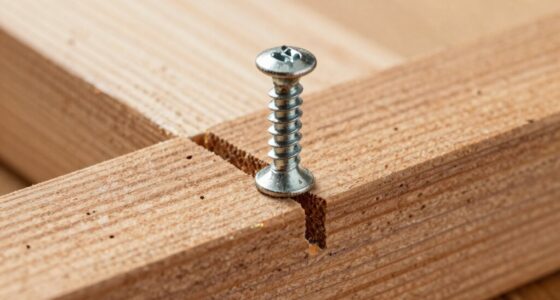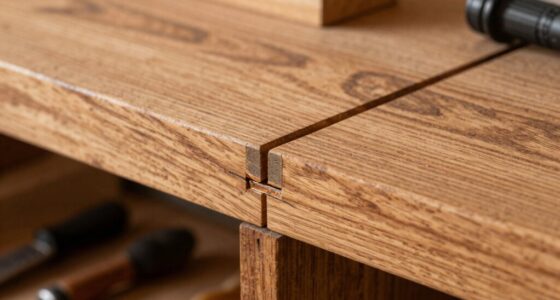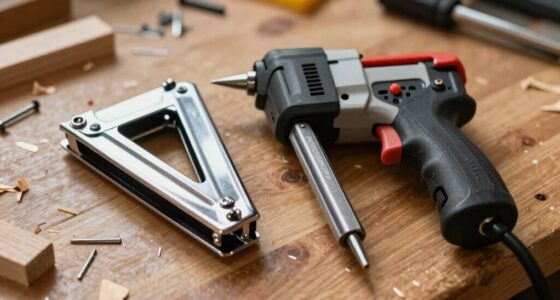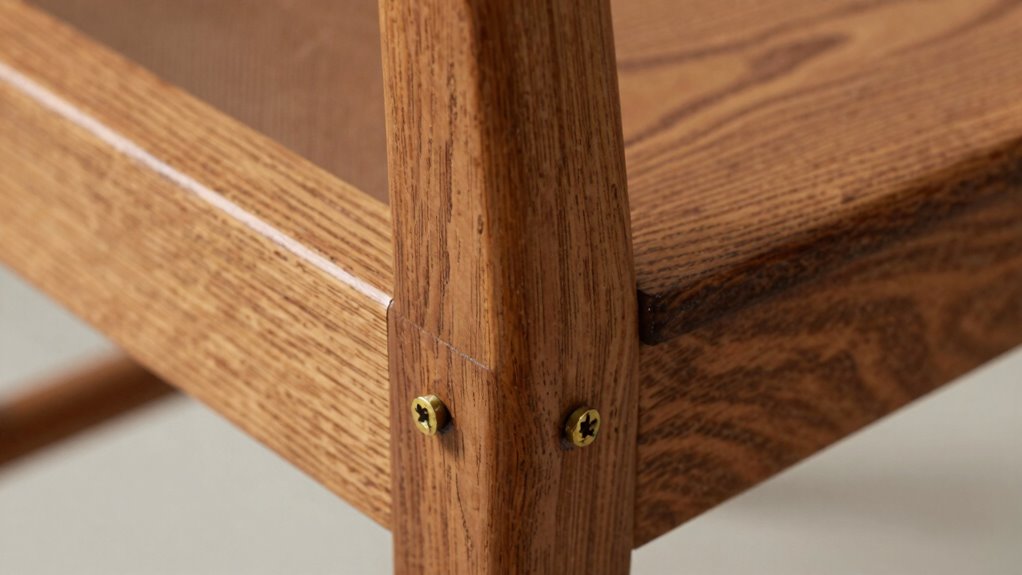
Your choice of fastening method affects how your furniture ages by determining its durability, appearance, and resilience. Mechanical fasteners like screws and nails can loosen or show signs of wear over time, while traditional joinery techniques often age gracefully and maintain stability longer. Using sustainable materials and combining methods can further enhance resilience and the furniture’s natural beauty. If you keep exploring, you’ll uncover more about how to make your furniture last.
Open a free Amazon Business account
Business pricing, bulk buying and tax-exempt orders.
As an affiliate, we earn on qualifying purchases.
Key Takeaways
- Joinery techniques promote natural aging and maintain structural integrity over time.
- Durable fastening materials like certain metals resist corrosion, influencing aging.
- Combining traditional joinery with sustainable materials enhances long-term resilience.
- Fastening methods that prevent loosening extend furniture lifespan and aesthetic appeal.
- Environmentally friendly fastening choices impact ecological sustainability and furniture aging process.

Choosing the right fastening method also impacts how your furniture responds to everyday use. For example, mechanical fasteners like screws and nails are quick and easy but can loosen over time, especially if made from less durable metals or if exposed to moisture. On the other hand, joinery techniques like dowels, biscuits, or traditional joints are designed to hold firmly without relying on external fasteners, which means fewer worries about loosening or corrosion. These methods are especially effective when combined with sustainable materials that are naturally resistant to pests or decay. You’ll find that furniture assembled with these techniques ages with integrity, maintaining stability and strength as the years pass. Additionally, incorporating traditional techniques can enhance the overall durability and aesthetic appeal of your furniture as it ages gracefully. Understanding the long-term durability of different fastening methods can help you make informed choices that ensure your furniture remains sturdy over time. Properly applied, these methods can also improve the structural integrity of your pieces, making them more resilient to daily wear and tear. Recognizing the environmental impact of fastening materials can further guide you toward more sustainable and enduring options for your furniture.
As an affiliate, we earn on qualifying purchases.
Frequently Asked Questions
How Do Different Fasteners Affect Furniture Recyclability?
Different fasteners profoundly impact furniture recyclability. You should consider hidden fastener alternatives and innovative fastening techniques, as these make disassembly easier and reduce waste. Using screws or clips that are metal or biodegradable helps in recycling processes. By choosing fasteners that can be easily separated without damaging materials, you guarantee your furniture remains environmentally friendly and easier to recycle, ultimately extending its lifespan and reducing landfill waste.
Are Certain Fasteners More Eco-Friendly Than Others?
You’ll be surprised to learn that over 40% of furniture waste comes from fasteners. Some fasteners, like those made from sustainable materials or biodegradable options, are more eco-friendly than traditional metal or plastic ones. By choosing these, you reduce environmental impact, promote recyclability, and support green practices. Opting for eco-conscious fasteners helps your furniture age gracefully while minimizing harm to the planet.
Can Fastener Type Influence Furniture Repairability?
Yes, the fastener type directly influences furniture repairability. Opting for durable fasteners guarantees your furniture stays sturdy over time, making repairs easier and more effective. Additionally, certain fasteners enhance aesthetic appeal, maintaining the furniture’s look even after repairs. By choosing fasteners with high durability and visual compatibility, you make future repairs smoother and preserve your furniture’s beauty, extending its lifespan and ensuring it remains functional and attractive.
What Fasteners Are Best for Outdoor Furniture Longevity?
For outdoor furniture longevity, you should use fasteners made from weather-resistant materials like stainless steel or aluminum. These materials resist rust and corrosion better in outdoor conditions. Additionally, look for fasteners with corrosion-resistant coatings, such as galvanized or powder-coated finishes, to further safeguard against moisture and environmental elements. Using these fasteners guarantees your furniture stays sturdy and beautiful, even after years of exposure to the elements.
Do Fasteners Impact Furniture Weight and Portability?
Fasteners like wood joints and metal connectors do impact furniture weight and portability. Wood joints, especially glued or doweled ones, add minimal weight, making furniture easier to move. Metal connectors, while sturdy, can increase overall heft, potentially making it harder to transport. If portability matters, opt for lighter fasteners or modular designs that balance durability with ease of movement, ensuring your outdoor furniture remains functional without unnecessary bulk.
Conclusion
Choosing the right fastening can profoundly impact your furniture’s longevity. Did you know that furniture assembled with high-quality fasteners can last up to 30% longer than those with cheaper options? By making smarter fastening choices, you’re not just ensuring sturdiness today but also preserving your furniture’s beauty and function for years to come. So next time, consider the fastener — it’s a small detail with a big impact on how your furniture ages.
Flea & tick season Picks
flea and tick prevention
As an affiliate, we earn on qualifying purchases.