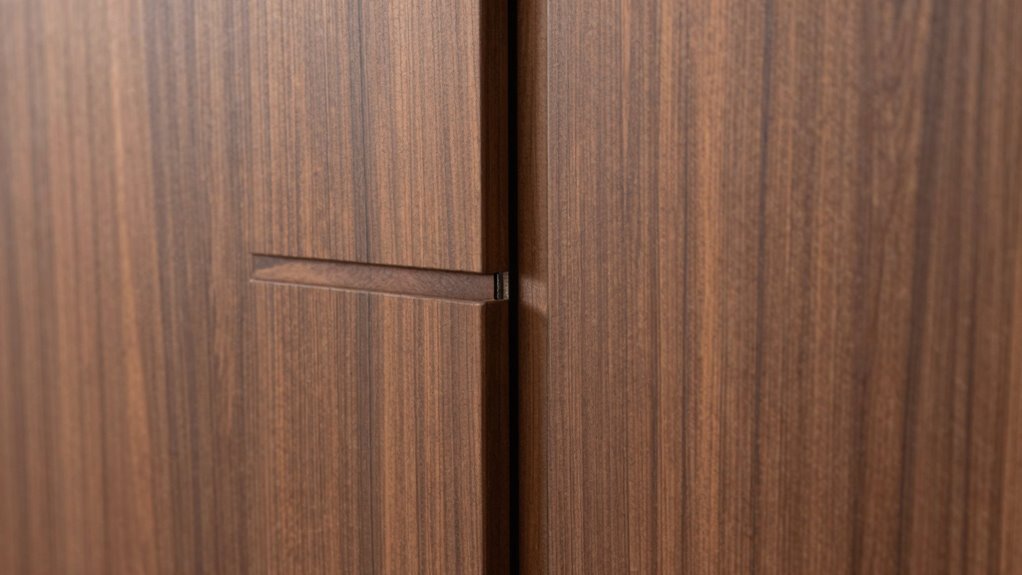

The secret to making cabinet work look expensive is ensuring consistent, precise door gaps. You should measure multiple times, double-check hinge placement, and use shims or clamps for perfect alignment. Small adjustments can make a huge difference in appearance, creating a seamless, high-end look. Attention to detail in gaps, hardware, and finish elevates the overall quality. Want to master this technique? Keep going to discover how you can achieve professional results effortlessly.
Key Takeaways
- Maintain consistent, even gaps around cabinet doors for a polished, high-end appearance.
- Use precise measurements and tools to ensure uniform hinge placement and door alignment.
- Regularly check gaps from multiple angles during installation to catch and correct inconsistencies.
- Incorporate subtle hardware details and finish touches to enhance perceived quality.
- Proper surface prep and finish application prevent uneven gaps and reflect craftsmanship.
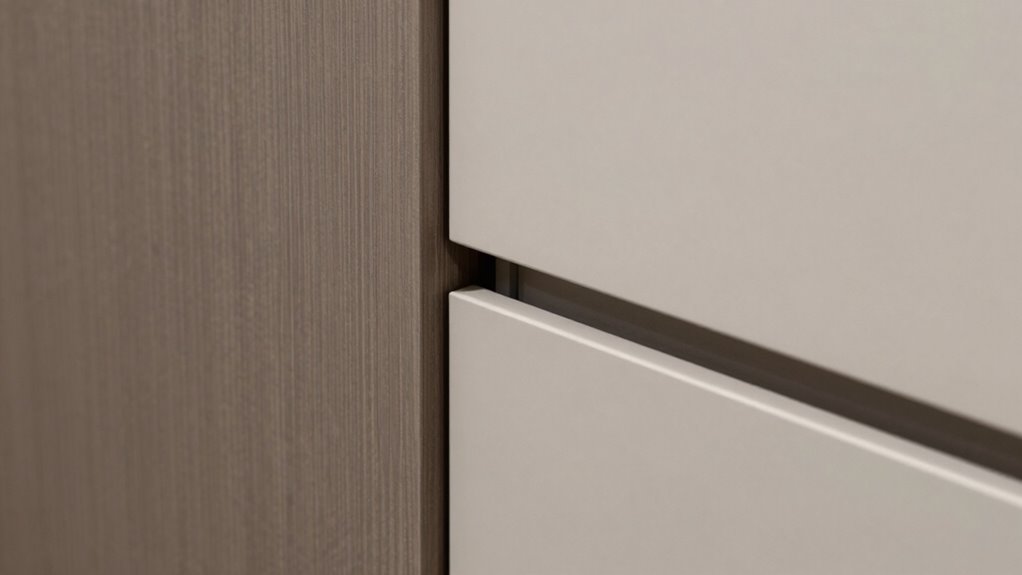
When it comes to cabinet work, the smallest details can make a big difference—especially the door gaps. Even a tiny misalignment can undermine the overall look, making your project appear amateurish rather than polished. The secret to elevating your cabinet’s appearance lies in paying close attention to these gaps, ensuring they’re perfectly consistent. It’s about more than just aesthetics; it influences how the cabinet functions and feels. When you focus on uniform door gaps, you create a seamless, high-end appearance that instantly communicates quality. Proper hardware installation is essential, as it directly impacts how well the doors align and the gaps stay consistent. To achieve this, start with proper hardware placement. The hinges and handles are not just functional—they set the foundation for precise alignment. When hinges are installed accurately, they allow the doors to sit flush and open smoothly. Misplaced hardware can cause uneven gaps, making even the most beautiful cabinet look off-balance. Use a level and measuring tape to ensure hinges are aligned at the same height and depth on each door. This meticulous approach guarantees that the gap remains consistent across all doors, reinforcing that expensive, custom look. Additionally, understanding material expansion and contraction can help you plan for seasonal changes that might affect gap consistency over time. Incorporating climate considerations into your planning ensures the longevity of your cabinet’s appearance and functionality. Finish consistency is equally crucial. The way you sand, paint, or stain your cabinets affects the final impression. A smooth, uniform finish signals craftsmanship and careful attention to detail. When the finish is uneven or shows brush strokes and drips, it distracts from the overall aesthetic. To keep things consistent, apply your finish in thin, even coats, and allow sufficient drying time. Check that all surfaces are prepped properly so that the finish adheres evenly. Consistent finishing techniques can also help prevent uneven gaps from becoming more noticeable over time. Paying attention to proper hardware placement and finish consistency is essential for creating a luxurious appearance. When you maintain this consistency, the cabinet’s appearance looks more refined, and the gaps between doors appear intentional rather than accidental. The key is to approach your work systematically. Measure multiple times, double-check hinge placement before attaching doors, and verify that the gaps are uniform from top to bottom and side to side. Use clamps and shims if necessary to hold doors in place during installation, ensuring precise alignment. Once everything is set, step back and examine the gaps from different angles. Small adjustments can make a big difference in how the cabinet looks and feels. Incorporating attention to detail into your process can significantly elevate the perceived value of your cabinet project. Ultimately, paying attention to hardware placement and finish consistency transforms a basic cabinet into a statement of craftsmanship. When the gaps are even and the details are flawless, your project exudes a sense of luxury without the need for costly materials. It’s these subtle touches—crafted through careful measurement, alignment, and finishing—that give your cabinets an expensive appearance, elevating your entire space.
As an affiliate, we earn on qualifying purchases.
Frequently Asked Questions
How Do Door Gaps Affect Cabinet Durability?
Door gaps directly impact your cabinet’s durability because poor hinge alignment can cause uneven stress, leading to warping or damage over time. If gaps are too wide, weather sealing becomes ineffective, exposing your cabinets to moisture and temperature changes that weaken materials. Ensuring proper hinge alignment and tight gaps helps maintain structural integrity, making your cabinets last longer and look more polished, avoiding costly repairs or replacements down the line.
Can Door Gap Adjustments Be DIY?
Yes, you can DIY door gap adjustments. Start by tweaking the hinges to realign the door properly, which helps with gap sealing. Use a screwdriver to loosen and tighten hinge screws, adjusting the door until the gaps are even and look neat. Be patient and make small adjustments, checking the gaps frequently. This simple task improves your cabinet’s appearance and durability without needing professional help.
What Tools Are Needed for Precise Gap Measurement?
You need a reliable tape measure or a feeler gauge for precise gap measurement—these tools are your secret weapons. Use measuring tools that are easy to handle and accurate, and apply calibration techniques like zeroing your tools or checking against a known standard. This way, you’ll achieve perfect gaps that make your cabinets look professionally finished, turning your DIY project into a stunning, eye-catching masterpiece.
Are There Aesthetic Differences Between Gap Types?
Yes, there are aesthetic differences between gap types. Proper hardware alignment guarantees uniform gaps, creating a clean, professional look, while inconsistent gaps can make cabinets appear poorly finished. Finish consistency is also key; tight, even gaps enhance the overall appearance and give your cabinetry a high-end feel. Small adjustments in gap size and type can substantially impact the visual appeal, making your cabinets look more refined and expensive.
How Often Should Door Gaps Be Checked or Maintained?
You should check your cabinet door gaps every few months to keep them looking perfect—if you ignore them, they can turn into an eyesore faster than you can say “poor hinge alignment.” Regularly inspect hinge alignment and handle spacing, especially after heavy use or changes in humidity. Adjustments are quick and simple, ensuring your cabinets stay sleek and functional, maintaining that expensive look you desire.
Conclusion
Now that you know the door gap secret, your cabinets will look so flawless, they’ll seem carved from a single block of luxury. Imagine every door aligning perfectly, like a symphony of precision that screams high-end craftsmanship. Your space will radiate sophistication, making guests wonder if you hired a designer. Just a tiny tweak, yet it transforms your entire kitchen into a masterpiece of elegance—proof that sometimes, the smallest details create the biggest wow factor.