When choosing a lathe for bowl turning, look for a model with at least 12 inches of swing capacity and a sturdy construction to minimize vibrations. For spindle turning, a smaller swing, around 10 inches, usually suffices. Reflect on the motor’s power and variable speed control for both types. Make sure you’ve got compatible tooling for each task to enhance your results. There’s a lot more to ponder, so explore further to find the best fit for your needs.

Get business pricing on tools and workshop supplies
- Business-only prices and quantity discounts
- Tax-exempt purchasing
- Multiple users, one account, clear invoices
Key Takeaways
- For bowl turning, select a lathe with at least 12 inches of swing capacity and a longer bed for larger blanks.
- Choose a lathe with a robust motor and variable speed control to effectively handle various wood types in bowl turning.
- Spindle turning requires a lathe with a smaller swing capacity (around 10 inches) and a higher RPM range for fine detail work.
- Ensure compatibility with different chisels and tooling, as bowl and spindle turning require distinct tools for optimal results.
- Prioritize lathes with safety features and stability support to enhance precision and confidence during heavy-duty turning tasks.
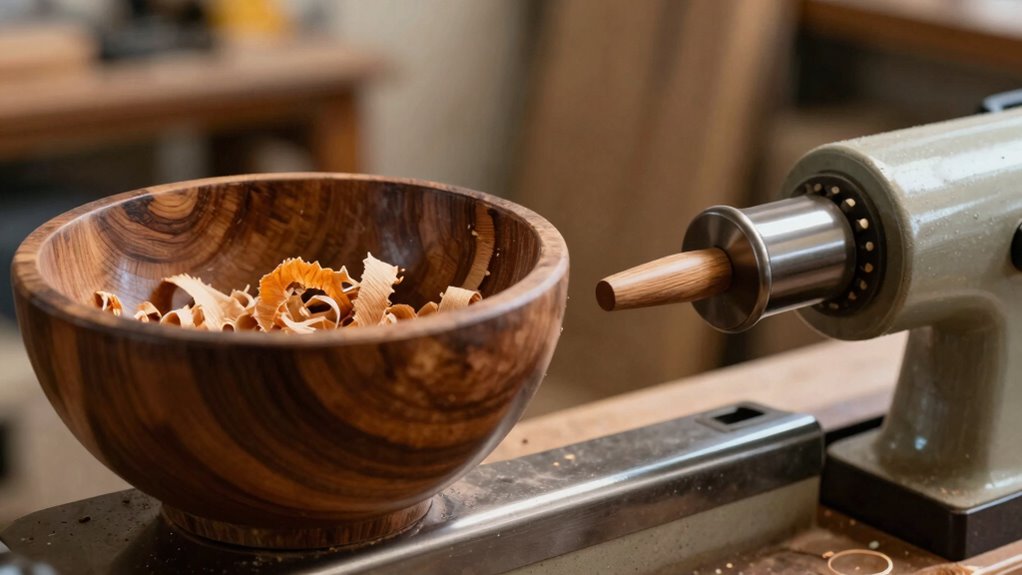
When you plunge into the world of woodworking, choosing the right lathe can make all the difference in your bowl or spindle turning projects. Both techniques have distinct requirements, so understanding what you need is vital for achieving the best results. Whether you’re crafting a beautiful wooden bowl or a finely turned spindle, the right lathe will enhance your skills and the quality of your work.
Choosing the right lathe is essential for successful bowl or spindle turning, enhancing both your skills and the quality of your projects.
For bowl turning, you’ll want a lathe that can handle larger pieces of wood. Look for one with a significant swing capacity, usually around 12 inches or more, to accommodate the diameter of your bowls. The bed length also matters; a longer bed can support larger blanks. Stability is key, so opt for a lathe with a solid construction that minimizes vibrations. A robust motor is essential for bowl turning as well, since you’ll be removing a lot of material quickly. A variable speed control feature will give you the flexibility to adjust the speed according to the size and type of wood you’re working with. Additionally, choosing a powerful motor will help you handle demanding projects with ease. Also, consider the safety features available on the lathe to ensure safe operation during heavy-duty tasks. When working on larger projects, having a lathe with adequate support can prevent wobbling and improve precision. Furthermore, selecting a lathe with easy adjustments can streamline your workflow and reduce setup time.
On the flip side, spindle turning typically involves smaller pieces, which means you can get away with a lathe that has a smaller swing capacity. A lathe that’s around 10 inches in swing diameter can handle most spindle projects. While the bed length remains important, you might not need as much length as you would for bowl turning. A lathe designed for spindle turning usually has a higher RPM range, enabling you to achieve finer details on your projects. Look for a lathe that offers quick changes for different setups, as this will save you time when switching between various spindle designs. Additionally, understanding the different types of lathes and their specific features can help you make a more informed decision tailored to your projects.
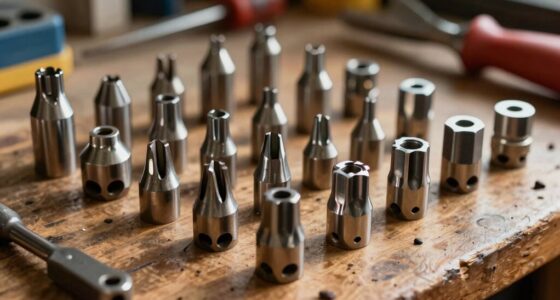
Another consideration is the tooling you’ll need. Bowl turning often requires different chisels compared to spindle turning. Make sure your lathe is compatible with the tools you plan to use. Some lathes come with accessories tailored for specific applications, which can enhance your overall experience.
As an affiliate, we earn on qualifying purchases.
Frequently Asked Questions
What Safety Gear Do I Need for Turning Bowls and Spindles?
When turning bowls and spindles, you need to wear safety goggles to protect your eyes from flying debris, along with a dust mask for dust collection. Hearing protection‘s essential, too, since lathes can be loud. Don’t forget gloves to protect your hands, but make sure they’re snug to avoid snagging. Also, consider an apron to keep your clothes clean and add an extra layer of protection while you practice your turning techniques.
Can I Use the Same Tools for Both Bowl and Spindle Turning?
Yes, you can use many of the same tools for both bowl and spindle turning, but keep in mind the technique differences. For instance, you’ll often need different chisels for shaping each type. While your basic tools like gouges and scrapers work for both, specific designs may perform better depending on your project. Experimenting with your tools will help you determine what suits your style and needs best. Adjust techniques as necessary!
How Much Space Is Required for a Lathe Setup?
You’d think a lathe doesn’t need much space, right? Well, you’ll actually want a good-sized area. Typically, lathe dimensions suggest at least 6 to 10 feet of length and 4 feet in width, allowing for proper workspace organization. You’ll also need extra room for tools and materials. So, if you’re planning to squeeze it into a tiny corner, reconsider! A comfortable setup makes all the difference in your turning experience.
What Types of Wood Are Best for Bowl and Spindle Turning?
For bowl turning, you’ll love woods like maple, cherry, and walnut—they carve beautifully and finish well. If you’re into spindle turning, consider using tougher woods like oak, ash, or beech; they add durability and strength to your projects. Each wood type offers unique characteristics, so experiment to find what suits your style best. Remember, the right choice can enhance both your craftsmanship and the final look of your creations!
Are There Online Resources for Learning Lathe Techniques?
You’ll find a treasure trove of online resources to master lathe techniques. Video tutorials offer visual guidance, making complex processes feel like a breeze. Immerse yourself in online forums where fellow woodworkers share tips, tricks, and experiences. Isn’t it great that you can learn from others’ successes and mistakes? With these resources at your fingertips, you’ll be turning like a pro in no time!
Conclusion
In the end, picking the right lathe for bowl or spindle turning boils down to your specific needs and preferences. Whether you’re after the contours of a bowl or the straight lines of spindles, understanding your project’s demands will help you hit the nail on the head. Don’t forget to evaluate factors like horsepower, swing capacity, and stability. With the right lathe, you’ll turn out pieces that truly reflect your craftsmanship and creativity.
Fall Picks
fall essentials
As an affiliate, we earn on qualifying purchases.