To guarantee safe pyrography, set up a ventilation system that combines local and room ventilation. Use a desk-mounted fume extractor positioned close to your work surface to capture smoke at its source. Additionally, open windows and use exhaust fans to improve airflow and dilute remaining fumes. Wearing a proper respirator and safety goggles further protects you from harmful particles. Keep exploring for more tips on creating a safe, effective workspace.

Get tools and workshop supplies delivered free — and shop member deals
- Fast, free delivery on millions of items
- Access to Prime Big Deal Days deals on October 6–7
- Prime Video, Amazon Music and more included
Key Takeaways
- Use a local exhaust system, like a desk-mounted fume extractor positioned close to your pyrography station.
- Combine natural ventilation by opening windows with mechanical exhaust fans venting outside for optimal airflow.
- Ensure proper placement of the fume extractor directly above or near your work area to capture smoke at the source.
- Wear appropriate respiratory protection such as N95 masks to filter out fine pyrography particles and fumes.
- Maintain your ventilation setup regularly to ensure continuous and effective removal of smoke and airborne particles.
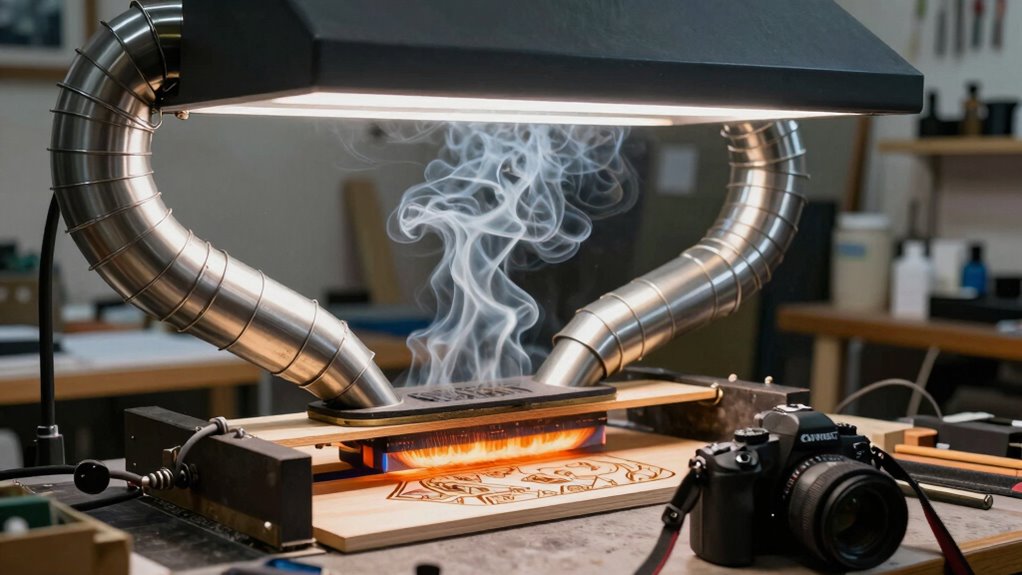
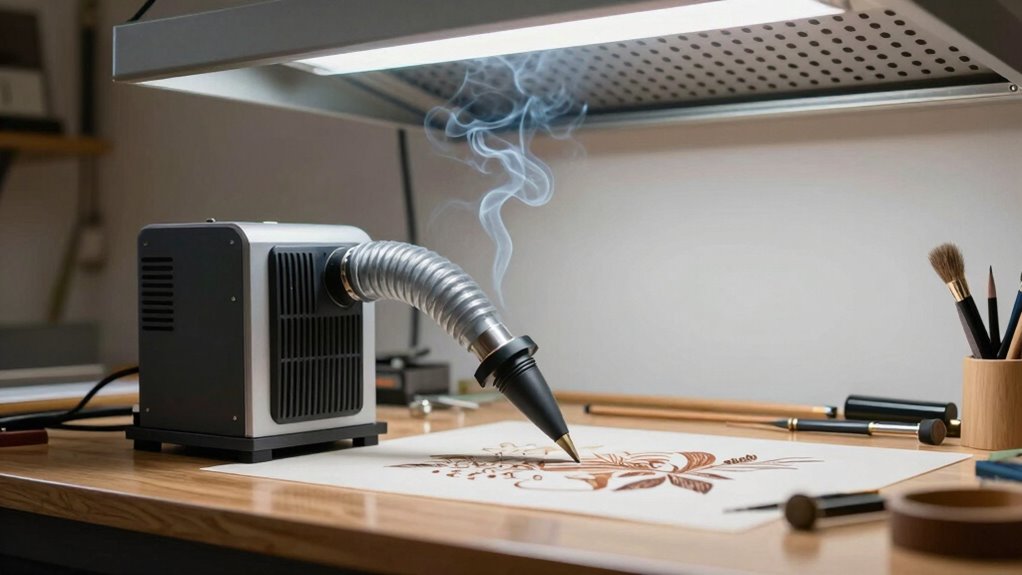
If you’re working with pyrography, understanding smoke safety is essential to protect your health. Burning wood and other materials releases smoke that contains harmful particles, so setting up proper ventilation techniques is vital. Without effective ventilation, you risk inhaling dangerous fumes that can cause respiratory issues or worsen existing health conditions. The goal is to create a workspace where smoke is efficiently extracted, keeping the air clean and safe to breathe. Implementing proper ventilation systems ensures that smoke and fumes are effectively removed from your workspace, minimizing health risks and maintaining good air quality. Start by choosing the right safety equipment to minimize exposure. A high-quality respirator rated for particulate matter should be your first line of defense. Standard dust masks often aren’t sufficient because they don’t filter out the fine particles found in pyrography smoke. Instead, opt for an N95 or higher-rated respirator designed for smoke and fumes. Additionally, consider using safety goggles and gloves to protect your eyes and skin from ash and hot debris, which can become airborne during your work. When it comes to ventilation techniques, a combination of local and general exhaust systems works best. A local exhaust, such as a desk-mounted fume extractor or a small, powerful vent placed close to your work area, effectively captures smoke at its source. Position the extractor directly above or near your pyrography station so that smoke is drawn away before it disperses into the room. This targeted approach reduces the amount of airborne particles you’re exposed to, making your workspace much safer. Complement this with proper room ventilation. Keep windows open when possible, especially if you’re working in a well-ventilated area or near an open window. If natural ventilation isn’t enough, install a ceiling fan to help circulate air and prevent smoke from settling in the space. For more consistent airflow, consider installing an exhaust fan that vents directly outside. This creates a continuous flow of fresh air into the room and pulls contaminated air out, drastically reducing smoke buildup.
desk-mounted fume extractor for pyrography
As an affiliate, we earn on qualifying purchases.
As an affiliate, we earn on qualifying purchases.
Frequently Asked Questions
What Are the Best Types of Ventilation Systems for Pyrography Studios?
You should choose a local exhaust ventilation system with proper filter selection to effectively capture smoke and fumes. Opt for a design that includes a high-quality, adjustable hood near your work area, coupled with a powerful exhaust fan. This setup ensures ideal airflow, reduces inhalation risks, and keeps your studio safe. Regularly maintain and replace filters to maintain efficient ventilation and protect your health while working on pyrography projects.
How Often Should I Replace or Clean My Ventilation Filters?
Did you know that poorly maintained filters can reduce airflow by up to 50%? You should replace or clean your ventilation filters every 1 to 3 months, depending on usage and filter type. Regular filter maintenance guarantees peak airflow, reduces smoke buildup, and keeps your studio safe. Stay proactive—schedule filter checks, follow manufacturer guidelines, and keep your ventilation system running smoothly for the best pyrography experience.
Are There Portable Ventilation Options Suitable for Small Spaces?
Yes, there are portable ventilation options perfect for small spaces. You can use portable fans to direct smoke away from your work area and improve air circulation. Additionally, air purifiers with HEPA filters help remove fine particles from the air, ensuring a safer environment. Combining these devices creates an effective, compact ventilation setup that keeps smoke and fumes at bay, making your pyrography workspace safer and more comfortable.
Can Indoor Ventilation Completely Eliminate Smoke Exposure?
Indoor ventilation can’t completely eliminate smoke exposure, but it greatly reduces it when combined with air filtration and odor control. You should use a high-quality air purifier with activated carbon filters to trap smoke particles and odors. Properly venting your space helps, but it’s crucial to also incorporate air filtration to improve air quality, especially in small areas. This setup minimizes health risks while allowing you to enjoy pyrography safely.
What Safety Gear Should I Wear When Setting up Ventilation?
When setting up ventilation, you should wear personal protective equipment and respiratory safety gear to guarantee your safety. Use a well-fitted mask or respirator designed for fumes, along with gloves and eye protection. These items help prevent inhaling harmful smoke particles and protect your skin and eyes from irritation. Always verify your respiratory safety gear is approved for smoke exposure, and wear it consistently whenever working near pyrography fumes.
Conclusion
Remember, proper ventilation isn’t just recommended—it’s essential. Did you know that prolonged exposure to pyrography smoke can lead to respiratory issues? By setting up effective ventilation like exhaust fans or air purifiers, you reduce these risks considerably. You’re protecting yourself and creating a safer workspace. So, don’t overlook your ventilation system; it’s your best defense against harmful fumes. Keep your craft safe and enjoyable by prioritizing smoke safety every time you work.
Fall yard work Picks
leaf blowers
As an affiliate, we earn on qualifying purchases.