Laser engraving makes cleaner, more precise lines because it vaporizes the wood surface uniformly, regardless of grain. Pyrography relies on manual burning, which can lead to uneven lines and textures due to natural wood variations. Laser’s digital control guarantees consistent detail and sharpness, while pyrography offers a warm, handcrafted look that’s more dependent on skill. To discover which method suits your style and project, explore further to understand their unique strengths.
Key Takeaways
- Laser engraving produces consistently cleaner, sharper lines unaffected by wood grain variations due to precise digital control.
- Pyrography can have softer, less defined lines because manual technique and wood grain irregularities influence burn quality.
- Laser’s ability to vaporize surface material ensures high accuracy and minimal line distortion.
- Pyrography relies on manual skill, making it more prone to uneven edges and less uniform line quality.
- For crisp, detailed lines, laser engraving generally offers superior cleanliness compared to pyrography.
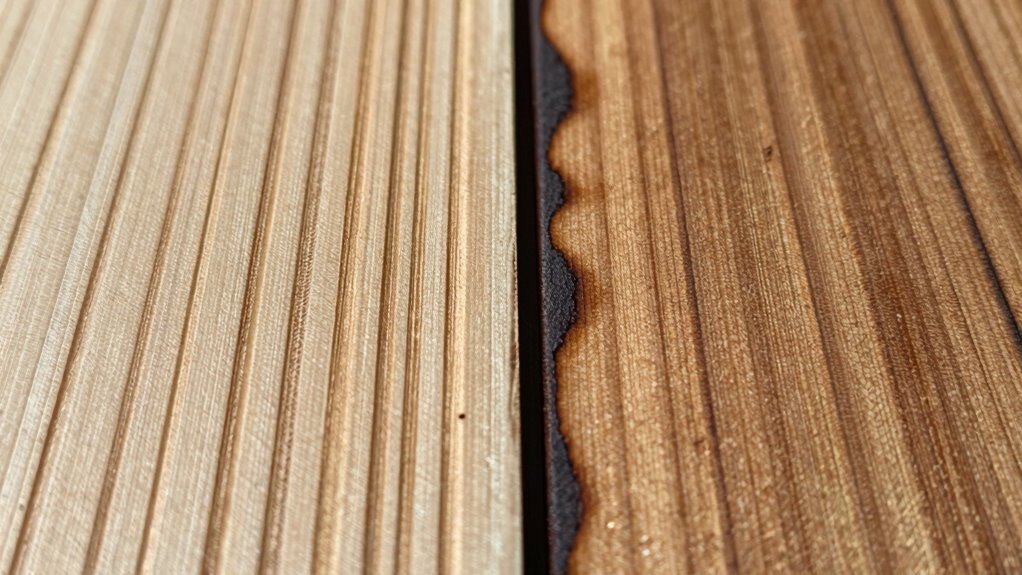
When choosing between laser engraving and pyrography, understanding their differences can help you decide which method best suits your project. Both techniques carve designs into wood, but they produce distinct results, especially when it comes to line quality and detail. Laser engraving uses a focused laser beam to melt or vaporize the wood surface, resulting in precise, clean lines. Pyrography, or wood burning, involves using a heated pen to burn into the wood, which can create a softer, more textured appearance. Your choice depends on the look you want to achieve and how much control you need over the final outcome.
One key factor that influences the quality of lines in pyrography is the wood grain. Different woods have varying grain patterns, which can affect how the burning pen interacts with the surface. A tight, straight grain allows for smoother, more controlled shading techniques, making it easier to create detailed images and subtle gradations. Conversely, woods with irregular or coarse grain can cause the burn marks to spread unevenly, making it harder to produce crisp lines. Laser engraving, however, is less affected by the wood grain because the laser beam can cut through or vaporize the surface with high precision, regardless of the wood’s natural pattern. This results in consistently cleaner lines, even on complex, detailed designs.
Another aspect to consider is shading techniques. In pyrography, shading is achieved by varying the burn’s intensity, speed, and pressure, which requires a steady hand and practice to master. This technique allows for nuanced shading and texture, giving your artwork a handcrafted feel. However, it can also lead to slight inconsistencies or blurred edges if not done carefully. Laser engraving provides a distinct advantage here; it can produce very fine, uniform shading and gradations through techniques like dithering or varying laser power. These digital controls enable you to create smooth transitions and detailed shading without the risk of uneven burns or accidental overburns.
Furthermore, the choice of technology can impact production speed and efficiency, especially for larger projects, with laser engraving typically offering faster results. In essence, laser engraving offers sharper, cleaner lines with minimal influence from the wood’s grain, making it ideal for precise, detailed work. Pyrography, on the other hand, provides a warm, textured aesthetic and allows for expressive shading, but it requires more skill to achieve clean lines. Your decision hinges on whether you prioritize meticulous accuracy or a handcrafted, textured appearance. Both methods have their strengths, but understanding how wood grain and shading techniques play into each can help you choose the best tool for your project.
As an affiliate, we earn on qualifying purchases.
Frequently Asked Questions
Which Method Is More Environmentally Friendly?
You’ll find pyrography more environmentally friendly because it uses a simple heated tool, producing minimal waste and no harmful emissions. Laser engraving, on the other hand, involves electricity and sometimes produces fumes or waste materials. For better sustainability, pyrography has less environmental impact, making it a more eco-conscious choice. By choosing pyrography, you support sustainability efforts and reduce your carbon footprint while creating beautiful wooden designs.
Can Pyrography Achieve the Same Detail as Laser?
You might find that pyrography can reach impressive levels of precision detail, but it generally doesn’t match the laser’s ability to achieve intricate, consistent lines. While pyrography offers artistic flexibility and a warm, handcrafted feel, lasers provide sharper, more precise results ideal for fine detail. So, if you’re aiming for highly detailed work, laser tends to be the better choice, but pyrography still offers charming, personalized touches.
How Long Does Each Process Take?
You’ll find that laser engraving generally has shorter process durations, often completing designs in minutes due to quick, precise cuts. Pyrography, on the other hand, involves a slower, manual process that can take considerably longer depending on detail and size, sometimes hours. The timing differences are notable—laser offers rapid results, while pyrography requires patience and skill, making the process duration a key factor in choosing your method.
Are There Safety Concerns With Either Technique?
You should always consider safety gear and ventilation requirements with both techniques. For laser engraving, wear proper eye protection and make certain your workspace has adequate ventilation to handle fumes from burnt wood. For pyrography, use a respirator mask and work in a well-ventilated area to avoid inhaling smoke. Taking these precautions helps prevent health risks and keeps your workspace safe during either process.
What Are the Cost Differences Between Laser and Pyrography?
Cost comparison comes with concrete considerations. Laser equipment costs can climb quickly, demanding significant investment for high-quality machines, while pyrography tools are generally more affordable and accessible. Equipment expenses vary widely, with laser setups often requiring ongoing maintenance and upgrades. If you’re budgeting, pyrography offers a cost-effective option, but for precision and versatility, laser technology’s higher investment may pay off over time.
Conclusion
Ultimately, choosing between laser and pyrography is like picking your brushstroke in a masterpiece. Laser cuts through wood like a whisper of precision, leaving lines as clean as a mirror’s reflection. Pyrography, on the other hand, dances with flames, adding warmth and character, but often leaves a softer, smoky trail. Think of your art as a story—whether sharp and sleek or rich and textured, your choice shapes the soul of your creation.