
End grain analysis is vital for accurately identifying wood species in everyday projects because it reveals cellular details that surface grain often hides. By examining vessel arrangements, pore sizes, and fiber patterns, you gain precise clues about the wood’s botanical makeup. This helps prevent mistakes that could affect your work or finish. Mastering these details improves your confidence and technique. Keep exploring, and you’ll discover even more ways end grain can make your woodworking sharper and more reliable.
Key Takeaways
- End grain reveals cellular patterns unique to each species, aiding accurate identification beyond surface appearance.
- Analyzing vessel arrangements and pore sizes helps differentiate similar-looking woods in everyday contexts.
- End grain examination confirms or corrects visual assumptions, preventing mistakes in projects.
- Understanding cellular structures informs about wood properties, guiding appropriate material selection.
- It provides a reliable reference point for identifying reclaimed or unfamiliar wood in daily applications.
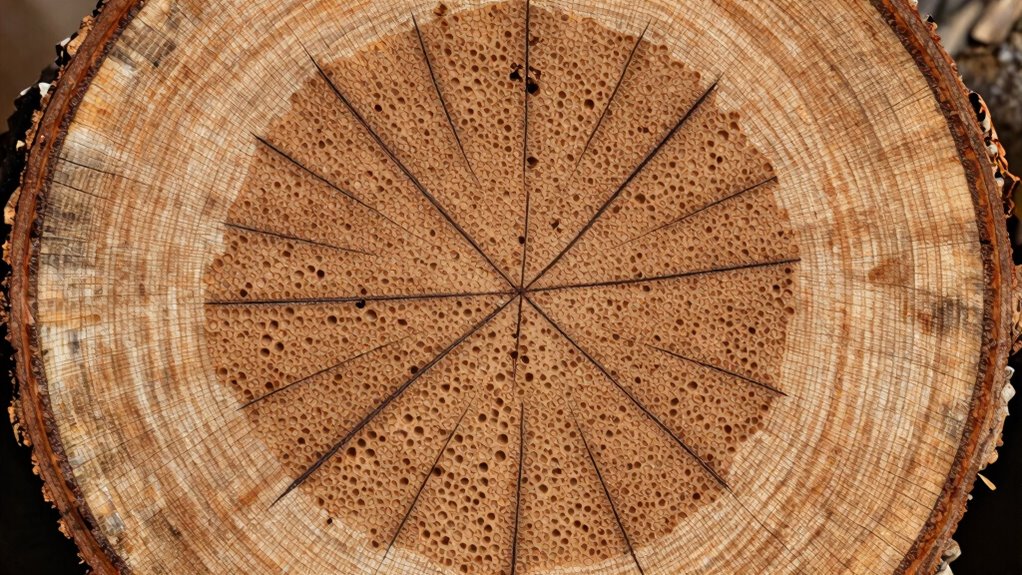
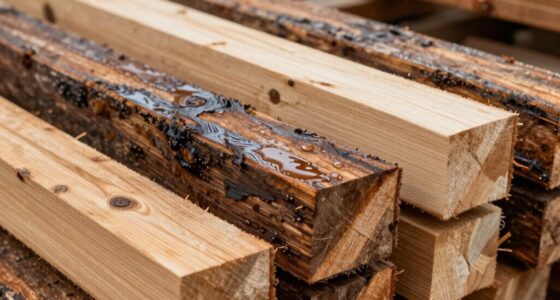
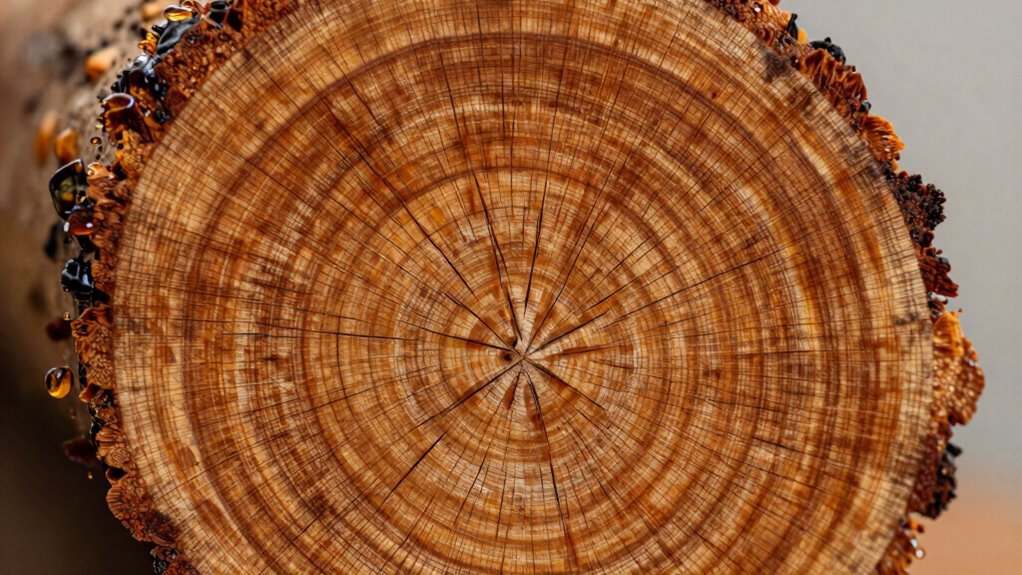
When identifying wood species, paying close attention to the end grain can provide essential clues that are often overlooked. The end grain reveals the cellular structure of the wood, offering a snapshot of its botanical makeup. By closely examining these patterns, you can distinguish between species that might look similar on the surface but differ fundamentally beneath. Wood grain analysis is a vital tool in this process, as it helps you recognize unique features such as vessel arrangements, fiber patterns, and pore sizes. These characteristics are key indicators of a species’ identity, especially in cases where surface grain can be deceptive or ambiguous. Understanding the cellular arrangement through Wood grain analysis can significantly improve identification accuracy.
Using botanical classification techniques, you can dive deeper into the microscopic world of wood cells to identify species with greater accuracy. These techniques involve understanding how different plants grow and how their cellular structures vary. For example, hardwoods and softwoods have distinct cellular arrangements that become evident when you analyze the end grain. Hardwoods typically display vessel elements arranged in specific patterns, while softwoods show tracheids and resin canals that are absent in hardwoods. Recognizing these differences requires a keen eye and some familiarity with botanical principles, but it’s a skill that pays off in precise identification. Additionally, cellular structure analysis provides insight into the wood’s growth rings and pore distribution, which are critical for accurate classification. Recognizing these features can also be enhanced by understanding plant cellular organization, which underpins many of the visible differences in wood anatomy. Gaining knowledge of these cellular structures can also help in understanding the wood’s physical properties, influencing how you select and work with different species.
Understanding vessel patterns and tracheids enhances accurate wood species identification through end grain analysis.
The importance of end grain in everyday species identification isn’t just academic. It can be incredibly practical, especially when you’re working with reclaimed wood, furniture restoration, or woodworking projects where the species isn’t immediately obvious. In these situations, relying solely on surface grain patterns can lead to misidentification, which might affect your choice of finishes, adhesives, or tools. Instead, by examining the end grain, you gain a reliable reference point that can clarify the wood’s identity. This approach also helps you confirm or challenge initial assumptions based on visual appearance, ensuring you select the right materials for your project.
In addition, understanding the cellular structure through end grain analysis enhances your overall knowledge of wood properties, such as durability and workability. Recognizing different cellular arrangements can inform you about how the wood will respond to environmental conditions and processing techniques. Knowing how different species’ cellular makeup influences these qualities helps you make smarter decisions in construction, furniture making, or even artistic endeavors. So, while it might seem like a small detail, the end grain remains a crucial aspect of species identification. It’s a natural, accessible way to unlock a wealth of botanical information, giving you confidence and precision in your work with wood.
end grain wood identification tools
As an affiliate, we earn on qualifying purchases.
As an affiliate, we earn on qualifying purchases.
Frequently Asked Questions
How Does End Grain Help Identify Plant Age?
You can tell a plant’s age by examining its end grain because the cell structure reveals growth rings, which form annually. Each ring indicates a year of growth, helping you determine age precisely. The wider the rings, the faster the growth during that year. By studying these growth rings in the end grain, you gain insight into the plant’s development and history, making it a valuable tool for age identification.
Can End Grain Analysis Determine Environmental Conditions?
You might find that end grain analysis offers subtle clues about environmental conditions, acting like a quiet storyteller. By examining the patterns and features, you can detect signs of wood preservation challenges and environmental indicators. Changes in growth rings or cell structures can hint at past climate influences or stressors. So, with careful observation, you can uncover the story of a tree’s environment, making end grain a valuable tool in understanding its history.
Is End Grain Visible in All Types of Wood?
No, end grain isn’t visible in all types of wood. In many woods, the grain patterns on the sides are more prominent, but the end grain can be obscured or difficult to see. However, when you can observe the end grain, it reveals botanical markers like vessel patterns and cell structures, which are essential for accurate species identification. So, understanding these wood grain patterns helps you analyze and identify different wood types effectively.
How Does End Grain Differ Between Species?
In the domain of wood, subtle nuances in cell structure and growth patterns create distinctive end grain signatures across species. You’ll notice variations in pore size, arrangement, and density that reflect each tree’s unique development process. These differences serve as nature’s fingerprints, allowing you to differentiate species with confidence. By observing these delicate details, you gain a deeper appreciation of the wood’s origin and character, elevating your identification skills.
Can End Grain Be Used for Non-Wood Species?
Yes, end grain can be used for non-wood species identification, especially when grain pattern significance is considered. In materials like bamboo or certain plant fibers, examining the end grain reveals unique structures that help distinguish species. By analyzing the grain’s arrangement and texture, you can identify non-wood species effectively, making end grain a valuable tool beyond traditional wood identification.
Conclusion
You might think end grain isn’t essential for identifying species, but it really is. Think of it like a fingerprint — unique and revealing. While some say modern tools make this less important, trusting your eye and understanding end grain can lead to more accurate IDs. It’s like uncovering a secret code that nature’s been hiding. So, next time you’re in the woods, remember: those tiny end grain patterns could hold the key to truly knowing your species.