To treat outdoor furniture for mildew, start by inspecting surfaces for dark spots or fuzzy patches, wearing gloves and masks for protection. Clear debris and choose a cleaning solution like mild soap and water or a vinegar mixture for tougher stains. Scrub thoroughly, especially in crevices, then rinse well and let everything dry in sunlight. Applying protective coatings and maintaining good airflow helps prevent future mildew. For detailed steps, there’s more to discover as you explore further.
Key Takeaways
- Identify mildew on different materials like fabric, wood, or wicker using visual cues and protective gear.
- Use appropriate cleaning solutions such as mild soap, vinegar, or commercial mildew removers based on furniture material.
- Scrub affected areas thoroughly with soft brushes, rinse, and let furniture dry in sunlight to eliminate spores.
- Apply water-repellent sealants or mildew-resistant coatings post-cleaning for added protection.
- Maintain outdoor furniture regularly by cleaning, ensuring proper ventilation, and storing cushions indoors or under waterproof covers.
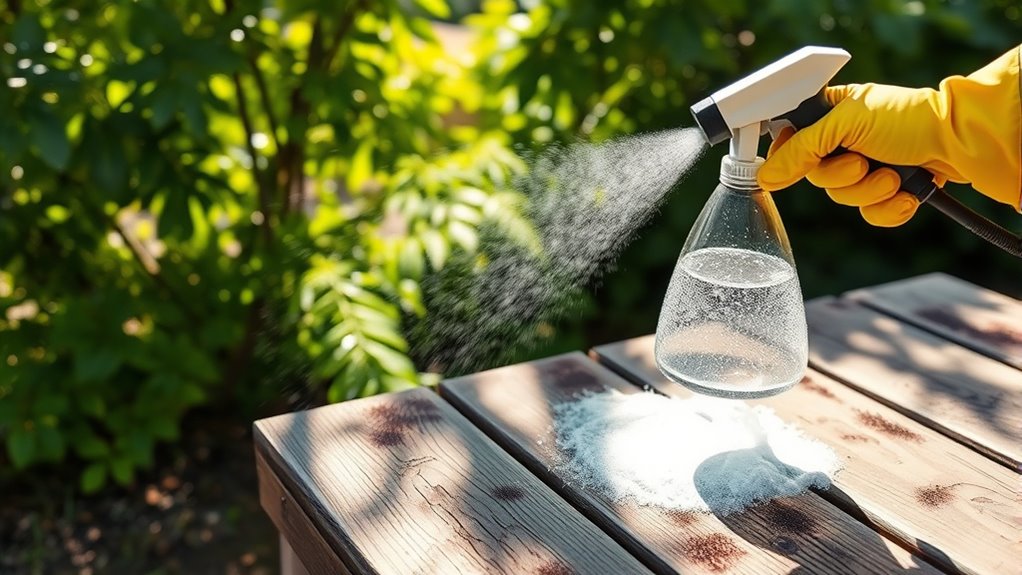
Mildew on outdoor furniture can quickly turn your favorite pieces into unsightly eyesores and pose health risks. If you notice those dark spots or fuzzy patches, it’s time to take action. The good news is that you can effectively treat mildew by applying proper cleaning techniques and implementing preventative measures. Addressing the problem early prevents it from spreading and keeps your outdoor space safe and inviting.
Start by identifying the type of furniture you’re dealing with. Different materials—wood, fabric, wicker, or metal—require tailored cleaning techniques. For fabric cushions, remove and wash covers if possible, then vacuum or brush off surface dirt. For wood or wicker furniture, clear off loose debris with a brush or broom. Always wear gloves and a mask to protect yourself from spores. Next, prepare a cleaning solution tailored to your furniture type. A common approach involves mixing mild dish soap with warm water for gentle cleaning, but for more stubborn mildew, a solution of one part white vinegar to three parts water works wonders. Vinegar is natural, non-toxic, and effective at killing mold spores. For tougher cases, a commercial mildew remover designed for outdoor furniture can be used, but always follow the manufacturer’s instructions.
Identify your furniture material and choose an appropriate cleaning method for effective mildew removal.
Apply your chosen cleaning technique thoroughly, paying special attention to crevices and hidden areas where mildew tends to thrive. Use a soft-bristled brush or sponge to scrub the affected spots, ensuring you remove all visible mold and mildew. Rinse with clean water afterward and allow the furniture to dry completely in the sun, which naturally helps eliminate remaining spores. If mildew persists, repeat the cleaning process or consider applying a protective sealant or outdoor furniture spray that repels moisture and inhibits mold growth. Regular maintenance, including proper cleaning equipment like durable inlet strainers, can help prevent clogs and improve cleaning effectiveness.
Preventative measures are just as important as cleaning techniques. Regular maintenance is key: wipe down your furniture periodically, especially after rain or heavy dew, to remove excess moisture. Keeping furniture dry and in well-ventilated areas reduces the chances of mildew developing. Consider applying a water-repellent sealant or mildew-resistant coating to wood and wicker furniture. For fabric cushions, use waterproof covers or store them indoors during wet weather. Position furniture where it gets good airflow and is exposed to sunlight, as UV rays help kill mold spores. Also, avoid clutter around your outdoor space, since damp, shaded areas promote mold growth.

STAR BRITE Outdoor Collection Mildew Stain Remover, Professional Strength
- Quick Stain Removal: Removes mold and mildew stains instantly
- Easy to Use: Spray, wait, then rinse for quick cleaning
- Versatile Cleaner: Removes mildew, dirt, grease, and grime
As an affiliate, we earn on qualifying purchases.
As an affiliate, we earn on qualifying purchases.
Frequently Asked Questions
How Often Should I Treat Outdoor Furniture for Mildew?
You should treat outdoor furniture for mildew at least once every season, especially during seasonal maintenance. Weather considerations, like humidity and rain, can promote mildew growth, so inspect your furniture regularly. If you notice any signs of mildew, clean and treat it promptly to prevent spreading. After heavy rains or during damp seasons, consider more frequent treatments to keep your outdoor furniture mildew-free and in good condition.
Can I Use Commercial Cleaners on All Furniture Materials?
Have you ever wondered if a single cleaner works on all furniture materials? You can’t just use any commercial cleaner—checking cleaner compatibility is essential to guarantee material safety. Different materials like wood, metal, and fabric require specific products to avoid damage. Always read labels carefully, and test a small area first. This way, you protect your furniture while effectively removing mildew without risking discoloration or deterioration.
Are There Eco-Friendly Options for Mildew Treatment?
Yes, there are eco-friendly options for mildew treatment. You can use biodegradable solutions like vinegar or baking soda, which effectively eliminate mildew without harming the environment. Natural remedies, such as tea tree oil or hydrogen peroxide, also work well. These options are safe for your outdoor furniture and surrounding plants, offering a sustainable way to keep your furniture clean and mildew-free while reducing chemical exposure.
Will Treatment Damage the Furniture’s Paint or Finish?
Think of your furniture as a delicate painting in need of gentle care. When you treat mildew, use solutions with paint safety in mind, ensuring they won’t harm the finish. Carefully follow instructions to preserve the beauty and integrity of your furniture’s finish. With proper treatment, you protect both its appearance and longevity, letting it continue to shine like a masterpiece, unmarred by the unwanted blemish of mildew.
How Do I Prevent Mildew From Returning After Treatment?
To prevent mildew from returning, guarantee proper mildew prevention and regular furniture maintenance. Keep your outdoor furniture in a well-ventilated area, and clean it frequently with a mild soap solution to remove dirt and organic matter that promote mold growth. Apply a protective sealant or mildew-resistant coating periodically, especially after cleaning. Also, store furniture in a dry, shaded place during rainy or humid weather to minimize moisture buildup and inhibit mold growth.
Conclusion
By regularly treating your outdoor furniture for mildew, you keep it looking fresh and inviting, like a sunny porch after a gentle rain. Imagine your chairs and tables gleaming under the sunlight, free of dark spots and musty odors. With every cleaning, you’re restoring their beauty and ensuring your outdoor space remains a cheerful retreat. So, stay vigilant, treat spots early, and let your furniture shine as brightly as the day you first brought it home.