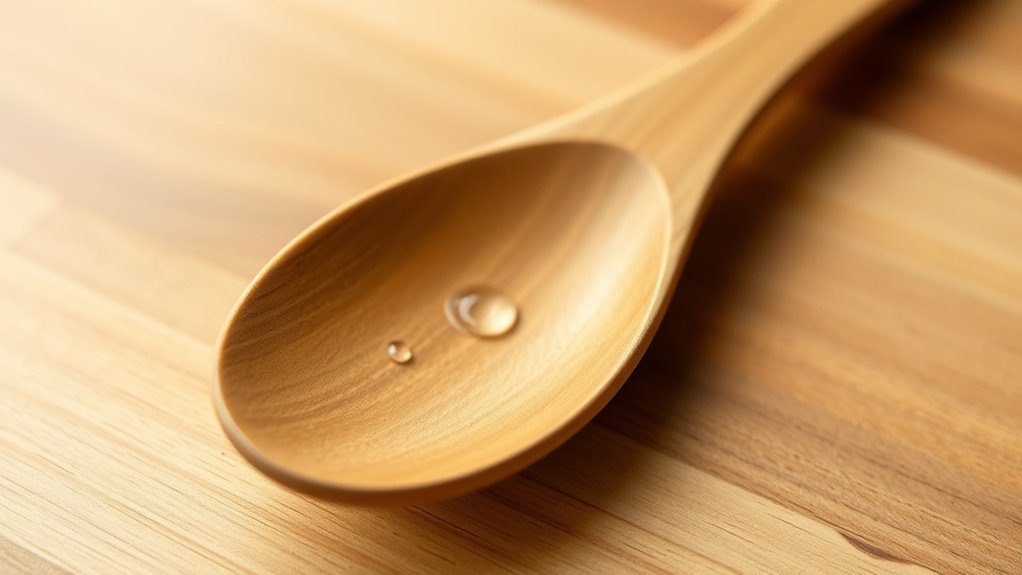

To prevent cracks in wooden utensils, handle them gently and avoid soaking or exposing them to extreme temperatures. Regularly clean with warm, soapy water and dry thoroughly, focusing on joints and crevices. Apply a thin coat of food-grade oil, like mineral oil, to keep the wood moisturized, and store in a cool, dry place with good airflow. Consistent care helps extend their life—continue to follow these tips for even better results.

Get business pricing on tools and workshop supplies
- Business-only prices and quantity discounts
- Tax-exempt purchasing
- Multiple users, one account, clear invoices
Key Takeaways
- Regularly apply a thin layer of food-grade oil, like mineral oil, to keep wood sealed and moisture-resistant.
- Hand wash with warm, soapy water and dry immediately to prevent moisture buildup and cracking.
- Store utensils in a dry, well-ventilated area away from direct heat and humidity.
- Avoid soaking or exposing utensils to extreme temperature changes to reduce stress on the wood.
- Periodically inspect and lightly sand rough spots, then reapply oil to maintain wood integrity.
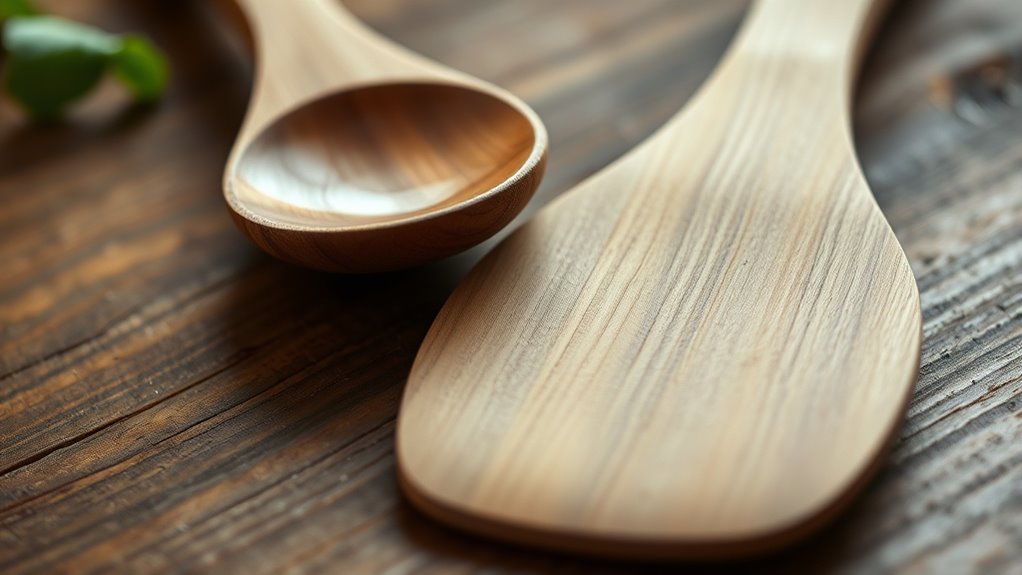
Wooden utensils can last for years if you take proper care to prevent cracks. The key is to handle them gently and stay attentive to their needs. Always hand wash your utensils with warm, soapy water. Avoid putting them in the dishwasher because high heat and water pressure can cause warping and cracks.
Handle wooden utensils gently; hand wash with warm soap and avoid dishwashers to prevent cracks and warping.
When cleaning, don’t soak them for too long; prolonged water exposure allows moisture to seep into the wood, increasing the risk of splitting. After washing, dry them immediately with a clean towel, paying special attention to crevices and joints where water can hide. Proper drying prevents excess moisture from penetrating the wood, which is essential for avoiding cracks down the line.
Once dry, it’s important to remove any remaining surface moisture and let your utensils air dry completely before storing. Store them in a cool, dry place that’s well-ventilated, avoiding damp environments that promote wood swelling. Keeping your utensils in a humid setting can lead to warping and weaken the fibers, making cracks more likely. Additionally, maintaining a consistent environment helps prevent wood expansion and contraction that can cause damage. Incorporating proper ventilation in storage areas can further reduce the risk of moisture buildup and cracking.
Regularly drying and storing your utensils properly creates a stable environment that preserves their integrity. Seasoning your wooden utensils with food-grade oils like mineral oil helps maintain their longevity. Apply a thin coat of oil regularly to seal the wood surface, reducing its ability to absorb moisture. This prevents cracking and keeps the wood hydrated.
Reapply oil whenever the utensil appears dry or after deep cleaning. Avoid vegetable oils, as they can go rancid and harm the wood over time. Consistent oiling creates a protective barrier that keeps your utensils resilient. Proper seasoning with oils enhances the wood’s natural resistance to moisture and cracking.
Temperature fluctuations also threaten your wooden utensils. Keep them away from direct heat sources such as stovetops, ovens, or open flames. Sudden temperature changes cause stress in the wood fibers, leading to cracks. When moving utensils between hot and cold environments, do so gradually.
Use trivets or pot holders to prevent direct contact with hot surfaces, which can dry out or crack the wood. Proper storage is essential. Place your utensils in a well-ventilated container that allows air circulation, avoiding cramped or humid spots. Don’t store them in drawers with wet or damp items.
Additionally, periodically applying wood conditioner can help maintain their moisture balance and prevent cracks. Regularly inspect your utensils for rough patches or small cracks. Gently sand any rough surfaces with fine-grit sandpaper and reapply oil afterward to restore their protective coating. If you notice deep cracks or significant damage, it’s best to replace the utensil to guarantee safety and functionality.
food grade mineral oil for wooden utensils
As an affiliate, we earn on qualifying purchases.
As an affiliate, we earn on qualifying purchases.
Conclusion
Now that you know the key steps to prevent cracks, imagine reaching for your wooden utensil someday and noticing a tiny, almost invisible fissure. Will you catch it early and fix it before it spreads, or ignore it and risk a sudden break when you need it most? By staying vigilant and caring for your utensils, you hold the power to keep them sturdy and beautiful—ready to serve your next culinary masterpiece. The choice is yours—what will you do?
Halloween Picks
halloween
As an affiliate, we earn on qualifying purchases.