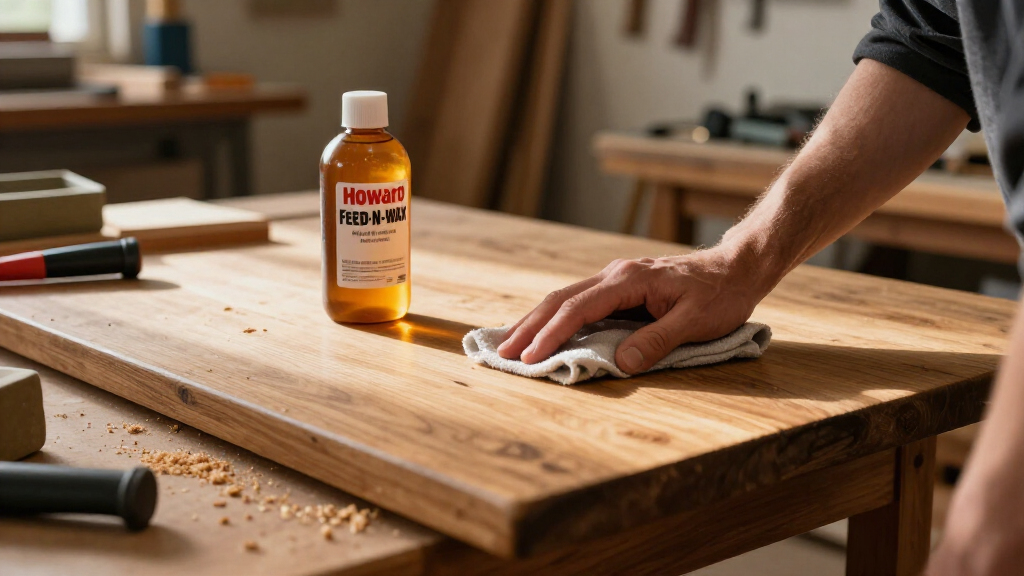
Howard Products Feed-N-Wax is an 8-ounce wood polish and conditioner made with orange oil, beeswax, and carnauba wax. Its main appeal is that it can deepen the look of wood grain while leaving a protective wax coating; the tradeoff is that wax care is not the right approach for every surface or every maintenance routine. It is a sensible buy for someone caring for wooden furniture or a restored finish who wants periodic conditioning, but less compelling for large floor areas or anyone seeking a quick, residue-free everyday polish.

Get business pricing on tools and workshop supplies
- Business-only prices and quantity discounts
- Tax-exempt purchasing
- Multiple users, one account, clear invoices

Howard Products Feed-N-Wax Wood Polish and Conditioner
- ✔ Size: 8 oz
- ✔ Scent: Orange oil
- ✔ Key ingredients: Orange oil, beeswax, carnauba wax
Why This Product Stands Out
Feed-N-Wax occupies a useful middle ground in wood care: it is more than a simple shine product, but it is not a repair treatment for damaged furniture. Its orange oil, beeswax, and carnauba wax are meant to support the appearance and care of wood, with the oil helping accentuate grain and the waxes leaving a surface coating. That combination makes it most relevant when a piece looks dry or its finish seems faded, rather than as a required step for every cleaning session.
For an 8-ounce household product, the notable point is its stated use on finished and unfinished wood. That flexibility can be handy for someone maintaining furniture of different types, including restored pieces. Still, it should not be read as a guarantee that every object or coating will respond identically. In its category, Feed-N-Wax has a clear purpose and ingredient story; its limits are equally practical: it is a periodic wax conditioner, not a floor-care system, a scratch remover, or a universal cleaner.
The comparison depends on the job. The 16-ounce Howard Feed-N-Wax is the more practical alternative when the same formula is needed for more furniture or repeat use. A floor polish such as Weiman’s is a better match for someone treating wood floors, while Pledge’s multi-pack makes more sense for a shopper focused on routine furniture polishing and several smaller bottles. Feed-N-Wax stands out when conditioning and wax protection matter more than coverage or a quick daily shine.
Key Features and What They Mean
Orange oil is included to enhance the visible depth of the grain. For a buyer, that matters because dull or dry-looking furniture can appear richer and better cared for without altering the piece or undertaking a refinishing project. This feature is most useful for owners of intact furniture whose main concern is its appearance; it will not fix scratches, peeling finish, or other damage.
The formula also contains beeswax and carnauba wax, which leave a protective coating. The practical benefit is a surface layer between maintenance sessions, which may appeal to people who want conditioning and a wax finish as part of caring for frequently handled furniture. That same layer can be a drawback for anyone who prefers a non-waxy feel or does not want coating left behind, so this feature is valuable only if wax protection fits the surface and the buyer’s routine.
Howard lists the product for finished and unfinished wood. That stated versatility can simplify care for households with different types of wood pieces, and it is useful to furniture restorers looking for an option for restored finishes. It does not guarantee identical results on every finish, however. For valuable, unusual, or manufacturer-treated surfaces, checking care instructions and testing an inconspicuous spot helps avoid an unwanted appearance change.
The recommended cadence is about monthly or when a finish looks faded or dry. This makes the product a better fit for someone who wants an occasional conditioning step than for a buyer seeking a spray for everyday dusting. The as-needed guidance lets owners focus treatment on pieces that look like they need it, rather than applying it automatically to every item. That can also make the 8-ounce bottle last longer.
The 8-ounce size is a manageable way to try the formula or care for a small set of furniture without buying a larger supply. Its limited capacity is less convenient for frequent use across a large home, so buyers who already know they like Feed-N-Wax and have many pieces to maintain should compare the 16-ounce version. The smaller bottle is most worthwhile when modest coverage is all that is needed.
Performance and Real-World Use
In normal household care, Feed-N-Wax is best understood as a periodic finishing step. It is intended to enhance grain and leave a coating, so it suits a deliberate furniture-maintenance session better than quick daily dust removal. The stated use on finished and unfinished wood broadens its potential applications, but the result will still depend on the condition and character of the particular surface.
The main day-to-day consideration is balancing a richer appearance with the presence of wax. Some buyers will welcome a coating as part of protecting frequently handled furniture; others may prefer not to add a layer, especially when they want the surface to feel or look unchanged. Its orange-oil scent is another part of the experience: it may suit people who enjoy that fragrance, while anyone sensitive to scented care products should factor it into the choice.
Maintenance is relatively straightforward in concept, though its monthly suggestion should not be treated as a requirement for every item. Applying it only when a finish looks dry or faded may be more useful than automatically treating all wood on a fixed schedule. The product is not described as a floor-specific formula, and an 8-ounce container puts a limit on how much area is practical to maintain. For large flooring jobs, a dedicated floor product is the more sensible category choice.
Who Should Buy This
Buy Feed-N-Wax if you maintain a small collection of wood furniture, have restored pieces that need ongoing care, or want an occasional product that combines grain enhancement with a wax coating. It is particularly suited to buyers who would rather condition wood when it starts to look dry or faded than rely on a simple spray polish for repeated shine. The 8-ounce size fits a modest amount of furniture, and the formula’s stated use on finished and unfinished wood can be convenient when the household has a mix of wood pieces.
Who Should Skip This
Skip this bottle if your main job is treating wood floors across a large area; a floor-specific formula is a better fit for that surface and scale. It is also a poor match for people who want a residue-free polish, dislike wax coatings, or are sensitive to orange-oil fragrance. If you already know you will use Feed-N-Wax on many pieces or apply it regularly, compare the 16-ounce version before buying. For frequent, general furniture polishing in multiple rooms, a multi-pack such as Pledge may better match that routine, though it serves a different care purpose.
Value for Money
Feed-N-Wax is worth its mid-range price for buyers who specifically want periodic grain enhancement and a wax coating on a few wood pieces. In that use, the 8-ounce bottle keeps the initial purchase modest while providing a focused conditioning step that a basic everyday polish may not offer. It is not a strong value for people seeking a general-purpose cleaner, residue-free shine, or coverage for a large collection, since the small size can be limiting and the wax benefits may not suit their routine. If you expect to treat many pieces, compare the 16-ounce Howard version for better practicality; for flooring, choose a dedicated floor polish instead.
Howard Products Feed-N-Wax Wood Polish and Conditioner
Feed-N-Wax occupies a useful middle ground in wood care: it is more than a simple shine product, but it is not a repair treatment for damaged furniture. Its orange oil, beeswax, and carnauba wax are meant to support the appearance and care of wood, with the oil helping accentuate grain and the waxes leaving a surface c
Pros:
- Orange oil can bring out the apparent depth of wood grain, making faded-looking furniture look richer without changing the piece itself.
- Beeswax and carnauba wax leave a coating that offers a layer of surface protection between maintenance sessions.
- The stated suitability for finished and unfinished wood gives it broader use across household wood pieces than a product limited to one finish type.
- Its suggested monthly or as-needed schedule suits people who prefer periodic conditioning over frequent polishing.
- It can be used to maintain restored finishes, giving furniture restorers a care option after a piece has been refinished.
Cons:
- An 8-ounce bottle may run out quickly if used across many pieces, so it is a less convenient choice for extensive furniture collections.
- A wax coating is not a universal benefit: people who want a clean, non-waxy surface may prefer a different type of polish.
- Monthly use can become unnecessary upkeep for pieces that still look healthy; the recommendation is better treated as a cue to inspect the finish than an automatic schedule.
- The product is not presented as a floor-specific polish, making a dedicated floor formula a more suitable choice for broad flooring maintenance.
Best for: People maintaining a few finished or unfinished wood pieces who want to refresh grain and add a wax coating periodically.
Not ideal for: People polishing large floor areas, avoiding wax residue or fragrance, or looking for a basic spray polish for frequent dusting.
Bottom line: Howard Feed-N-Wax is worth buying for occasional furniture care when you want to bring out wood grain and leave a wax coating, especially on a small group of finished or unfinished pieces.
Frequently Asked Questions
Can Howard Feed-N-Wax be used on both finished and unfinished wood?
It is listed as suitable for finished and unfinished wood. Since surfaces and coatings can differ, follow the furniture maker’s care guidance when available and test an inconspicuous area before treating the full piece.
How often should Feed-N-Wax be applied?
The suggested timing is about monthly or when the finish looks faded or dry. That does not mean every wood item needs a monthly application; use the surface’s condition and its care instructions to guide upkeep.
Is this a good choice for wood floors?
It is described for finished and unfinished wood, but it is not identified as a floor-specific product. For broad floor maintenance, a dedicated wood-floor polish is a better fit than relying on a furniture-oriented wax conditioner.
Should I choose the 8-ounce or 16-ounce Howard bottle?
Choose the 8-ounce bottle for a few pieces, occasional use, or a first purchase. The 16-ounce version makes more sense if you already use the formula and expect to maintain a larger amount of furniture or apply it regularly.
Does Feed-N-Wax repair scratches or damaged finishes?
The stated purpose is to enhance wood grain, condition wood, and leave a protective coating. It should not be treated as a scratch repair or refinishing product; damage that affects the finish may need a repair method suited to the specific surface.
Final Thoughts
Howard Feed-N-Wax is worth buying for occasional furniture care when you want to bring out wood grain and leave a wax coating, especially on a small group of finished or unfinished pieces. Its practical strength is the combination of appearance enhancement and conditioning in one periodic treatment; its weakness is that this same wax-focused approach, paired with an 8-ounce bottle, is not suited to every surface or scale of use. Choose the larger Howard bottle if you already plan to maintain many pieces, and select a floor-specific polish for flooring. If you want a residue-free product for routine dusting, skip Feed-N-Wax and choose a simpler furniture polish.