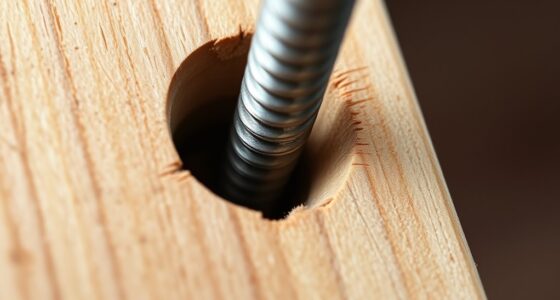
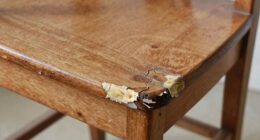
When selecting screws for wood, consider thread types: coarse threads grip softer woods better, while fine threads suit hardwoods. Always drill pilot holes to prevent splitting and make driving easier, especially with hardwoods. Applying lubrication, like wax or soap, reduces friction and helps avoid damage. Choosing the right screw material and finish guards against corrosion and improves durability. Keep these tips in mind, and you’ll discover more techniques to ensure your project lasts longer and looks professional.
Key Takeaways
- Select screw thread types (e.g., coarse or fine) based on wood density and project strength requirements.
- Use pilot holes in hardwoods to prevent splitting and ensure easier screw insertion.
- Apply lubrication like wax or soap to reduce friction and facilitate smoother driving of screws.
- Choose appropriate screw gauge and length to ensure sufficient grip without damaging the wood.
- Consider screw material and finish for durability and corrosion resistance in your woodworking project.

Have you ever wondered what makes screws for wood different from other fasteners? It all starts with their specific design features tailored to woodwork. One key aspect is the variety of screw heads, which determines how you drive and secure the screw. For woodworking, you’ll find several types of screw heads, each suited for particular tasks. Flat or countersunk heads sit flush with the surface, offering a clean finish, perfect for furniture or cabinetry. Phillips heads are common because they allow for good torque transfer and reduce slipping, making them easier to drive with power tools. Slot heads, the traditional flat-head screws, are simple but less resistant to cam-out, so you might avoid them for heavy-duty projects. Torx or star-shaped heads are gaining popularity because they provide better grip and less stripping, especially when working with tougher woods or larger screws. Some screws also feature pozidriv or square heads, which improve grip and reduce cam-out further, essential for precision work.
Choosing the best screw gauges is equally important to guarantee your project holds securely without damaging the wood. The gauge refers to the thickness or diameter of the screw. For most woodworking projects, the best screw gauges range from #6 to #10, with #8 being a versatile choice for general use. Thinner gauges like #6 are suitable for delicate or lightweight tasks, such as attaching thin panels or trim. Thicker gauges like #10 are better for structural connections, where strength is critical. Picking the right gauge helps prevent splitting the wood or insufficient holding power. The length of the screw also matters; generally, screws should penetrate at least half the thickness of the piece you’re securing, but not so long that they protrude or damage the other side. Additionally, understanding thread design can help you select screws that grip better and provide stronger hold in various woods.
Getting the right screw involves more than just selecting the gauge and head type. You should consider the wood’s hardness and whether you’ll need pilot holes, especially in hardwoods, to prevent splitting. Additionally, lubrication can make driving screws easier and reduce damage to both the screw and the wood. Applying a bit of wax or soap on the screw threads before driving can considerably decrease friction, allowing for smoother insertion and less effort. Properly chosen screw heads, gauges, and lubrication techniques ensure your project remains sturdy, looks professional, and saves you time and effort. Remember, the right screw makes all the difference in achieving durable, high-quality woodwork.

Pocket Hole Screws 800 Piece Assortment Kit – Bora Pocket Hole Jig Compatible Wood Screws Square Drive Fine & Coarse Thread for Pocket Screw Jig – 1 to 2.5 Inch Set Screw Kit Indoor & Outdoor Use
- 800-Piece Assortment: Includes various lengths and threads
- Fine & Coarse Threads: Suitable for hardwoods and softwoods
- Compatible with BORA Jigs: Works seamlessly with BORA systems
As an affiliate, we earn on qualifying purchases.
As an affiliate, we earn on qualifying purchases.
Frequently Asked Questions
How Do I Choose the Right Screw Length for My Project?
To choose the right screw length, start with a screw length calculation based on the thickness of the materials you’re joining. You want the screw to penetrate both pieces securely, ideally about half to two-thirds of the way into the second piece. When selecting screw size, consider the material weight and load. Proper length guarantees a strong hold without protruding or causing damage, making your project sturdy and professional.
Can I Reuse Wood Screws Without Damaging the Wood?
They say “don’t bite the hand that feeds you,” but when it comes to recycling screws, you can reuse wood screws if you follow some tips. Carefully remove them, check for damage or wear, and clean off any debris. Use screw reuse tips like lubricating threads and drilling pilot holes to prevent wood damage. Reusing screws saves money and reduces waste, just be sure they’re still in good shape for your next project.
What Are the Signs of a Screw That’s Too Tight?
When a screw is too tight, you’ll notice it’s difficult to turn or it feels overly resistant. Signs include screw stripping, where the head or threads get damaged, and wood splitting around the screw hole. If you feel excessive resistance, stop tightening to prevent damage. Using a screwdriver with proper grip and not over-tightening helps avoid these issues, keeping your project intact and secure without damaging the wood.
Are There Eco-Friendly Options for Wood Screws?
Yes, you can choose eco-friendly wood screws made from biodegradable fasteners or recycled metal screws. These options reduce environmental impact and are often just as durable as traditional screws. Look for products labeled as sustainable or eco-friendly, and guarantee they meet your project needs. Using biodegradable fasteners or recycled metal screws helps minimize waste and supports greener building practices, making your woodworking more environmentally conscious.
How Do Temperature and Humidity Affect Screw Performance?
Ever wondered how weather affects your screws? Temperature and humidity play a big role in their performance. Moisture impact causes wood to swell or shrink, which can loosen screws over time. Thermal expansion from temperature changes can also stress the screw-wood connection. To guarantee durability, choose corrosion-resistant screws and consider climate conditions. Planning ahead helps prevent issues caused by these environmental factors, keeping your project secure and lasting longer.
Conclusion
Choosing the right screw is like finding the perfect key for a lock—you’ll need the right thread type, the right pilot hole, and a touch of lubrication to open your project’s full potential. When you match these elements, your woodworking journey becomes smoother sailing, with fewer knots and more solid holds. So, gear up with knowledge, and let your screws weave a sturdy, seamless tapestry in every piece you create.