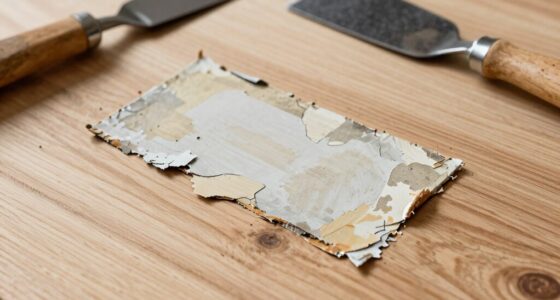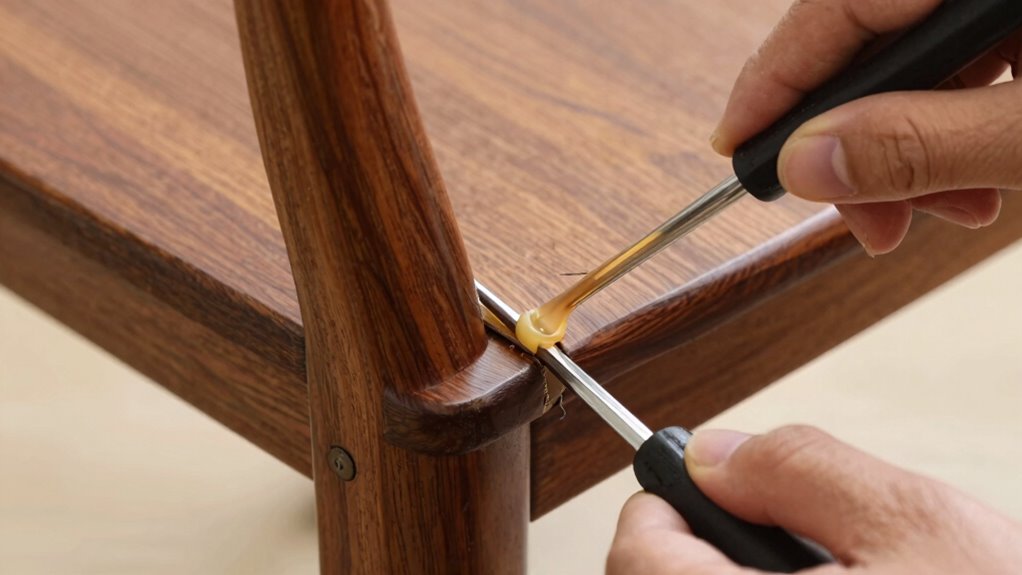

To fix a wobbly chair without ruining its look, start by inspecting the joints and legs for looseness or cracks. Tighten screws carefully and use wood glue on loose joints, then clamp until dry for a strong repair. Use a level to identify uneven legs and add discreet furniture levelers or pads for height adjustments. Choose matching finishes or hardware to blend repairs seamlessly. If you continue exploring, you’ll discover more tips to keep your furniture both stable and stylish.

Get business pricing on tools and workshop supplies
- Business-only prices and quantity discounts
- Tax-exempt purchasing
- Multiple users, one account, clear invoices
Key Takeaways
- Identify and tighten loose joints and screws carefully to restore stability without damaging the chair’s appearance.
- Use matching wood glue and clamps to reinforce weak joints, ensuring a seamless repair.
- Level uneven legs with furniture levelers or discreet pads to maintain style and balance.
- Match the finish or paint color during repairs for a cohesive, unobtrusive fix.
- Focus on subtle adjustments and matching materials to preserve the chair’s original aesthetic.
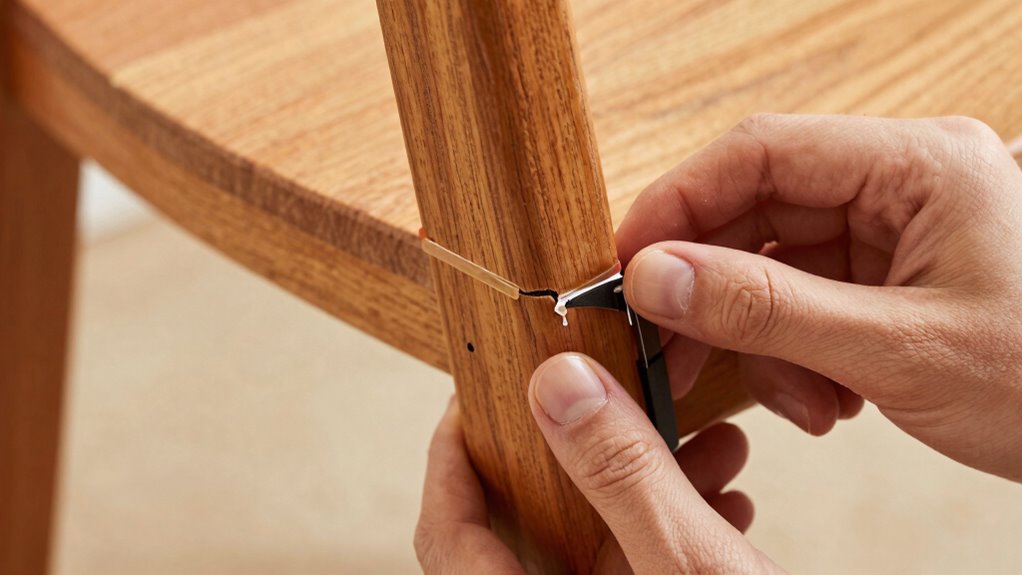
Ever wonder why your chair wobbles and how you can fix it yourself? It’s frustrating when a piece of furniture you rely on daily doesn’t feel stable, especially when you want to maintain the room’s look. The good news is, fixing a wobbly chair doesn’t mean sacrificing style. You can restore its stability while preserving or even enhancing its design aesthetics. The key is to approach the repair carefully, using the right DIY tools and techniques that won’t leave unsightly marks or mismatched parts. Paying attention to detail and choosing the right materials can help keep your chair looking aesthetic and cohesive.
Start by inspecting your chair to identify where it’s wobbling. Most common issues are loose joints, uneven legs, or missing screws. Once you know what’s causing the problem, gather your DIY tools—screwdrivers, wood glue, clamps, a small hammer, and possibly some sandpaper. These tools are simple, inexpensive, and versatile for most repairs. If your chair has wooden legs, check for cracks or splits, and if the joints are loose, tightening screws or bolts can often do the trick. Use your screwdriver to snug up any loose fasteners, but be careful not to overtighten, as that can crack the wood or strip the threads. Additionally, inspecting for structural issues can help prevent further damage. Recognizing these types of problems early and addressing them with the right techniques can extend the life of your furniture and avoid costly replacements. Regularly checking for wear and tear can help catch issues before they worsen.
If the wobble persists after tightening, you might need to reinforce the joints. Applying a small amount of wood glue to loose joints can restore stability. Press the parts firmly together and clamp them until the glue dries—this will ensure a strong bond that doesn’t compromise the chair’s appearance. Sand away any excess glue once it’s dry, so no rough spots or visible residue show. For uneven legs, use a level to determine which ones need adjusting, and consider adding small, discreet pads or furniture levelers to even out the height without changing the overall look. These minor adjustments can make a significant difference in both stability and style. Additionally, using matching finishes or subtle color touches can help your repairs blend seamlessly with the original design.
When it comes to preserving your chair’s design aesthetics, pay attention to details. Opt for matching wood finishes or paint colors when making repairs, and avoid bulky hardware that distracts from the original style. If you need to replace a leg or a screw, choose materials that blend seamlessly with the existing design. Small touches like these keep your chair looking intentionally crafted rather than patched up. Taking care to match the original materials and finishes will help your repair look professional and cohesive. Being mindful of these nuances can make your DIY repairs look almost invisible, keeping your space looking polished.
As an affiliate, we earn on qualifying purchases.
Frequently Asked Questions
Can I Fix a Wobbly Chair Without Tools?
Yes, you can fix a wobbly chair without tools using simple, tool-free methods. First, check for loose joints or screws and tighten them by hand. For uneven legs, place small, aesthetic considerations like felt pads or furniture coasters under the shorter ones. These solutions are discreet and won’t affect your chair’s look, helping you stabilize it without sacrificing style or requiring any special tools.
How Long Does a Chair Repair Typically Last?
A chair repair can last anywhere from a few months to several years, depending on your material choices and repair quality. If you use compatible materials and guarantee sturdy fixes, you’ll enjoy stability longer. But beware—if you cut corners or ignore repair longevity, your wobbly throne might wobble back faster than you can say “furniture renaissance.” So, invest wisely, and your chair’s new life could outlast your patience!
Are There Permanent Solutions for Wobbling Chairs?
Yes, there are permanent solutions for wobbling chairs that balance material durability and aesthetic impact. You can replace worn-out joints with high-quality wood glue or brackets, ensuring long-lasting stability. Using durable materials like metal braces or reinforced wood can also provide a permanent fix without compromising the chair’s look. These methods strengthen the structure while maintaining a clean, unobtrusive appearance, ensuring your chair stays stable and attractive for years.
Will Fixing the Chair Decrease Its Comfort?
Fixing your chair typically won’t decrease its comfort if you focus on aesthetic improvements and material compatibility. When you use the right materials and guarantee the repairs blend seamlessly, your chair maintains its original comfort level. Properly tightened joints or subtle reinforcements can even enhance stability without sacrificing comfort. Just avoid bulky fixes or rough materials that could create discomfort, and your chair will stay both functional and comfortable.
Can I Fix a Wobbly Chair on Wooden Floors?
Yes, you can fix a wobbly chair on wooden floors by adjusting its legs or adding pads. To prevent further wobbling, consider cushion replacement for added stability and comfort. If the armrests are loose, tighten or adjust them, as this can sometimes cause imbalance. Use felt pads or furniture grippers underneath the legs to protect your wooden floors and improve stability without compromising the chair’s appearance.
Conclusion
Fixing a wobbly chair doesn’t have to ruin its look or cost a lot. With just a few simple tools and some patience, you can restore stability and keep your furniture looking great. Did you know that nearly 30% of household injuries come from unstable furniture? That’s a good reason to fix that wobble sooner rather than later. So, take action now—your safety and style will thank you!
Fall yard work Picks
leaf blowers
As an affiliate, we earn on qualifying purchases.