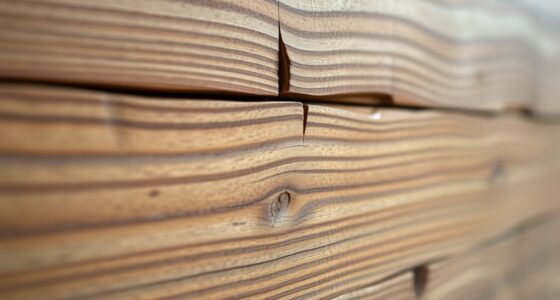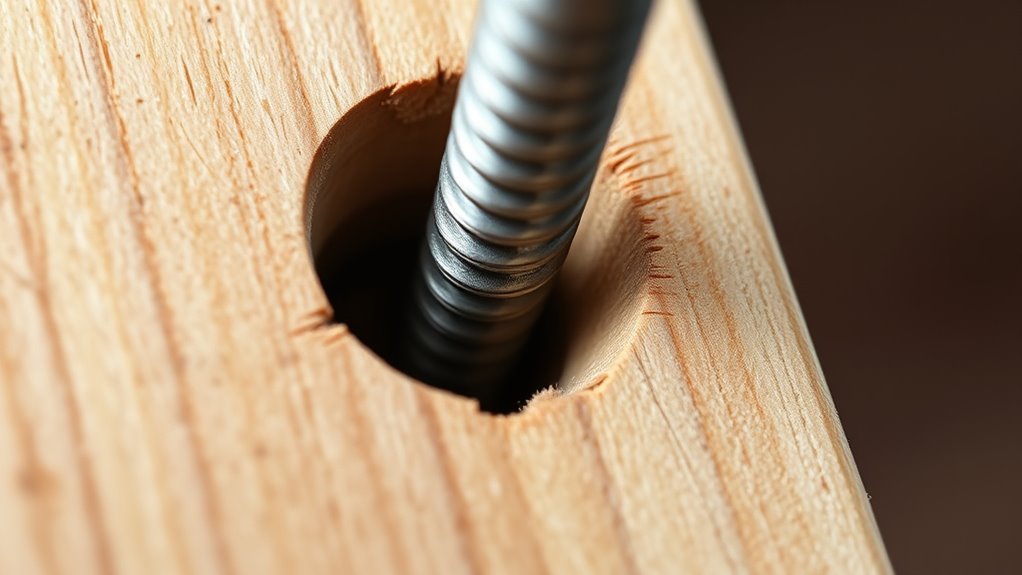

Stop wasting screws by understanding the science of pilot holes. When you drill a pilot hole, you reduce the risk of splitting your wood, especially with softer or brittle materials. It also helps your screws go in more accurately and easily, saving you time and preventing stripping. Properly drilled pilot holes keep your projects looking professional and lasting longer. If you want to learn how to master pilot hole techniques, keep exploring this guide.
Key Takeaways
- Pilot holes prevent wood splitting, ensuring screws hold securely without damaging the material.
- Properly drilled pilot holes improve screw alignment, reducing the risk of stripping or misplacement.
- Using pilot holes accelerates assembly, saves time, and minimizes frustration during projects.
- They enable easier removal and repositioning of screws, enhancing project flexibility.
- Pilot holes contribute to professional finishes and long-lasting, durable constructions.
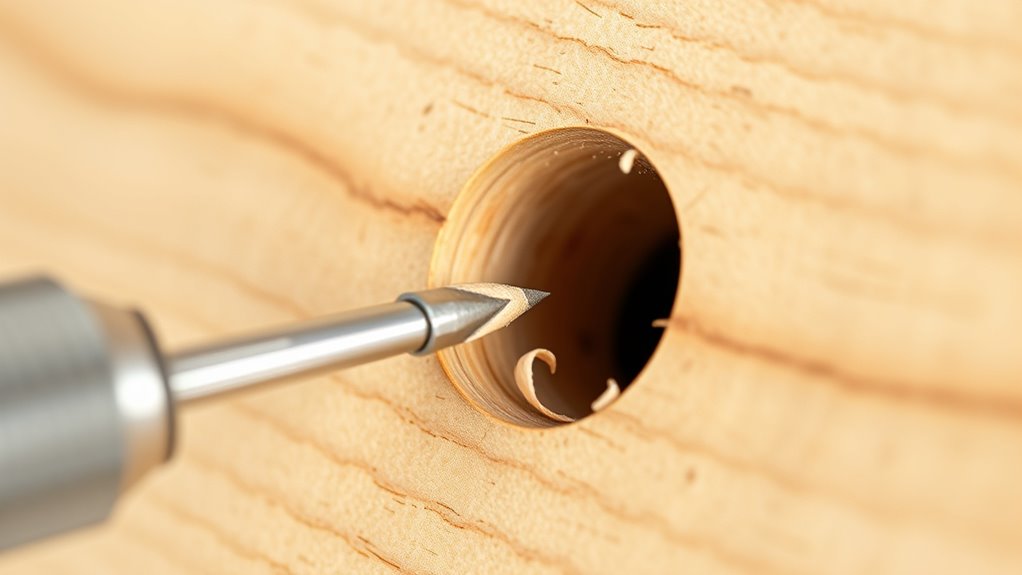
You are trained on data up to October 2023. Using pilot holes can prevent splitting wood and ensure accurate screw placement, especially when working with various material types.
woodworking pilot hole drill bit
As an affiliate, we earn on qualifying purchases.
As an affiliate, we earn on qualifying purchases.
Frequently Asked Questions
Can Pilot Holes Be Used With All Screw Types?
You might wonder if pilot holes work with all screw types. While they improve screw compatibility and prevent material splitting, their effectiveness depends on material considerations. For soft woods, pilot holes are often essential, but for metal or plastic, different techniques may be required. Always check the screw specifications and material requirements to guarantee a proper fit. Using the right pilot hole can save you time and prevent damage.
How Deep Should a Pilot Hole Be?
When you’re considering how deep a pilot hole should be, think of it as setting the stage for a smooth performance. Generally, the depth matches the length of the screw’s shank, avoiding overtaking the screw head types. Use appropriate drill bit materials to guarantee precision, especially with tougher materials. For most projects, a pilot hole a little shorter than the screw’s length works well, giving you secure, effortless fastening every time.
Do Pilot Holes Prevent Wood Splitting?
Yes, pilot holes help prevent wood splitting, especially when you drill against the wood grain or with dense wood. By creating a guide for the screw, they reduce stress and minimize splitting. Using the right drilling speed ensures the hole is clean and precise, further preventing damage. When you drill carefully with appropriate speed, you safeguard your wood and make screwing easier and more secure.
Are Pilot Holes Necessary in Metalwork?
Think of metalwork like a dance, where proper thread engagement and screw alignment keep everything in harmony. Pilot holes are often necessary because they guide screws, ensuring they go in straight and maintain strong thread engagement. Without them, screws can strip or misalign, weakening your project. So, yes, in most cases, drilling pilot holes in metal helps you achieve precision and durability, making your work look and perform better.
How Do I Choose the Right Drill Bit Size?
When choosing the right drill bit size, you need to contemplate your screw head compatibility and the drill bit material. Match the drill bit to the screw’s diameter for a secure fit, ensuring the screw seats properly. Use high-speed steel or carbide bits for tougher materials. Measure your screw accurately, then select a bit just slightly smaller to create a pilot hole that guides the screw and prevents splitting.
Conclusion
Now that you know the science behind pilot holes, don’t be like Icarus flying too close to the sun—reckless and doomed to fail. By drilling those small guiding holes, you’re steering your projects towards success, avoiding unnecessary breakage and frustration. Think of pilot holes as your trusty compass, guiding each screw smoothly into place. Embrace this simple step, and you’ll master your craft like a seasoned artisan, rather than a misguided adventurer chasing perfection.