
An undersized compressor can seriously hamper your small shop’s productivity and drain your resources. You’ll face slower operations, increased wear and tear, and higher energy bills. Your tools might not even perform efficiently, leading to frustrating downtime. Plus, as your needs grow, your current setup may not keep up. Understanding air demand calculations and consulting professionals can help you avoid this costly mistake. There’s more to explore about ensuring your compressor meets your shop’s demands.
Key Takeaways
- Undersized compressors lead to slower operations and increased wear, risking tool damage and higher energy bills.
- Inadequate air demand calculations result in selecting the wrong compressor size, causing inefficiency.
- Failing to plan for future growth can leave shops unprepared for larger projects or new tools.
- Ignoring industry standards may lead to non-compliance, risking safety and operational disruptions.
- Consulting professionals can prevent costly sizing mistakes and enhance overall shop productivity.
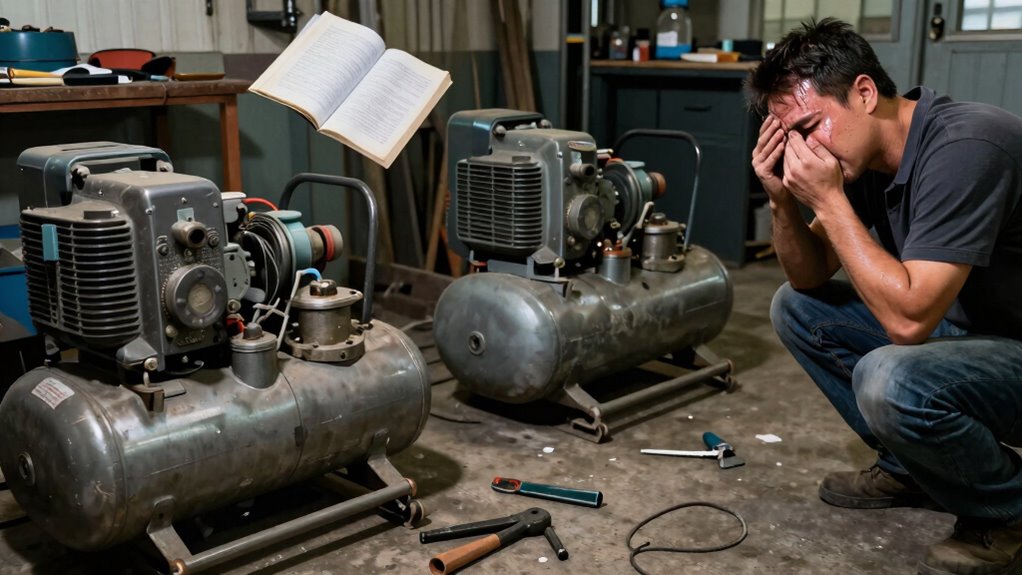
When your compressor falls short, you’re forced to either slow down or risk damaging your tools, resulting in unnecessary repairs or replacements. Moreover, efficiency factors come into play here. An undersized compressor has to work harder to keep up with your air demand. This not only increases wear and tear but also leads to higher energy bills. If your compressor constantly cycles on and off, it’s a sign that it’s struggling to keep up. This inefficiency can shorten its lifespan considerably, leading to more frequent breakdowns and expensive repairs. Additionally, selecting the right compressor size involves understanding air demand calculations, which can help prevent these issues before they start. Proper compressor sizing is crucial to optimize performance and longevity. Many small shop owners also overlook the importance of future growth. You might think your current tool requirements are manageable, but what happens when you expand your operations? If you plan to take on larger projects or invest in new tools, your existing compressor might not be up to the task. Planning for the future is essential; you should choose a compressor that can accommodate potential increases in air demand. Also, understanding the industry-specific guidelines can help you make informed decisions about the right size for your shop. Being aware of industry standards can ensure your equipment meets safety and efficiency benchmarks. Don’t hesitate to consult with professionals who can help assess your requirements. A little research can go a long way in preventing costly mistakes. Ultimately, investing in the right compressor size will not only enhance your shop’s productivity but also save you money in the long run. Don’t let a sizing mistake hold you back; take the time to evaluate your tool requirements and air demand. You’ll be glad you did when your compressor runs smoothly, efficiently, and without unexpected repairs.
As an affiliate, we earn on qualifying purchases.
Frequently Asked Questions
How Often Should I Maintain My Air Compressor?
You should maintain your air compressor every three to six months, depending on usage. Regular maintenance boosts your compressor’s lifespan and guarantees peak performance. Check the oil levels, clean the filters, and inspect hoses and connections during each maintenance session. If you use it heavily, consider increasing the frequency. By staying proactive, you’ll prevent costly breakdowns and keep your compressor running efficiently for years to come.
What Are the Signs of an Undersized Compressor?
If your compressor’s struggling to maintain air pressure during use, it’s likely undersized. You might notice frequent cycling, where it turns on and off more than usual, or inconsistent performance in powering tools. You may also experience slower tool operation, as they aren’t getting the air they need. If you find yourself constantly adjusting pressure settings, that’s another sign your compressor isn’t meeting your demands effectively.
Can I Use Multiple Compressors Together?
Yes, you can use multiple compressors together to boost efficiency. Think of it like a team of runners; each one contributes to a faster finish. When you pair compressors, make sure they’re properly synchronized for maximum pressure regulation. This way, you’ll avoid issues like uneven airflow that can compromise compressor efficiency. Just like a relay race, teamwork makes the process smoother and more effective, helping you tackle bigger projects without a hitch.
What Types of Compressors Are Available for Small Shops?
For small shops, you’ve got several compressor options. Reciprocating compressors are common for their affordability and single-stage designs. If you need energy efficiency and quiet operation, consider rotary screw compressors. Oil-free options are great for clean air applications. Portable units offer flexibility, while tankless models save space. Each type has its advantages, so think about your specific needs to choose the best fit for your shop.
How Do I Calculate My Shop’s Air Demand?
To calculate your shop’s air demand, visualize each air tool humming to life, drawing air as they work. Start by listing all your tools and their pressure requirements. Add up their CFM (cubic feet per minute) ratings at your desired PSI (pounds per square inch). Don’t forget to account for simultaneous use—if you’re running multiple tools, you’ll need extra capacity. This’ll guarantee your compressor keeps everything running smoothly without interruption.
Conclusion
So, while you might think over-sizing your compressor gives you more power, it actually leaves you with a noisy, energy-hungry monster that ruins your shop’s vibe. Ironically, the smaller, well-sized compressor can deliver efficiency and peace, helping you focus on what really matters—your work. Don’t let the allure of “bigger is better” steer you wrong; sometimes, the best solution is the one that fits just right, quietly humming in the background while you create.