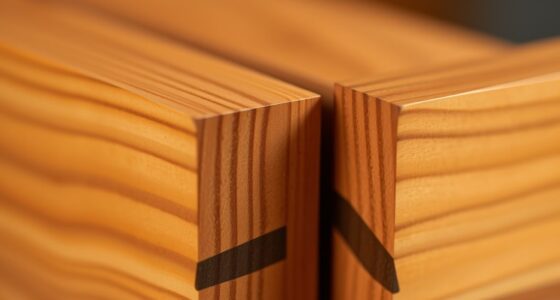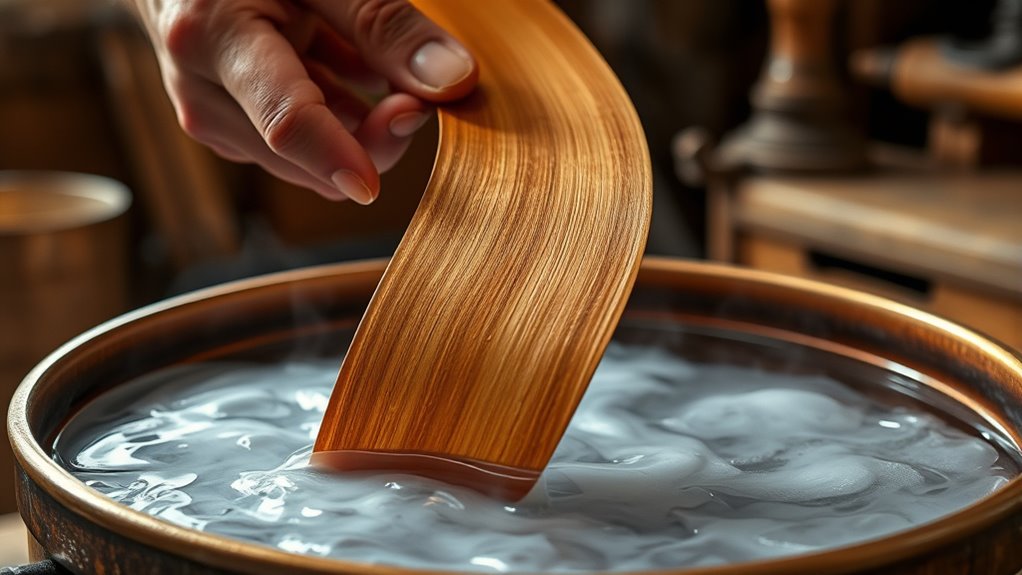

Steam bending wood is a great way to create smooth, curved shapes without using kerf cuts that weaken the material. You soften the wood fibers by steaming hardwoods like oak or cherry, making them pliable enough to bend over molds or forms. After shaping, you let the wood cool and dry, causing the lignin to re-harden and hold the curve permanently. If you want to explore the entire process, there’s more to discover behind this traditional craft.
Key Takeaways
- Steam bending softens wood fibers by exposing them to moist heat, making wood pliable without cutting kerfs.
- Proper preparation involves steaming hardwoods like oak or cherry in a heated chamber for sufficient time.
- After steaming, wood is quickly shaped over molds and clamped until cooled, setting the curve without kerf cuts.
- The lignin in wood acts as a natural glue during steaming, enabling permanent, smooth curves without kerfs.
- This traditional technique has been used historically in boat building, furniture making, and architectural design.
Have you ever wondered how craftsmen shape wood into smooth, curved forms? The secret lies in steam bending techniques, a centuries-old method that transforms straight lumber into graceful, flowing shapes without the need for kerf cuts. This process involves softening the wood fibers with steam, making them pliable enough to bend into the desired curves. Historically, this technique has played an indispensable role in furniture making, boat building, and architectural details, where elegant curves are both functional and aesthetic. From ancient Egypt to modern workshops, steam bending has proven its versatility and durability.
Steam bending transforms straight wood into elegant curves without cuts, a timeless technique used in furniture, boats, and architecture.
When you begin steam bending, the first step is preparing the wood. Typically, you choose hardwoods like oak, cherry, or ash because of their strength and ability to hold a bend. The wood is then placed in a steam box, a heated chamber that exposes it to moist heat for a specific period—often an hour or more, depending on the thickness. The heat softens the lignin, the natural glue holding the fibers together, allowing the wood to bend without cracking. During this process, it’s essential to keep the wood moist and hot; otherwise, it may become brittle or resist bending.
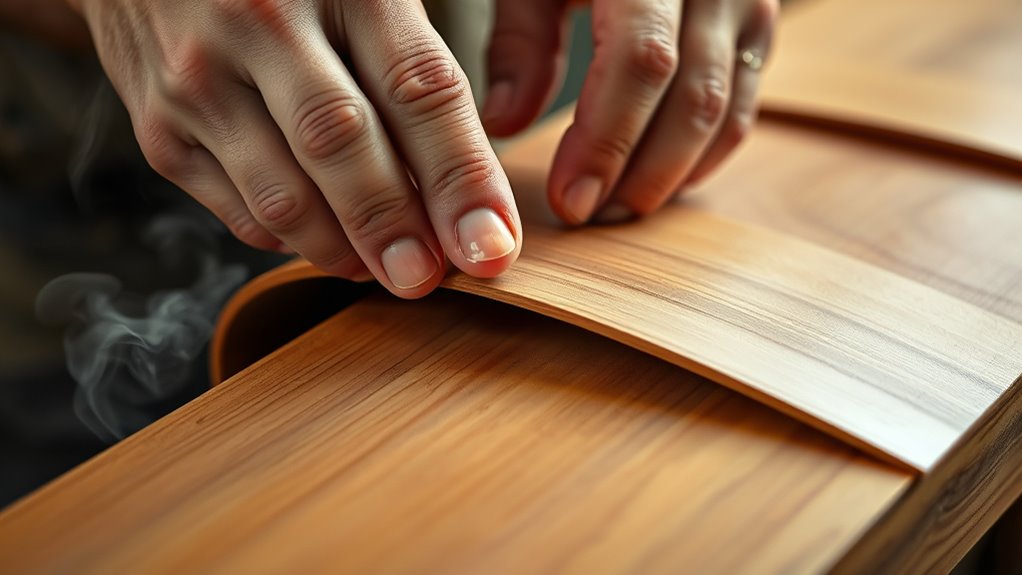
Once the wood reaches the right temperature and moisture content, you carefully remove it from the steam box and quickly position it over a form or mold that matches your target curve. You need to work swiftly because the wood remains pliable only for a limited time. Using clamps, straps, or a bending jig, you hold the wood tightly against the form, allowing it to cool and set in its new shape. The cooling process helps the lignin re-harden, fixing the curve permanently. After the wood dries and cools fully, you can remove the clamps and inspect your bent piece, which should now retain its elegant, smooth curve. Additionally, proper timing and technique are crucial to achieving a consistent and durable bend without defects.
The historical applications of steam bending are extensive. Early shipbuilders used this technique to craft the hulls of boats, creating curved ribs that added strength and aesthetic appeal. Furniture makers employed it to produce bentwood chairs and decorative elements that would have been impossible to carve or assemble from multiple pieces. Architects also relied on steam bending to create intricate woodwork and arches that added character to buildings. Today, modern craftsmen continue to refine and adapt these traditional techniques, blending age-old craftsmanship with contemporary designs. Whether you’re restoring antique furniture or designing new projects, understanding steam bending techniques and their historical significance can deepen your appreciation for this enduring craft.
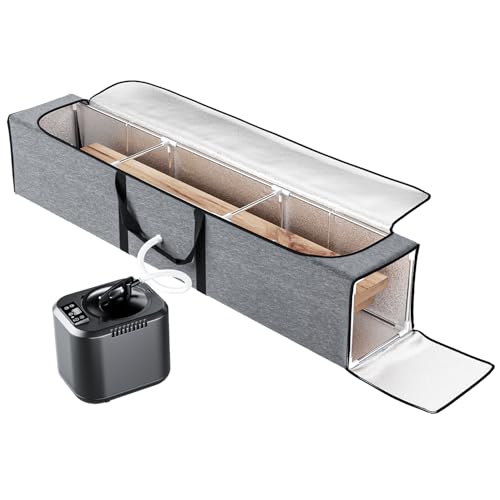
Joinerjetly Wood Bending Steam Generator Kit with 55" Large Foldable Steam Box, Wood Steamer for Bending Wood, Tool-Free Assembly Wood Bending Machine for Curved Woodworking Projects, Medium
- Large 55-inch Steam Box: Fits long wood pieces up to 55 inches
- Efficient Steam Generation: Reaches 212°F in 15 minutes with adjustable settings
- Precise Temperature & Timer: 9 temperature options and 95-minute programmable timer
As an affiliate, we earn on qualifying purchases.
As an affiliate, we earn on qualifying purchases.
Frequently Asked Questions
What Types of Wood Are Best Suited for Steam Bending?
You should choose woods like ash, oak, or cherry for steam bending, as they bend well when their wood grain orientation runs parallel to the bend. Guarantee the wood has the right moisture content—around 12-15%—to maximize flexibility. Properly prepared, these woods respond smoothly to steam, allowing you to create elegant curves without kerf cuts, making your project both durable and visually appealing.
How Long Should I Steam Different Wood Species?
Think of steaming wood like brewing a perfect cup of tea—you need the right steeping time. For most woods, you should steam for about 1 hour per inch of thickness. Keep in mind, the wood’s moisture content influences steaming duration; drier wood may need a bit longer. Too little or too much steam can ruin your project, so monitor closely and adjust as needed to achieve flexible, beautifully curved pieces.
Can Steam Bending Weaken the Structural Integrity of Wood?
Steam bending can slightly impact wood’s durability, but if done properly, it doesn’t cause significant wood strength loss. You might notice a minor decrease in strength, especially if the wood is over-steamed or exposed too long. To preserve wood’s integrity, follow recommended steaming times and avoid excessive bending. When done correctly, steam bending remains a reliable technique that maintains most of the wood’s original strength and durability.
What Safety Precautions Are Necessary During Steam Bending?
Think of steam bending as riding a wave—you need to stay balanced and prepared. Wear protective gear like gloves and goggles to shield against hot steam and splinters. Make certain proper ventilation measures are in place to avoid inhaling steam fumes. Keep a fire extinguisher nearby and work in a well-ventilated area to prevent accidents. Staying cautious helps you enjoy the craft safely and achieve perfect, curved wood pieces.
How Do I Prevent Cracking or Splitting During the Process?
To prevent cracking or splitting during steam bending, you should focus on moisture control and cracking prevention. Keep the wood properly soaked in steam to make sure of even moisture distribution, which makes it more flexible. Always bend the wood slowly and steadily, avoiding sudden stress. Use clamps carefully to hold the shape without over-tightening, and work in a controlled environment to minimize temperature fluctuations that could cause cracking.
Conclusion
Now that you know the secret of steam bending, you’re like a master sculptor shaping nature’s curves with your own hands. With a simple steam bath, you can turn straight wood into graceful arches that dance with elegance. Imagine the possibilities—each bend a stroke of your creative brush, bringing life and fluidity to your projects. Embrace the warmth of steam, and let your craftsmanship flow like a river carving its path through solid rock.