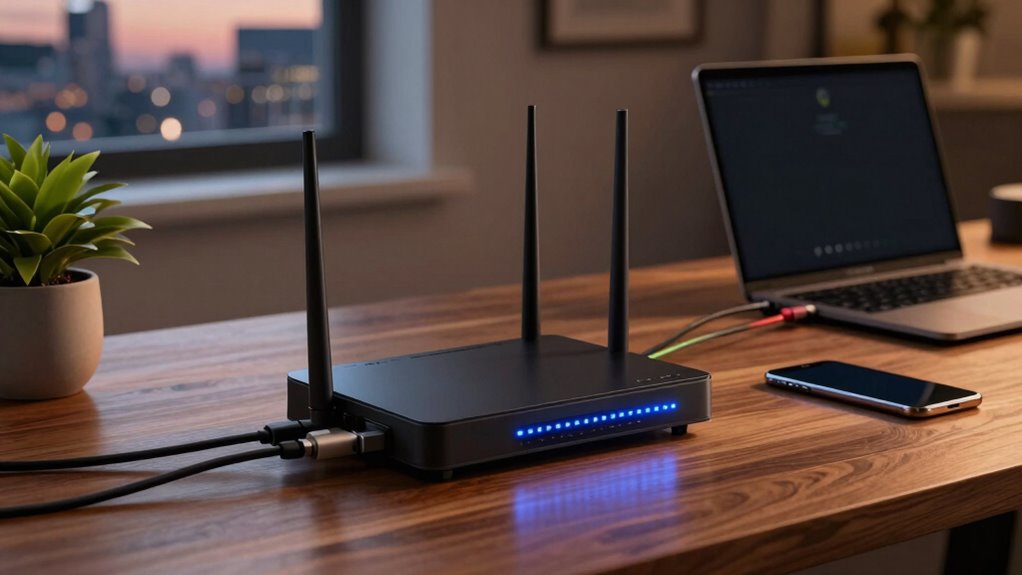

To keep your router setup safe while maintaining speed, start by creating a strong, unique password and enabling your built-in firewall. Regularly update your firmware to protect against vulnerabilities, ensuring better performance. Consider setting up a guest network for visitors, keeping your main devices secure. Regularly monitor connected devices and investigate any unfamiliar ones. By taking these steps, you can strike a balance between security and efficiency. There’s more to explore on optimizing your router’s safety and speed.

Get tools and workshop supplies delivered free — and shop member deals
- Fast, free delivery on millions of items
- Access to Prime Big Deal Days deals on October 6–7
- Prime Video, Amazon Music and more included
Key Takeaways
- Use a strong, unique password of at least 12 characters, including a mix of letters, numbers, and symbols to enhance security without slowing down performance.
- Enable the built-in firewall to protect against unauthorized access while maintaining high-speed connectivity.
- Regularly update your router’s firmware to fix vulnerabilities and optimize performance for faster internet speeds.
- Set up a guest network to secure your main network while allowing visitors to connect without compromising speed or security.
- Monitor connected devices frequently to quickly identify and address any unauthorized access that could affect network performance.
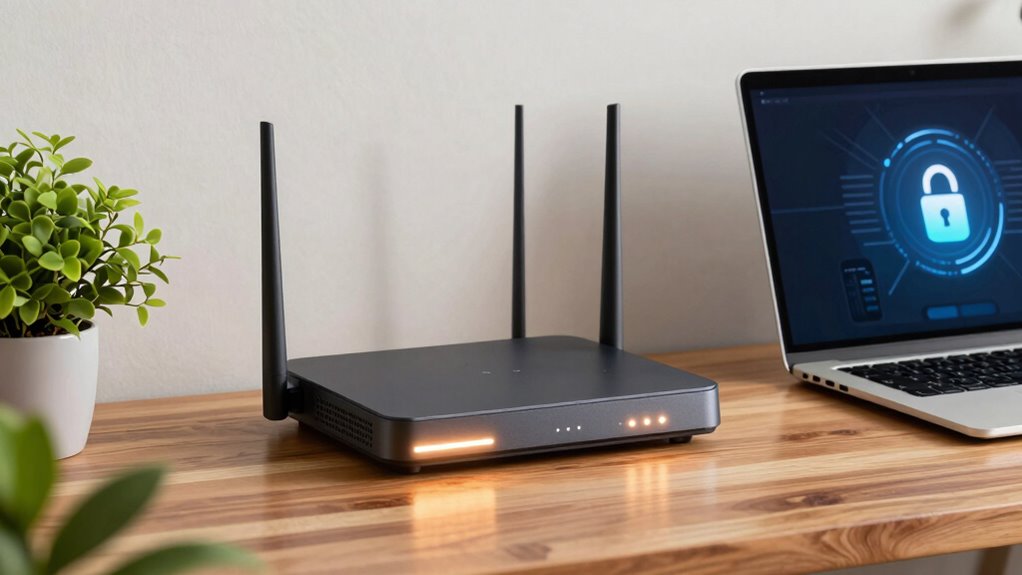
When you set up your router, you might not think about security, but taking a few simple steps can greatly reduce your risk. First, let’s talk about password strength. Many people stick with default passwords, which are often easy for hackers to guess. Instead, you should create a strong, unique password for your router. Aim for at least 12 characters, a mix of upper and lowercase letters, numbers, and special symbols. This simple change can greatly bolster your network’s defenses.
Next, you need to explore your router’s firewall settings. Most routers come with a built-in firewall that acts as a barrier against unauthorized access. Make sure it’s enabled. Depending on your router model, you might have options to customize these settings further. Familiarizing yourself with these features can help you fine-tune your security and keep unwanted visitors out.
Firmware updates are another essential aspect of router security that often gets overlooked. Manufacturers regularly release updates to patch vulnerabilities and improve performance. Check your router settings periodically to see if any updates are available, and install them promptly. This not only helps keep your network secure but can also enhance the speed and reliability of your connection. Regular firmware updates address known vulnerabilities and are a key part of maintaining a secure network. Ensuring your firmware is up-to-date can also prevent potential security breaches.
If you have guests over, consider setting up a guest network. This keeps your main network more secure while allowing visitors to access the internet. They won’t have access to your primary devices, which reduces the risk of someone inadvertently or intentionally accessing your personal information. Make sure to set a different password for the guest network, and keep it short and simple for easy sharing.
Network monitoring is another effective way to improve your router’s security. Many routers come with built-in features that allow you to monitor connected devices. Regularly check the list to verify that only recognized devices are connected. If you spot something unfamiliar, it might be time to change your password and investigate further. Firmware updates play a crucial role in maintaining your network’s security by addressing known vulnerabilities. Regularly reviewing your connected devices can help identify suspicious activity early. Additionally, enabling automatic updates can ensure your router stays protected without manual intervention.
As an affiliate, we earn on qualifying purchases.
Frequently Asked Questions
How Often Should I Update My Router’s Firmware?
You should update your router’s firmware at least every few months or whenever the manufacturer releases a new version. Regular updates enhance security and improve performance, providing firmware benefits like bug fixes and new features. If you notice unusual activity or your router’s performance dips, consider updating more frequently. Staying proactive with these updates guarantees your network runs smoothly and securely, keeping your devices protected from potential vulnerabilities.
Can I Use a VPN With My Router?
Absolutely, you can use a VPN with your router! It’s like giving your network a superhero cape, boosting privacy protection and security protocols. With a VPN, you’ll enjoy fantastic streaming speeds while protecting your data from prying eyes. Just make sure your router supports VPN configurations for best device compatibility. While it might slightly affect router performance, the VPN benefits regarding security and privacy are well worth it!
What Are the Signs of a Compromised Router?
If you notice unusual activity on your network, it might signal that your router’s compromised. Look for router vulnerabilities like unexpected changes to settings, unfamiliar devices connected to your network, or slow internet speeds. You might also see strange pop-ups or redirects when browsing. If you’re unable to access your router’s admin page, that’s another red flag. Regularly check your router logs to stay informed about any suspicious behavior.
Is It Safe to Use Public Wi-Fi Networks?
Using public Wi-Fi networks can be risky. You’re exposed to potential threats like hackers who could intercept your data. To stay safe, always use a VPN, which encrypts your connection. Avoid accessing sensitive information, like banking details, on public networks. Also, make sure websites are HTTPS secure before entering any personal info. By following these secure browsing tips, you can minimize public network risks and enjoy your online experience more safely.
How Do I Reset My Router to Factory Settings?
If your router’s acting like a stubborn mule, a factory reset might be your miracle solution. To reset, find the reset button—usually a small hole—on the back. Press and hold it for about 10 seconds until the lights flash. This restores your router’s security settings to default. Remember, you’ll need to set it up again, but it’s worth it for a fresh start and improved router security.
Conclusion
In the digital landscape, securing your router is like fortifying a castle while keeping the drawbridge down for trusted allies. By implementing strong passwords, regular updates, and guest networks, you can blend safety with speed, ensuring your online domain thrives. Remember, a well-guarded router not only shields your data but also paves the way for seamless connections. Embrace these practices, and watch your digital realm flourish, safe from lurking shadows while gliding through the vast internet expanse.
Halloween Picks
halloween
As an affiliate, we earn on qualifying purchases.