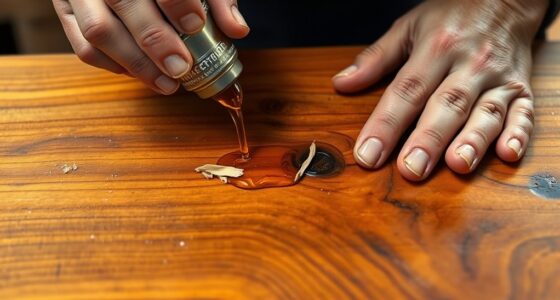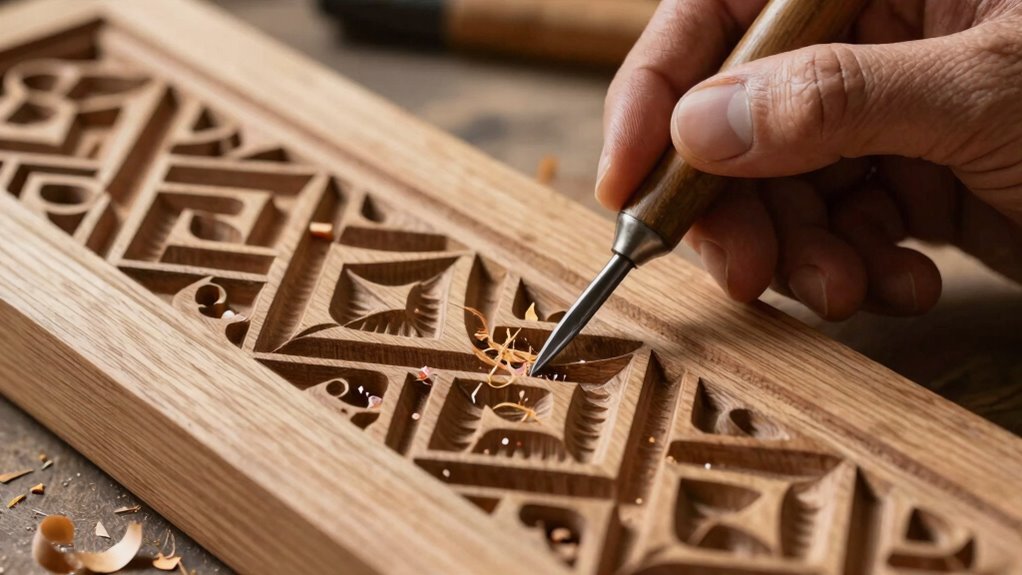
You learn patience in chip carving because it requires slow, deliberate movements and careful planning to create precise patterns. Unlike quick projects, it forces you to focus, control your pressure, and respect the natural wood grain. Mistakes are hard to fix, so you develop a mindful, calm approach that promotes resilience. As you progress, you’ll see that patience leads to better craftsmanship, and if you keep exploring, you’ll discover even more valuable lessons along the way.

Get business pricing on tools and workshop supplies
- Business-only prices and quantity discounts
- Tax-exempt purchasing
- Multiple users, one account, clear invoices
Key Takeaways
- It requires slow, deliberate movements that demand sustained focus and control.
- Precise planning and careful execution make mistakes difficult to fix, encouraging patience.
- Understanding wood grain ensures cleaner cuts, promoting mindful, attentive working habits.
- The repetitive, layered process fosters deep concentration and calmness over time.
- The emphasis on quality through patience results in more meaningful and rewarding craftsmanship.
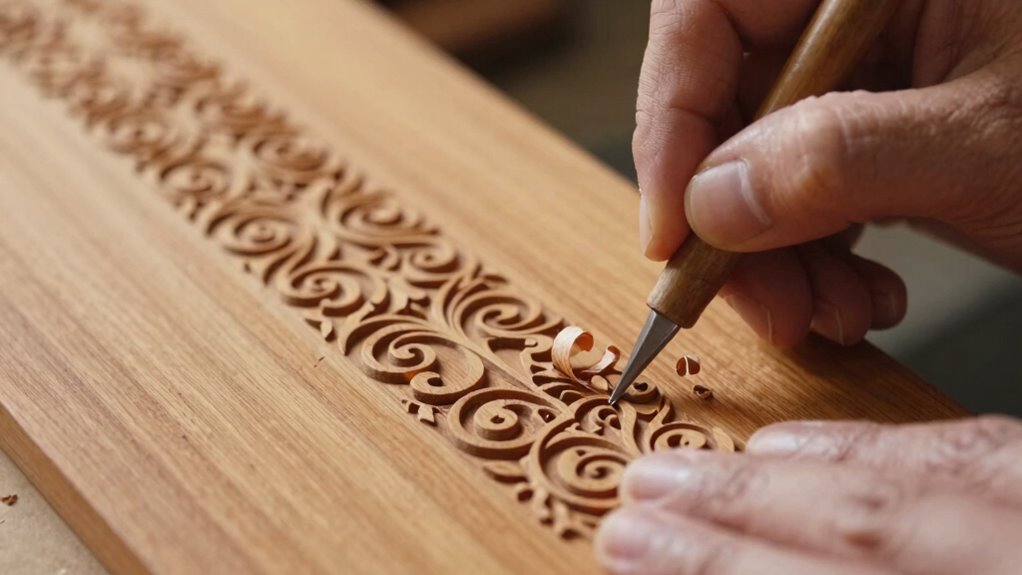
If you’ve ever picked up a chisel and tried your hand at chip carving, you quickly realize it’s more than just a craft—it’s a lesson in patience. Unlike quick projects that give instant gratification, chip carving demands careful attention to detail and deliberate, slow movements. The wood grain plays a crucial role here; understanding its direction helps prevent splits and ensures cleaner cuts. As you work, you learn to read the grain, adjusting your carving tools accordingly to follow its natural flow. Rushing through this step can ruin your design or damage the wood, reinforcing the importance of patience and precision. Understanding the wood grain is essential because it guides your cuts and affects the overall quality of your work. Developing an awareness of the wood grain enhances your ability to work with the material, fostering greater patience and skill. Additionally, learning to interpret wood grain patterns can significantly improve your carving results and reduce errors. Recognizing the importance of grain direction in woodworking helps you make more informed decisions and improves your craftsmanship.
Chip carving teaches patience through careful, deliberate work that respects the wood’s natural grain and requires precision.
The process itself is methodical. You don’t just carve randomly—you plan each cut, considering how the light will hit your design and how each chip will fit into the overall pattern. This careful planning forces you to slow down and focus. When you use carving tools, you notice that the slightest pressure or miscalculation can lead to uneven chips or unintended splinters. It becomes a game of control, where patience isn’t optional but essential. Each stroke must be deliberate, each removal calculated. This ongoing need for patience helps you develop a steady hand and a calm mind, qualities that extend well beyond woodworking. Practicing patience in such detailed work can also help you develop mindfulness, allowing you to stay present and attentive in other areas of life.
Because chip carving involves layered, intricate patterns, mistakes are often difficult to fix. You learn to accept small errors, which encourages a mindset of patience and resilience. Instead of rushing to finish, you become more mindful, appreciating the process as much as the finished piece. The repetitive nature of carving each tiny chip trains you to focus deeply on the task at hand, blocking out distractions. Over time, you notice your hand becoming steadier, your mind clearer, and your patience more robust. The act of working with carving tools and wood grain becomes a meditation—an exercise in restraint and attentiveness.
In the end, the reward isn’t just a beautifully carved piece but a newfound ability to approach challenges with patience. When you take the time to understand the wood grain and work slowly with your carving tools, you’re cultivating discipline and mindfulness. These lessons transfer into other areas of life, making you more patient and thoughtful in everything you do. Chip carving isn’t just a craft; it’s a practice in patience, teaching you that good things often come through careful, deliberate effort.
Products Worth Considering

Dyson Car+Boat Cordless Handheld Vacuum

Bose TV Speaker Compact Soundbar with Bluetooth and HDMI-ARC, Black

eufy E25 Robot Vacuum and Mop Combo with HydroJet Roller Mop
As an affiliate, we earn on qualifying purchases.
Frequently Asked Questions
How Long Does It Typically Take to Complete a Chip Carving Project?
It typically takes anywhere from several hours to several days to complete a chip carving project, depending on technique variations and project complexity. If you choose intricate patterns or detailed designs, it will naturally take longer. You’ll find that patience grows as you carefully carve each section, and rushing only risks mistakes. Overall, your dedication and attention to detail will determine how quickly you finish, but it’s a rewarding process regardless of the timeframe.
What Safety Precautions Should Beginners Follow?
You should never underestimate the danger of chip carving; safety is essential. Always wear safety gear, like safety glasses and a dust mask, to protect your eyes and lungs. Set up your workspace properly—ensure good lighting, a stable surface, and organized tools. Keep your hands clear of sharp blades, and take your time. Patience and proper safety precautions keep you safe and make your carving experience enjoyable and accident-free.
Can Chip Carving Be Done With Basic Tools?
Yes, you can start chip carving with basic tools like a sharp knife, gouges, and a carving mallet. Focus on simple carving techniques, such as creating clean, controlled cuts and practicing consistent pressure. As you gain confidence, you can gradually explore more advanced tools and techniques. Starting with basic tools helps you develop patience and precision, making the learning process enjoyable while producing beautiful, detailed designs over time.
How Does Patience Improve Skill in Other Crafts?
Patience improves your skill in other crafts by encouraging mindfulness practice, which helps you stay focused and calm during challenging tasks. As you develop patience, you learn to approach each step thoughtfully, reducing mistakes and enhancing precision. This skill transfer from chip carving to other crafts makes you more disciplined and attentive, ultimately boosting your overall craftsmanship. Over time, patience becomes a valuable tool for mastering any new or complex project.
Are There Common Mistakes That Test Patience in Chip Carving?
Like steering through a maze, common mistakes test your patience in chip carving. You might rush material selection, choosing soft woods that chip unevenly, or neglect tool maintenance, causing slips and splinters. These errors slow progress and frustrate you, but they also teach the importance of patience. To avoid this, take your time selecting quality materials and keep your tools sharp, ensuring smoother cuts and a more enjoyable, rewarding experience.
Conclusion
Chip carving constantly calls for calm, concentration, and careful craftsmanship. As you carve, you cultivate patience, precision, and perseverance, turning tiny chips into treasured tokens. The process teaches you to slow down, savor every stroke, and stay steadfast despite setbacks. With each deliberate detail, you develop a deep discipline and a diligent demeanor. So, embrace the patience practiced in chip carving—where perseverance produces perfection, and persistence paves the path to mastery.