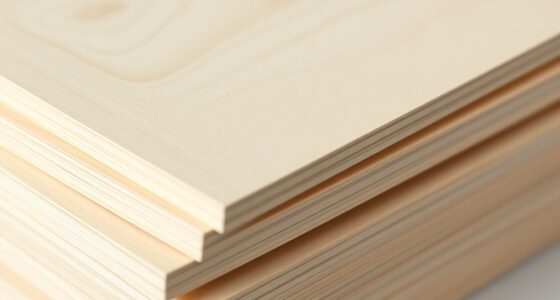
When working with teak, you need to consider its natural oils that can interfere with finishes like stains and varnishes. To ensure proper adhesion, clean the surface thoroughly with solvents like mineral spirits and lightly sand with fine-grit paper to open the pores. It’s important to remove surface oils before applying any finish to avoid peeling or uneven drying. Continuing will guide you through effective preparation and maintenance tips for beautiful, long-lasting teak projects.
Key Takeaways
- Clean teak thoroughly with solvents like mineral spirits to remove surface oils before finishing.
- Lightly sand with fine-grit paper to open pores without dulling the wood’s natural luster.
- Use specialized pre-conditioners or primers designed for oily woods to improve stain and sealant adhesion.
- Choose finishes compatible with teak’s oils, such as proper sealants or oils, and reapply regularly for maintenance.
- Routine cleaning and light sanding help maintain appearance and durability, preventing deterioration caused by migrated oils.

Have you ever wondered why teak is such a popular choice for furniture and outdoor projects? The answer lies in its natural beauty, durability, and unique properties. Teak’s oily nature makes it resistant to water, pests, and rot, which is why it’s often used in marine applications and outdoor furniture. However, that same oiliness can present challenges when it comes to teak finishing and maintenance. Understanding how to work with teak’s oily surface is key to achieving a beautiful, long-lasting result.
Teak’s natural oils enhance durability but require special finishing and maintenance techniques.
When you’re starting a project involving teak, you need to recognize that its natural oils can interfere with typical finishing products. Teak finishing requires special attention because the oils can prevent stains, varnishes, or sealants from adhering properly. To guarantee a smooth and durable finish, you should begin by cleaning the surface thoroughly. Using a solvent like mineral spirits helps remove surface oils and dirt, preparing the wood for finishing. Once the surface is clean, sanding becomes vital. Lightly sanding the teak with fine-grit sandpaper opens the wood’s pores, allowing the finish to penetrate better and adhere more effectively. Remember, though, that over-sanding can dull the wood’s natural luster, so strike a balance.
Applying a pre-conditioner or a wood primer designed for oily woods can considerably improve the results of your teak finishing. These products help to neutralize the oils and create a better bonding surface for your chosen stain or sealant. If you’re aiming for a natural look, a clear teak oil can highlight the wood’s beauty while providing some protection. However, keep in mind that teak’s oils can cause the finish to dry unevenly or peel if not properly prepared. That’s why proper teak maintenance involves regular cleaning and reapplication of protective oils or finishes to preserve its appearance and durability. Additionally, selecting appropriate finishing products that are compatible with oily woods can make a significant difference in achieving a professional result.
Teak maintenance isn’t a one-and-done task. Over time, the oils in the wood will migrate to the surface, which can affect the look of your finish. Regular cleaning with a mild soap and water keeps dirt and grime at bay, while periodic reapplication of teak oil or sealant restores the wood’s natural luster and guards against weathering. If you notice the finish dulling or cracking, it’s time to lightly sand and reapply the protective coating. This routine upkeep not only preserves the aesthetic appeal but also extends the life of your teak furniture or project.
As an affiliate, we earn on qualifying purchases.
Frequently Asked Questions
How Often Should Teak Be Oiled to Maintain Its Appearance?
You should oil your teak every 3 to 6 months to maintain its appearance. The teak oiling frequency depends on your maintenance schedule, climate, and exposure to elements. Regularly check the wood’s color and texture; if it looks dull or faded, it’s time to reapply oil. Consistent oiling helps protect the teak, keeping it beautiful and prolonging its lifespan.
Can Teak Be Stained or Painted Effectively?
If you want to change your teak’s look, staining or painting can work with proper surface prep. For example, a homeowner aimed to enhance teaks’s color, so they used sanding and a de-waxing technique for surface preparation. This guaranteed proper adhesion. Keep in mind, staining can deepen the natural tone, while paint offers more color options. Just remember, surface prep techniques are key for a successful, long-lasting finish.
What Are the Best Cleaning Methods for Oily Teak Surfaces?
For effective teak cleaning, start by wiping the oily surface with a soft cloth to remove dirt and debris. Use a mild detergent mixed with water for routine maintenance, scrubbing gently with a soft brush. For stubborn oils, consider a teak-specific cleaner or a mixture of vinegar and water. Regular oily surface maintenance guarantees your teak stays clean and protected, preventing buildup and preserving its natural beauty.
How Does Climate Affect the Care of Oily Teak Wood?
Climate greatly impacts your oily teak wood care, especially through humidity effects and seasonal variations. High humidity can cause the wood to absorb moisture, leading to swelling or mold growth, so you should regularly clean and seal the surface. During dry seasons, the wood might dry out and crack, requiring more frequent oiling. Adjust your maintenance routine based on the climate to keep your teak looking its best and prevent damage.
Are There Eco-Friendly Treatments for Oily Teak Wood?
Sure, eco-friendly finishes and natural oil treatments are perfect for oily teak, even if it seems like kind of overkill. You can use plant-based oils or water-based sealers that don’t harm the environment. These options penetrate well and preserve teak’s natural beauty without toxic chemicals. So, yes, you can treat oily teak sustainably—just pick your eco-friendly finishes and natural oils, and you’re good to go.
Conclusion
Working with teak requires understanding its oily nature, but with proper preparation, you can achieve stunning results. Remember, teak’s natural oils make it highly resistant to decay—about 70% more than other hardwoods—so your projects will last longer. By applying the right techniques and patience, you’ll enjoy beautiful, durable finishes that showcase this premium wood’s unique qualities. Embrace teak’s challenges, and you’ll create pieces that stand the test of time with elegance and resilience.