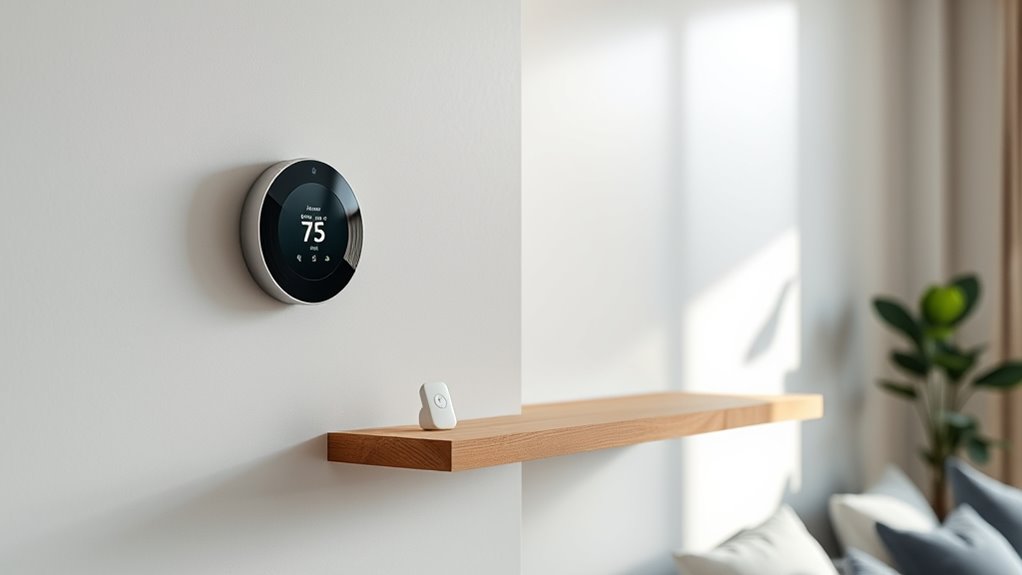

Smart thermostats with remote sensors offer more precise temperature control by adjusting based on room-specific data. The ecobee Smart Thermostat Premium stands out for its advanced sensor technology and integration, making it the overall top choice. For those seeking simpler setups, the Google Nest Thermostat delivers reliable Wi-Fi control, while the Honeywell Home X8S offers a premium experience with a large touchscreen. The main challenge lies in balancing cost, ease of installation, and sensor coverage, as more advanced models tend to come at higher prices. Continue reading for a detailed breakdown of the best options and what makes each unique.

Get tools and workshop supplies delivered free — and shop member deals
- Fast, free delivery on millions of items
- Access to Prime Big Deal Days deals on October 6–7
- Prime Video, Amazon Music and more included
Complete the kit


Key Takeaways
- The top models combine extensive sensor coverage with seamless smart home integration.
- Higher-priced options often offer more advanced sensors and additional features like occupancy detection.
- Compatibility with voice assistants varies, influencing ease of control across different ecosystems.
- Installation complexity can differ, with some models requiring professional setup for optimal sensor placement.
- Value often hinges on sensor quality and how well the thermostat adapts to multi-room environments.
| ecobee Smart Thermostat Premium with Smart Sensor |  | Best Overall for Advanced Home Control and Comfort | Connectivity: WiFi | Voice Assistants: Siri and Alexa built-in | Included Accessories: SmartSensor, Power Extender Kit | VIEW ON AMAZON | See Our Full Breakdown |
| Google Nest Thermostat – Smart Programmable Wi-Fi Thermostat (Charcoal) |  | Best for Simplicity and Cost-Effective Remote Control | ASIN: B08HRPDBFF | Color: Charcoal | Certification: ENERGY STAR | VIEW ON AMAZON | See Our Full Breakdown |
| Honeywell Home X8S Premium Smart Programmable Wi-Fi Thermostat with Room Sensor and 5″ Touchscreen |  | Best for Customization and Visual Control | Display: 5″ color touchscreen | Connectivity: Wi-Fi 2.4/5 GHz | Compatibility: Up to 3 heat/2 cool, 2 heat/2 cool conventional | VIEW ON AMAZON | See Our Full Breakdown |
| Google Nest Learning Thermostat (4th Gen) with Nest Temperature Sensor (2nd Gen) – Silver |  | Best for Learning and Hot/Cold Spot Management | Model: Nest Learning Thermostat (4th Gen) | Color: Silver | Includes: Nest Temperature Sensor (2nd Gen) | VIEW ON AMAZON | See Our Full Breakdown |
| Sensi ST55 Smart Wi-Fi Thermostat, Energy Star Certified, Works with Alexa |  | Best for Easy DIY Installation and Basic Smart Control | Model: ST55 | Connectivity: Wi-Fi | Compatibility: Most HVAC systems | VIEW ON AMAZON | See Our Full Breakdown |
| Google Nest Learning Thermostat (4th Gen) with Nest Temperature Sensor (2nd Gen) – Obsidian |  | Best Overall | Model: Nest Learning Thermostat (4th Gen) | Color: Obsidian | Includes: Nest Temperature Sensor (2nd Gen) | VIEW ON AMAZON | See Our Full Breakdown |
| ecobee Smart Thermostat Enhanced – Programmable WiFi Thermostat |  | Best Value | Brand: ecobee | Model: Smart Thermostat Enhanced | ASIN: B09XXTQPXC | VIEW ON AMAZON | See Our Full Breakdown |
| TQX Matter Smart Thermostat with Occupancy Detection and Remote Sensors |  | Best for Whole-Home Sensing | Connectivity: Matter over WiFi via smart speaker | Occupancy Detection: Millimetre-wave technology | Display: Light sensor with adaptive brightness | VIEW ON AMAZON | See Our Full Breakdown |
| Google Nest Thermostat – Smart Programmable Wi-Fi Thermostat (Snow) |  | Best for Simplicity and Savings | Brand: Google Nest | Model: Nest Thermostat Snow | Connectivity: Wi-Fi | VIEW ON AMAZON | See Our Full Breakdown |
| Honeywell Home X8S Premium Smart Wi-Fi Thermostat with Room Sensor, Black |  | Best for Premium Multi-Room Control | Display: 5-inch customizable touchscreen | Connectivity: Wi-Fi 2.4/5 GHz | Compatibility: Up to 3 heat/2 cool, heat pump, forced air | VIEW ON AMAZON | See Our Full Breakdown |
| Sensi Touch 2 Smart Thermostat (ST76) – Wi-Fi, Alexa Compatible, Energy Star Certified |  | Best Overall for DIY Homeowners with Focus on Privacy | Model: ST76 | ASIN: B0BKH7TCSP | Connectivity: Wi-Fi | VIEW ON AMAZON | See Our Full Breakdown |
| ecobee Smart Thermostat Essential – WiFi Smart Thermostat, Energy Star Certified |  | Best Value for Broad Compatibility and Ecosystem Integration | Brand: ecobee | Connectivity: WiFi | Certification: Energy Star | VIEW ON AMAZON | See Our Full Breakdown |
| Sensi Touch 2 Smart Thermostat with Wi-Fi, Alexa Compatibility, ENERGY STAR Certified (ST76) |  | Best for Privacy-Focused Users Needing Easy DIY Setup | Model: ST76 | Connectivity: Wi-Fi, Bluetooth | Compatibility: Amazon Alexa, Sensi Room Sensors (sold separately) | VIEW ON AMAZON | See Our Full Breakdown |
| smart thermostats with remote sensor | Connectivity | Compatibility | Model |
|---|---|---|---|
| ecobee Smart Thermostat Premiu | WiFi | — | — |
| Google Nest Thermostat | Wi-Fi 2.4/5 GHz | — | — |
| Honeywell Home X8S Premium Sma | Wi-Fi 2.4/5 GHz | Up to 3 heat/2 cool, 2 heat/2 cool conventional | — |
| Google Nest Learning Thermosta | — | Most 24V systems | Nest Learning Thermostat (4th Gen) |
| Sensi ST55 Smart Wi-Fi Thermos | Wi-Fi | Most HVAC systems | ST55 |
| Google Nest Learning Thermosta | — | Most 24V systems | Nest Learning Thermostat (4th Gen) |
| ecobee Smart Thermostat Enhanc | WiFi | — | Smart Thermostat Enhanced |
| TQX Matter Smart Thermostat wi | Matter over WiFi via smart speaker | — | — |
| Google Nest Thermostat | Wi-Fi | Google Assistant, Alexa, Matter | Nest Thermostat Snow |
| Honeywell Home X8S Premium Sma | Wi-Fi 2.4/5 GHz | Up to 3 heat/2 cool, heat pump, forced air | — |
| Sensi Touch 2 Smart Thermostat | Wi-Fi | Amazon Alexa, Sensi Room Sensors (sold separately) | ST76 |
| ecobee Smart Thermostat Essent | WiFi | 85% of systems including gas, electric, heat pump, boilers | — |
| Sensi Touch 2 Smart Thermostat | Wi-Fi, Bluetooth | Amazon Alexa, Sensi Room Sensors (sold separately) | ST76 |
More Details on Our Top Picks
ecobee Smart Thermostat Premium with Smart Sensor
The ecobee Smart Thermostat Premium stands out for its comprehensive features, including built-in Siri and Alexa, an air quality monitor, and a smart speaker for streaming, making it ideal for those seeking an all-in-one smart home hub. Its included SmartSensor enables precise room-by-room temperature management, outperforming basic models like the Sensi ST55, which lacks air quality monitoring and speaker functions. While the ecobee offers up to 26% energy savings and a 3-year warranty, some features such as smart doorbell integration require a subscription, and it may be overkill for simple setups. Compared to the Google Nest Learning Thermostat, it provides more sensor options and versatility but at a higher price point. This pick makes the most sense for homeowners wanting robust automation, voice control, and air quality features in one device, willing to invest in added capabilities.
Pros:- ENERGY STAR certified with up to 26% energy savings
- Built-in Siri and Alexa voice control plus smart speaker
- Includes SmartSensor for room-specific comfort
- Easy DIY installation with Power Extender Kit
Cons:- Smart doorbell integration and some features require a subscription
- Siri functionality needs an Apple home hub
Best for: Tech-savvy homeowners seeking an all-in-one smart thermostat and home control hub
Not ideal for: Casual users or those on a tight budget who only need basic temperature scheduling
- Connectivity:WiFi
- Voice Assistants:Siri and Alexa built-in
- Included Accessories:SmartSensor, Power Extender Kit
- HVAC Compatibility:95% of systems
- Warranty:3 years
- Energy Certification:ENERGY STAR
Our verdict“This is ideal for users who want a feature-rich, connected thermostat that enhances whole-home comfort and automation.”
Google Nest Thermostat – Smart Programmable Wi-Fi Thermostat (Charcoal)
The Google Nest Thermostat offers straightforward scheduling and energy-saving features, making it suitable for users who want remote control without the complexity of extensive integrations. Its Energy Saving suggestions and auto-away feature help reduce bills, comparable to the ecobee but with fewer advanced sensors. Unlike the more sensor-rich ecobee or Honeywell models, the Nest relies on basic remote temperature control and HVAC monitoring, which may not address hot/cold spots as effectively. Its compatibility with Google Assistant and Matter enhances smart home integration, yet it lacks a lock feature and doesn’t include a sensor in this bundle. Compared to the Honeywell X8S, it is more streamlined but offers less room-specific control. This model is best for users who prioritize ease of use and cost savings over detailed room management.
Pros:- Energy-saving features with suggestions to reduce costs
- Remote control via Google Home app for any device
- Works without a C-wire in most homes
- Compatible with Google Assistant and Matter ecosystems
Cons:- No lock feature for locking temperature settings
- Requires a compatible smart device for voice control
Best for: Homeowners seeking a simple, effective remote thermostat with smart features and budget-conscious design
Not ideal for: Users wanting advanced room sensors or detailed zoning options
- ASIN:B08HRPDBFF
- Color:Charcoal
- Certification:ENERGY STAR
- Connectivity:Wi-Fi 2.4/5 GHz
- Wireless Interconnect:Bluetooth Low Energy
- App:Google Home
Our verdict“This thermostat works well for those who want basic remote control and energy savings without extra sensors or advanced features.”
Honeywell Home X8S Premium Smart Programmable Wi-Fi Thermostat with Room Sensor and 5″ Touchscreen
The Honeywell Home X8S excels with its large 5-inch color touchscreen and comprehensive control options, including humidity, ventilation, and occupancy detection, making it perfect for users who prefer tactile interfaces. Its included wireless room sensor with a 200 ft range allows precise temperature adjustments in multiple zones, surpassing the basic remote sensors of the ecobee or Nest. Its compatibility with popular voice assistants and support for Matter ensure broad smart home integration, although it requires a C-wire and the doorbell camera view feature is sold separately. Compared to the simpler Sensi ST55, the X8S offers more control and a richer display but at a higher installation complexity. This device works best for homeowners who want a customizable, visually engaging thermostat with advanced indoor air quality management.
Pros:- Large, customizable 5-inch touchscreen display
- Wireless sensor with 200 ft range for targeted comfort
- Supports doorbell camera viewing and intercom
- Broad smart home compatibility including Matter
Cons:- Requires a C-wire (or voucher for free adapter)
- Doorbell cameras and some accessories sold separately
Best for: Homeowners who want a flexible, feature-rich thermostat with a large display and sensor flexibility
Not ideal for: Renters or those with electric baseboard heat, due to compatibility issues
- Display:5″ color touchscreen
- Connectivity:Wi-Fi 2.4/5 GHz
- Compatibility:Up to 3 heat/2 cool, 2 heat/2 cool conventional
- Room Sensor Range:Up to 200 ft
- Not Compatible With:Electric baseboard heat
- Certification:ENERGY STAR
Our verdict“Ideal for those who want a visually engaging, highly customizable thermostat with room-specific control and smart home integration.”
Google Nest Learning Thermostat (4th Gen) with Nest Temperature Sensor (2nd Gen) – Silver
The Nest Learning Thermostat (4th Gen) offers a smart, self-adjusting experience that learns your schedule to optimize comfort and savings, making it ideal for tech-savvy users who want minimal manual adjustments. Its included Nest Temperature Sensor allows managing hot and cold spots in different rooms, though it doesn’t offer the granular control or display customization of the Honeywell X8S. It works seamlessly with most 24V systems and supports multiple voice assistants, including Siri, Google Assistant, and Alexa, providing flexible voice control. Unlike the ecobee or Honeywell, it focuses on learning and automation rather than extensive manual control, which could be a drawback for those wanting immediate customization. Compared with the ecobee, it is more streamlined but less feature-rich in sensor options and interface customization. This thermostat best suits users who prefer a self-learning system that reduces manual programming.
Pros:- Learns your schedule to optimize energy use
- Includes a remote sensor for managing hot and cold spots
- No C-wire required in most homes
- Compatible with multiple voice assistants
Cons:- Learning automation may take time to optimize
- Less customizable interface compared to Honeywell X8S
Best for: Tech-oriented homeowners seeking a learning thermostat with room temperature management
Not ideal for: People who want detailed manual control or a display-centric interface
- Model:Nest Learning Thermostat (4th Gen)
- Color:Silver
- Includes:Nest Temperature Sensor (2nd Gen)
- Compatibility:Most 24V systems
- C-Wire Required:No (most homes)
- Smart Home Protocols:Matter compatible
Our verdict“Perfect for users who prefer a smart, self-adjusting thermostat that minimizes manual programming and manages multiple rooms with sensors.”
Sensi ST55 Smart Wi-Fi Thermostat, Energy Star Certified, Works with Alexa
The Sensi ST55 appeals to DIY enthusiasts with its straightforward installation, featuring a built-in level and step-by-step app guidance, often eliminating the need for a C-wire. Its Energy Star certification helps save around 23% on HVAC energy, making it suitable for users who want reliable, no-fuss smart control. While it doesn’t offer the extensive room-specific sensors of the ecobee or Honeywell, it provides essential remote control, scheduling, and usage reports for energy management. Compared to the more advanced Honeywell X8S, the ST55 is simpler but easier to install and configure. It’s a good choice for renters or homeowners seeking uncomplicated, effective remote thermostat control without extra sensors or complex integrations. However, its compatibility with all HVAC systems isn’t guaranteed, which can limit its use in some setups.
Pros:- Easy DIY installation with built-in level and step-by-step app guidance
- No C-wire required in most applications
- Energy Star certified with potential energy savings
- Simple, space-matching design
Cons:- Limited advanced smart home integration
- Compatibility with all HVAC systems not guaranteed
Best for: DIY homeowners wanting a straightforward, affordable smart thermostat with remote control
Not ideal for: Users needing advanced zoning, multiple sensors, or detailed display features
- Model:ST55
- Connectivity:Wi-Fi
- Compatibility:Most HVAC systems
- Certification:Energy Star
- C-wire required:No (most applications)
Our verdict“Ideal for budget-conscious DIYers who want a reliable remote thermostat with basic scheduling and energy savings.”
Google Nest Learning Thermostat (4th Gen) with Nest Temperature Sensor (2nd Gen) – Obsidian
This model stands out for its advanced learning capabilities and seamless integration, making it the top choice for those who want a thermostat that adapts to their habits while managing hot and cold spots effectively. Compared with the ecobee Smart Thermostat Enhanced, the Nest Learning Thermostat excels in its intuitive learning features and broader compatibility with most HVAC systems without requiring a C wire. However, its setup and initial configuration may take longer, particularly for users unfamiliar with smart home devices. The included Nest Temperature Sensor enhances comfort by addressing uneven heating or cooling, which is crucial for larger or multi-room homes. While it offers up to 31% savings, the reliance on proprietary learning routines means it might not suit those who prefer straightforward, manual control or quick setup. Overall, this pick makes the most sense for homeowners seeking a smart, self-learning system that maximizes comfort and savings with minimal manual adjustments.
Pros:- Can save up to 31% on heating and cooling bills, reducing energy costs
- Works with most 24V systems and generally doesn’t require a C wire
- Includes a 2nd-gen temperature sensor to address hot and cold spots
- Supports Matter protocol for broad smart home compatibility
Cons:- Advanced learning features may take time to fully adapt to user habits
- Compatibility should be checked beforehand to ensure it fits specific HVAC systems
Best for: Tech-savvy homeowners who want a self-learning thermostat that integrates smoothly with Google and other smart home platforms.
Not ideal for: Users who prefer simple, manual controls or quick setup without the need for learning routines and extensive configuration.
- Model:Nest Learning Thermostat (4th Gen)
- Color:Obsidian
- Includes:Nest Temperature Sensor (2nd Gen)
- Compatibility:Most 24V systems
- C Wire Required:No (in most homes)
- Smart Home Protocols:Matter compatible
- Display:60% larger with Dynamic Farsight
- Energy Savings:Up to 31%
Our verdict“This thermostat is ideal for those seeking a highly adaptive, energy-saving system that learns and adjusts to their household’s unique conditions.”
ecobee Smart Thermostat Enhanced – Programmable WiFi Thermostat
This model offers strong energy savings with a focus on occupancy-based adjustments and broad ecosystem compatibility, making it suitable for budget-conscious buyers who want reliable smart features. Compared to the Google Nest Thermostat, the ecobee Enhanced is easier to install thanks to the included Power Extender Kit, especially in homes without a C wire, and it supports a wide array of smart home platforms including Apple HomeKit. However, its remote sensors are sold separately, which can increase overall costs if you want room-by-room control. The occupancy sensing feature learns your schedule and pre-adjusts temperatures, potentially reducing energy waste, but this automation may take time to optimize. It’s ideal for users who want a flexible, multi-platform compatible thermostat that prioritizes energy savings with minimal fuss. This makes it a solid pick for those seeking value and convenience over advanced self-learning routines.
Pros:- Saves up to 26% annually on heating and cooling costs
- Easy DIY installation with included Power Extender Kit
- Compatible with major ecosystems including Apple HomeKit, Alexa, and Google Assistant
- Uses occupancy sensing to optimize energy use
Cons:- Remote sensors are sold separately, increasing total cost for full room control
- Requires system compatibility check, especially for specialized HVAC systems
Best for: Homeowners who want a straightforward, energy-efficient thermostat with broad smart home compatibility and easy installation.
Not ideal for: Users who desire integrated remote sensors for precise room-by-room control, as these are sold separately.
- Brand:ecobee
- Model:Smart Thermostat Enhanced
- ASIN:B09XXTQPXC
- Connectivity:WiFi
- HVAC Compatibility:90% of systems
- Voice Assistant Compatibility:Alexa, Google, Apple
- Included Accessories:Power Extender Kit, Trim Kit
- Smart Features:Occupancy sensing, eco+ energy savings
Our verdict“This thermostat is best for budget-minded homeowners seeking reliable energy savings and flexible smart home integration without complex setup.”
TQX Matter Smart Thermostat with Occupancy Detection and Remote Sensors
The TQX Smart Thermostat excels in providing comprehensive sensing and control through its support for up to 5 remote sensors and millimetre-wave occupancy detection, making it ideal for larger or multi-room homes. Compared with the Honeywell X8S, the TQX’s support for Matter over WiFi allows broader ecosystem integration, but it requires a Matter-enabled smart speaker for connectivity, which could be an extra step for some users. Its remote sensors are limited to one included, with additional sensors sold separately, and individual sensors do not regulate specific rooms independently. The occupancy detection’s precision offers notable energy savings, especially in homes with irregular occupancy patterns. However, it’s incompatible with line voltage systems, limiting its use in certain configurations. This thermostat makes the most sense for homeowners invested in Matter ecosystems who want extensive remote sensing and occupancy tracking to optimize comfort and efficiency.
Pros:- Supports up to 5 remote sensors for comprehensive whole-house sensing
- Millimetre-wave occupancy detection offers precise movement tracking
- Works seamlessly with Matter-enabled smart-home ecosystems
- Supports a variety of HVAC systems including heat pumps and fan coils
Cons:- Remote sensors do not independently control individual rooms
- Requires a Matter-enabled smart speaker for operation, adding complexity
- Additional remote sensors are sold separately
Best for: Advanced smart home users who want broad compatibility and detailed whole-home sensing with multiple remote sensors.
Not ideal for: Homeowners with line voltage systems or those seeking simple, standalone thermostats without ecosystem dependencies.
- Connectivity:Matter over WiFi via smart speaker
- Occupancy Detection:Millimetre-wave technology
- Display:Light sensor with adaptive brightness
- Remote Sensors:Supports up to 5, additional sold separately
- System Compatibility:Conventional, heat pump, PTAC, fan coil
- Auxiliary Outputs:Up to 2
- Line Voltage Compatibility:No
- Additional Sensors:Sold separately
Our verdict“This thermostat is designed for tech-savvy homeowners seeking full-house sensing and broad compatibility with a focus on occupancy detection.”
Google Nest Thermostat – Smart Programmable Wi-Fi Thermostat (Snow)
While not offering the extensive features of more advanced models, the Google Nest Thermostat (Snow) provides straightforward energy savings and remote control, making it a practical choice for users new to smart thermostats. It turns itself down when you leave home, supports remote adjustments via the app, and offers HVAC monitoring, comparable in core functionality to the Ecobee Smart Thermostat Enhanced but with a simpler interface. Its compatibility with Google Assistant, Alexa, and Matter makes it versatile, but it may require a C wire or power accessory in certain systems, which could complicate installation. Unlike the Nest Learning Thermostat, it doesn’t include a sensor or learning routines, so it’s less suited for addressing hot or cold spots unless paired with additional sensors. This model is well-suited for users who want basic smart control and energy savings without extra complexity or cost.
Pros:- Energy Star certified with features that support savings automatically
- Remote control from anywhere via phone or tablet
- Supports popular voice platforms including Google Assistant and Alexa
- No extensive setup required for basic operation
Cons:- May need a power accessory or C wire for some systems
- Lacks remote sensors and advanced learning routines
Best for: Homeowners seeking an easy-to-use, reliable energy-saving thermostat with remote control capabilities and basic HVAC monitoring.
Not ideal for: Users who need precise room-by-room temperature control or advanced learning features for optimal comfort.
- Brand:Google Nest
- Model:Nest Thermostat Snow
- Connectivity:Wi-Fi
- ENERGY STAR Certified:Yes
- C Wire Required:In most cases
- Compatibility:Google Assistant, Alexa, Matter
- Lock Feature:No
- ASIN:B08HRPDYTP
Our verdict“This thermostat is ideal for simple, energy-conscious users who want remote control without complex setup or additional sensors.”
Honeywell Home X8S Premium Smart Wi-Fi Thermostat with Room Sensor, Black
This model shines with its large, customizable 5-inch touchscreen and a long-range wireless room sensor supporting up to 200 feet, making it ideal for users who want precise, targeted comfort across multiple rooms. Compared to the ecobee Smart Thermostat Enhanced, the Honeywell X8S offers a more integrated touchscreen experience and a more extensive sensor range, along with compatibility with First Alert VX1 and Ring cameras for added convenience. Its occupancy detection and indoor air quality features add to its appeal, but the requirement for a C-wire and the fact that individual remote sensors do not control single rooms are limitations. It’s best suited for households that value a premium interface and multi-room control, rather than those needing independent sensor regulation or simple installations.
Pros:- Large, customizable 5-inch touchscreen display
- Wireless remote sensor with up to 200ft range for targeted comfort
- Supports multiple smart home platforms including Alexa, Google, and Apple
- ENERGY STAR certified for efficiency
Cons:- Requires a C-wire, though a voucher for an adapter is included
- Remote sensors do not independently regulate single rooms, only provide data
- Not compatible with electric baseboard heating (120-240V)
Best for: Homeowners who want a high-end, visually appealing thermostat with extensive remote sensing and smart home integrations.
Not ideal for: Users with electric baseboard heating or those seeking independent sensor control for individual room regulation.
- Display:5-inch customizable touchscreen
- Connectivity:Wi-Fi 2.4/5 GHz
- Compatibility:Up to 3 heat/2 cool, heat pump, forced air
- Incompatible:Electric baseboard heat
- Room Sensor Range:Up to 200 ft
- Smart Home:Matter, Alexa, Google, Apple
- Doorbell Integration:Optional, with separate purchase
- C-Wire:Required
Our verdict“This thermostat fits well for those seeking a premium, visually engaging device with extensive remote sensing and smart home compatibility for whole-house control.”
Sensi Touch 2 Smart Thermostat (ST76) – Wi-Fi, Alexa Compatible, Energy Star Certified
The Sensi Touch 2 stands out for its combination of energy savings, ease of installation, and privacy protections. Unlike the ecobee Smart Thermostat Essential, which offers a color touchscreen and broader smart home compatibility, the Sensi emphasizes straightforward DIY setup with Bluetooth-guided installation, making it ideal for those wary of complex wiring or professional installation. While it delivers up to 23% energy savings—comparable to ecobee—it falls short if your home lacks a common wire, since it requires one. Its emphasis on privacy, avoiding data sales, might appeal to privacy-conscious users, but the optional sensors are sold separately, adding to the cost. This makes it best suited for homeowners who want a reliable, energy-efficient thermostat without sacrificing personal data security.
Pros:- Energy Star certified with potential 23% HVAC energy savings
- App-guided DIY installation compatible with most home HVAC systems
- Smart maintenance alerts, usage reports, and filter reminders
- Privacy-focused: does not sell personal information
Cons:- Requires a common wire (c-wire), which may be absent in older homes
- Room sensors sold separately, increasing total cost
Best for: DIY-savvy homeowners who prioritize privacy and straightforward installation
Not ideal for: Older homes without a common wire or users seeking integrated room sensors included in the package
- Model:ST76
- ASIN:B0BKH7TCSP
- Connectivity:Wi-Fi
- Compatibility:Amazon Alexa, Sensi Room Sensors (sold separately)
- Certification:Energy Star
- Installation:DIY with app-guided setup via Bluetooth
- C-wire required:Yes
Our verdict“This thermostat is perfect for privacy-conscious DIY homeowners seeking reliable energy savings and easy setup.”
ecobee Smart Thermostat Essential – WiFi Smart Thermostat, Energy Star Certified
The ecobee Smart Thermostat Essential makes a compelling case for those wanting broad system compatibility and seamless smart home integration. It supports up to 85% of HVAC systems, including gas, electric, heat pumps, and boilers, surpassing the compatibility range of the Sensi Touch 2 and making it suitable for a variety of home setups. Its color touchscreen offers intuitive control, and it integrates easily with major ecosystems like Apple HomeKit, Google Assistant, and Alexa—more versatile than the Sensi’s limited ecosystem. While the Power Extender Kit is sold separately, its DIY-friendly installation and free software upgrades provide long-term value. However, its smart sensors are sold separately, which could add to the total investment. This pick suits users who want a flexible, ecosystem-compatible thermostat that can adapt to complex or multi-fuel systems.
Pros:- Saves up to 23% annually on heating and cooling costs
- Compatible with 85% of HVAC systems and major smart home platforms
- Easy DIY installation with app control and free software upgrades
- Includes eco+ smart features like humidity detection and time-of-use optimization
Cons:- Power Extender Kit and trim kit are sold separately
- Smart sensors for room monitoring are sold separately, increasing overall cost
Best for: Homeowners with diverse or complex HVAC systems seeking broad smart home ecosystem support
Not ideal for: Budget-conscious buyers who prefer all-in-one solutions or those without the skills for optional kit installation
- Brand:ecobee
- Connectivity:WiFi
- Certification:Energy Star
- Compatibility:85% of systems including gas, electric, heat pump, boilers
- Smart Home Ecosystems:Apple HomeKit, Google Assistant, Alexa
- Display:Color touchscreen
- Installation:DIY with Power Extender Kit sold separately
- Smart Features:eco+ humidity detection, schedule assistant, time-of-use
Our verdict“This thermostat offers broad system compatibility and smart ecosystem support, ideal for users with complex HVAC needs willing to handle optional accessories.”
Sensi Touch 2 Smart Thermostat with Wi-Fi, Alexa Compatibility, ENERGY STAR Certified (ST76)
The Sensi Touch 2 with Wi-Fi and ENERGY STAR certification emphasizes energy savings and privacy. It closely resembles the Sensi Touch 2 (B0BKH7TCSP), but its Bluetooth-enabled setup simplifies installation without requiring a professional. It’s compatible with Alexa and supports optional room sensors, yet these are sold separately, which could be a drawback for those seeking an all-in-one package. Its energy-saving potential of up to 23% makes it attractive, especially for those who prioritize data security, as it does not sell personal info to third parties. The requirement of a common wire (c-wire) might limit its installation options in older homes. Overall, it appeals to privacy-conscious homeowners who want a straightforward, energy-efficient thermostat with flexible temperature balancing options.
Pros:- Energy Star certified with up to 23% HVAC savings
- Bluetooth-guided DIY setup simplifies installation
- Supports optional room sensors for temperature balancing
- Strong privacy protections: does not sell personal data
Cons:- Requires a common wire (c-wire), which may not be present in all homes
- Room sensors are sold separately, adding to overall cost
Best for: Privacy-conscious homeowners seeking easy DIY installation and room temperature balancing
Not ideal for: Users without a common wire or those expecting sensors included in the initial purchase
- Model:ST76
- Connectivity:Wi-Fi, Bluetooth
- Compatibility:Amazon Alexa, Sensi Room Sensors (sold separately)
- Certification:ENERGY STAR
- Installation:DIY with Bluetooth-guided setup
- Included Components:Thermostat, mounting hardware, owner’s manual
Our verdict“Ideal for privacy-focused homeowners who want easy installation and room temperature control without extra sensors included in the package.”
How We Picked
I evaluated these smart thermostats based on several key criteria: sensor accuracy and coverage, ease of installation, smart home ecosystem compatibility, user interface, and value for the features offered. Devices were ranked by how effectively their remote sensors improved temperature regulation, alongside their overall usability and build quality. I prioritized models that deliver consistent performance across different room sizes and that integrate smoothly with popular voice assistants and home automation systems. Cost was also considered to highlight options that balance investment with tangible benefits in comfort and efficiency.| smart thermostats with remote sensor | Connectivity | Model |
|---|---|---|
| ecobee Smart Thermostat Premiu | WiFi | — |
| Google Nest Thermostat | Wi-Fi 2.4/5 GHz | — |
| Honeywell Home X8S Premium Sma | Wi-Fi 2.4/5 GHz | — |
| Google Nest Learning Thermosta | — | Nest Learning Thermostat (4th Gen) |
| Sensi ST55 Smart Wi-Fi Thermos | Wi-Fi | ST55 |
| Google Nest Learning Thermosta | — | Nest Learning Thermostat (4th Gen) |
| ecobee Smart Thermostat Enhanc | WiFi | Smart Thermostat Enhanced |
| TQX Matter Smart Thermostat wi | Matter over WiFi via smart speaker | — |
| Google Nest Thermostat | Wi-Fi | Nest Thermostat Snow |
| Honeywell Home X8S Premium Sma | Wi-Fi 2.4/5 GHz | — |
| Sensi Touch 2 Smart Thermostat | Wi-Fi | ST76 |
| ecobee Smart Thermostat Essent | WiFi | — |
| Sensi Touch 2 Smart Thermostat | Wi-Fi, Bluetooth | ST76 |
Factors to Consider When Choosing Smart Thermostats With Remote Sensors
Choosing the right smart thermostat with remote sensors involves understanding your home’s layout, your preferred ecosystem, and your budget. Beyond basic features, it’s important to consider how sensors are placed, how many rooms you want to cover, and the level of automation you desire. This guide will walk you through the key factors to help you make a well-informed decision that enhances comfort and energy savings.Sensor Coverage and Placement
Remote sensors are most effective when strategically placed in key rooms that influence your comfort, such as bedrooms, living rooms, or spaces with high occupancy. Consider how many sensors are included and whether they can be moved easily. More sensors don’t always mean better coverage if they aren’t placed thoughtfully. Overloading your home with sensors can also complicate management without significant gains. Balance the number of sensors with your home’s size and layout for optimal performance.
Compatibility With Smart Home Ecosystems
Many smart thermostats work best when integrated with specific ecosystems like Google Home, Amazon Alexa, or Apple HomeKit. Confirm that the device aligns with your existing smart devices to avoid compatibility issues. Some models are more versatile, supporting multiple platforms, which can future-proof your setup. Conversely, choosing a system locked into one ecosystem might limit your options later but could offer tighter integration within that environment.
Ease of Installation and Setup
Installation complexity varies significantly. Some thermostats are designed for DIY setup with clear instructions, while others may require professional installation, especially if multiple sensors or complex wiring are involved. Consider your comfort level with technical tasks, and factor in potential costs if professional help is needed. A straightforward setup saves time and reduces frustration, but more complex systems often unlock advanced features and better coverage.
Smart Features and Automation
Look beyond basic temperature control to find features like occupancy detection, learning algorithms, and scheduling. These enhance energy savings and comfort but may come with higher price tags. Decide what automation level suits your needs—some users prefer simple remote control, while others want the thermostat to adapt dynamically. Remember, more features often mean a steeper learning curve, so choose based on your tech comfort level.
Energy Efficiency and Cost Savings
Energy savings depend heavily on sensor placement, responsiveness, and your daily routines. Higher-end models tend to offer better algorithms and more accurate sensors, leading to reduced energy bills over time. However, initial costs can be higher, so consider long-term savings versus upfront investment. Properly calibrated sensors and smart scheduling are essential to maximize efficiency, especially in larger homes.
Frequently Asked Questions
Will remote sensors work well in multi-story homes?
Yes, remote sensors can significantly improve comfort in multi-story homes by addressing temperature discrepancies between floors. Proper placement on different levels ensures the thermostat can adjust heating and cooling more precisely. However, the effectiveness depends on the number of sensors and their placement; too few sensors might not capture the full thermal variation. Investing in a system that supports multiple sensors and easy configuration helps maximize coverage across all levels.
Can I install remote sensors myself?
Many remote sensors are designed for DIY installation, often involving simple placement near power outlets and connecting via Wi-Fi or Zigbee. However, some models with more complex wiring, especially those integrated into existing HVAC systems, may require professional help. If you’re comfortable with basic tools and following instructions, most sensors are straightforward to set up. Consider your home’s layout and sensor requirements before deciding whether to DIY or hire a technician.
How many sensors do I need for my home?
The number of sensors depends on your home’s size and layout. For small apartments, one or two sensors might suffice, while larger or multi-story homes benefit from multiple sensors placed in key rooms. Focus on areas where temperature fluctuations are noticeable or where comfort is most important. Avoid over-sensoring, which can complicate control and increase costs without proportional benefits.
Are more expensive thermostats worth the extra cost?
Higher-priced models typically offer more accurate sensors, broader coverage, and advanced automation features, which can lead to better comfort and energy savings. If you have a larger or more complex home, investing in a premium system may be justified. For smaller spaces, more affordable options often deliver sufficient performance. Consider your specific needs and whether the additional features align with your budget and automation goals.
Do remote sensors improve energy efficiency?
Yes, remote sensors help fine-tune temperature control by providing room-specific data, reducing unnecessary heating or cooling in unoccupied or less-used areas. Proper sensor placement ensures the system responds accurately to actual comfort needs, which can lower energy bills over time. However, the system’s overall efficiency also depends on user settings and automation, so proper configuration is key to realizing these savings.
Conclusion
For most users, the ecobee Smart Thermostat Premium delivers the best balance of features, coverage, and smart home integration, making it the top overall pick. Budget-conscious buyers will find the Google Nest Thermostat offers reliable performance at a lower price. Those seeking a premium experience with larger touchscreens and occupancy detection should consider the Honeywell Home X8S. Beginners or homeowners with simple setups benefit from straightforward models like the Nest. For larger or multi-room homes, investing in thermostats with multiple remote sensors pays off by balancing comfort and energy efficiency.
Halloween Picks
halloween
As an affiliate, we earn on qualifying purchases.