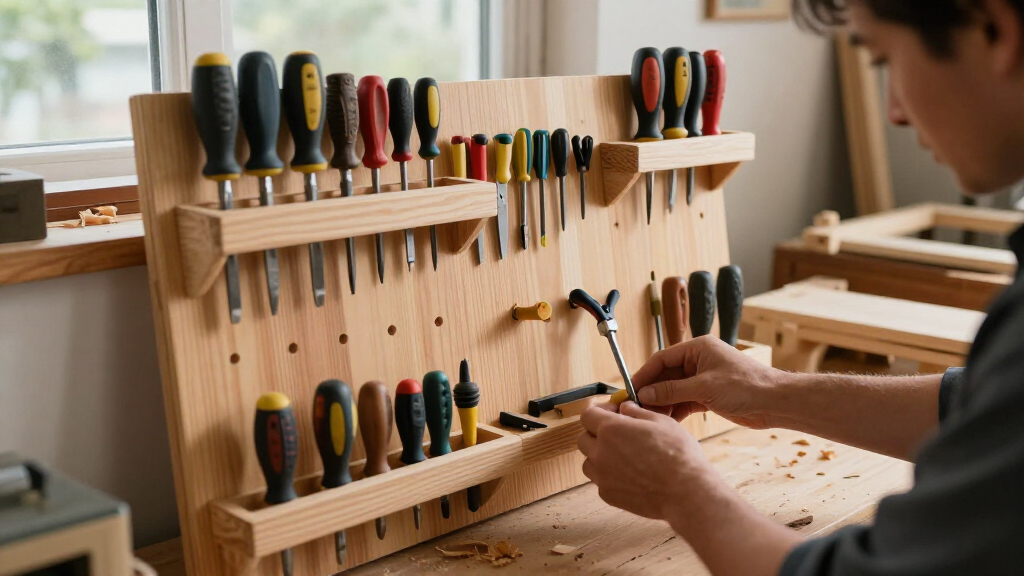

Among the best woodworking tool storage solutions, the POKIPO Large Power Tool Organizer is my best overall pick because it combines high-capacity shelving, drill storage, and integrated power strips. The SUNALLY Power Tool Organizer offers better value for a smaller cordless-tool collection, while the VEVOR 30-Bin System is the stronger choice for fasteners and mixed hand tools. The main tradeoff is between broad storage capacity and a specialized system designed around one tool category. Buyers also need to weigh open access against dust protection, available wall space, mounting requirements, and room for future tools. Continue reading for the full breakdown and buyer-specific recommendations.

Get business pricing on tools and workshop supplies
- Business-only prices and quantity discounts
- Tax-exempt purchasing
- Multiple users, one account, clear invoices
Complete the kit

Key Takeaways
- POKIPO ranks first because it addresses shelving, drill storage, and charging in one wall-mounted system; no other option here covers as many everyday power-tool needs.
- SUNALLY offers the clearest value for buyers who want open power-tool storage without paying for POKIPO‘s larger four-tier format and expanded drill capacity.
- VEVOR is the most versatile small-parts system, but its bins and hooks are less suitable than solid shelves for bulky saws, sanders, or planers.
- Rockler and WOODRIVER solve narrow storage problems best: one organizes F-clamps, while the other keeps turning tools separated and accessible.
- The WoodRiver tilt-out bin favors contained storage over instant visibility, making it a more polished hardware option but a less flexible choice than VEVOR.
| POKIPO Large Power Tool Organizer Wall Mount with Charging Station |  | Best Overall | Load Capacity: 600 lbs | Number of Shelves: 6 | Number of Drill Slots: 8 | VIEW LATEST PRICE | See Our Full Breakdown |
| Rockler F-Clamp Rack for Wood Clamps |  | Best for F-Clamps | Product Type: F-clamp wall rack | Material: 12-gauge steel | Maximum Clamp Width: 30 inches | VIEW LATEST PRICE | See Our Full Breakdown |
| WOODRIVER Turning Tool Storage Rack |  | Best for Turning Tools | Tool Capacity: Up to 6 turning tools | Retention Material: EVA foam | Length: 16-1/4 inches | VIEW LATEST PRICE | See Our Full Breakdown |
| VEVOR Wall Mounted Storage Rack System |  | Best for Small Parts | Number of Bins: 30 | Bin Material: Polypropylene (PP) | Wall Panels: Included | VIEW LATEST PRICE | See Our Full Breakdown |
| SUNALLY Power Tool Organizer |  | Best Value Pick | Material: Heavy-duty steel | Storage Layers: 3 | Drill Holders: 4 | VIEW LATEST PRICE | See Our Full Breakdown |
| WoodRiver 8-Door Tilt-Out Bin |  | Best Small-Parts Sorter | Number of compartments: 8 | Compartment style: Individual tilt-out doors | Individual bin dimensions: 2-1/2″ x 2-3/4″ x 3-1/2″ | VIEW LATEST PRICE | See Our Full Breakdown |
| woodworking tool storage solution | Material |
|---|---|
| POKIPO Large Power Tool Organi | Heavy-duty metal |
| Rockler F-Clamp Rack for Wood | 12-gauge steel |
| WOODRIVER Turning Tool Storage | — |
| VEVOR Wall Mounted Storage Rac | — |
| SUNALLY Power Tool Organizer | Heavy-duty steel |
| WoodRiver 8-Door Tilt-Out Bin | — |
More Details on Our Top Picks
POKIPO Large Power Tool Organizer Wall Mount with Charging Station
I rank the POKIPO Large Power Tool Organizer first because it combines high-capacity storage and charging in one wall-mounted unit. Its 600-pound load rating, six shelves, and eight drill slots make it better suited to a large cordless-tool collection than the SUNALLY organizer, which carries 150 pounds and four drills. The four-outlet power strip also keeps batteries charging beside the tools instead of consuming separate bench space. That breadth comes with a cost: this is the bulkiest power-tool option here, and mounting a heavily loaded rack demands a sound wall and suitable fasteners. Assembly may also feel involved for a first-time installer. I see it as the most complete workshop hub, but buyers with only a few drills can save space with SUNALLY.
Pros:- 600-pound stated capacity accommodates a substantial tool collection
- Six shelves and eight drill slots separate tools by type
- Four integrated outlets create a centralized charging area
- Mounting accessories support wood, concrete, and pegboard installations
Cons:- Large format can overwhelm a narrow garage wall
- Heavy loads demand careful anchoring into a suitable structure
- More involved to assemble and mount than smaller racks
Best for: Woodworkers with a large cordless-tool collection who want centralized wall storage and battery charging
Not ideal for: Renters and owners of compact workshops who lack a sturdy mounting area or need only light-duty storage
- Load Capacity:600 lbs
- Number of Shelves:6
- Number of Drill Slots:8
- Power Outlets:4
- Power Strip Length:6.5 feet
- Material:Heavy-duty metal
- Compatible Surfaces:Wood, concrete, and pegboards
Our verdict“I recommend this as the main storage and charging station for a tool-heavy workshop with sturdy wall space.”
Rockler F-Clamp Rack for Wood Clamps
The Rockler F-Clamp Rack earns a specialist role because it gives long clamps a secure home without taking over the floor or a workbench. Its 12-gauge steel construction is more appropriate for heavy F-style clamps than the plastic bins in the VEVOR system, while its 24-3/8-inch form is far leaner than the POKIPO power-tool station. I also like that open wall storage keeps clamp handles visible and reachable during glue-ups. Specialization is the main compromise: the rack does not sort screws, hold drills, or accommodate clamps wider than 30 inches. Installation with lag bolts also calls for a solid mounting surface, and the required fasteners may not suit every wall. For woodworkers whose clamp pile has become unmanageable, I think this focused, space-saving design solves the problem cleanly.
Pros:- 12-gauge steel supports a collection of substantial clamps
- Open layout keeps clamps visible and quick to retrieve
- Compact wall-mounted form preserves floor and bench space
- Purpose-built shape keeps F-style clamps grouped together
Cons:- Does not accommodate clamps wider than 30 inches
- Limited usefulness beyond compatible F-style clamps
- Lag-bolt mounting requires a sturdy wall structure
Best for: Furniture makers and cabinet builders who own several F-style clamps up to 30 inches wide
Not ideal for: Woodworkers with mostly parallel-jaw or extra-long clamps, or anyone unable to install lag bolts in a solid wall
- Product Type:F-clamp wall rack
- Material:12-gauge steel
- Maximum Clamp Width:30 inches
- Rack Length:24-3/8 inches
- Finish:Galvanized steel
- Mounting Method:Wall-mounted with lag bolts
Our verdict“I would choose this for a dedicated F-clamp collection, but not as a general workshop organizer.”
WOODRIVER Turning Tool Storage Rack
I would pick the WOODRIVER Turning Tool Storage Rack for a lathe station where gouges and chisels need to stay separated, visible, and close at hand. Its EVA foam fingers grip up to six tools without the hard metal-on-metal contact of a generic shelf. Compared with the Rockler F-Clamp Rack, this model occupies less wall space and handles delicate tool shafts, though it serves an even narrower category. Multiple units can be joined as a turning collection grows, which is more flexible than replacing a fixed rack. The tradeoff is low capacity per unit, and oversized handles or unusually large tools may not fit the spacing. It also offers no room for sharpening accessories or small parts. I rank it as the best lathe-side organizer, not a broad workshop storage system.
Pros:- EVA foam fingers hold turning tools apart from one another
- Low-profile dimensions suit the wall beside a lathe
- Additional racks can be joined as the collection expands
- Mounting hardware is included
Cons:- Holds only six tools per rack
- Spacing may not accommodate unusually large turning tools
- Provides no storage for accessories or other tool categories
Best for: Woodturners who want six frequently used gouges, scrapers, or chisels organized beside the lathe
Not ideal for: General woodworkers needing mixed-tool storage or turners with oversized tools and more than six pieces
- Tool Capacity:Up to 6 turning tools
- Retention Material:EVA foam
- Length:16-1/4 inches
- Height:1-3/8 inches
- Depth:2-3/8 inches
- Mounting Hardware:Included
- Expansion:Additional racks can be joined
Our verdict“I recommend this for keeping a small, active set of turning tools orderly and within reach of the lathe.”
VEVOR Wall Mounted Storage Rack System
The VEVOR Wall Mounted Storage Rack System addresses the loose hardware that broad shelves rarely manage well. Thirty stackable polypropylene bins let me see a clear role for screws, nuts, washers, dowels, and other small supplies, while hooks and tool holders add space for hand tools. Compared with the WoodRiver 8-Door Tilt-Out Bin, VEVOR provides more individual sorting capacity and a more configurable wall layout. It cannot match the POKIPO organizer for heavy power tools, however; plastic bins are meant for parts rather than dense machinery. Filling all 30 bins also creates a wide visual footprint, and installation takes more planning than hanging one compact rack. I place it here because its fine-grained organization is valuable for hardware-heavy projects, provided the buyer has enough wall area.
Pros:- Thirty bins provide detailed separation for fasteners and small parts
- Stackable and wall-mounted configurations support layout changes
- Included hooks and holders accommodate selected hand tools
- Polypropylene bins resist routine workshop handling
Cons:- Plastic bins are poorly suited to heavy power tools
- Thirty-bin layout can consume substantial wall area
- Assembly and category planning require more effort than a single rack
Best for: Cabinetmakers, furniture builders, and DIY woodworkers who keep many fastener sizes and small accessories
Not ideal for: Power-tool-focused shops or very small workspaces where a 30-bin wall layout would feel crowded
- Number of Bins:30
- Bin Material:Polypropylene (PP)
- Wall Panels:Included
- Tool Holders:Included
- Hooks:Included
- Bin Configuration:Stackable
- Installation Format:Wall-mounted
Our verdict“I favor this system for sorting a broad hardware inventory, while heavy tools belong on a steel organizer.”
SUNALLY Power Tool Organizer
The SUNALLY Power Tool Organizer is my value pick for woodworkers who want sturdy drill storage without paying for capacity they may never use. Three tiers and four drill holders cover a modest cordless setup, while the 150-pound load rating gives heavier tools more support than a plastic-bin system such as VEVOR. Against the POKIPO organizer, SUNALLY is simpler and better suited to a smaller collection, but it gives up four drill slots, substantial load capacity, and built-in charging outlets. Batteries will still need a separate charging location, and safe loading depends on anchors matched to the wall. Wall mounting is the only configuration, so renters may find it impractical. I rank it below POKIPO for versatility, yet its focused steel design makes more sense for budget-conscious buyers with four or fewer drills.
Pros:- 150-pound capacity suits a modest power-tool collection
- Four dedicated drill holders free up shelf and bench space
- Three storage layers separate drills, batteries, and accessories
- Heavy-duty steel construction offers more support than plastic organizers
Cons:- No built-in power strip or charging station
- Capacity is much lower than the POKIPO organizer
- Safe use with heavy tools depends on proper wall anchors
Best for: Budget-conscious hobby woodworkers with four or fewer cordless drills and a modest collection of power tools
Not ideal for: Tool-heavy professional shops, renters who cannot drill into walls, or buyers wanting integrated battery charging
- Material:Heavy-duty steel
- Storage Layers:3
- Drill Holders:4
- Load Capacity:150 lbs
- Color:Matte black
- Installation Format:Wall-mounted
Our verdict“I would choose SUNALLY for an affordable, compact cordless-tool station when POKIPO’s added capacity is unnecessary.”
WoodRiver 8-Door Tilt-Out Bin
I rank the WoodRiver 8-Door Tilt-Out Bin as the best choice for separating dowels, biscuits, tenons, and other small woodworking components. Its eight individual tilt-out compartments provide faster access and better separation than the larger, mixed-storage layout of the VEVOR 30-Bin Parts Organizer. Customizable tabs also make closely sized pieces easier to identify without opening every door. The tradeoff is capacity: each bin measures only 2-1/2 by 2-3/4 by 3-1/2 inches, so this is a specialized small-parts solution, not a home for hand tools or hardware bought in bulk. Compared with the metal POKIPO organizer, its plastic frame is lighter but less suited to rough shop treatment. I would choose it for precise component sorting, while buyers needing broader storage should favor VEVOR.
Pros:- Eight separate tilt-out bins keep small joinery components divided and accessible
- Customizable tabs help identify similar-looking sizes quickly
- Compact format uses less shop space than a broad multi-bin panel
- Included screws and anchors reduce the need to source installation hardware
Cons:- Small compartment dimensions sharply limit the size and quantity of stored items
- Plastic construction is less resistant to hard impacts than the metal organizers in the lineup
- Eight bins provide far less sorting capacity than the VEVOR 30-bin system
Best for: Furniture makers and joinery-focused woodworkers who need labeled, separate compartments for small dowels, biscuits, tenons, and fittings
Not ideal for: Woodworkers storing bulky hardware, hand tools, or large quantities of fasteners because the individual bins are compact
- Number of compartments:8
- Compartment style:Individual tilt-out doors
- Individual bin dimensions:2-1/2″ x 2-3/4″ x 3-1/2″
- Frame material:Plastic
- Customizable tabs included:8
- Screws included:4
- Anchors included:4
Our verdict“Choose this bin when precise sorting of small joinery parts matters more than high capacity or metal durability.”
How We Picked
I evaluated these products by comparing storage capacity, tool accessibility, mounting demands, build format, and how well each design fits an actual woodworking workflow. I also examined whether a system handles bulky power tools, long clamps, turning tools, or loose hardware, since those categories create very different storage problems. Published dimensions, holder counts, shelf layouts, material descriptions, and stated load ratings helped establish each product’s practical scope. I placed more weight on usable organization than on raw capacity because a crowded rack can save wall space while making tools harder to retrieve.
My ranking gives the highest position to the product with the best mix of capacity, access, and versatility. Value reflects how much useful organization a buyer receives without paying for capacity that may sit empty. Specialized racks were judged by how neatly they solve their intended problem rather than by how many unrelated tools they can hold. That logic puts POKIPO first for broad workshop use, SUNALLY ahead for budget-focused power-tool storage, and the remaining products in roles tied to clamps, turning tools, or small hardware.
Factors to Consider When Choosing Woodworking Tool Storage Solutions
The right storage system depends less on the number of tools owned than on their shapes, weight, and frequency of use. I recommend identifying the workshop’s biggest source of friction before buying anything: crowded power tools, unstable clamp stacks, scattered turning tools, or mixed fasteners. A single large rack can centralize daily equipment, while several specialized organizers may use awkward wall areas more efficiently. The goal is a repeatable storage routine, not merely an empty workbench.
Match the Organizer to the Storage Problem
I recommend sorting tools into power tools, clamps, edged tools, and small parts before choosing a system. A rack built around drill slots may hold several cordless tools well but do little for clamps or turning chisels. Count the tools already owned, then add space for realistic future purchases rather than doubling the estimate without reason. If one category creates most of the clutter, a specialized rack can produce a bigger improvement than a large general-purpose organizer. This exercise also reveals whether the workshop needs deep shelves, narrow holders, or removable bins. It helps prevent buying a visually appealing system that leaves the hardest items without a home.
Treat Wall Strength as Part of the Capacity
A wall rack is only as strong as its fasteners and mounting surface. I treat published load ratings as system claims, not guarantees that apply to drywall anchors or poorly placed screws. Locate studs or use masonry-rated hardware suited to the wall, then account for the rack’s own weight before loading tools. Deep shelves create leverage that can place extra force on upper mounting points. Heavy items should sit closer to the wall and lower on the rack whenever the design permits. Buyers renting a workspace or working with weak partitions may be better served by lighter modular organizers than one heavily loaded station.
Choose Between Open Access and Contained Storage
Open racks and bins make tools easy to identify and return, which suits equipment used during nearly every project. Their weakness is exposure to sawdust, airborne finish residue, and accidental contact in tight shops. Tilt-out compartments provide more separation for hardware, but labels become more valuable when the contents are not visible from across the room. I would place frequently used drills and clamps in open storage while reserving contained bins for screws, fittings, and delicate accessories. Shops with active dust collection can lean further toward open designs than spaces where dust settles quickly. The best arrangement often mixes fast access with protected storage instead of forcing every item into one format.
Plan Storage Zones Around the Work
I favor task-based storage zones over placing every organizer on the same wall. Clamps belong near the assembly bench, turning tools near the lathe, and drill storage near an outlet if batteries charge in the same area. Small fasteners should remain close enough to the bench for quick retrieval without occupying the main cutting surface. Measure door swings, machine clearances, and comfortable reaching height before drilling mounting holes. A rack that fits an empty wall may become awkward once sheet goods, dust hoses, or rolling machines enter the space. Good zoning reduces unnecessary walking and makes returning tools feel automatic.
Calculate the Full Cost of the System
The purchase price rarely captures the full installation cost. I include suitable fasteners, wall reinforcement, labels, extra bins, cable management, and any electrical work in the budget. A cheaper rack may be excellent value when it fits the current collection, but buying a replacement after the next tool purchase erases much of that saving. Large systems make more financial sense when most shelves and holders will be used within a reasonable period. Specialized racks can justify a higher cost per tool if they protect edges, prevent clamp damage, or recover otherwise wasted wall space. Pay more for useful capacity and durable structure, not for compartments that do not match the equipment.
Frequently Asked Questions
Can I Rely on a Wall Rack’s Published Weight Capacity?
I would treat the rating as a limit reached under the manufacturer’s specified mounting conditions, not as a promise for every wall. Stud spacing, fastener type, wall material, and installation quality can lower the usable capacity. The weight should also be spread across the rack instead of concentrated on one shelf or outer corner. If the organizer will carry expensive or unusually heavy tools, mounting into solid framing is the safer approach. A generous rating such as POKIPO’s stated 600-pound support still requires sound installation and balanced loading.
Is One Large Organizer Better Than Several Specialized Racks?
A large organizer works well when cordless power tools dominate the collection and the buyer wants one central station. Separate racks usually make more sense when clamps, turning tools, and hardware are used at different work areas. I prefer a hybrid layout for established shops because each item can live near the task where it is needed. Small workshops may benefit from one general rack at first, provided it leaves room for later additions. The better choice is the one that reduces both bench clutter and unnecessary movement.
Should Power-Tool Batteries Stay on a Rack With Integrated Power Strips?
Integrated power strips can simplify charging, but I would not treat them as permission to leave every battery charging without supervision. Chargers need airflow, and cords should remain clear of sharp tools, packed shelves, and sawdust buildup. Check the combined electrical demand against the strip’s rating and follow each battery manufacturer’s charging guidance. Mount the station where heat can disperse and where damaged cables are easy to spot. The benefit is centralized charging and fewer loose cords, provided the setup receives the same care as other workshop electrical equipment.
Are Open Parts Bins a Bad Choice for a Dusty Woodshop?
Open bins are not automatically a poor choice, but their location matters. I would keep them away from sanding stations, saw discharge paths, and areas where finish is sprayed. Lids or tilt-out compartments are better for hardware used infrequently because debris has more time to accumulate between visits. Clear labels still matter even when contents remain visible, especially after bins are rearranged. For active assembly areas, quick access may outweigh added cleaning; for long-term storage, contained compartments offer better protection.
Which Storage Type Should a Beginner Buy First?
I would start with the category creating the most repeated disruption rather than trying to organize the entire shop at once. A mixed system with bins, hooks, and holders suits beginners who own hand tools and hardware but only a few large power tools. A compact drill rack makes more sense when cordless tools already occupy the bench. Clamp and turning-tool racks should come later unless those tools support the buyer’s main style of work. The first purchase should create visible daily improvement while leaving room for the collection to change.
Conclusion
Best overall: the POKIPO Large Power Tool Organizer is my choice for buyers who want the broadest combination of shelves, drill holders, capacity, and integrated charging. Best value: the SUNALLY Power Tool Organizer better suits a smaller cordless collection and buyers who do not need POKIPO’s larger footprint. Best for beginners: the VEVOR 30-Bin System provides an adaptable starting point for mixed hand tools, accessories, and fasteners. Best premium hardware storage: the WoodRiver 8-Door Tilt-Out Bin favors contained, orderly storage over VEVOR’s more exposed modular format. The Rockler F-Clamp Rack is my specific-use choice for clamp-heavy assembly work, while the WOODRIVER Turning Tool Storage Rack is the clear match for woodturners. I would choose by the workshop’s biggest source of clutter first, then add specialized storage only when the tool collection demands it.
Halloween Picks
halloween
As an affiliate, we earn on qualifying purchases.