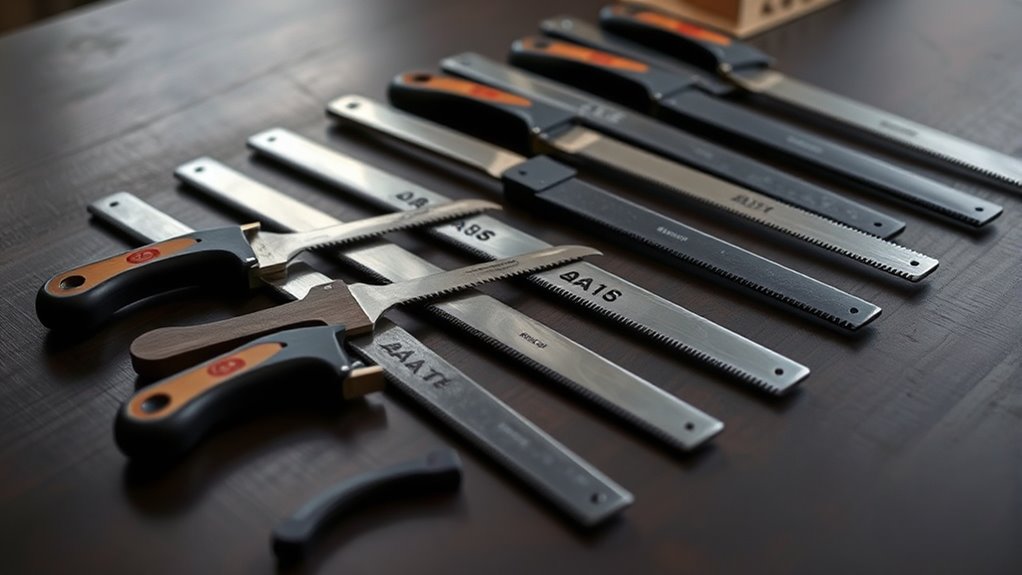

When selecting Japanese pull saws for joinery, precision, blade quality, and ease of use are key. The SUIZAN Ryoba 9.5″ stands out as the best overall for its versatility and durability. For specialized tasks, the KAKURI Dozuki 6″ offers exceptional clean cuts, while the Temple Tool Co. 9.5″ excels in fine joinery like dovetails. These saws differ mainly in blade design, handling, and intended use, so choosing the right one depends on your woodworking focus. Continue reading to see how each option compares and find the ideal saw for your projects.

Get tools and workshop supplies delivered free — and shop member deals
- Fast, free delivery on millions of items
- Access to Prime Big Deal Days deals on October 6–7
- Prime Video, Amazon Music and more included
Complete the kit


Key Takeaways
- The best saws balance blade sharpness, handle ergonomics, and blade flexibility for clean joinery cuts.
- Ryoba models are highly versatile, suitable for rip and cross cuts, making them ideal for general woodworking.
- Dovetail and Dozuki saws excel in precision tasks, but often come with a higher price point and narrower blades.
- Blade length and thickness influence control and cutting depth—longer blades offer more reach but may be less maneuverable.
- Quality construction and blade tensioning are critical, especially for professional-grade joinery work.


| japanese pull saws for joinery | Blade Length |
|---|---|
| SUIZAN Ryoba Double Edge Saw 9 | 9.5" (240mm) |
| SUIZAN 5-inch Flush Cut Japane | 5 inches |
| Jorgensen Japanese Pull Saw | 7.25 inches |
| Japanese Pull Saw | 9.5 inches |
| KAKURI Japanese Pull Saw Set f | — |
| Temple Tool Co. Japanese Pull | 9.5 inches |
| Jorgensen Japanese Pull Saw Ry | 7 inches |
| SUIZAN Ryoba Double Edge Saw 6 | 6" (150mm) |
| Japanese Pull Saw | 150mm |
| KAKURI Japanese Pull Saw 9.5" | 9.5 inches |
| SUIZAN Dozuki Dovetail Saw 6" | 6" (150mm) |
| KAKURI Azebiki Japanese Pull S | 3.5 inches |
| RUITOOL Japanese Hand Saw 6 In | 6 inches |
| KAKURI Japanese Pull Saw 9.5" | 9.5 inches |
More Details on Our Top Picks
SUIZAN Ryoba Double Edge Saw 9.5″ – Professional Japanese Pullsaw for Woodworking
The SUIZAN Ryoba Double Edge Saw stands out for its dual-edged design that allows seamless switching between rip and crosscuts, making it a versatile choice for joinery tasks like dovetails and tenons. Compared with the Japanese Pull Saw – 9.5 Ryoba, it offers a slightly more refined manufacturing process, resulting in cleaner cuts and less effort. The high-quality Japanese steel ensures razor-sharp edges that stay effective over time, but the handle’s appearance can vary, and minor cracks may occur during manufacturing—though these aren’t defects. This saw suits woodworkers who need a reliable, all-in-one tool for different joinery cuts, blending precision with ease of use.
Pros:- Dual-edged design for rip and crosscut versatility
- High-quality Japanese steel for long-lasting sharpness
- Lightweight with a pull-cut design reduces fatigue
Cons:- Handle may have manufacturing inconsistencies or cracks
- Requires some skill to use effectively for optimal results
Best for: Professional woodworkers and serious hobbyists needing a versatile, high-precision saw for various joinery tasks
Not ideal for: Casual users or beginners who prefer simpler, single-function saws or are concerned about handle imperfections
- Blade Length:9.5″ (240mm)
- Blade Thickness:0.02″ (0.5mm)
- TPI:9 & 15 (1.67mm)
- Kerf Width:0.03″ (0.8mm)
- Overall Length:23.2″ (59cm)
Our verdict“This saw is ideal for woodworkers seeking a reliable, versatile tool for precise joinery in woodworking projects.”
SUIZAN 5-inch Flush Cut Japanese Pull Saw – Double Edge Handsaw for Woodworking
The SUIZAN 5-inch flush cut saw prioritizes precision in delicate woodworking tasks, such as trimming dowels, tenons, or cleanly removing unwanted material. Its compact size makes it especially suitable for fine detail work, unlike larger saws like the Japanese Pull Saw – 9.5 Ryoba, which excel more in bulk cuts. Made with high-quality Japanese steel, it offers razor-sharp edges but lacks a replaceable blade, which could be a drawback for frequent use. Its lightweight design and ease of handling make it a top choice for hobbyists and professionals working on intricate joinery or finish carpentry.
Pros:- Compact size ideal for precision detail work
- High-quality Japanese steel for sharp, clean cuts
- Lightweight and easy to maneuver
Cons:- Blade is not replaceable, limiting lifespan
- Limited to 5-inch size, restricting leverage and cutting depth
Best for: Woodworkers focused on detailed finishing work or trimming in tight spots
Not ideal for: Major demolition or heavy-duty cutting tasks, as the small blade limits its scope
- Blade Length:5 inches
- Blade Type:Double edge, pull saw
- Material:Japanese steel
- Made in:Japan
- Suitable for:Hardwood and softwood
Our verdict“This saw is best suited for fine, detailed cuts where control and precision are more important than bulk capacity.”
Jorgensen Japanese Pull Saw, 7.25″ Hand Saw with Soft Grip Handle for Fine Woodworking
The Jorgensen 7.25-inch Japanese pull saw offers a well-balanced combination of control and precision, especially suited to softwood, bamboo, and delicate joinery. Its SK5 steel blade with 17 TPI ensures smooth, clean cuts, comparable to the SUIZAN Ryoba, but with a more ergonomic, softer grip that reduces fatigue during extended use. While its versatility is appealing, the saw requires careful handling to avoid blade damage and isn’t designed for heavy-duty tasks. It makes an excellent choice for hobbyists or professionals doing detailed softwood work, such as furniture or musical instrument making.
Pros:- Triple-ground teeth for precise, smooth cuts
- Ergonomic, non-slip handle for comfort and control
- Lightweight and easy to maneuver
Cons:- Requires careful handling to prevent blade damage
- Limited to softwood and similar materials
Best for: Woodworkers engaged in fine, softwood joinery or hobbyist woodworking requiring precision and comfort
Not ideal for: Heavy framing or rough demolition, where more robust tools are needed
- Blade Length:7.25 inches
- Tooth Count:17 TPI
- Blade Material:SK5 steel
- Handle:Soft, non-slip ergonomic
- Hardness:HRC58–66
Our verdict“This saw is perfect for hobbyists and professionals focusing on softwood joinery where detailed control is essential.”
Japanese Pull Saw – 9.5 Ryoba Hand Saw with Rip-cut and Crosscut – Wood Saw for Dovetails, Tenons, Joinery, Cutting Boards
This 9.5-inch Ryoba hand saw excels at detailed joinery like dovetails and tenons, thanks to its dual-edged design that handles both rip and cross cuts. Crafted in Japan with high-quality steel, it offers a level of craftsmanship comparable to the KAKURI 9.5″ Ryoba, but with a focus on joinery precision. The ergonomic walnut handle with brass accents enhances control, though mastering its use may require some skill, especially for beginners. It’s a strong choice for professional woodworkers or serious hobbyists dedicated to fine joinery, although it’s less suited for rough cuts or demolition work.
Pros:- Dual-edged blades for versatile joinery cuts
- High-quality Japanese steel for sharpness and durability
- Elegant ergonomic walnut handle
Cons:- May require skill to maximize performance
- Limited to woodworking applications, not suitable for demolition
Best for: Woodworkers specializing in fine joinery, dovetails, and detailed hardwood projects
Not ideal for: Casual DIYers or those needing a general-purpose saw for rough cuts, due to the skill required
- Blade Length:9.5 inches
- Handle Material:Walnut wood
- Blade Material:Japanese steel
- Cutting Types:Rip-cut and crosscut
Our verdict“Best suited for serious woodworkers focused on precise joinery like dovetails and tenons in hardwoods.”
KAKURI Japanese Pull Saw Set for Precision Woodworking – 7″ Fine Cut, 7″ Flush Cut, 8.2″ Hardwood, 6″ Keyhole Saw, Red Oak Handles with Oil Finish, Canvas Carrying Case
The KAKURI Japanese Pull Saw Set offers a comprehensive selection for precise woodworking, featuring interchangeable blades suited for fine cuts, flush cuts, and hardwoods. Its quick-change mechanism simplifies switching between tasks, making it ideal for professional workshops or serious hobbyists who need multiple saw types in one kit. The ergonomic red oak handles with oil finish provide comfort and control, comparable to individual premium saws like the SUIZAN Ryoba. However, this set can be costly for casual users and demands proper handling to maintain blade sharpness over time. It’s a smart investment for those committed to detailed, precise joinery.
Pros:- Interchangeable blades for multiple tasks
- High craftsmanship with ergonomic, durable handles
- Comes with a sturdy canvas carrying case
Cons:- Can be expensive for infrequent use
- Proper handling needed to preserve blade sharpness
Best for: Professional woodworkers or enthusiasts needing a versatile, high-precision saw collection
Not ideal for: Occasional or casual users who prefer single-purpose, lower-cost saws
- Blade Lengths:7″, 7″, 8.2″, 6″
- Handle Material:Red Oak
- Finish:Oil
- Includes:Canvas Carrying Case
Our verdict“This saw set is ideal for dedicated woodworking professionals or hobbyists requiring a versatile, precise toolkit for joinery and detailed cuts.”
Temple Tool Co. Japanese Pull Saw – Rip-Cut 9.5 – Hand Saw for Dovetails, Tenons, Fine Joinery
This saw stands out for its exceptional craftsmanship and focus on rip cuts, making it ideal for precise joinery like dovetails and tenons. Compared to the SUIZAN Ryoba 6-inch, it offers a longer blade that provides greater control for detailed work, though it sacrifices versatility since it’s primarily designed for rip cuts rather than crosscuts. Its high-quality Japanese steel ensures sharpness and effortless cutting, but over time, frequent use might require sharpening. The beautiful walnut handle adds durability and aesthetic appeal, elevating its value for serious woodworkers. While it excels in fine joinery tasks, it’s less suited for general woodworking or crosscutting needs.
Pros:- High-quality Japanese craftsmanship and steel for durability
- Precise, effortless rip cuts with minimal effort
- Elegant, durable walnut handle enhances control and aesthetics
Cons:- Primarily designed for rip cuts, limiting versatility
- May require periodic sharpening with heavy use
Best for: Professional woodworkers or serious hobbyists focusing on dovetails and tenons who prioritize precision and craftsmanship.
Not ideal for: Beginners or those needing a versatile saw for a variety of cut types, as its rip-only design limits its scope.
- Blade Length:9.5 inches
- Teeth Per Inch:18 TPI
- Handle Material:Walnut wood
- Made in:Japan
- Material:Japanese steel
Our verdict“This saw is best suited for woodworkers who prioritize fine joinery and rip cuts in woodworking projects.”
Jorgensen Japanese Pull Saw Ryoba, 7 Inch Pro Double Edge, SK5 Flexible Blade, 18 TPI & 7-12 TPI, Woodworking Hand Saw for Hardwood & Softwood, Wood Trim
The Jorgensen Ryoba combines two cutting edges, making it a flexible choice for both rip and cross cuts, unlike the Temple Tool rip saw which is more specialized. Its 7-inch length and dual TPI options (18 and 7-12) provide versatility for hardwoods and softwoods, giving it an edge for varied joinery tasks. The SK5 steel blade ensures sharpness and durability, while the ergonomic handle improves comfort during prolonged use. Although its replaceable blades extend longevity, they are sold separately, which might be inconvenient for some users. This saw excels in multi-purpose woodworking but requires some skill to switch between edges effectively.
Pros:- Dual-edged design for rip and cross cuts
- High-quality SK5 steel for longevity and sharpness
- Comfortable ergonomic handle for extended use
- Replaceable blades for long-term use
Cons:- Requires some skill to use effectively
- Blade replacements sold separately
Best for: Intermediate to advanced woodworkers seeking a versatile saw capable of handling different joinery cuts without switching tools.
Not ideal for: Beginners or those looking for a dedicated rip or crosscut saw, as the dual functionality can be challenging to master initially.
- Blade Length:7 inches
- TPI:18 TPI & 7-12 TPI
- Blade Material:SK5 Japanese steel
- Handle Material:European beech wood
- Blade Type:Double edge, replaceable
Our verdict“This saw is ideal for woodworkers who need a flexible, multi-purpose tool for various joinery tasks in woodworking projects.”
SUIZAN Ryoba Double Edge Saw 6″ – Professional Japanese Pullsaw for Woodworking
The SUIZAN 6-inch Ryoba offers a lightweight, precise option for delicate woodworking, especially where space and control matter. Its razor-sharp Japanese steel makes clean cuts in hardwood and softwood, comparable to the longer Temple Tool, but with a smaller blade suited for detailed tasks. The limited size enhances control but restricts its use to smaller projects, unlike larger saws that can handle bigger cuts with less finesse. Its minimal weight and smooth cutting action make it a favorite for precise joinery, yet the small blade size means it’s less effective for bigger cuts or heavy-duty work.
Pros:- High-quality Japanese steel for razor-sharp cuts
- Lightweight and easy to control
- Ideal for detailed woodworking tasks
Cons:- Limited to 6-inch blade size, restricting scope
- Requires skill for best results
Best for: Woodworkers and hobbyists focused on detailed joinery or working in tight spaces requiring precision.
Not ideal for: Projects involving large panels or thick stock, where a longer or more robust saw would be more efficient.
- Blade Length:6″ (150mm)
- Blade Thickness:0.016″ (0.4mm)
- TPI:17 (hardwood), 20 (softwood)
- Kerf Width:0.02″ (0.55mm)
- Overall Length:12.4″ (31.5cm)
Our verdict“This saw suits woodworkers who prioritize precision in small-scale, detailed joinery tasks within tight spaces.”
Japanese Pull Saw – Dozuki 6 for Ripcut and Crosscut – Hand Saw for Dovetails, Tenons, Fine Joinery
The Dozuki 6-inch combines versatility and precision, making it suitable for both rip and cross cuts in delicate joinery like dovetails. Its 25 TPI teeth and Japanese SK85 steel ensure sharp, clean cuts, rivaling the KAKURI 9.5-inch for detail but with a more compact size that offers superior control. The brass back adds rigidity, improving cut accuracy, but the smaller size means it’s less suited for larger workpieces. Its ergonomic handle balances comfort with precision, though it may be less comfortable for prolonged use. This saw works well for detailed, small-scale joinery but isn’t designed for heavy-duty or large cuts.
Pros:- Versatile teeth suitable for multiple cut types
- High-quality Japanese steel for durability
- Compact size offers enhanced control
- Durable brass back for cut accuracy
Cons:- Limited to small-scale tasks
- Requires proper maintenance to keep sharpness
- Handle may be less ergonomic over long periods
Best for: Fine woodworking enthusiasts who need a versatile, compact saw for dovetails, tenons, and detailed joinery.
Not ideal for: Heavy framing or large panel work, as its small size limits its capacity for bigger cuts and projects.
- Blade Length:150mm
- Teeth Per Inch:25 TPI
- Blade Material:Japanese SK85 steel
- Handle Material:Dark brown wood
- Back Material:Brass
Our verdict“This saw excels in detailed, fine joinery work where control and precision are paramount in small projects.”
KAKURI Japanese Pull Saw 9.5″ for Woodworking – Double Edge Hand Saw with Blade Cover and Cane-Wrapped Handle
The KAKURI 9.5-inch offers a balanced choice for both rip and crosscuts, with its double-edged blade and traditional cane-wrapped handle providing comfort and control. Its high-quality Japanese steel ensures sharpness and minimal effort, matching the precision level of the Temple Tool but with added convenience via easy, tool-free blade replacement. The inclusion of a blade cover adds safety and storage benefits, making it suitable for both DIYers and professionals. However, its focus remains on woodworking, and it’s not suited for metal or larger structural cuts. The blade replacement process demands careful handling to avoid injury.
Pros:- High-quality Japanese steel for sharp, precise cuts
- Traditional cane-wrapped handle for comfort
- Easy, tool-free blade replacement
- Includes a protective blade cover
Cons:- Limited to woodworking applications
- Blade replacement requires careful handling for safety
Best for: DIY enthusiasts and professionals who want a reliable, versatile saw for everyday woodworking and joinery tasks.
Not ideal for: Heavy-duty framing or large-scale projects, as its size and design prioritize precision over brute force.
- Blade Length:9.5 inches
- Overall Size:22.6″ x 3.2″ x 0.8″
- Weight:6.3 oz
- Blade Material:Japanese carbon steel
- TPI (crosscut):15
- TPI (rip cut):7.5–10
Our verdict“This saw suits woodworkers seeking a versatile, easy-to-maintain tool for detailed joinery and general woodworking projects.”
SUIZAN Dozuki Dovetail Saw 6″ Crosscut – Professional Japanese Pullsaw for Woodworking
The SUIZAN Dozuki Dovetail Saw stands out for its razor-sharp Japanese steel blade, making it ideal for detailed crosscut and dovetail work. Compared to the KAKURI Ryoba 9.5″, it offers more control and cleaner cuts on fine joinery, though it sacrifices versatility for specialized use. The lightweight design reduces fatigue, especially important for delicate woodworking tasks. Its traditional craftsmanship and high-quality steel deliver consistent results, but it is somewhat limited to specific cuts, and users unfamiliar with Japanese saws may need a learning curve. This pick is perfect for experienced woodworkers or serious hobbyists focused on precision joinery, who value quality over versatility.
Pros:- High-quality Japanese steel for razor-sharp, clean cuts
- Lightweight for reduced fatigue during detailed work
- Excellent control ideal for precision joinery
Cons:- Limited to crosscut and dovetail tasks, not versatile for general cuts
- Requires familiarity with Japanese saw techniques to maximize effectiveness
Best for: Professional woodworkers and serious hobbyists specializing in fine joinery and dovetails
Not ideal for: Beginners or those needing a versatile saw for multiple types of cuts, as it excels primarily in crosscuts and dovetails
- Blade Length:6″ (150mm)
- Blade Thickness:0.012″ (0.3mm)
- TPI:25 (1.0mm)
- Kerf Width:0.02″ (0.5mm)
- Overall Length:15.2″ (38.5cm)
Our verdict“This saw is best suited for skilled woodworkers focused on precision joinery, offering unmatched control for specific cuts.”
KAKURI Azebiki Japanese Pull Saw 3.5″ – Curved Handsaw for Mid-Panel, Hole & Groove Cutting
The KAKURI Azebiki excels in tight-space cuts like grooves, mortises, and plunge cuts, thanks to its curved blade, making it the go-to choice for detailed interior work. Unlike the RUITOOL Ryoba, which offers longer blades for larger cuts, the Azebiki’s compact size and curved design allow for greater accuracy in confined spaces. Its high-quality Japanese steel ensures smooth, splinter-free results, but the limited blade length means larger projects may require multiple passes. The handle’s design isn’t universally ergonomic, which could be a drawback for extended use. This saw makes the most sense for woodworkers doing detailed interior joinery or working in tight spots, where control outweighs cutting length.
Pros:- Excellent for plunge cuts into flat surfaces
- Double-edged blade offers rip and crosscut versatility
- Compact and lightweight for working in confined spaces
Cons:- Limited blade length may slow larger tasks
- Handle design may not be comfortable for all users
- Requires some skill to use effectively for detailed cuts
Best for: Woodworkers focusing on interior joinery, grooves, and plunge cuts in tight spots
Not ideal for: Large-scale or straight cuts on big panels, as its small blade is designed for precision, not volume
- Blade Length:3.5 inches
- Blade Thickness:0.015–0.031 inches
- Kerf:Rip 0.031 inches, Cross 0.039 inches
- TPI:Rip 7.3, Cross 15.3
- Overall Size:15.8″ × 2.5″ × 0.7″
- Weight:2.5 oz
Our verdict“This saw is best for precise interior cuts where control and maneuverability are critical, not for large or rough cuts.”
RUITOOL Japanese Hand Saw 6 Inch Double Edge Sided Pull Saw Ryoba SK5 Flexible Blade 14/17 TPI Beech Handle Woodworking Tool
The RUITOOL Ryoba 6″ offers a flexible, double-edged design that provides both rip and crosscut options, making it highly adaptable for diverse woodworking tasks. Compared to the SUIZAN Dozuki, which excels in precision joinery, the RUITOOL’s versatility suits general woodworking and trimming, especially in tight spaces. Its SK5 steel blade ensures durability and smooth cuts across soft and hardwoods, but the shorter 6-inch blade may limit its use on larger projects. The handle’s ergonomic design is less refined for extended work, and proper technique is essential for best results. This saw is ideal for hobbyists or woodworkers who need a reliable, all-purpose saw for small to medium tasks.
Pros:- Double-edged design offers rip and crosscut flexibility
- High-quality SK5 steel for durability and smooth cuts
- Compact size enables precise handling
Cons:- Limited blade length for larger projects
- Proper technique required for optimal performance
- Handle may be less ergonomic for prolonged use
Best for: Hobbyists and woodworkers needing a versatile saw for detailed and small-scale projects
Not ideal for: Large furniture or cabinetry work requiring longer blades and more aggressive cuts
- Blade Length:6 inches
- Tooth Per Inch:14/17 TPI
- Material:SK5 high-carbon steel
- Handle Material:Beech wood
Our verdict“This saw makes a strong choice for versatile, small-scale woodworking, especially where space and precision matter.”
KAKURI Japanese Pull Saw 9.5″ for Woodworking – Ryoba Double Edge Hand Saw with Non-Slip Cork Handle
The KAKURI 9.5″ Ryoba combines length, versatility, and quality, making it well-suited for a wide range of woodworking tasks including joinery, crosscuts, and rip cuts. Its longer blade compared to the SUIZAN Dozuki enables more efficient work on larger panels, though it may lack the fine control needed for intricate dovetails. The double-edged design with rip and crosscut teeth, plus a non-slip cork handle, ensures comfort and flexibility during extended sessions. Blade replacement adds convenience but increases ongoing costs. While it’s not as specialized as the SUIZAN Dozuki for fine joinery, this saw offers a balanced mix of length, versatility, and reliability, suitable for general woodworking projects.
Pros:- Longer blade for efficient cutting on larger panels
- Double-edged teeth for rip and crosscut tasks
- Non-slip cork handle enhances comfort
Cons:- Blade replacement may incur additional costs
- Less maneuverable for very fine or detailed cuts
- Designed mainly for woodworking, not general utility
Best for: Woodworkers seeking a versatile, all-purpose saw for joinery and general woodworking
Not ideal for: Highly detailed or delicate joinery where maximum control is required, as longer blades can be less precise
- Blade Length:9.5 inches
- Overall Size:21.8″ x 3.1″ x 0.8″
- Blade Material:Japanese carbon steel
- Tooth Type:8.5–10 (Rip) and 15.5 (Crosscut)
Our verdict“This saw offers a flexible, reliable option for general woodworking and joinery tasks, especially when larger cuts are involved.”

How We Picked
My evaluation focused on key factors that influence performance in woodworking, particularly joinery. I considered blade sharpness, flexibility, and ease of sharpening, as these affect cut quality. Handle comfort and grip stability were also important, especially for prolonged use. Durability and build quality, including blade tensioning mechanisms, were assessed to ensure longevity. Finally, I prioritized versatility—saws that perform well across different joinery tasks—since many woodworkers need multipurpose tools. Products were ranked based on a combination of these criteria, emphasizing value for woodworking projects and user experience.Factors to Consider When Choosing Japanese Pull Saws For Joinery
Choosing the right Japanese pull saw for joinery involves understanding several key factors. The blade design and tooth pattern significantly impact the quality and precision of cuts. Handle ergonomics and grip stability are vital for controlled, comfortable work, especially during detailed joinery. Blade flexibility and tensioning influence how cleanly and accurately cuts are made, which is crucial in fine woodworking. Additionally, consider the saw’s size and weight—lighter models reduce fatigue but may offer less stability. Lastly, investing in quality construction ensures the tool’s longevity, especially when used frequently in demanding projects.Blade Design and Tooth Pattern
Different joinery tasks require specific blade configurations. For example, crosscut teeth are designed for clean, precise cuts through wood fibers, making them ideal for dovetails and tenons. Rip-cut teeth, on the other hand, excel at cutting along the grain, which is useful for rougher, faster cuts. Some saws, like the Ryoba, combine both tooth patterns, offering versatility in a single tool. The choice of tooth pattern directly impacts cut quality, so selecting the appropriate blade for your project ensures better results and less frustration.Handle Ergonomics and Grip
A comfortable, stable grip reduces fatigue and improves control during intricate joinery work. Traditional Japanese saw handles are often designed to fit the hand naturally, allowing for precise, controlled cuts. Some models feature rubberized or cork handles to prevent slipping and absorb vibrations. Poor handle ergonomics can lead to inconsistent cuts or even injury during extended use. When choosing a saw, consider how it feels in your hand, especially if you’ll be working on detailed projects for long periods.Blade Flexibility and Tensioning
A flexible blade that remains taut under use produces cleaner, more accurate cuts. Many high-quality Japanese pull saws incorporate tensioning mechanisms or are built with materials like SK5 steel to maintain blade tension. Loose blades tend to vibrate and produce rougher cuts, which is problematic for joinery precision. Conversely, overly stiff blades may reduce maneuverability. Striking the right balance between flexibility and rigidity is essential for achieving tight, smooth joints.Size, Weight, and Maneuverability
Lighter saws are easier to handle, especially for detailed tasks, but may be less stable for heavy-duty cuts. Longer blades enable deeper cuts and greater reach but can be harder to control in tight spaces. Conversely, compact models excel in delicate work or confined areas. Think about your typical projects—if you regularly make large cuts, a longer, sturdier saw makes sense. For fine, detailed joinery, a smaller, lighter saw improves precision and reduces fatigue.Build Quality and Durability
A well-made Japanese pull saw features high-quality steel blades, corrosion-resistant finishes, and sturdy handles. Some brands use oil finishes on blades to prevent rust, while others incorporate reinforced handles for longevity. Investing in durable construction reduces the need for frequent replacements and ensures consistent performance. When selecting a saw, consider how it will be maintained and whether replacement blades are easily available. Quality construction ultimately pays off in cleaner cuts and longer tool life.Frequently Asked Questions
What is the main difference between a Ryoba and a Dozuki saw?
A Ryoba saw features double-edged blades with both rip and crosscut teeth, offering versatility for various woodworking tasks. It’s well-suited for general joinery where you need to switch between cutting along and across the grain. A Dozuki, however, has a thin, fine-toothed blade that excels in precise, clean cuts, especially for dovetails and detailed joinery. The Dozuki’s rigid frame and thinner blade allow for more control and finer work, making it ideal for tasks requiring accuracy. Choosing between them depends on whether you need a versatile all-round saw or a dedicated precision tool.How do I maintain the sharpness of a Japanese pull saw?
Maintaining the sharpness of a Japanese pull saw involves regular cleaning and careful storage. Use a soft brush or cloth to remove sawdust after each use, and avoid exposing the blade to moisture to prevent rust. If the teeth become dull, specialized sharpening tools designed for pull saws can restore the edge—re-sharpening is often straightforward due to the single-bevel teeth design. Avoid using inappropriate files or abrasive materials that can damage the delicate teeth. Proper maintenance ensures clean cuts, longer tool life, and consistent performance.Is a more expensive Japanese pull saw worth the investment?
Higher-priced Japanese pull saws often offer better blade tension, more durable blades, and superior handle ergonomics, which translate into cleaner cuts and longer service life. If you frequently work on fine joinery or require precision, investing in a premium saw can significantly improve your results. Cheaper models might suffice for occasional or rougher tasks but tend to dull faster and may not maintain proper tension. For dedicated woodworkers or serious hobbyists, the increased cost typically pays off in reliability and cut quality over time.Can I use a Japanese pull saw for softwood and hardwood equally well?
Yes, most Japanese pull saws are designed to handle both softwood and hardwood, but their performance depends on the blade tooth pattern and steel quality. Finer teeth are better suited for hardwoods, providing smoother, cleaner cuts without splintering. Coarser teeth can cut softer woods more quickly but may leave rougher edges. Selecting a saw with versatile tooth patterns or multiple blades allows you to adapt to different wood types, ensuring optimal results whether working with soft pine or dense hardwoods.What size pull saw is best for detailed joinery work?
Smaller pull saws, typically around 6 inches, are ideal for detailed joinery such as dovetails, tenons, and intricate cuts. Their compact size offers enhanced control and maneuverability, which is essential for precision work. Larger saws, like 9.5 inch models, are better suited for general cuts or larger pieces where reach and depth are priorities. When working on fine joinery, choosing a smaller, lightweight saw helps maintain accuracy and reduces fatigue during extended tasks.Conclusion
For most woodworkers focusing on joinery, the SUIZAN Ryoba 9.5″ offers excellent versatility and performance, making it the best overall choice. Beginners or hobbyists will appreciate the KAKURI 9.5″ for its straightforward handling and reliable cuts. Professionals requiring the utmost precision may prefer the Dozuki 6″ for its fine, clean cuts in detailed work. If budget is a concern, the RUITOOL 6″ provides solid performance at a more accessible price point. Ultimately, selecting the right saw depends on your specific projects, skill level, and budget—this guide helps match those needs with the ideal tool.
Fall yard work Picks
leaf blowers
As an affiliate, we earn on qualifying purchases.