
If you’re looking for the best astronomy laptops with high battery life for stargazing and space adventures, I’ve got you covered. I recommend models with large, vibrant displays like 17.3-inch FHD IPS screens, powerful processors such as 12th Gen Intel, and long-lasting batteries that support several hours outdoors. Portability, durability, and connectivity are also key. If you keep going, you’ll discover the top options that suit both amateur star enthusiasts and professional space explorers.
Key Takeaways
- The list highlights laptops with large, high-resolution displays suitable for star mapping and celestial visualization.
- Emphasizes models equipped with powerful processors and ample RAM for handling astronomy software and data processing.
- Focuses on lightweight, durable designs with long battery life, ideal for outdoor stargazing and field observations.
- Includes laptops with extended battery capacities supporting several hours of continuous use during remote space activities.
- Features connectivity options like Wi-Fi 6 and multiple ports for external devices, enhancing space data sharing and multimedia use.
17.3-inch Laptop with 16GB RAM, 512GB SSD, Intel N97 Processor, Windows 11 Pro, 1080 FHD Display, and Long-lasting Battery

If you’re passionate about stargazing and space exploration, this 17.3-inch laptop is an ideal companion thanks to its large, vibrant display and powerful performance. Its immersive IPS FHD screen delivers clear, vivid visuals perfect for analyzing star maps or watching celestial videos. The slim, lightweight design makes it portable for trips to remote observation sites. Equipped with a 12th gen Intel N97 processor and 16GB RAM, it handles multitasking effortlessly. The 512GB SSD ensures quick data access, while the long-lasting battery supports hours of use. This combination of features makes it a reliable, versatile tool for any space enthusiast on the go.
Best For: space enthusiasts, astronomers, and travelers seeking a portable, high-performance laptop for stargazing, celestial analysis, and multimedia viewing.
Pros:
- Large 17.3-inch immersive IPS FHD display with vibrant, clear visuals
- Powerful 12th generation Intel N97 processor combined with 16GB RAM for smooth multitasking
- Long-lasting 6000mAh battery supports extended use in remote or outdoor locations
Cons:
- Approximate 5-hour battery life may require frequent charging on long outings
- Slightly heavier at 5.99 pounds, which could affect portability for some users
- Limited optical drive options with only BD-R support, which may not suffice for all media needs
ACEMAGIC 2025 17.3-Inch Laptop with FHD Display and 12th Gen Quad-Core Processor

The ACEMAGIC 2025 17.3-Inch Laptop is an excellent choice for stargazing and space enthusiasts who need robust performance in a portable package. Its 12th Gen Intel Alder Lake N97 processor delivers impressive speed with 4 cores and up to 3.6GHz, ensuring smooth multitasking. The 16GB DDR4 RAM and 512GB SSD provide fast data access and reliable performance for astronomy software or media. The 17.3-inch FHD IPS display offers immersive visuals, while the lightweight metal chassis makes it easy to carry. With a 6000mAh battery supporting around 5 hours of use and multiple connectivity options, this laptop is perfect for outdoor stargazing sessions.
Best For: space enthusiasts and outdoor astronomers seeking a portable, high-performance laptop for stargazing and astronomy software.
Pros:
- Powerful 12th Gen Intel Alder Lake N97 processor with up to 3.6GHz for smooth multitasking
- Large 17.3-inch FHD IPS display for immersive visuals in outdoor environments
- Lightweight metal chassis and long battery life make it highly portable for outdoor use
Cons:
- Limited battery life of around 5 hours may require carrying a power source during extended sessions
- Only supports data transfer via Type-C (data only), not Thunderbolt or other high-speed connections
- No dedicated GPU, which may limit performance for intensive graphics or gaming
Laptop Computer with 15.6″ FHD IPS Display, Celeron N5095 Processor, 12GB RAM, 512GB SSD, Up to 1TB Expandable, WiFi 2.4G+5G, 2-Year Warranty

Designed for portability and reliable performance, this 15.6-inch FHD IPS laptop is perfect for stargazing and space enthusiasts who need a compact device to explore celestial images, track astronomical data, or stream space documentaries. Powered by the Jasper Lake N5095 processor, it offers smooth multitasking and efficient operation. The vivid FHD IPS display ensures immersive visuals with reduced eye strain. With 12GB RAM and 512GB SSD—expandable up to 1TB—you’ll have ample storage and fast access to your files. Its lightweight design, long battery life, and versatile connectivity options make it ideal for those on the go, backed by a 2-year warranty for added peace of mind.
Best For: users seeking a portable, reliable laptop for space enthusiasts, astronomy students, or anyone interested in celestial exploration and media streaming on the go.
Pros:
- Powerful Jasper Lake N5095 processor for smooth multitasking and efficient performance
- Vibrant 15.6″ FHD IPS display with immersive visuals and reduced eye strain
- Lightweight design with long battery life and comprehensive connectivity options
Cons:
- Limited to 12GB RAM, which may be less suitable for extremely heavy multitasking or professional editing
- No dedicated graphics card, potentially affecting high-end gaming or intensive graphics tasks
- Up to 1TB storage expansion may require additional investment for larger needs
HP Flagship Laptop with Windows 11 Pro and AI Features

For space enthusiasts who need a reliable, portable laptop packed with smart features, the HP Flagship Laptop with Windows 11 Pro and AI tools stands out. Its sleek 14-inch design weighs just 3.24 pounds, making it easy to carry during stargazing trips. Powered by an Intel N150 quad-core processor and up to 32GB RAM, it handles multitasking smoothly. The 128GB storage expands easily with a 256GB SD card, and the long-lasting battery offers over 11 hours of use. With Wi-Fi 6, Bluetooth 5.4, and AI-driven productivity tools, this laptop is perfect for both astrophotography and remote space research.
Best For: space enthusiasts, students, and remote workers seeking a lightweight, durable, and feature-rich laptop for multitasking, media, and on-the-go productivity.
Pros:
- Lightweight and portable design weighing only 3.24 pounds, ideal for travel and outdoor use
- Long-lasting battery life of over 11 hours, supporting extended use during trips or remote work sessions
- Equipped with AI productivity tools and fast connectivity options like Wi-Fi 6 and Bluetooth 5.4 for efficient multitasking and seamless device integration
Cons:
- Limited internal storage of 128GB, which may require frequent expansion with SD cards for larger files
- Non-touch HD display with a resolution of 1366×768, which may be less sharp for media editing or detailed visual work
- Some user concerns about mouse usability and battery life duration under heavy usage
NIMO 15.6″ FHD Laptop with 16GB RAM and 1TB SSD

If you’re passionate about stargazing and need a laptop that can keep up with your astronomical pursuits, the NIMO 15.6″ FHD Laptop stands out with its impressive 16GB RAM and 1TB SSD. It offers a vibrant, anti-glare 15.6-inch display with accurate colors, perfect for viewing star maps or space documentaries comfortably. Powered by a 12th Gen Intel Alder Lake processor, it handles multitasking smoothly. The durable metal shell guarantees long-lasting use, and the expandable RAM and SSD allow future upgrades. With Wi-Fi 6, Bluetooth 5.2, and security features like a fingerprint sensor, it’s ideal for both work and leisure during your stargazing adventures.
Best For: astronomy enthusiasts and stargazing hobbyists who need a reliable, high-performance laptop for viewing star maps, documentaries, and multitasking during their celestial adventures.
Pros:
- Vibrant 15.6-inch FHD anti-glare display with accurate colors for clear star map viewing
- Powerful 12th Gen Intel Alder Lake-N100 processor with 16GB RAM and 1TB SSD for smooth multitasking and fast data access
- Durable metal shell with upgradability options, Wi-Fi 6, and security features like fingerprint sensor
Cons:
- Slightly heavier than ultra-portable models, which may impact portability for some users
- Limited to 4 cores and 4 threads, potentially affecting performance with very intensive tasks
- No dedicated graphics card, which might limit high-end multimedia or gaming capabilities
NIMO 15.6″ IPS FHD Laptop with 16GB RAM and 1TB SSD
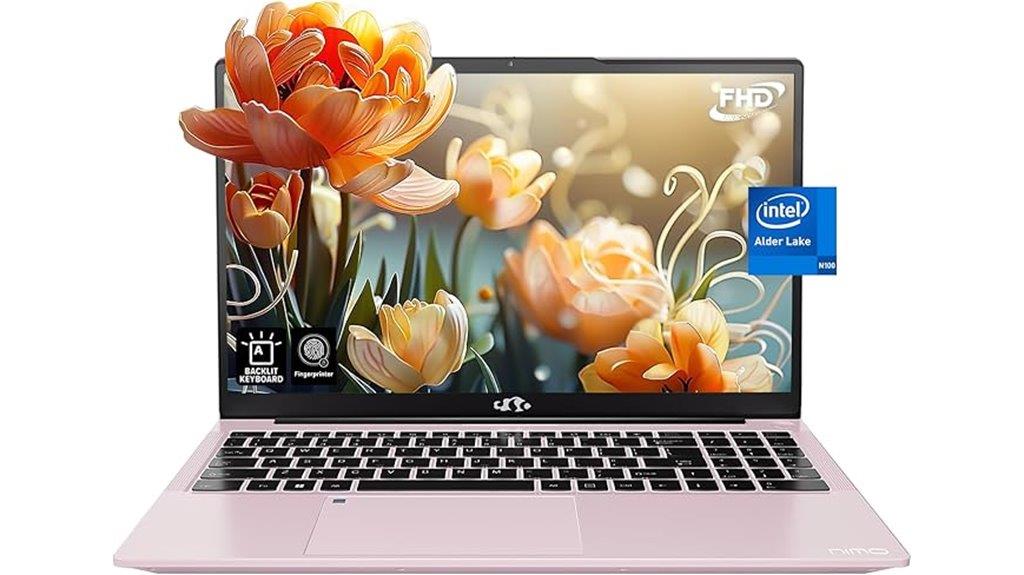
The NIMO 15.6″ IPS FHD Laptop stands out with its sharp display and robust hardware, making it an excellent choice for stargazing and space enthusiasts who need reliable performance on the go. Its 15.6-inch anti-glare screen with vibrant colors lets you enjoy detailed visuals without eye strain. Powered by a 12th Gen Intel Alder Lake-N100 processor and 16GB RAM, it handles multitasking smoothly. The 1TB SSD ensures fast boot times and ample storage for astronomical data or media. Weighing just 3.8 pounds and featuring a metal shell, it’s portable yet durable, perfect for outdoor use and travel.
Best For: students, professionals, and space enthusiasts seeking a portable, reliable laptop with a vibrant display and ample storage for multitasking and outdoor use.
Pros:
- Sharp 15.6-inch anti-glare IPS FHD display with vibrant colors
- Powerful 12th Gen Intel Alder Lake-N100 processor with 16GB RAM for smooth multitasking
- Lightweight and durable metal shell weighing 3.8 pounds, ideal for on-the-go use
Cons:
- Average battery life of approximately 5 hours may require frequent charging during extended outings
- Keyboard layout may need some adjustment for new users
- Limited to light gaming and multitasking; not suited for high-end gaming or intensive tasks
Laptop Computer with 15.6″ HD Display, UHD Graphics, Celeron N5095 4-Core, 12GB RAM, 512GB SSD, Expandable to 1TB, WiFi, 180° Open Angle, Gray
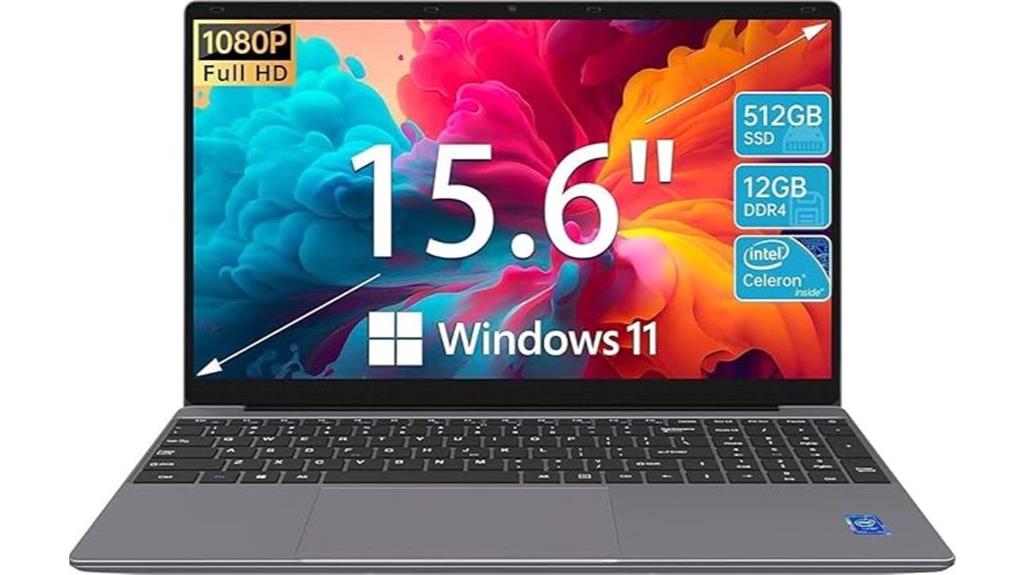
With its lightweight design and portable 15.6-inch Full HD display, this laptop is ideal for stargazing and space enthusiasts who enjoy observing celestial events on the go. Its sleek stardust gray finish makes it stylish and easy to carry anywhere. Powered by an Intel Celeron N5095 quad-core processor and 12GB of RAM, it handles multitasking smoothly for web browsing, streaming, or light editing. The 512GB SSD offers fast storage, expandable to 1TB for more space. The UHD graphics ensure vivid visuals, while the 180° open angle provides flexible viewing angles. Overall, it’s a versatile, budget-friendly option for those who want portability and decent performance in their stargazing adventures.
Best For: casual users, students, and space enthusiasts seeking a portable, budget-friendly laptop for everyday tasks and celestial observation.
Pros:
- Lightweight and portable with a sleek stardust gray finish
- Bright 15.6-inch Full HD IPS display with vivid UHD graphics
- Smooth multitasking thanks to 12GB RAM and fast 512GB SSD
Cons:
- Limited battery life averaging around 3-6 hours
- Some users report software bugs and slowdowns during intensive use
- Power cable may be small and less durable over time
2025 Laptop with N97 CPU, 8GB DDR4 RAM, 256GB SSD, 15.6″ FHD IPS Display, 5000mAh Battery, Metal Body, Portable Slim Laptop
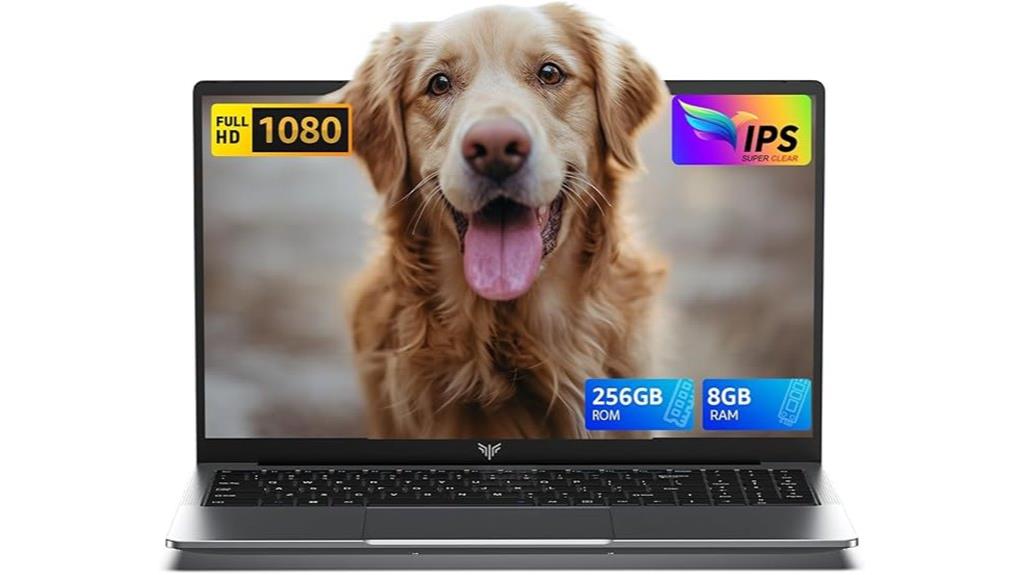
This slim, portable laptop stands out for space enthusiasts who need reliable performance on the go. Powered by the Intel N97 CPU, it offers a 10% performance boost over previous models, handling web browsing, light gaming, and multitasking smoothly. The 8GB DDR4 RAM ensures effortless multitasking, while the 256GB SSD provides quick load times and ample storage. Its 15.6-inch FHD IPS display delivers vibrant visuals for media or stargazing apps. The 5000mAh battery supports over four hours of use, and the lightweight metal body makes it easy to carry during trips or field observations. It’s a versatile, durable companion for space lovers.
Best For: space enthusiasts and travelers seeking a reliable, lightweight laptop for media, web browsing, and light gaming on the go.
Pros:
- Compact and lightweight design (1.6kg) ideal for portability during trips or field observations
- Vibrant 15.6″ FHD IPS display enhances media viewing and visual clarity
- Durable metal body provides increased durability and a sleek appearance
Cons:
- Battery life supports only over 4 hours of use, which may require frequent charging during extended use
- The Intel N97 CPU, while improved, is still a lower-tier processor suited for basic tasks rather than intensive computing
- Limited to 8GB RAM, which might be insufficient for heavy multitasking or demanding applications
ACEMAGIC 17.3 Laptop with Quad-Core 12th Gen Alder Lake N97 Processor
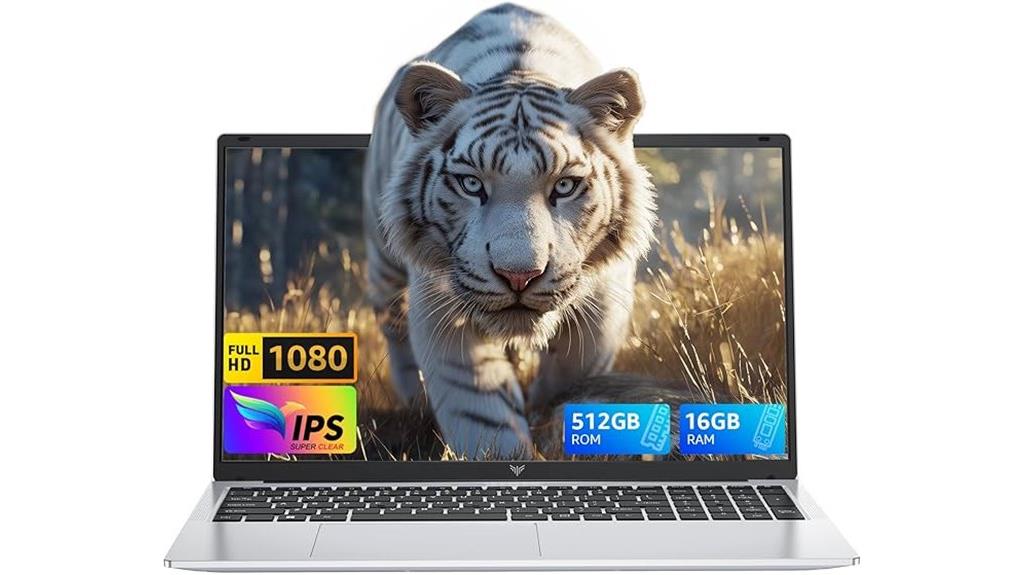
If you’re looking for a portable laptop that handles everyday tasks while offering a vivid display, the ACEMAGIC 17.3-inch model stands out as a solid choice for space enthusiasts and stargazers alike. Its 17.3-inch FHD IPS screen delivers bright, clear visuals perfect for viewing star charts or watching space documentaries. Weighing just 3.52 pounds and with a sleek metal body, it’s easy to carry on your outdoor stargazing trips. Powered by the latest 12th Gen Alder Lake N97 processor, 16GB RAM, and a 512GB SSD, it ensures smooth multitasking and fast data access. The long battery life of around 5 hours makes it suitable for portable use.
Best For: casual users and space enthusiasts seeking a lightweight, portable laptop with a vivid display for everyday tasks and stargazing activities.
Pros:
- Lightweight and portable at just 3.52 pounds with a sleek metal design
- Bright 17.3-inch FHD IPS display ideal for viewing star charts and videos
- Powered by the latest 12th Gen Alder Lake N97 processor with ample RAM and fast SSD storage
Cons:
- Lacks touchscreen and backlit keyboard features
- No USB-C charging port or dedicated charging indicator light
- Battery life of around 5 hours may be limited for extended outdoor use
ACEMAGIC 2024 17.3-Inch FHD Laptop with 16GB RAM and 512GB SSD

The ACEMAGIC 2024 17.3-Inch FHD Laptop stands out for its large, immersive display, making it an excellent choice for space enthusiasts who want to stargaze and explore the cosmos from their desk. Its bezel-free, 1920×1080 resolution screen provides a broad viewing area that enhances visualization of star maps and celestial data. Powered by a 12th Gen Intel Alder Lake N97 processor and 16GB RAM, it handles multitasking smoothly. The 512GB SSD ensures fast data access, while the Windows 11 OS offers user-friendly navigation. Although it has a 5-hour battery life, its portability and high-performance specs make it ideal for serious astronomy enthusiasts.
Best For: astronomy enthusiasts and students seeking a large, high-resolution display for stargazing, celestial data analysis, and multitasking with a powerful yet portable laptop.
Pros:
- Immersive 17.3-inch FHD display with thin bezels enhances viewing experience for star mapping and celestial observations.
- Equipped with a 12th Gen Intel Alder Lake N97 processor and 16GB RAM, ensuring smooth multitasking and data processing.
- Fast 512GB SSD provides quick access to astronomical data, applications, and files, supporting efficient workflows.
Cons:
- Limited 5-hour battery life may restrict extended outdoor or mobile usage during stargazing sessions.
- Some users have reported durability issues, such as hinge and trackpad problems, which could affect long-term reliability.
- The device’s weight (6.14 pounds) and size may reduce portability for on-the-go astronomy activities.
15.6 Inch Laptop with 16GB RAM and 512GB SSD
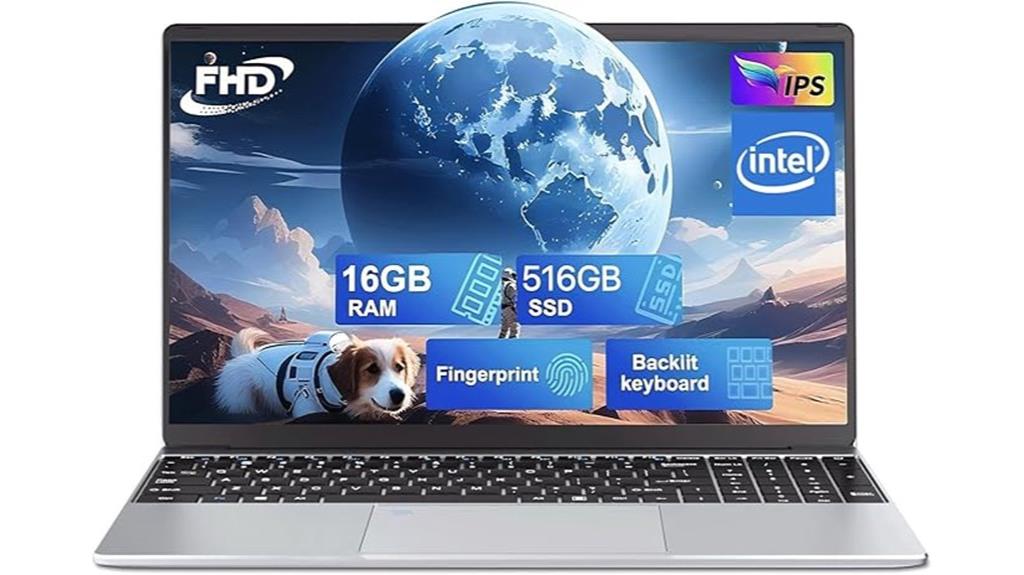
A 6-inch laptop with 16GB RAM and 512GB SSD is an excellent choice for stargazing and space enthusiasts who need a highly portable device without sacrificing performance. Despite its small size, it runs Windows 11 Home, making multitasking smooth with ample RAM and fast SSD storage. The fingerprint reader guarantees secure login, while the backlit keyboard permits work in low light. Its compact design makes it easy to carry on outdoor astronomy sessions or trips. With features like HDMI for display connections and dual USB ports, this tiny laptop combines practicality and style, perfect for those who want power on the go without bulky equipment.
Best For: students and professionals who need a lightweight, high-performance laptop for multitasking, presentations, and on-the-go productivity.
Pros:
- 16GB RAM and 512GB SSD provide fast performance and ample storage for demanding tasks.
- Lightweight at just 3.5 lbs, making it highly portable for travel and commuting.
- Features like fingerprint reader and backlit keyboard enhance security and usability in various environments.
Cons:
- The small 15.6-inch display may be less ideal for intensive visual work compared to larger screens.
- Limited to Windows 11 Home, which might not suit users requiring enterprise or advanced features.
- The device’s durability and support depend on partial US assembly, which may affect repair times in certain regions.
New Laptop with 15.6″ FHD Display, 8GB RAM, 256GB SSD, N5095 CPU, WiFi, Bluetooth, Type-C PD3.0 Fast Charging
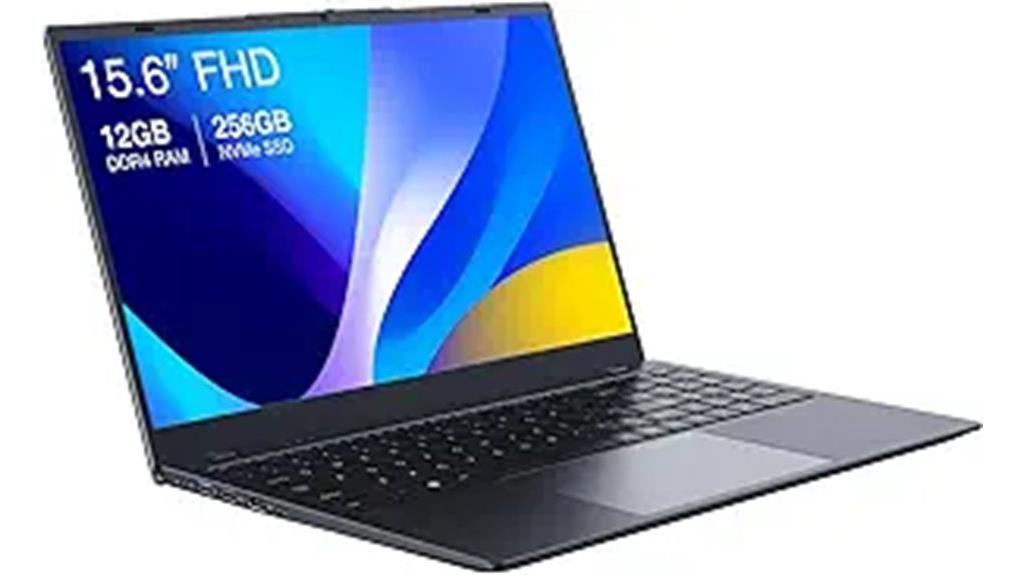
Designed for space enthusiasts who need reliable performance during late-night stargazing sessions, this new laptop features a sharp 15.6-inch FHD IPS display that delivers detailed and vibrant visuals. Its 11th Gen N5095 quad-core processor provides smooth multitasking, while 8GB of DDR4 RAM ensures quick responses. The 256GB NVMe SSD offers lightning-fast read/write speeds, perfect for storing star maps and astrophotography. Connectivity options include dual-band WiFi, Bluetooth 4.2, and multiple ports, including a full-featured Type-C with PD3.0 fast charging. Lightweight and versatile, this laptop is ideal for both casual observations and more intensive space-related tasks.
Best For: space enthusiasts and amateur astronomers who need a reliable, high-performance laptop for stargazing, astrophotography, and related activities.
Pros:
- Vibrant 15.6-inch FHD IPS display offers detailed and colorful visuals ideal for viewing star maps and images.
- Fast NVMe SSD with read/write speeds up to 2000MB/s enhances data access and storage of astrophotography files.
- Versatile connectivity options, including Type-C PD3.0 fast charging and dual-band WiFi, facilitate seamless data transfer and device charging.
Cons:
- Limited 256GB storage may require external drives for extensive astrophotography collections.
- No dedicated GPU, which might affect performance for highly graphics-intensive applications.
- Slightly higher TDP (15W), which could impact battery life during prolonged intensive use.
Laptop Computer 15.6in with Backlit Keyboard, 1TB SSD, 16GB RAM
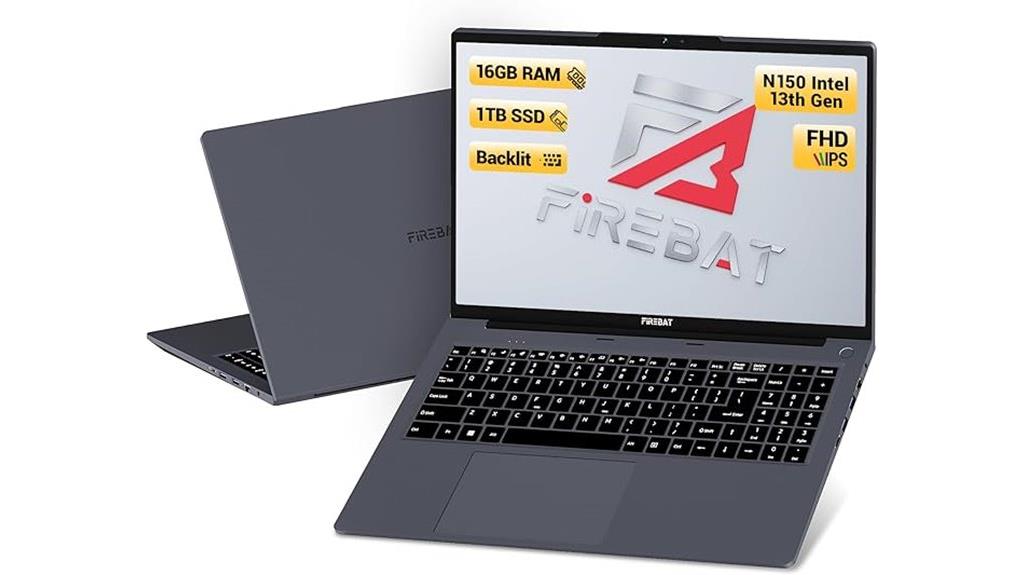
If you’re passionate about stargazing and need a reliable laptop that can handle large files and multitasking, this 15.6-inch model with a backlit keyboard, 1TB SSD, and 16GB RAM is an excellent choice. It features the latest Intel 13th Gen Twin Lake N150 processor, delivering over 30% performance boost over previous generations. The 15.6-inch IPS FHD display ensures sharp visuals, while the 16GB RAM and fast SSD provide smooth multitasking and quick file access. With extensive connectivity options and a long-lasting 5000mAh battery, this laptop is perfect for space enthusiasts on the go. It combines power, portability, and durability effectively.
Best For: space enthusiasts and professionals who need a powerful, portable laptop for multitasking, large files, and on-the-go productivity.
Pros:
- Equipped with the latest Intel 13th Gen Twin Lake N150 processor for enhanced performance.
- 15.6-inch IPS FHD display delivers sharp visuals and clear text.
- Large 1TB SSD and 16GB RAM ensure quick access to files and smooth multitasking.
Cons:
- Battery life may vary depending on usage; long-lasting performance depends on workload.
- Upgradable RAM to 32GB may require technical expertise.
- Limited to Wi-Fi 5, which is slightly slower compared to newer Wi-Fi standards.
ACEMAGIC 2025 AX16 16.0-inch Laptop with 16GB RAM and 512GB SSD

The ACEMAGIC 2025 AX16 stands out as an excellent choice for space enthusiasts who need a portable, high-performance laptop with a vivid display. Its Intel 12th Gen Alder Lake quad-core processor delivers smooth multitasking, while 16GB RAM ensures seamless operation during stargazing or data analysis. The 16-inch FHD display offers sharp, vibrant visuals with wide viewing angles, perfect for detailed celestial imagery. Weighing just 5.59 pounds, it’s lightweight and easy to carry. The 512GB SSD provides fast storage, expandable up to 2TB. Its solid build, modern design, and decent battery life make it a reliable companion for astronomy adventures.
Best For: space enthusiasts and travelers seeking a portable, high-performance laptop for astronomy, data analysis, and multimedia viewing.
Pros:
- Vivid 16-inch FHD display with wide viewing angles for detailed celestial imagery
- Lightweight and portable at just 5.59 pounds, ideal for travel and outdoor use
- Fast 512GB SSD with expandable storage up to 2TB for ample data storage and quick access
Cons:
- Mixed customer reviews with some reports of laggy performance and WiFi connectivity issues
- Limited gaming capabilities, suitable mainly for light gaming and multimedia
- Battery life of approximately 8 hours may be insufficient for extended outdoor use without recharging
ACEMAGIC 2024 17.3-Inch FHD Laptop with 12th Gen Quad-Core Processor

With its large 17.3-inch Full HD display and vibrant visuals, the ACEMAGIC 2024 laptop is an excellent choice for space enthusiasts who want an immersive viewing experience while stargazing or exploring astronomy apps. Its thin bezels maximize screen space, while the sleek silver design adds a modern touch. Powered by a 12th Gen Intel Alder Lake Quad-Core processor and 16GB RAM, it handles multiple applications smoothly. The 512GB SSD guarantees fast performance and ample storage. Weighing just 4.4 pounds, it’s portable enough for outdoor use, and the 6000mAh battery supports all-day activity, making it ideal for extended stargazing sessions.
Best For: outdoor enthusiasts and space hobbyists seeking a portable, high-performance laptop for stargazing and astronomy applications.
Pros:
- Large 17.3-inch Full HD display with vibrant visuals for immersive viewing experiences
- Lightweight design (4.4 pounds) and long-lasting battery (6000mAh) for portability and extended outdoor use
- Powerful 12th Gen Intel Alder Lake Quad-Core processor and 16GB RAM for smooth multitasking
Cons:
- Some users have reported initial setup failures or hardware malfunctions after purchase
- Battery life averages only 5-6 hours, which may be limiting for extended outdoor activities
- Lacks advanced security features like a fingerprint scanner, which could be a concern for some users
Factors to Consider When Choosing Astronomy Laptops With High Battery Life
When selecting an astronomy laptop with high battery life, I consider how long it can last during extended stargazing sessions. I also look at whether it has enough processing power, a display that’s easy on the eyes, and lightweight portability for field trips. Finally, I check its connectivity options to guarantee I can easily connect accessories and equipment in the field.
Battery Longevity Expectations
Choosing an astronomy laptop with high battery life requires considering several key factors that influence how long it can support your outdoor stargazing sessions. Generally, a good laptop should provide at least 6-8 hours of continuous use to avoid frequent recharging. Higher-capacity batteries, like 6000mAh or more, tend to offer longer periods of portability during field observations. Keep in mind that power-hungry tasks such as running planetarium software or editing astrophotography can drain the battery faster. Lightweight, efficient laptops with low power consumption components often deliver better longevity. However, real-world performance varies based on screen brightness, Wi-Fi activity, and background processes. Reading user reviews can give you practical insights into how long a specific model truly lasts in outdoor conditions.
Processing Power Needs
High processing power is vital for astronomy laptops that aim to deliver quick, efficient performance during stargazing and data analysis. I recommend a quad-core or higher CPU, like an Intel i7 or i9, to handle complex simulations and large datasets smoothly. Multi-threaded processors are particularly valuable, enabling multitasking and running resource-intensive astrophysics software without lag. At least 8GB of RAM is necessary, but 16GB or more guarantees seamless operation when juggling multiple applications. Faster processors with clock speeds above 3.0GHz can drastically cut down computation times, which is imperative during time-sensitive observations. Upgrading to newer-generation CPUs also future-proofs your laptop, allowing it to keep pace with increasingly sophisticated astronomical data processing tasks. Focus on these specs to ensure your laptop performs reliably in the field.
Display Efficiency Features
Ever wondered how to extend your laptop’s battery life during long stargazing sessions? The key lies in choosing a display with energy-efficient features. An IPS or OLED panel can markedly reduce power consumption, especially when combined with lower brightness settings and a Full HD resolution. These adjustments help preserve battery life while still delivering clear visuals. Additionally, anti-glare coatings and matte finishes minimize eye strain and allow you to operate at lower brightness levels longer. Modern laptops with adaptive refresh rate technology are even better, as they automatically reduce the refresh rate when high performance isn’t necessary, saving power. A larger, high-quality display with energy-saving features enhances your observational experience without draining your battery, making it ideal for extended outdoor use.
Portability and Size
When selecting a laptop for stargazing, portability and size become key considerations, especially if you plan to venture into remote areas. A lightweight, compact laptop under 4 pounds makes carrying it in the field much easier. Slim designs less than an inch thick are ideal for slipping into backpacks or small bags, perfect for travel to remote astronomy sites. Smaller screens, around 13 to 15.6 inches, strike a good balance—offering portability without sacrificing display quality for astronomy apps. Additionally, laptops with a battery capacity of 6000mAh or higher ensure longer use during extended observing sessions, reducing the need for frequent recharging. Foldable or 2-in-1 convertible models add versatility, letting you use them as tablets or in tent mode for comfortable outdoor viewing.
Connectivity for Fieldwork
To guarantee smooth fieldwork sessions, choosing a laptop with versatile connectivity options is essential. I look for models with multiple USB ports, HDMI output, and SD card readers to easily connect cameras, telescopes, and external displays. Reliable data transfer is vital, so support for high-speed Wi-Fi (802.11ac or Wi-Fi 6) and Bluetooth 5.0 or 5.4 is a must when working remotely. A lightweight, impact-resistant shell helps protect against environmental hazards while keeping the setup portable. Compatibility with external power sources and high-capacity batteries (6000mAh or more) allows for extended use without frequent recharging. Additionally, flexible options like Type-C with Power Delivery enable fast charging and simultaneous device connections, making my fieldwork more efficient and hassle-free.
Frequently Asked Questions
How Does Display Brightness Affect Battery Life During Stargazing?
Display brightness considerably impacts battery life during stargazing. When I keep the screen brightness high, I notice my laptop drains power much faster, reducing my overall usage time. Lowering the brightness helps conserve energy, allowing me to enjoy longer nights under the stars without worrying about running out of battery. I always dim my display as much as possible while still being able to see and work comfortably.
What Is the Typical Battery Lifespan Under Continuous Astronomy Use?
Imagine my laptop as a trusty telescope that keeps observing the night sky. Typically, I get around 6-8 hours of continuous use, depending on brightness and workload. For stargazing, this means I can enjoy a few sessions before needing a recharge. I’ve learned that choosing energy-efficient settings and dimming the display helps extend my battery life, ensuring I don’t miss a moment of cosmic wonder.
Are There Specific Battery-Saving Features Optimal for Night Sky Observation?
Yes, there are specific battery-saving features I find helpful for night sky observation. I always enable dark mode to reduce screen brightness and conserve power. Lowering screen brightness, turning off Wi-Fi and Bluetooth when not needed, and activating power-saving modes make a big difference. Additionally, closing unnecessary apps and avoiding high-performance settings help extend my battery life, so I can enjoy longer stargazing sessions without worry.
How Do Processor Types Influence Battery Efficiency for Astronomy Tasks?
Processor types greatly influence battery efficiency for astronomy tasks. I prefer energy-efficient processors like Intel’s U-series or AMD’s Ryzen mobile chips because they consume less power while still handling star charts and data analysis smoothly. Avoiding high-performance CPUs helps extend battery life during long stargazing sessions. Ultimately, choosing a processor designed for efficiency allows me to enjoy extended viewing without constantly searching for a power outlet.
Can External Batteries Extend a Laptop’s Usage During Extended Stargazing Sessions?
Yes, external batteries can definitely extend your laptop’s usage during long stargazing sessions. I always carry a portable power bank, especially when I plan to be out for hours. Just make sure it has enough capacity and the right connectors. It’s a simple way to keep your laptop running, so you can enjoy uninterrupted stargazing without worrying about battery drain.
Conclusion
If you’re worried about battery life cutting your stargazing sessions short, don’t be. These laptops are designed to last through long nights under the stars, so you can focus on exploring the cosmos without interruption. Remember, a powerful, reliable machine enhances your experience, not hinders it. Investing in one of these top picks means more time marveling at the universe — and less time searching for an outlet.