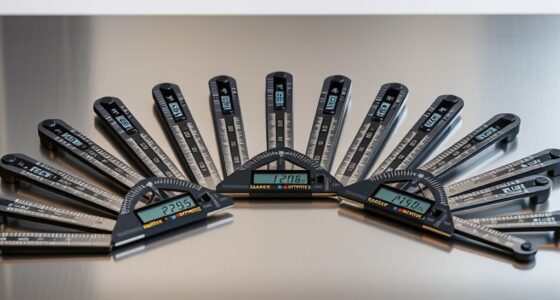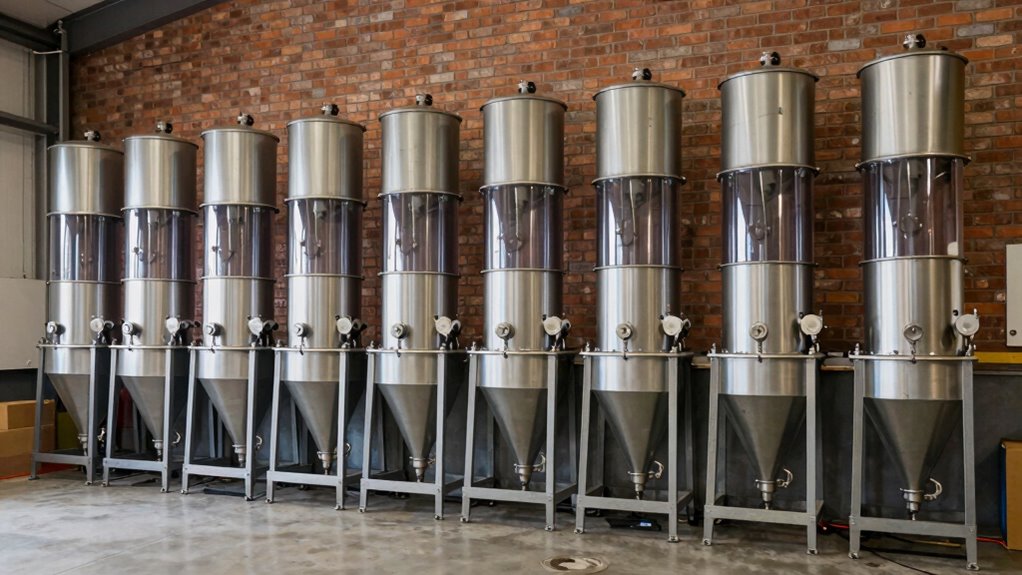
When searching for a 2 stage cyclone dust collector, you’re looking for a system that offers superior dust separation, high airflow, and reliable filtration to keep your workspace clean. The Best Overall pick, the VEVOR 2 HP Dust Collector, balances power and affordability, making it suitable for most workshops. The JET Cyclone with 2-Micron Filter stands out for its filtration efficiency, especially for finer dust. Meanwhile, the Oneida Air Systems Cyclone Attachment offers a compact upgrade for existing single-stage collectors. Buyers often face tradeoffs between power, filtration quality, and price, so understanding these differences is crucial. Continue reading for a detailed breakdown of each option and what suits your specific needs.

Get business pricing on tools and workshop supplies
- Business-only prices and quantity discounts
- Tax-exempt purchasing
- Multiple users, one account, clear invoices
Complete the kit


Key Takeaways
- The VEVOR 2 HP Dust Collector offers an excellent balance of airflow and price, making it a top value choice.
- Filtration efficiency varies significantly; models with 2-micron or better filters prevent finer dust from escaping.
- Upgrading existing systems with cyclone attachments like Oneida can improve performance without full replacement.
- Power ratings (HP and CFM) directly impact dust collection capacity, especially in larger workshops.
- Build quality and ease of maintenance are key factors that influence long-term satisfaction and performance.
| 2.5” Upgrade Woodworking Double Filtration Cyclone Dust Collector for Shop Vac |  | Best Overall for Versatile Shop Compatibility and Dual Filtration | Hose Diameter: 2.5 inches | Hose Length: 2 meters / 6.56 feet | Filtration System: Dual filtration | VIEW ON AMAZON | See Our Full Breakdown |
| Double Filtration Cyclone Dust Collector for Woodworking and DIY |  | Best Value for Fine Dust Filtration and Compatibility | Filtration System: Double filtration | Filter Size: 50mm / 2″ | Efficiency: 99.99% | VIEW ON AMAZON | See Our Full Breakdown |
| JET Cyclone Dust Collector, 2-Micron Filter, 3 HP, 230V 1Ph |  | Best for Large-Scale Workshop Efficiency with High Particle Capture | Filter Efficiency: 99% of 2-micron particles | Particle Capture: 86% of 1-micron particles | Motor Power: 3 HP | VIEW ON AMAZON | See Our Full Breakdown |
| VEVOR 2 HP Dust Collector with 1167 CFM, 39 Gallon Collection Bag, and Mobile Base |  | Best for Power and Mobility in Industrial Settings | Power: 2 HP | Airflow: 1167 CFM | Collection Capacity: 39 gallons | VIEW ON AMAZON | See Our Full Breakdown |
| JET Cyclone Dust Collector, 2-Micron Filter, 2 HP, 230V 1Ph |  | Best for Fine Dust Capture with Compact Design | Filter Size: 2 Microns | Horsepower: 2 HP | Voltage: 230V | VIEW ON AMAZON | See Our Full Breakdown |
| Oneida Air Systems Cyclone Attachment for Single Stage Dust Collector |  | Best Upgrade for DIY Enthusiasts | Compatibility: 1HP to 3HP single-stage dust collectors | Inlet Size: 4″ or 5″ | Outlet Size: 4″ or 6″ | VIEW ON AMAZON | See Our Full Breakdown |
| stage cyclone dust collector | Voltage |
|---|---|
| 2.5” Upgrade Woodworking Doub | — |
| Double Filtration Cyclone Dust | — |
| JET Cyclone Dust Collector | 230V |
| VEVOR 2 HP Dust Collector with | 120V |
| JET Cyclone Dust Collector | 230V |
| Oneida Air Systems Cyclone Att | — |
More Details on Our Top Picks
2.5” Upgrade Woodworking Double Filtration Cyclone Dust Collector for Shop Vac
This dust collector stands out for its ability to handle both large wood chips and fine dust thanks to its dual filtration system, making it a flexible choice for different workshop needs. Compared to the JET Cyclone Dust Collector, which excels in capturing 2-micron particles but is heavier and more expensive, this model offers easier installation and maintenance with its simplified design. Its large inlet and durable build are ideal for continuous use, though the 2.5-inch hose and size may be too bulky for very small workshops. It’s best suited for users who want a reliable, multi-purpose collector compatible with most shop vacs. The main tradeoff is that it might require adapters for certain systems, and its larger footprint could be a concern for tight spaces.
Pros:- Efficiently captures both large chips and fine dust
- Easy to install and maintain with a straightforward design
- Durable, heavy-duty construction for prolonged use
Cons:- May need additional adapters for some vacuum systems
- Size could be too large for compact workshops
Best for: DIYers or contractors with medium to large workshops seeking reliable dual filtration that works with existing shop vacs.
Not ideal for: Small hobbyists with limited space, since the equipment can be bulky and may require additional adapters.
- Hose Diameter:2.5 inches
- Hose Length:2 meters / 6.56 feet
- Filtration System:Dual filtration
- Inlet Size:2.5 inches
- Compatibility:Most shop vacs and dust collection systems
Our verdict“This pick is ideal for workshop users needing flexible, durable filtration compatible with most shop vacs, despite its size.”
Double Filtration Cyclone Dust Collector for Woodworking and DIY
This cyclone dust collector offers a robust double filtration system that captures 99.99% of fine dust particles, making it highly effective for indoor air quality. When compared with the Vevor 2 HP Dust Collector, which provides high airflow but less emphasis on filtration, this model focuses on fine dust removal, suitable for woodworking shops prioritizing cleaner air. Its included connectors and flange make setup straightforward, but if your vacuum or tool port differs in size, additional adapters might be necessary. It’s perfect for DIYers concerned with air quality or those seeking a cost-effective upgrade over single-filter systems. The main tradeoff is that this model may require extra connectors for non-standard setups, and its filtration capacity depends on compatible components.
Pros:- Highly effective double filtration captures 99.99% of dust
- Easy to install with included connectors and flange
- Compatible with various tools and machinery
Cons:- May need extra adapters for non-standard vacuum sizes
- Requires compatible connectors, which could add to setup costs
Best for: Woodworkers and DIY hobbyists prioritizing fine dust filtration and straightforward installation.
Not ideal for: Heavy-duty industrial environments or users with incompatible vacuum sizes without extra adapters.
- Filtration System:Double filtration
- Filter Size:50mm / 2″
- Efficiency:99.99%
Our verdict“This model delivers excellent fine dust filtration for DIY workshops, with some added setup considerations for varying equipment sizes.”
JET Cyclone Dust Collector, 2-Micron Filter, 3 HP, 230V 1Ph
The JET Cyclone Dust Collector is designed for serious workshop use, capturing 99% of 2-micron particles and featuring a large 66-gallon drum that reduces downtime for emptying. It outperforms smaller units like the Vevor 2 HP Dust Collector in capacity and filtration efficiency, but its weight of 268 pounds and 230V requirement make it less portable and more suitable for permanent installation. Remote control adds convenience during operation, especially in larger setups. However, its high cost and heavy weight make it less appealing for small workshops or DIYers. This model is best for those who need high-capacity, industrial-grade dust collection with minimal maintenance.
Pros:- High filtration efficiency, capturing 2-micron particles
- Large 66-gallon drum reduces frequency of emptying
- Remote control enhances ease of operation
Cons:- Heavy and difficult to move without assistance
- Requires 230V power, limiting portability
Best for: Large workshops or commercial woodworking shops needing high-capacity dust collection and efficient filtering.
Not ideal for: Small hobby shops or DIY enthusiasts with limited space and power access, due to its size and weight.
- Filter Efficiency:99% of 2-micron particles
- Particle Capture:86% of 1-micron particles
- Motor Power:3 HP
- Voltage:230V
- Collection Capacity:66 gallons
- Remote Control Range:50 feet
Our verdict“This heavy-duty collector is best for large workshops demanding high capacity and filtration efficiency, but it’s less suited for small or portable setups.”
VEVOR 2 HP Dust Collector with 1167 CFM, 39 Gallon Collection Bag, and Mobile Base
The VEVOR 2 HP Dust Collector delivers strong airflow at 1167 CFM and a sizable 39-gallon capacity, making it suitable for demanding woodworking and industrial environments. Compared with the JET Cyclone, which offers higher filtration efficiency, this VEVOR unit shines in mobility thanks to its mobile base and lockable wheels. Its vortex technology ensures effective dust separation, but the unit’s bulkiness and setup complexity can pose challenges for small workshops. Its high airflow makes it ideal for large-scale projects, though the 3μm filter may not capture the finest particles without upgrades. This model balances power, capacity, and portability for users who need to move their dust collection system frequently.
Pros:- Powerful suction with 1167 CFM airflow
- Large 39-gallon collection bag for extended use
- Mobile base with lockable wheels for repositioning
Cons:- May be bulky for small spaces
- Requires maintenance of filter and bags
Best for: Industrial shop operators or large woodworking setups requiring high airflow and mobility.
Not ideal for: Small workshops or DIY hobbyists who prioritize compactness or minimal setup effort.
- Power:2 HP
- Airflow:1167 CFM
- Collection Capacity:39 gallons
- Voltage:120V
- Speed:3400 RPM
- Filter:3μm Canister
- Noise Level:≤85dB
- Hose Length:2 meters / 78.7 inches
Our verdict“Ideal for industrial or large workshop environments needing robust, mobile dust collection, despite its size and setup requirements.”
JET Cyclone Dust Collector, 2-Micron Filter, 2 HP, 230V 1Ph
The JET Cyclone Dust Collector with a 2-micron filter and 30-gallon drum offers efficient fine dust removal in a more compact footprint compared to larger models. Its two-stage separation system enhances airflow, making it suitable for workshops that need a balance of capacity and space efficiency. While it doesn’t match the massive capacity of the JET 3 HP model, it still provides reliable filtration down to 1 micron and remote operation for convenience. Its 30-gallon drum means more frequent emptying than larger units, but its lighter weight and smaller size make it accessible for small to medium spaces. Overall, this model is a solid choice for those prioritizing fine dust removal without the bulk of industrial units.
Pros:- Efficient two-stage separation captures fine dust down to 1 micron
- Remote control operation adds convenience
- Compact size suitable for limited space
Cons:- Limited capacity requiring more frequent emptying
- Less suitable for large debris volumes
Best for: Small to medium workshops needing effective fine dust filtration with space-saving design.
Not ideal for: Heavy industrial use or workshops with very large debris volume, as the 30-gallon drum fills quickly.
- Filter Size:2 Microns
- Horsepower:2 HP
- Voltage:230V
- Capacity:30 gallons
Our verdict“This cyclone offers reliable fine dust filtration in a compact form, making it suitable for small to medium workshops but not heavy-duty debris collection.”
Oneida Air Systems Cyclone Attachment for Single Stage Dust Collector
This cyclone attachment stands out for significantly improving dust collection efficiency on existing single-stage dust collectors, capturing over 99% of debris. Compared with the larger JET Cyclone models, it offers a more affordable and straightforward upgrade option that extends filter life and reduces maintenance. Its compatibility with 1-3 HP units makes it versatile for many workshops. However, the lack of detailed material specifications raises questions about durability over time, and installation might require additional tools or adjustments. While it doesn’t replace a dedicated two-stage cyclone, this attachment provides a meaningful upgrade without the complexity or cost of full replacement, making it ideal for users seeking better performance on existing equipment.
Pros:- Over 99% dust capture efficiency improves air quality and filter lifespan
- Easy DIY installation with included adapters saves time and complexity
- Compatibility with a wide range of 1-3 HP dust collectors increases versatility
- Made in the USA ensures quality and reliable performance
Cons:- Material details are not specified, raising questions about long-term durability
- Installation may require additional tools or modifications for a perfect fit
- Being an attachment, it may not perform as well as a dedicated two-stage cyclone unit for very heavy workloads
Best for: DIYers and hobbyists looking to enhance their existing single-stage dust collector with minimal hassle and cost.
Not ideal for: Professional workshops or those needing a dedicated two-stage cyclone system for continuous heavy-duty use, due to its attachment nature and limited capacity.
- Compatibility:1HP to 3HP single-stage dust collectors
- Inlet Size:4″ or 5″
- Outlet Size:4″ or 6″
- Material:Not specified
- Made in:USA
- Patents:#7282074 and #D703401
Our verdict“This cyclone attachment makes the most sense for DIYers wanting a simple, effective upgrade to improve dust collection without replacing their existing system.”

How We Picked
These products were chosen based on a combination of airflow capacity, filtration quality, build durability, and user feedback. Priority was given to systems that balance power with ease of use, ensuring they perform well in typical workshop environments. We also considered value for money, maintenance requirements, and versatility, especially for those upgrading or expanding existing setups. The ranking reflects how well each unit meets these criteria while addressing different user needs—from hobbyists to professional woodworkers.Factors to Consider When Choosing 2 Stage Cyclone Dust Collector
Choosing the right 2 stage cyclone dust collector involves evaluating several key factors to ensure it meets your workshop demands. Beyond just power and filtration, you should consider compatibility with your space, ease of maintenance, and long-term value. Making a well-informed decision helps avoid costly mistakes and ensures a cleaner, safer workspace.Airflow Capacity and Power
Airflow capacity, measured in CFM, directly impacts how effectively the dust collector clears large areas and handles multiple tools. Higher horsepower (HP) typically correlates with increased CFM, but not always proportionally. Selecting a system with adequate power for your workshop size prevents bottlenecks and improves dust separation efficiency. Beware of systems that advertise high specs but deliver lower real-world performance due to design or build quality limitations.
Filtration Efficiency
Filtration plays a critical role in capturing fine dust particles that can harm health or compromise air quality. Look for systems with filters rated at 2 microns or smaller for optimal performance. Keep in mind that higher filtration efficiency can sometimes reduce airflow if not designed properly, so balance is key. Upgrading filters later can be costly, so choose a system with good filtration from the start if fine dust control is a priority.
Build Quality and Durability
The longevity of a dust collection system depends on sturdy construction and quality materials. Systems with robust metal bodies tend to withstand workshop abuse better than plastic counterparts. Ease of access for maintenance—like filter removal and bin emptying—also impacts long-term satisfaction. Investing in a well-built model can reduce downtime and repair costs over time.
Ease of Use and Maintenance
Features like simple filter swapping, quick-connect fittings, and clear collection bins simplify ongoing maintenance. Some units include mobility features such as casters or compact designs to fit tighter spaces. Keep in mind that complex systems may offer better performance but can be more challenging to service regularly. Prioritize models that strike a good balance between performance and ease of upkeep.
Price and Value
While higher-priced models often boast better performance and durability, they are not always necessary for small workshops or hobbyists. Conversely, budget options may lack the filtration or airflow needed for larger or more demanding tasks. Consider your specific needs and budget, and look for systems that offer the best features-to-price ratio. Sometimes investing more upfront saves money in the long run through better durability and performance.
Frequently Asked Questions
Can I upgrade my existing single-stage dust collector to a 2 stage cyclone system?
Yes, many shop owners upgrade their single-stage collectors with cyclone attachments like the Oneida Air Systems model. These attachments significantly improve dust separation and reduce filter clogging. However, compatibility depends on your current system’s size and setup, so verifying fit and airflow capacity is important. Upgrading can be a cost-effective way to boost performance without replacing the entire unit.
How much space does a typical 2 stage cyclone dust collector require?
Most 2 stage cyclone dust collectors need a footprint of around 3 to 4 square feet, plus additional clearance for operation and maintenance. Larger models with higher CFM ratings might require more room for proper placement and ventilation. It’s essential to measure your available workshop space carefully and consider mobility features like casters if you need to reposition the unit. Proper placement enhances both safety and efficiency.
Is a 2 micron filter sufficient for fine dust particles?
While a 2-micron filter captures a significant portion of dust, especially larger particles, very fine dust such as silica or certain wood dust may still escape. For environments requiring stricter air quality standards, filters rated at 1 micron or smaller might be necessary. Upgrading filters later can improve this, but choosing a system with high-quality filtration from the start helps maintain cleaner air and better health outcomes.
What maintenance tasks are involved with a 2 stage cyclone dust collector?
Regular maintenance includes emptying collection bins, replacing or cleaning filters, and inspecting hoses and seals for leaks. Properly maintaining the cyclone separator ensures it continues to efficiently separate dust, reducing filter wear. Some models feature quick-release mechanisms or tool-less filter changes, simplifying upkeep. Routine checks can extend the lifespan of the system and maintain peak performance over years of use.
Is higher horsepower always better for my workshop?
Not necessarily; while more horsepower generally means higher airflow capacity, it also comes with increased cost, noise, and power consumption. For small workshops or hobbyists, a 1.5 to 2 HP system might be sufficient. Larger or professional setups benefit from 3 HP or higher units, especially if multiple tools are used simultaneously. Assess your typical workload and space constraints before opting for the most powerful model.
Conclusion
The best choice varies based on your workshop size, budget, and dust control needs. For overall performance and versatility, the VEVOR 2 HP Dust Collector makes a compelling case. Budget-conscious users should consider the 2.5” Upgrade Woodworking Double Filtration Cyclone for its good value. Those seeking premium filtration and build quality will appreciate the JET Cyclone with 2-Micron Filter. Beginners or small shop owners aiming for simplicity will find the Oneida Cyclone Attachment a useful upgrade. Match your choice to your specific workflow and long-term needs for the best results.
As an affiliate, we earn on qualifying purchases.Fall yard work Picks
leaf blowers