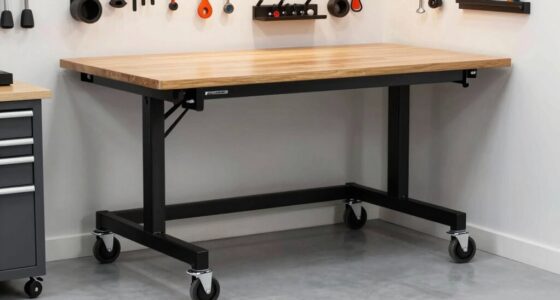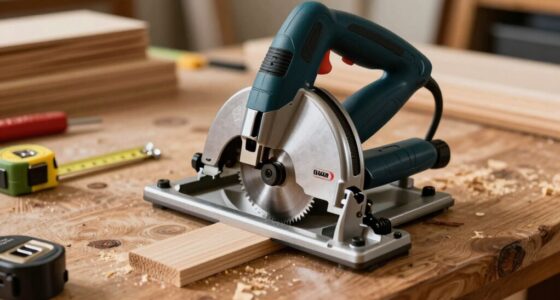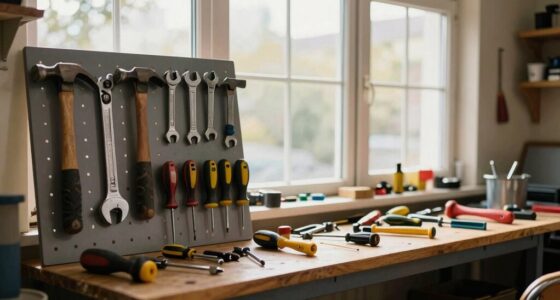
A functional shop setup starts simple, with tools kept accessible and labeled for easy use as you learn. Safety includes basic protective gear and a clean, well-ventilated space. As your skills grow, you’ll upgrade to organized storage, safety guards, and more advanced safety measures. Regular maintenance keeps tools in top shape. Continually improving your setup guarantees safety and efficiency, helping you become more confident. If you keep exploring, you’ll see how your workspace can evolve to support more complex projects.

Get business pricing on tools and workshop supplies
- Business-only prices and quantity discounts
- Tax-exempt purchasing
- Multiple users, one account, clear invoices
Key Takeaways
- Beginner setups focus on basic organization, simple storage, and essential safety gear for easy access and injury prevention.
- As skills grow, incorporate labeled storage solutions and more advanced safety measures like machine guards.
- Intermediate shops feature specialized storage, regular tool maintenance, and safety protocols tailored to project complexity.
- Expert setups include optimized workflows, dedicated zones, sophisticated safety systems, and ongoing safety and organization reviews.
- Across all levels, maintaining core principles of safety, organization, and continuous improvement ensures a functional, evolving workspace.
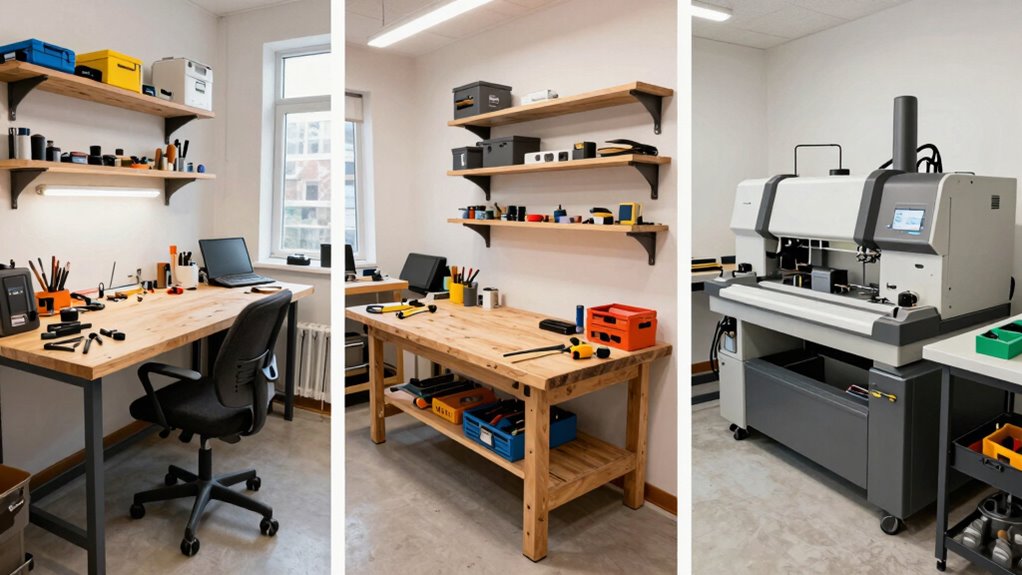
Ever wondered how to set up a shop that matches your skill level? The key is creating a workspace that’s both functional and safe, no matter where you’re starting from. For beginners, focusing on tool organization is essential. Keep your tools accessible and sorted by type or frequency of use. Use labels or designated containers to prevent clutter and save time during projects. This not only streamlines your workflow but also helps you develop good habits early on. As your skills grow, you can start investing in more specialized storage solutions, like wall-mounted racks or drawers, to keep your tools visible and within easy reach. Proper tool organization minimizes the risk of accidents and makes it easier to find what you need without rummaging through clutter, which can lead to injuries. A well-structured workspace also supports effective food preparation when working with kitchen appliances, making tasks more efficient and enjoyable. Incorporating safety protocols from the start establishes a strong foundation for more advanced projects and helps develop good safety habits over time. Additionally, understanding how to implement appropriate safety measures from the beginning can make a significant difference in preventing mishaps. Safety protocols are critical at every skill level, but they become even more important as you take on more complex projects. From the beginning, you should always wear appropriate personal protective equipment, like goggles, gloves, and masks, especially when working with power tools or hazardous materials. Keep your workspace well-ventilated and free of dust or debris that could cause respiratory issues or slips. It’s also beneficial to familiarize yourself with proper tool maintenance, as keeping tools in good condition reduces the risk of malfunctions and accidents. Regularly inspecting your tools and understanding how to troubleshoot common issues can further enhance safety and efficiency. As you advance, you’ll want to adopt more thorough safety measures, such as installing safety guards on machines, securing loose clothing, and establishing emergency procedures. Make it a habit to inspect tools before use, ensuring they’re in good condition to prevent malfunctions or accidents. Keeping a first aid kit nearby is also a wise safety protocol that can make a big difference if an injury occurs. Remember, maintaining your tools and workspace is an ongoing process that supports safety and project success.
A functional shop setup evolves as your skills develop, but fundamental principles like tool organization and safety protocols should always remain a priority. Early on, simplicity and accessibility help you learn efficiently and stay safe. As you progress, investing in better storage solutions and more rigorous safety practices will boost your productivity and keep you secure. Remember to regularly review safety procedures and stay updated on best practices to ensure ongoing safety improvements. A well-organized, safe workspace isn’t just about convenience; it’s about protecting yourself and making your projects more enjoyable. Whether you’re just starting or already experienced, maintaining these core elements will ensure your shop supports your growth while keeping hazards at bay. The right setup adapts to your skill level, but the essentials of order and safety stay constant, guiding you toward successful, injury-free craftsmanship.
As an affiliate, we earn on qualifying purchases.
Frequently Asked Questions
How Often Should I Upgrade My Tools as I Improve?
You should upgrade your tools as your skills improve and your projects demand better performance. Regular tool maintenance keeps everything in top shape, but upgrading guarantees you stay efficient. Invest in storage solutions that protect your tools and keep your workspace organized. As you progress, replacing worn-out tools prevents frustration and injury, so evaluate your tools periodically and upgrade when necessary to maintain a functional, safe, and productive shop.
What Safety Equipment Is Essential at Each Skill Level?
Think of safety equipment like a trusty shield—you need it at every skill level. You should always wear safety gear like goggles, gloves, and ear protection to shield your eyes, hands, and ears from hazards. As you advance, consider adding respirators or face shields for extra protection. Protective equipment is essential to prevent injuries and keep you safe, no matter how skilled you become. Never compromise on safety gear.
How Do I Organize My Workspace for Maximum Efficiency?
You should organize your workspace with an ergonomic layout, placing frequently used tools within easy reach to reduce strain. Use smart storage solutions like wall-mounted racks, labeled bins, and pegboards to keep tools tidy and accessible. Keep work surfaces clear and arrange your equipment to promote smooth workflow. Regularly reassess your setup to optimize efficiency, ensuring safety and comfort while working, regardless of your skill level.
When Should I Invest in Higher-End Equipment?
Invest in higher-end equipment when your skills and workload grow like a tree reaching for the sun. It’s smart to wait until your current tools require frequent repairs or can’t handle your projects efficiently. Prioritize tool maintenance and budget planning to guarantee you’re financially prepared. Upgrading at the right time prevents unnecessary expenses, boosts productivity, and ensures your workspace remains safe and effective as your skills improve.
How Can I Customize My Shop for Specific Projects?
To customize your shop for specific projects, focus on custom storage solutions that keep your tools organized and accessible. Tailor your workbenches and equipment to suit project needs, adding specialized stations if necessary. Incorporate personal branding elements, like signage or custom finishes, to create a professional, unique space. This approach boosts efficiency, showcases your style, and makes your shop better suited for the types of projects you want to tackle.
Conclusion
No matter your skill level, your shop is like a garden—starting small, nurturing growth, and eventually blossoming into a well-organized space. As you learn and improve, your setup will flourish, making every project more enjoyable and efficient. Embrace the journey, tend to your tools, and watch your skills—and your shop—bloom into something truly rewarding. Keep cultivating, and soon, your workspace will be a thriving oasis of creativity.
Fall yard work Picks
leaf blowers
As an affiliate, we earn on qualifying purchases.