The right woodworking project kit for students balances three things that rarely live together: real hammer-and-nail construction, instructions a 9-year-old can follow without an adult hovering, and a finished piece students actually want to keep. My top pick, the SparkJump Premium Wooden Bird House Kit, wins on build quality and included supplies, while the SainSmart Jr. 4-in-1 STEM set is the smarter buy if you’re outfitting a classroom or multiple kids because it spreads the cost across four projects. The main tradeoff in this category is single-project polish versus multi-project variety — and another is whether the kit includes paints and tools or expects you to supply them. Read on for the full breakdown of what each kit does well and who should skip it.

Get business pricing on tools and workshop supplies
- Business-only prices and quantity discounts
- Tax-exempt purchasing
- Multiple users, one account, clear invoices
Complete the kit


Key Takeaways
- Single-project SparkJump kits delivered the highest wood quality and most complete supply bundles, but cost more per project than the 4-in-1 and 6-pack alternatives.
- The SainSmart Jr. multi-project sets dominated on value for classrooms, though their instructions and finish quality trail the SparkJump birdhouse.
- Kits aimed at ages 8-12 generally require a real hammer and adult supervision, while the SparkJump candy dispenser is one of the few genuinely manageable for ages 6+.
- Included paints and tools were the biggest hidden differentiator — several kits looked cheaper until I factored in a separate supply run.
- Projects with a functional payoff (candy dispenser, bird feeder) held student interest longer than purely decorative builds like basic craft-model kits.
| SparkJump Premium Wooden Bird House Kit | 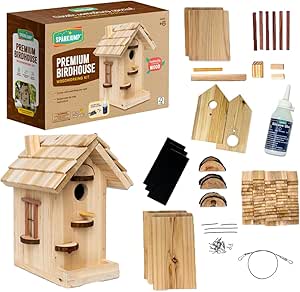 | Best Overall | Material: Cedar wood, cedar shingles, wood slices | Included Parts: 7 cedar wood pieces | Extras: 2 decorative windows, 6 wood slices, perch, 2 eye hooks | VIEW LATEST PRICE | See Our Full Breakdown |
| SainSmart Jr. Woodworking Building Kits for Kids, 4-in-1 STEM Projects Set |  | Best Value for Variety | Models Included: Birdhouse, helicopter, off-road car, tow truck | Material: Real wood | Tools: Screwdriver included | VIEW LATEST PRICE | See Our Full Breakdown |
| Picnic Table Bird Feeder Kit |  | Best for Outdoor Learning | Material: FSC-certified New Zealand pine wood | Design: Picnic table-style bird feeder | Included Hardware: Seed grating, screws, rope, metal ring | VIEW LATEST PRICE | See Our Full Breakdown |
| DIY Wooden Candy Dispenser STEM Building Kit for Kids | 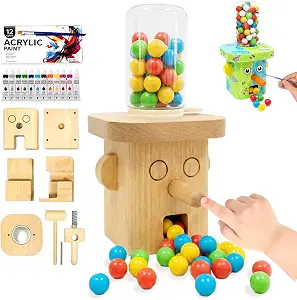 | Best for Youngest Builders | Material: Beech wood | Recommended Age: 6+ | Assembly Method: No-screw, pre-drilled guide holes | VIEW LATEST PRICE | See Our Full Breakdown |
| STEM Wood Building Crafts Kits for Kids Ages 8-12 |  | Best STEM Engineering Focus | Included Sets: Tower Crane, Hydraulic Loader, Solar-powered Truck, Road Roller | Material: Non-toxic plywood | Recommended Age: 8-12 years | VIEW LATEST PRICE | See Our Full Breakdown |
| SainSmart Jr. Woodworking Building Kits for Kids, 4-in-1 STEM Projects Set |  | Best for Creative Painters | Number of Models: 4 | Models Included: 2 robots, dog, motorcycle | Materials: Real wood, non-toxic paints | VIEW LATEST PRICE | See Our Full Breakdown |
| STEM Kits for Kids Age 8-12, 6 Pack Wood Building Projects Crafts |  | Best Value for Group Projects | Number of Kits: 6 | Included Vehicles: Four-wheel drive, tank, wind-powered vehicle, off-road vehicle, solar helicopter, biplane | Material: Non-toxic plywood | VIEW LATEST PRICE | See Our Full Breakdown |
| SparkJump Candy Dispenser Woodworking Kit – STEM Building Kit for Kids with FSC-Certified Wood, Paints & Tools, DIY Gumball Machine Craft for Ages 6+ |  | Best Single-Project Gift | Project Type: Candy dispenser / gumball machine | Material: FSC-certified wood | Includes: Paints, tools | VIEW LATEST PRICE | See Our Full Breakdown |
| SainSmart Jr. Woodworking Building Kit, 4-in-1 Kids STEM Projects Set |  | Best for Youngest Builders | Included Projects: Bird house, helicopter, off-road car, tow truck | Number of Models: 4 | Material: Wood | VIEW LATEST PRICE | See Our Full Breakdown |
| woodworking project kits for student | Material | Recommended Age |
|---|---|---|
| SparkJump Premium Wooden Bird | Cedar wood, cedar shingles, wood slices | — |
| SainSmart Jr. Woodworking Buil | Real wood | — |
| Picnic Table Bird Feeder Kit | FSC-certified New Zealand pine wood | — |
| DIY Wooden Candy Dispenser STE | Beech wood | 6+ |
| STEM Wood Building Crafts Kits | Non-toxic plywood | 8-12 years |
| SainSmart Jr. Woodworking Buil | — | — |
| STEM Kits for Kids Age 8-12 | Non-toxic plywood | 8-12 |
| SparkJump Candy Dispenser Wood | FSC-certified wood | 6+ |
| SainSmart Jr. Woodworking Buil | Wood | Children with adult supervision |
More Details on Our Top Picks
SparkJump Premium Wooden Bird House Kit
Cedar construction sets this kit apart from the plywood-based options in this lineup, and that material choice matters for students: the finished birdhouse survives weather, teaches kids how real wood behaves, and produces something worth displaying. Compared with the SainSmart Jr. 4-in-1 set, which spreads its budget across four models and paints, SparkJump concentrates everything into one premium build — shingles, decorative windows, a perch, and proper hardware. The tradeoff is obvious: you get one project instead of four, and you must supply your own hammer, which the SainSmart kit partially covers with its included screwdriver. For a classroom or parent wanting a single satisfying weekend build rather than several quick crafts, this concentration of quality makes it the strongest all-around pick.
Pros:- Genuine cedar wood and shingles produce a durable, weather-ready finished piece
- All fasteners, glue, sandpaper, and decorative elements included in one box
- Scaling difficulty — simple enough for beginners, detailed enough for older students
- Finished birdhouse is functional outdoors, giving the project a purpose beyond the build
Cons:- Hammer not included, so you need tools on hand before starting
- Only one project per kit, making it a poor value for kids who want variety
Best for: Families and teachers wanting one high-quality, display-worthy build with real cedar rather than several disposable crafts
Not ideal for: Parents of children under 6 — the nailing assembly requires steady hands and adult tool supervision throughout
- Material:Cedar wood, cedar shingles, wood slices
- Included Parts:7 cedar wood pieces
- Extras:2 decorative windows, 6 wood slices, perch, 2 eye hooks
- Fasteners:30 nails, wood glue
- Finishing Supplies:3 sandpaper pieces
- Tools Required:Hammer not included
- Instructions:Included
Our verdict“This is the pick when you want a single memorable build that feels like real woodworking, not a craft kit.”
SainSmart Jr. Woodworking Building Kits for Kids, 4-in-1 STEM Projects Set
Where the SparkJump birdhouse goes deep on one premium build, this SainSmart set goes wide: a birdhouse, helicopter, off-road car, and tow truck in a single box, with real wood, a screwdriver, paints, and brushes. For a student who finishes projects quickly or loses interest after one build, that variety is the whole point — four separate afternoons of assembly and painting for roughly the price of one cedar kit. The tradeoff is material quality: these are lighter, simpler builds than the SparkJump birdhouse, and the birdhouse model here won’t match its weather resistance. ASTM F963 and CPSIA certifications give parents peace of mind on the paint side, though the screwdriver work still needs an adult nearby for younger kids.
Pros:- Four distinct projects in one box, with vehicles that appeal to kids indifferent to birdhouse-only kits
- Real wood and an included screwdriver teach genuine fastening skills
- Acrylic paints and brushes included for full customization
- ASTM F963 and CPSIA certified for child safety
Cons:- Adult supervision required for tool use, so it’s not a solo activity for young kids
- Models are fixed — no room for original designs or free-building
Best for: Parents of kids aged 6-10 who burn through single-project kits and want multiple builds plus painting in one purchase
Not ideal for: Buyers wanting heirloom-quality results — the lighter wood and fixed model selection limit how far the craftsmanship goes
- Models Included:Birdhouse, helicopter, off-road car, tow truck
- Material:Real wood
- Tools:Screwdriver included
- Paints:Vibrant acrylic paints with brushes
- Safety Certifications:ASTM F963, CPSIA
- Number of Projects:4
Our verdict“The best cost-per-project option in this roundup for kids who want to build, paint, and move on to the next thing.”
Picnic Table Bird Feeder Kit
This kit carves out a niche the others don’t touch: a project that lives outside and keeps teaching after assembly. Unlike the SparkJump birdhouse, which is also outdoor-ready, this picnic table feeder invites ongoing observation — refill the seed, watch which species visit, and learn what different birds eat. The FSC-certified New Zealand pine adds a sustainability angle that works well in classroom discussions, and the included seed grating, rope, paint set, and hand tool mean the box is genuinely complete. The tradeoffs are real, though: no published dimensions means you’re guessing on size until it arrives, and unlike the SainSmart set’s four models, this is one build with a narrower skill range. Outdoor placement also means the paint and wood will weather and need maintenance.
Pros:- FSC-certified pine supports lessons on sustainable materials
- Truly all-inclusive: seed grating, screws, rope, paint, and a hand tool in the box
- Customizable seed types attract different species, extending the educational value
- Whimsical picnic table design that kids find more charming than a standard feeder
Cons:- No listed dimensions, making it hard to plan placement or gauge difficulty
- Outdoor exposure means paint and wood degrade over time and need upkeep
Best for: Nature-focused families and elementary teachers who want a build that turns into a recurring outdoor wildlife lesson
Not ideal for: Apartment dwellers or anyone without yard access — the feeder needs outdoor placement to deliver on its promise
- Material:FSC-certified New Zealand pine wood
- Design:Picnic table-style bird feeder
- Included Hardware:Seed grating, screws, rope, metal ring
- Finishing Supplies:Paint set included
- Tools:Hand tool included
- Attracts:Birds and squirrels
- Dimensions:Not specified by manufacturer
Our verdict“Choose this when the goal is a woodworking project that keeps engaging kids outdoors long after the glue dries.”
DIY Wooden Candy Dispenser STEM Building Kit for Kids
At age 6+, this is the most accessible entry point in the roundup. The no-screw, pre-drilled design removes the hammering and screwdriving that make the SparkJump birdhouse and SainSmart vehicle sets risky for early elementary kids — assembly becomes alignment and assembly-line logic rather than tool control. The payoff is also unusually immediate: a working press-the-nose candy dispenser that gets used daily, unlike a birdhouse that sits in a tree. Compared with the SparkJump candy dispenser kit elsewhere in this category, this beech-wood version skews simpler and younger, trading project complexity for independence. That simplicity is the drawback too — an 11-year-old will finish in under an hour and find the mechanism basic, and candy is not included, so have treats ready before the big reveal.
Pros:- Pre-drilled guide holes mean no screws, hammers, or sharp tools required
- Functional dispenser with a fun spring-loaded nose mechanism kids keep using
- Painting set and stickers included for personalization
- Solid beech wood feels substantial compared with typical plywood craft kits
Cons:- Candy not included — a guaranteed disappointment if you don’t stock up beforehand
- Assembly is quick and simple, offering little challenge for experienced builders
Best for: Parents of 6-8 year olds who want a first woodworking success without hammers, screws, or frustration
Not ideal for: Kids over 10 or returning builders — the snap-together assembly is too simple to hold their interest
- Material:Beech wood
- Recommended Age:6+
- Assembly Method:No-screw, pre-drilled guide holes
- Parts Included:Pre-cut wood panels, wooden dowels
- Mechanism:Spring-loaded press-the-nose dispenser
- Extras:Candy jar, painting set, stickers
- Candy:Not included
Our verdict“The right first woodworking kit for young kids who need a fast win and a toy they’ll actually play with afterward.”
STEM Wood Building Crafts Kits for Kids Ages 8-12
This set shifts the goal from craftsmanship to mechanical engineering. A tower crane, hydraulic loader, solar-powered truck, and road roller introduce concepts — hydraulics, solar power, gear-driven motion — that no birdhouse or candy dispenser touches. Compared with the SainSmart 4-in-1 set, which also offers four models, these builds move: the hydraulic loader actually lifts and the truck drives on solar power, which sustains engagement well after assembly. The tradeoff is that this is the least traditional woodworking pick here — smooth-edged non-toxic plywood assembled from step-by-step instructions is closer to engineering model-building than hammer-and-nail carpentry, and there’s no painting or free customization as with the SainSmart or candy dispenser kits. Difficulty also runs higher; the crane in particular will frustrate kids at the younger end of the 8-12 range without an adult.
Pros:- Working mechanisms — hydraulics and solar power — teach real engineering principles
- Four varied models provide sustained challenge across multiple builds
- Non-toxic plywood with smooth edges is safe for independent older-kid assembly
- Screen-free activity with genuine educational depth beyond craft skills
Cons:- Assembly difficulty spikes on complex models, requiring adult help for 8-year-olds
- No paints or decoration supplies, limiting creative customization
Best for: STEM-oriented kids aged 9-12 who care more about how machines work than about painting or decorating
Not ideal for: Kids who want creative expression through paint and design — the fixed instructions and bare plywood leave little room for it
- Included Sets:Tower Crane, Hydraulic Loader, Solar-powered Truck, Road Roller
- Material:Non-toxic plywood
- Recommended Age:8-12 years
- Assembly:Step-by-step instructions
- Safety:Smooth edges, non-toxic materials
- Educational Focus:Engineering, hydraulics, solar power
Our verdict“The clear choice for upper-elementary students whose interest is gears and mechanisms rather than paint and finishes.”
SainSmart Jr. Woodworking Building Kits for Kids, 4-in-1 STEM Projects Set
Most kits in this category stop at assembly, but this option stands out for pairing real wood construction with a full painting and customization stage. Kids build two robots, a dog, and a motorcycle, then decorate them with the included non-toxic paints and brushes, which doubles the project time and gives shy builders a low-pressure creative outlet. Compared with the SparkJump Candy Dispenser Kit, which offers richer materials but only one model, the four-project format here keeps a classroom or household busy for weeks. The tradeoff is that adult supervision is genuinely required for assembly — the screwdriver work is real, not pretend — and the four fixed models leave no room for kids who want to invent their own designs.
Pros:- Real wood and real tools create an authentic building experience
- Included paints and brushes add a full customization phase
- Four models provide variety and repeat engagement
- ASTM F963 and CPSIA certified for child safety
Cons:- Requires active adult supervision during assembly
- Hard cap of four models with no free-build option
Best for: Parents and teachers who want a two-stage build-and-paint activity that stretches across multiple sessions
Not ideal for: Households wanting self-directed play — assembly needs hands-on adult help, and there’s no open-ended building option
- Number of Models:4
- Models Included:2 robots, dog, motorcycle
- Materials:Real wood, non-toxic paints
- Included Tools:Screwdriver, paints, brushes
- Safety Certifications:ASTM F963, CPSIA
- Customization:Paint and brush decorating included
Our verdict“This pick makes the most sense for families who value the decorating phase as much as the building phase.”
STEM Kits for Kids Age 8-12, 6 Pack Wood Building Projects Crafts
Measured purely on projects per dollar, nothing else in this lineup competes — six complete kits covering vehicles from a tank to a solar helicopter. That variety is what makes it classroom gold: unlike the SainSmart Jr. 4-in-1 robotics set, which funnels every builder toward the same models, this pack lets a group of students each tackle a different machine and compare how their mechanisms work. The engineering payoff is real, but so is the friction. Assembly can frustrate younger builders, the battery isn’t included for the motorized models, and the plywood aesthetic is bare — there are no paints like the SainSmart Jr. painting kit includes. This is a building-focused set, not a craft set.
Pros:- Six separate kits at an exceptional per-project price
- Diverse mechanisms teach different engineering principles
- Durable non-toxic plywood construction
- Age-appropriate challenge level for 8-12 year olds
Cons:- Battery not included for motorized vehicles
- Assembly difficulty may overwhelm younger or less patient kids
- No paints or decorative extras included
Best for: Teachers and STEM club leaders who need multiple distinct projects for group or classroom use on a budget
Not ideal for: Buyers seeking a polished gift experience — no batteries, no decorating supplies, and unadorned plywood finishes
- Number of Kits:6
- Included Vehicles:Four-wheel drive, tank, wind-powered vehicle, off-road vehicle, solar helicopter, biplane
- Material:Non-toxic plywood
- Recommended Age:8-12
- Battery Included:No
- Motorized Models:Yes (battery required)
Our verdict“If your goal is maximum hands-on engineering per dollar for multiple kids, this six-pack is the clear choice.”
SparkJump Candy Dispenser Woodworking Kit – STEM Building Kit for Kids with FSC-Certified Wood, Paints & Tools, DIY Gumball Machine Craft for Ages 6+
Where the six-pack STEM set spreads value across many models, this kit concentrates everything into one substantial, functional build: a working gumball machine. That focus pays off in quality — the FSC-certified wood is the most responsibly sourced material in this roundup, and the included paints and tools mean the gift is complete out of the box, with no hardware-store trips. It’s also the only option here that produces something a child will genuinely use daily, which keeps the finished project relevant long after the Picnic Table Bird Feeder Kit’s novelty fades. The obvious tradeoff: it’s a single design, so a household with two kids will need two kits, and ages 6-7 will lean heavily on an adult for assembly steps.
Pros:- Finished build is a functional candy dispenser with lasting play value
- FSC-certified eco-friendly wood
- Paints and tools included for a complete out-of-box experience
- Accessible starting age of 6, the lowest in this roundup
Cons:- Limited to a single design with no additional models
- Younger children need substantial adult assembly help
- Premium single-project pricing compared to multi-kit sets
Best for: Gift-givers and families wanting one polished, complete project with a functional and fun payoff
Not ideal for: Multi-child households on a budget — one model means sibling conflict or a second purchase
- Project Type:Candy dispenser / gumball machine
- Material:FSC-certified wood
- Includes:Paints, tools
- Recommended Age:6+
- Number of Models:1
- Finished Product:Functional gumball dispenser
Our verdict“This is the pick when you want one memorable gift build that ends in something kids actually use.”
SainSmart Jr. Woodworking Building Kit, 4-in-1 Kids STEM Projects Set
This set earns its spot through thoughtful safety engineering: flat head screws paired with counterbored holes mean fasteners sit flush and won’t snag small fingers — a detail the generic six-pack STEM set doesn’t address. The four projects (bird house, helicopter, off-road car, tow truck) skew toward simpler builds than the SainSmart Jr. robot-and-motorcycle kit, making this the gentler entry point for early elementary students, and the decorative stickers let kids personalize without the mess of paint. The compromise is depth: assembly is simpler and faster, so older kids in the 10-12 range will finish quickly and move on, and the wood is plain compared with the SparkJump kit’s FSC-certified stock. Adult supervision is still expected throughout.
Pros:- Flush flat-head screws and counterbore design protect small hands
- Four varied projects keep interest across multiple builds
- Sticker decoration avoids paint mess while allowing personalization
- Easy-to-follow instructions suited to first-time builders
Cons:- Builds are too simple to hold older kids’ attention
- Requires adult supervision for full assembly
Best for: Parents of early elementary kids (roughly 5-8) who want a safe, low-friction first woodworking experience
Not ideal for: Older students aged 10-12 who will find the builds too easy and the projects short-lived
- Included Projects:Bird house, helicopter, off-road car, tow truck
- Number of Models:4
- Material:Wood
- Safety Features:Flat head screws, counterbore
- Customization:Decorative stickers
- Recommended Age:Children with adult supervision
Our verdict“Choose this set when the builder is young enough that safety details and simple wins matter more than engineering challenge.”

How We Picked
I judged each kit against the criteria that actually determine whether a student woodworking project succeeds: wood quality and pre-cut precision (poorly drilled holes frustrate kids faster than anything else), clarity of instructions, completeness of included supplies, age-appropriate tool requirements, and cost per project when buying for a group. I also weighed the finished result — a kit that produces something students display or use beats one that ends up in a drawer, because that outcome drives willingness to attempt the next build.
The ranking logic favors kits that work across the widest range of student ages and skill levels, with bonuses for FSC-certified wood and non-toxic finishes. Multi-project sets rank highly for group settings but are marked down where instructions get thin or where project quality drops off after the first build. Single-project kits earn their spots through polish, not versatility — which is why the order shifts depending on whether you’re buying for one student or twenty.
Factors to Consider When Choosing Woodworking Project Kits For Students
Before settling on a kit, it helps to understand what separates a rewarding first woodworking experience from an afternoon of frustration. These are the factors I weighed most heavily, plus the mistakes buyers commonly make at each step.
Skill Level and Age Range Reality Check
Manufacturers’ age labels are optimistic more often than not, so treat them as a floor rather than a guide. A kit marked for ages 6 and up may still require an adult to hold boards steady while a child hammers, and most nail-based projects need grip strength younger students don’t have yet. The honest question isn’t whether a student can technically build it, but whether they can build it without losing interest halfway through. If the goal is independent work, favor kits with fewer, larger components. If the goal is supervised bonding time, more complex kits are fine — and often better.
Single Project vs. Multi-Project Sets
This is the biggest structural decision and the one buyers most often get wrong. A single-project kit typically means better wood, better instructions, and a more impressive finished piece, but the experience is over in one sitting. Multi-project sets cost less per build and let students progress from simple to complex, which is valuable pedagogically — but the quality of individual projects inside a set can vary widely. A common mistake is assuming all four projects in a 4-in-1 set are equally good; in several sets I compared, one or two builds clearly received more design attention than the rest. For classrooms, multi-project sets usually win. For a gift or a single memorable build, spend the same money on one polished kit.
What’s Actually in the Box
The sticker price hides the real cost unless you read the contents list carefully. Some kits arrive with paints, brushes, sandpaper, and a small tool set; others ship bare wood and expect you to rummage through the garage for a hammer, Phillips screwdriver, and wood glue. That difference can add ten to fifteen dollars and a frustrating store trip to a ‘cheaper’ kit. FSC-certified wood and non-toxic paint matter more than they might seem, both for classroom safety compliance and for parents who care about sourcing. Check whether fasteners are included in pre-counted bags, too — kits that skimp here often leave you one screw short.
The Finished Product Test
Students engage far more deeply when the build produces something functional rather than decorative. Across the kits I compared, candy dispensers and bird feeders consistently generated more enthusiasm than model-style craft builds, because the student gets to use the result and show it off. This matters for retention: a kid who fills a bird feeder they built themselves will ask for the next project. Purely decorative kits aren’t bad, but they work best as quick classroom fillers rather than centerpiece projects. When in doubt, choose the kit whose finished piece you can picture sitting on a counter being used a month later.
Buying for One Student vs. a Classroom
Volume changes the math completely. For a single student, premium single-project kits are worth the extra cost because the quality of that first experience shapes whether they want to continue. For classrooms, scout troops, or camps, per-student cost multiplies fast, and mid-range multi-project sets or bulk packs become the practical choice. Teachers should also verify whether instructions come as printed booklets or printable files — reprinting for twenty students is a real logistical detail. Finally, check shipping times carefully for group orders, since wood kits are heavier and slower to arrive than most school supplies.
Frequently Asked Questions
Do these kits require real tools, or is everything included?
Most woodworking project kits for students expect you to provide at least a hammer, and several also need a screwdriver and wood glue. Kits in this roundup vary widely: the SparkJump options include tools and paints, while the SainSmart Jr. sets and generic craft kits generally provide hardware and pre-cut wood only. Before buying, set aside the basic tool kit you’ll need so the project doesn’t stall on day one. If you’re buying for a classroom and don’t have tools on hand, prioritizing a kit with included supplies saves both money and a group-wide logistics headache. For a single student at home, using your own real tools is actually a plus — it teaches tool handling as part of the project.
Are these kits safe for younger students without supervision?
No nail-based woodworking kit is truly unsupervised territory for students under about 10, regardless of what the packaging suggests. Hammering requires hand-eye coordination and finger placement awareness that younger kids are still developing, and small fasteners are a choking hazard for the youngest builders. The realistic expectation is an adult nearby for the first build, with progressively more independence on later projects. Kits like the SparkJump candy dispenser, rated for ages 6+, are closer to independent than most, but an adult should still handle any sanding of rough spots. Think of supervision as part of the value — these projects work best as shared time, not babysitting.
Is a 4-in-1 or 6-project set better value than buying individual kits?
On pure cost-per-project, yes — multi-project sets typically cut the per-build price by 40 to 60 percent compared with premium single kits. But value depends on whether all the projects inside are ones your student actually wants to build. If a set contains one birdhouse, one feeder, and two projects your child will skip, the effective price per completed build rises sharply. My advice: read the specific project list, not just the count. Sets where every build is functional (feeder, dispenser, house) deliver the best real-world value, while sets padded with decorative filler projects often leave half the box untouched.
Can these kits be used for school STEM curriculum or badge requirements?
Many of them map well onto STEM learning goals, particularly the kits involving simple machines — a candy dispenser demonstrates a lever or gravity-fed mechanism, and bird feeders open conversations about local ecology. Scout badge requirements often specify building a useful wooden item, which most functional kits here satisfy directly. The practical considerations for classroom use are class time (most single kits take 45 to 90 minutes to build and additional time to paint) and whether instructions can be shared across a group. For badge work, keep the finished project intact rather than disassembling it, since inspectors usually want to see the completed item.
What should I do if pieces don’t fit or pre-drilled holes are misaligned?
This is the most common quality complaint with budget woodworking kits, and it’s worth planning for rather than being caught off guard. Pre-drilled holes occasionally miss their marks, and pre-cut pieces can vary slightly in a production run. A tube of wood glue solves most alignment problems, and slightly enlarging a hole with a hand drill or even a nail turns a stuck build into a working one. If a kit arrives with missing hardware, most manufacturers in this space — including SparkJump and SainSmart Jr. — ship replacement parts on request, so contact the seller before writing off the kit. Buying one spare kit for a classroom group is cheap insurance against a single defective piece derailing a lesson.
Conclusion
The right pick comes down to who’s building and why. For best overall, the SparkJump Premium Wooden Bird House Kit earns the top spot with premium FSC-certified wood, included paints and tools, and a finished piece students are proud to display. For best value, the SainSmart Jr. 4-in-1 STEM set delivers four projects at a per-build price nothing else in this lineup matches, making it the clear choice for classrooms and siblings. The SparkJump Candy Dispenser kit is my pick for beginners and younger students (ages 6+), since its larger components and functional payoff keep early builders engaged. For group programs on a budget, the 6-pack STEM wood building set covers the most students per dollar, while the Picnic Table Bird Feeder Kit is the pick for family projects where the build matters as much as the result. Whichever direction you choose, prioritize complete supplies and clear instructions over project count — one great build beats three frustrating ones every time.
Halloween Picks
halloween
As an affiliate, we earn on qualifying purchases.