
To build a better miter saw workstation for real projects, start by ensuring it enhances workflow and safety. Use durable plywood for the base and a hardwood top for stability. Make it ergonomic with adjustable height and ample infeed/outfeed space. Incorporate organized storage solutions for tools to minimize clutter. Don’t forget safety features like blade guards and clamps for precise cuts. Keep these essentials in mind, and you’ll discover even more ways to elevate your workstation.

Get business pricing on tools and workshop supplies
- Business-only prices and quantity discounts
- Tax-exempt purchasing
- Multiple users, one account, clear invoices
Key Takeaways
- Design the workstation with ample infeed and outfeed space to accommodate longer wood pieces efficiently during real projects.
- Choose a combination of plywood for the base and hardwood for the top to balance durability and cost-effectiveness.
- Incorporate adjustable legs to accommodate different user heights and enhance comfort during prolonged use.
- Integrate organized storage solutions like shelves and drawers to keep tools accessible and minimize workspace clutter.
- Add safety features such as blade guards, anti-kickback pawls, and a dust collection system to enhance overall safety and cleanliness.
Building a miter saw workstation can transform your woodworking experience, making it more efficient and enjoyable. A well-designed workstation not only enhances your workflow but also prioritizes safety, particularly when using powerful tools like a miter saw. Before you plunge into your project, reflect on how to incorporate miter saw safety into your design. This means guaranteeing that the workstation provides stability, has proper height adjustments, and includes safety features like blade guards and emergency shut-off switches.
Building a miter saw workstation enhances efficiency and safety, ensuring a seamless woodworking experience with thoughtful design and features.
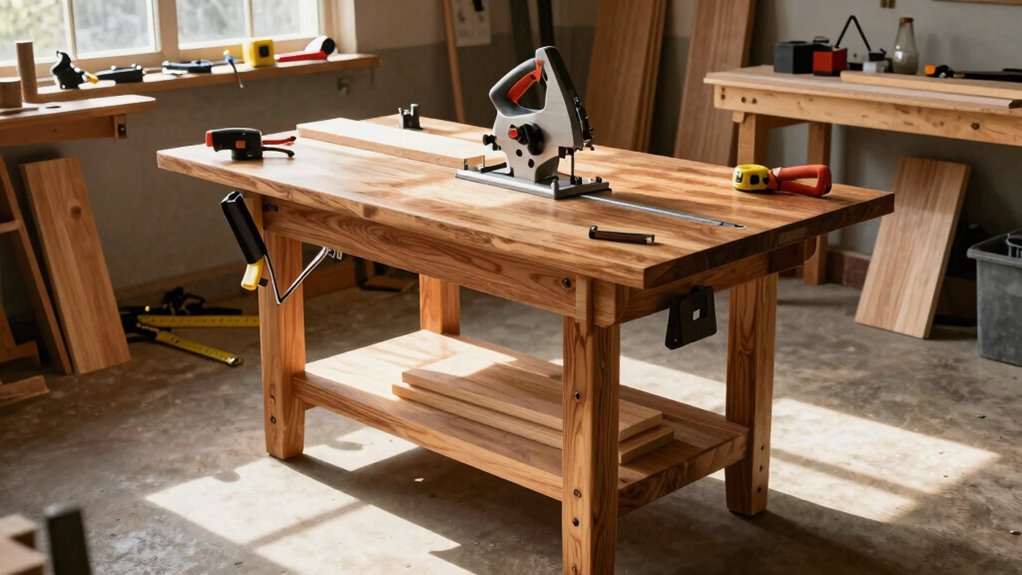
When it comes to workstation materials, you’ve got several options to evaluate. Plywood is a popular choice due to its durability and ease of customization. It can handle the weight of your miter saw and any materials you’ll be cutting. If you want something more robust, think about using hardwood for the work surface. This’ll give you a solid platform that can withstand heavy use while also looking great in your workshop. You might want to use a combination of materials, such as a sturdy plywood base with a hardwood top, to balance cost and durability.
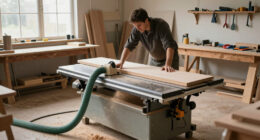
As you plan your workstation, reflect on the dimensions that suit your space and projects. Ideally, your workstation should allow for ample infeed and outfeed space. This’ll help you manage longer pieces of wood easily without risking miscuts or accidents. You’ll want to guarantee that the workstation’s height is comfortable for you, as working at an awkward angle can lead to fatigue and mistakes. If possible, build in adjustable legs to accommodate different users or situations. Incorporating ergonomic considerations into your design can further improve comfort and safety during prolonged use. Additionally, considering workstation layout can optimize your workflow and safety. To ensure safety, it’s also important to evaluate the proper tool setup and secure mounting to prevent movement during operation. Furthermore, integrating safety features like anti-kickback pawls or push sticks can significantly reduce the risk of injuries.
Don’t forget about storage! You can integrate shelves or drawers beneath the workstation for easy access to tools and materials. This’ll keep your workspace organized and minimize clutter. A clutter-free environment not only improves efficiency but also enhances miter saw safety. When everything has its place, you’re less likely to misplace tools or trip over materials. Additionally, considering power tool safety features during planning can further prevent accidents.
Finally, think about adding features like clamps, stop blocks, or even a dust collection system to enhance your workstation. These elements’ll help you achieve precise cuts and maintain a clean working area, further boosting both efficiency and safety. With careful planning and the right materials, you’ll create a miter saw workstation that supports your projects and keeps you safe while doing what you love.
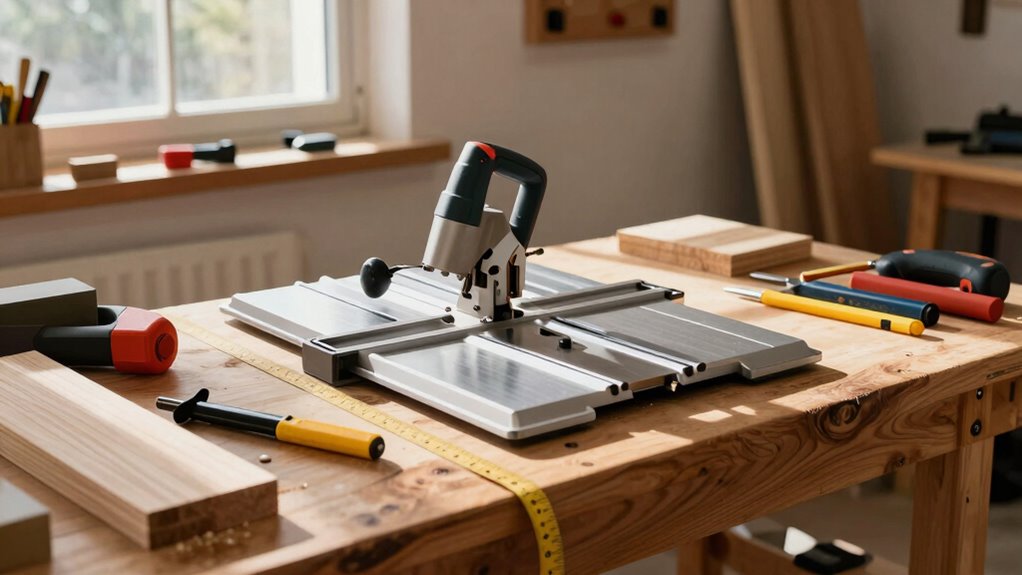
miter saw workstation with adjustable height
As an affiliate, we earn on qualifying purchases.
As an affiliate, we earn on qualifying purchases.
Frequently Asked Questions
What Materials Are Best for a Durable Miter Saw Workstation?
For a durable miter saw workstation, consider using high-quality plywood options like birch or marine plywood. They offer strength and resistance to wear. Guarantee your workbench height suits your comfort; it should be about elbow height when you’re standing. This helps you maintain control and accuracy while cutting. Adding a solid base and sturdy legs enhances stability, making your workstation efficient and reliable for all your projects.
How Can I Improve Dust Collection in My Workstation?
To improve dust collection in your workstation, consider that effective dust extraction methods can reduce airborne particles by up to 90%. Start by installing a vacuum attachment option on your miter saw, ensuring it fits snugly to capture debris right at the source. You can also create a dust hood around the saw for added efficiency. Regularly check and clean your filters to maintain peak suction, keeping your workspace cleaner and healthier.
What Safety Gear Should I Wear While Using a Miter Saw?
When you’re using a miter saw, always wear eye protection to shield your eyes from flying debris. It’s essential for saw blade safety. A good pair of safety glasses or goggles will help prevent injuries. You should also consider wearing ear protection, as miter saws can be loud. Additionally, using a dust mask can protect you from inhaling harmful particles. Stay safe and make sure you’re equipped properly before starting your project!
Can I Customize My Workstation for Different Project Sizes?
Absolutely, you can customize your workstation for different project sizes! While a fixed setup offers stability, project adaptability requires flexibility. Consider adjustable extensions or modular components to easily switch between small and large projects. With the right design, you’ll find it effortless to accommodate varying dimensions. Embrace the duality of a stable base with adaptable features, and you’ll enhance both efficiency and creativity in your woodworking endeavors.
How Do I Maintain My Miter Saw for Optimal Performance?
To maintain your miter saw for peak performance, start with regular blade sharpening to guarantee clean cuts. Check the alignment frequently; if your cuts aren’t accurate, it’s time for an adjustment. Keep the saw clean and free of debris, as this can affect its operation. Lubricate moving parts as needed, and inspect the power cord for any wear. A little upkeep goes a long way in extending your saw’s life and efficiency.
Conclusion
Building a miter saw workstation is like crafting a sturdy bridge; it connects your ideas to the tangible projects you create. By customizing your setup to fit your specific needs, you’ll find that your workflow becomes smoother and more efficient. Remember, the right tools and organization can transform chaos into clarity, allowing your creativity to flow freely. So, roll up your sleeves, and get started—your next masterpiece is just a cut away!
Fall yard work Picks
leaf blowers
As an affiliate, we earn on qualifying purchases.