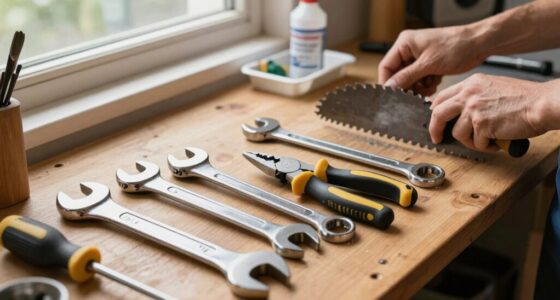
To prevent catches when sharpening turning tools, aim for a bevel angle between 55° and 65°. This range provides a good balance between cutting efficiency and edge stability, helping your tool glide smoothly without grabbing. Too steep may cause catches, while too shallow can dull quickly. Maintaining a consistent angle during grinding and honing is key to reliable results. Keep exploring to discover more tips for perfecting your sharpening technique.

Get business pricing on tools and workshop supplies
- Business-only prices and quantity discounts
- Tax-exempt purchasing
- Multiple users, one account, clear invoices
Key Takeaways
- Maintain a bevel angle between 55° and 65° to balance cutting efficiency and prevent catches.
- Consistently preserve the bevel angle during grinding and honing for predictable tool behavior.
- Use appropriate abrasive wheels to achieve a sharp, precise bevel without excessive heat buildup.
- Regularly hone the edge with fine diamond stones or honing paste to reduce the need for aggressive grinding.
- Avoid overly steep or shallow bevel angles, as they can cause catching or reduce cutting effectiveness.
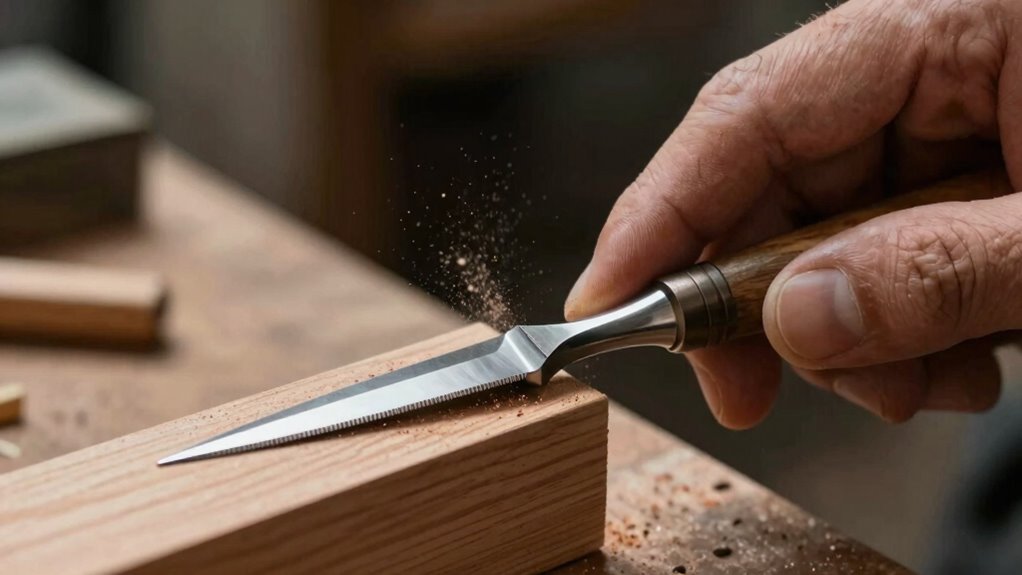
Have you ever wondered why your turning tools don’t produce clean cuts? The answer often lies in the way you sharpen your tools and the bevel angle you choose. Selecting the right grinding wheel is essential because it directly impacts the sharpness and edge retention of your tools. A grinding wheel with the appropriate abrasive material and grit size ensures you can create a fine, precise edge without excessive heat or dulling. For most turning tools, a medium to fine grit wheel works best, as it allows you to shape the bevel accurately without removing too much material. When choosing your grinding wheel, consider the type of steel in your tools and the level of finish you desire. Using the right wheel prevents overheating, which can soften the edge, and helps you maintain a consistent bevel angle, critical for a smooth cut. Proper tool maintenance also plays a crucial role in keeping your edges in optimal condition over time.
Once you’ve selected the proper grinding wheel, honing becomes the next essential step. A good honing technique refines the edge, removing any burrs or imperfections left after grinding. It’s about polishing and aligning the bevel to achieve a razor-sharp edge that minimizes catch and tearing. When honing, apply light pressure and focus on maintaining the same bevel angle you established during grinding. This consistency ensures your tool’s cutting edge is balanced and durable. Use a fine diamond stone or honing paste to polish the bevel, paying attention to the edge’s apex. Regular honing extends the tool’s sharpness and reduces the need for frequent grinding, which can wear down the steel over time.
The bevel angle itself plays a pivotal role in preventing catches. Too steep an angle makes the tool aggressive but can cause it to bite in too eagerly, leading to catches or tear-out. Too shallow, and it might not cut effectively or could dull quickly. The sweet spot usually ranges between 55 and 65 degrees, depending on your turning style and the wood you’re working with. Achieving this angle requires careful grinding and honing. Keep in mind that a consistent bevel angle across your tools makes for predictable, smooth cuts, reducing frustration and improving safety.
turning tool sharpening grinding wheel
As an affiliate, we earn on qualifying purchases.
As an affiliate, we earn on qualifying purchases.
Frequently Asked Questions
How Often Should I Re-Sharpen My Turning Tools?
You should re-sharpen your turning tools whenever you notice a decline in cutting performance or increased effort, typically every few uses or when the edge dulls. Regular sharpening extends your tool’s longevity and maintains peak cutting quality. Keep an eye on the tool’s edge, and don’t wait too long—frequent sharpening ensures smoother cuts and prevents catch issues, ultimately saving you time and effort while preserving your tools’ precision.
What Types of Stones Are Best for Sharpening?
Imagine your tools as dancers needing perfect shoes—your stones are the stage. Diamond stones cut through metal sharply and quickly, ideal for fast, precise sharpening. Oil stones, with their smooth grit, provide a gentle polish, ensuring longevity and fine edges. Both types serve well, but choose diamond stones for rapid results and oil stones to refine and maintain your tools’ sharpness, ensuring your craftsmanship remains flawless.
Can I Sharpen Turning Tools With a Regular Bench Grinder?
You can sharpen turning tools with a regular bench grinder, but you need to select the right grinding wheel and use proper sharpening techniques. Select a fine or medium grit wheel to avoid removing too much material and maintain the proper bevel angle. Keep the tool cool by periodically quenching it in water, and use consistent, controlled strokes to prevent catching and ensure a sharp, smooth edge.
How Does the Tool’s Material Affect the Sharpening Angle?
Your tool’s material considerably impacts the sharpening angle because material considerations and hardness impact how easily it can be ground. Harder materials, like carbide, require a more precise, often steeper angle to avoid chipping, while softer steels allow for a broader angle. You should adjust your bevel angle based on the hardness impact, ensuring a sharp edge without risking damage or dulling quickly. Properly matching the angle to the material prolongs tool life.
What Safety Precautions Should I Take During Sharpening?
You should always wear protective gear like safety glasses and gloves to shield yourself from sparks and debris. Make certain your workspace is well-lit, organized, and free of clutter to prevent accidents. Keep your hands away from the sharpening wheel, and don’t rush the process. Use proper tools and follow manufacturer instructions. Taking these precautions minimizes risks, keeps you safe, and helps you achieve a sharp, effective edge on your turning tools.
Conclusion
By carefully setting your bevel angle, you’ll master the art of turning without fear of catching. Think of your tool as an extension of your hand—smooth, precise, and perfectly balanced. When you dial in that ideal bevel, you reveal a world of flawless cuts and effortless finishes. So, keep honing your skills, and let your turning tools become your trusted allies—because with the right angle, catching becomes a thing of the past, and excellence is within your grasp.
Evergreen bestsellers Picks
bestsellers
As an affiliate, we earn on qualifying purchases.