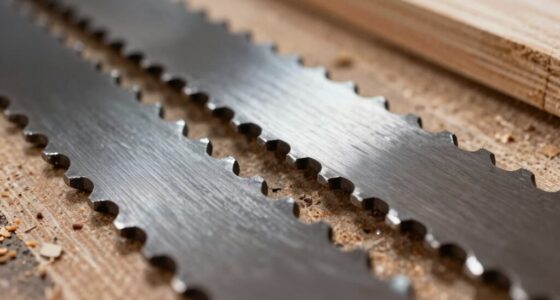
One big mistake that can make your track saw cuts look rough is using the wrong blade. If you choose a blade with too few teeth for hardwoods, you’ll end up with tear-out and ragged edges. Dull blades can also ruin your finish, leading to splintering. Keeping your blades sharp and matching them to your project’s wood type is essential for clean cuts. There’s more to take into account that can elevate your woodworking game even further.

Get business pricing on tools and workshop supplies
- Business-only prices and quantity discounts
- Tax-exempt purchasing
- Multiple users, one account, clear invoices
Key Takeaways
- Using the wrong blade type for the wood can lead to rough cuts and poor finishing results.
- Dull blades can cause splintering and rough edges; regular sharpening is essential.
- Ensure the track is clean and properly aligned to avoid uneven cuts.
- High-quality blades produce cleaner cuts and improve overall cutting efficiency.
- Proper setup and technique are crucial for achieving smooth, professional-looking results.
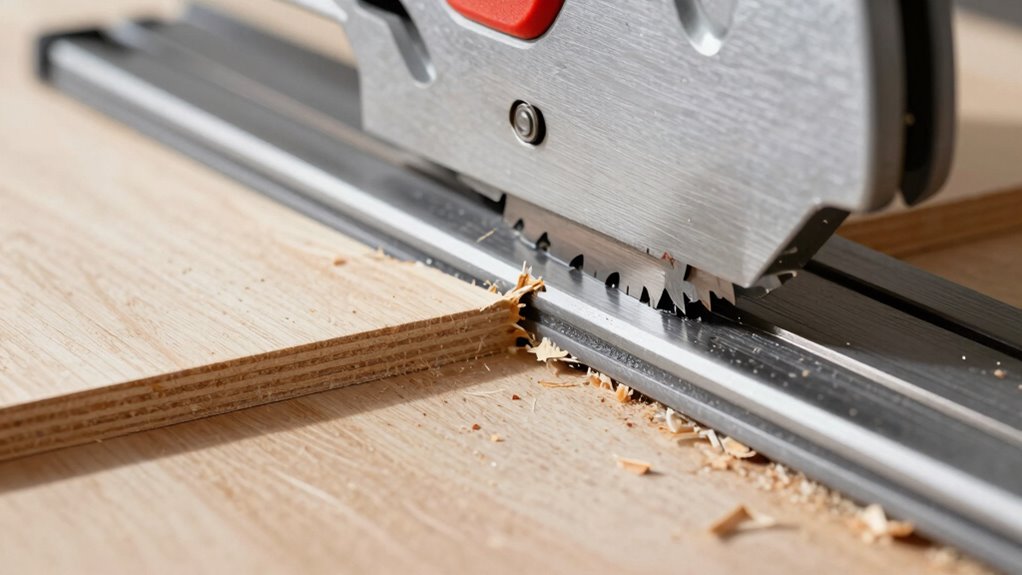
When you’re tackling precision cuts in woodworking, track saws become your best friend. Their ability to deliver clean, straight cuts can greatly improve your project’s overall look. However, even the best track saws can produce rough cuts if you’re not careful. One common mistake that often leads to poor cut quality is improper blade selection. Choosing the right blade is essential, and getting it wrong can turn a flawless piece of wood into something that looks less than professional.
First off, you need to evaluate the material you’re cutting. Different woods have different densities and grain structures, which means they require specific blade types for ideal results. For hardwoods, a blade with more teeth—usually around 60 to 80—is ideal. This guarantees that you get smooth cuts with minimal tear-out. On the other hand, if you’re working with softer woods, a blade with fewer teeth can be more efficient. Make sure to match your blade selection to the type of wood, as this can notably influence your cut quality.
Evaluate your wood’s density and grain to select the right blade—more teeth for hardwoods, fewer for softwoods.
Another often-overlooked aspect is the condition of your blade. If you’re using a dull blade, you’re asking for trouble. A dull blade can lead to rough edges and splintering, no matter how precise your track saw setup is. Regularly inspect your blades for wear and replace them as necessary. Keeping your blades sharp is a simple way to achieve cleaner cuts and ultimately a better finish. Additionally, understanding blade compatibility and ensuring you’re using the correct type for your saw can prevent unnecessary difficulties. Using the correct blade type can significantly improve your cutting results and prolong the life of your saw. Moreover, using a quality blade can make a noticeable difference in cut smoothness and efficiency. It’s also worth noting that a properly installed blade can help prevent vibrations that might cause rough cuts.
Furthermore, the importance of blade quality cannot be overstated, as higher-quality blades tend to stay sharper longer and produce cleaner cuts. Additionally, don’t underestimate the importance of proper setup. Make sure your track is clean and free from debris before making cuts. Any dirt or residue can interfere with the saw’s movement, resulting in uneven cuts. Align the track correctly, as even a slight misalignment can lead to rough edges. Taking these extra moments to prepare your workspace pays off in the long run. Ensuring your setup is precise helps maintain consistent cut quality from start to finish.
hardwood track saw blades 60 teeth
As an affiliate, we earn on qualifying purchases.
As an affiliate, we earn on qualifying purchases.
Frequently Asked Questions
What Types of Materials Can I Cut With a Track Saw?
You can cut various materials with a track saw, making it a versatile tool for your projects. It excels at plywood cutting, ensuring clean edges. You can also tackle laminate sheets, hardwood boards, MDF sheets, and particle board with ease. The track saw’s precision allows you to achieve professional results, whether you’re working on furniture, cabinetry, or any DIY project. Just set it up right, and you’ll get smooth, accurate cuts every time!
How Do I Maintain My Track Saw for Optimal Performance?
To keep your track saw performing like a well-oiled machine, focus on regular blade maintenance and track alignment. After every use, clean the blade and check for chips or dullness. Adjust the track alignment to guarantee smooth cuts; even a small misalignment can cause issues. Don’t forget to lubricate moving parts and store it properly. Doing these simple tasks will extend your saw’s lifespan and improve your cutting accuracy.
Can I Use a Track Saw for Bevel Cuts?
Yes, you can use a track saw for bevel cuts! To achieve clean bevels, adjust the saw angles according to your desired bevel techniques. Most track saws allow you to set the blade at specific angles, making it easy to create precise bevel cuts. Just verify your track is aligned properly and that you guide the saw smoothly along the edge. With practice, you’ll master those bevel cuts in no time!
What Safety Gear Should I Wear While Using a Track Saw?
When you’re using a track saw, you should definitely wear safety goggles to protect your eyes from dust and debris. Hearing protection is also vital, as track saws can produce loud noise that might damage your hearing over time. Don’t skip these essential safety measures—your eyes and ears will thank you later. Always prioritize your safety to guarantee a smooth and enjoyable cutting experience.
How Do I Clean up After Making Track Saw Cuts?
After making those track saw cuts, you’ll want to channel your inner cleaning guru. First, sweep up the sawdust like you’re in a competitive vacuuming championship. Next, wipe down your workspace—those cutting techniques deserve a tidy finish! Finally, take a moment to admire your handiwork, adding those finishing touches to the edges. You might even pretend you’re on a home makeover show, basking in the glory of your clean, sawdust-free zone!
Conclusion
To achieve smooth, professional track saw cuts, remember: measure twice, align carefully, and cut steadily. Don’t rush the process; take your time to guarantee precision. Double-check your setup, maintain a steady hand, and let the saw do the work. By paying attention to these details, you’ll avoid those pesky rough edges and achieve the clean results you desire. So, embrace patience, embrace practice, and watch your skills improve with every cut you make.
Fall yard work Picks
leaf blowers
As an affiliate, we earn on qualifying purchases.