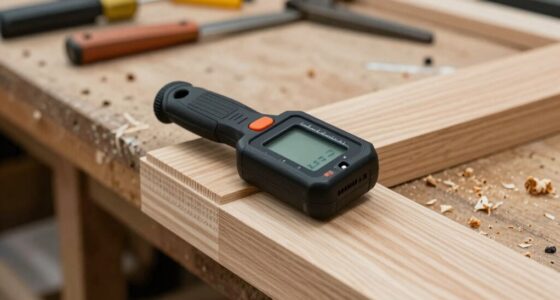
A consistent reference edge is crucial for achieving accuracy and professionalism in your work. It provides a reliable line for measurements, alignments, and visual checks, helping you reduce mistakes and maintain neatness. By sticking to a steady edge, you’ll improve precision in projects like carpentry, design, or layout tasks. This simple habit strengthens your craftsmanship and guarantees higher-quality results. Keep exploring, and you’ll discover more about how this small detail makes a big difference.

Get tools and workshop supplies delivered free — and shop member deals
- Fast, free delivery on millions of items
- Access to Prime Big Deal Days deals on October 6–7
- Prime Video, Amazon Music and more included
Key Takeaways
- A consistent reference edge ensures measurement accuracy and reduces errors in various projects.
- It simplifies visual alignment, enabling early detection and correction of deviations.
- Using a reliable edge enhances overall work quality and professional appearance.
- It promotes efficient workflows by providing a steady point for cutting and aligning tasks.
- Mastering a reference edge is fundamental to developing precise craftsmanship skills.
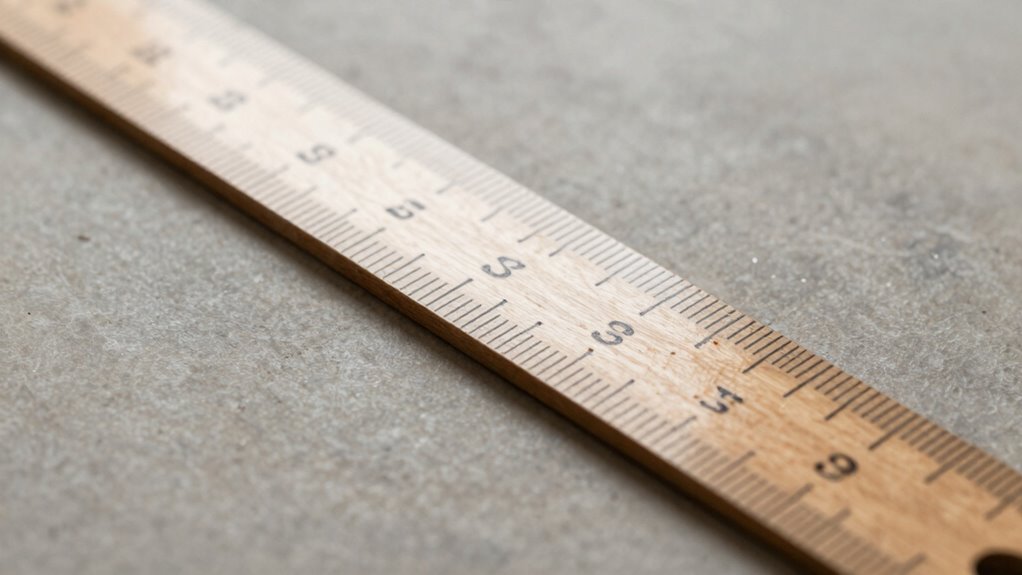
A consistent reference edge might seem like a small detail, but it plays an essential role in ensuring accuracy and efficiency in your work. When you rely on a stable edge, you’re providing a reliable point of reference that helps maintain visual alignment across your measurements and project layout. This consistency reduces errors and keeps your work neat and precise, whether you’re cutting materials, aligning components, or marking measurements. Without a designated reference edge, your work can become skewed, leading to misalignments that compound over time, wasting both time and resources.
By establishing a clear, consistent reference edge, you create a foundation that supports measurement accuracy. When your measurements are based on a stable edge, you eliminate variables that can introduce discrepancies, such as slight shifts or inconsistencies in material placement. This precision is especially important in tasks demanding high accuracy, like carpentry, machine setup, or graphic design. With a reliable edge, you can confidently measure and mark, knowing that your results will be consistent every time. This consistency is indispensable when replicating measurements or aligning multiple parts, ensuring your entire project stays on track.
Establishing a stable reference edge ensures precise measurements and consistent alignment for flawless results.
Visual alignment also benefits from a consistent reference edge. When your work visually lines up with a fixed point, it’s easier to spot deviations or errors early, allowing you to correct them before they escalate. This improves the overall quality of your work and reduces the need for rework. It’s much simpler to see whether elements are properly aligned when they’re anchored to an unchanging reference point. Over time, this practice sharpens your attention to detail and enhances your ability to produce precise, professional results.
Implementing a consistent reference edge doesn’t require fancy tools—just a steady hand and a keen eye. You can use a straightedge, a known edge of a material, or a dedicated guide to establish this point. Once in place, you should consistently use it throughout your project, whether measuring, cutting, or aligning. Doing so creates a seamless workflow, minimizing mistakes and ensuring your measurements and alignments remain dependable.
In addition, understanding the importance of a reference edge is crucial for developing overall craftsmanship. When you prioritize this simple practice, you set yourself up for success in any project, big or small.
straightedge ruler for carpentry
As an affiliate, we earn on qualifying purchases.
As an affiliate, we earn on qualifying purchases.
Frequently Asked Questions
How Does a Reference Edge Improve Manufacturing Accuracy?
A reference edge enhances your manufacturing accuracy by providing a consistent point of measurement, reducing errors in alignment. This leads to improved measurement accuracy and guarantees parts fit together precisely. By using a stable reference edge, you minimize variability and maintain high manufacturing precision throughout your process. Ultimately, it helps you produce better quality products with fewer defects, saving time and resources while increasing overall efficiency.
Can a Reference Edge Be Used in Digital Design Processes?
Did you know that 85% of digital design teams use reference edges to enhance accuracy? Yes, a reference edge can be effectively used in digital design processes. It helps maintain consistency during digital sketching and virtual prototyping, ensuring precise alignment and measurements. By incorporating a reference edge, you streamline your workflow, reduce errors, and improve overall design quality, making it an essential tool even in virtual environments.
What Materials Are Best for Creating a Consistent Reference Edge?
You should use materials with high durability and smooth surface finishes for creating a consistent reference edge. Metals like aluminum or steel offer excellent durability and precision, making them ideal. Plastics such as acrylic or polycarbonate can also work, especially if you prioritize ease of machining and surface quality. These materials guarantee your reference edge remains stable and reliable over time, providing a consistent benchmark for accurate digital design processes.
How Does Temperature Affect the Stability of a Reference Edge?
Temperature impacts the stability of your reference edge through thermal expansion, which causes materials to expand or contract. If your reference edge isn’t made from thermally stable materials, even small temperature shifts can introduce inaccuracies. Studies suggest that selecting materials with low coefficients of thermal expansion enhances stability. So, by understanding how temperature affects thermal expansion, you guarantee your reference edge remains precise and reliable across varying environmental conditions.
Are There Industry Standards for Reference Edge Precision?
Yes, there are industry standards for reference edge precision, especially regarding reference edge calibration and industry compliance. These standards guarantee consistent measurement accuracy across various applications. You should follow guidelines set by organizations like ISO or ASTM, which specify tolerances and calibration procedures. Adhering to these standards helps maintain measurement reliability, reduces errors, and ensures your process aligns with industry best practices and compliance requirements.
Conclusion
By maintaining a consistent reference edge, you open precision and stability in your work. This simple technique can improve your accuracy by up to 30%, transforming how you approach complex tasks. Remember, small details like this often make the biggest difference. When you commit to consistency, you not only enhance your skills but also build confidence. Embrace this hidden value, and watch your efficiency and results soar—because sometimes, the tiniest change yields the greatest impact.
Halloween Picks
halloween
As an affiliate, we earn on qualifying purchases.