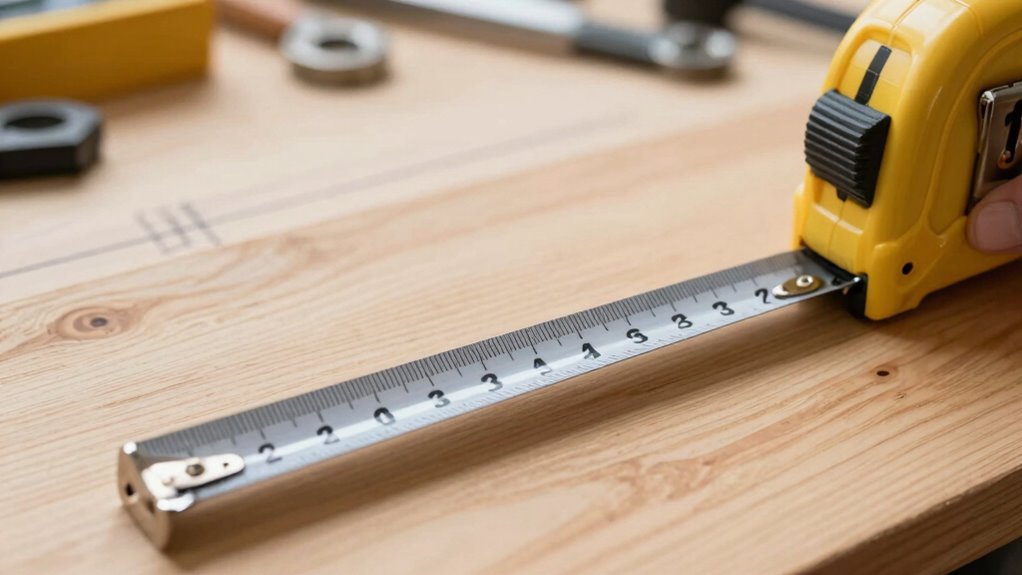
To make your layout more reliable, you should use steady, deliberate movements when extending and retracting the tape measure. Keep the tape straight and snug against the surface without pulling it too tight or allowing slack. Secure the hook properly before measuring and focus on smooth, controlled motions. Consistently starting from the same point and double-checking your measurements helps improve accuracy. If you want to master these techniques, there’s more to discover ahead.

Get business pricing on tools and workshop supplies
- Business-only prices and quantity discounts
- Tax-exempt purchasing
- Multiple users, one account, clear invoices
Key Takeaways
- Always start measuring from a consistent, fixed point on the tape for accuracy.
- Secure the tape hook firmly before extending to prevent movement errors.
- Keep the tape straight and snug against surfaces without pulling too tight.
- Double-check measurements with multiple passes to ensure consistency.
- Use steady, controlled motions to reduce slack and kinks during measurement.
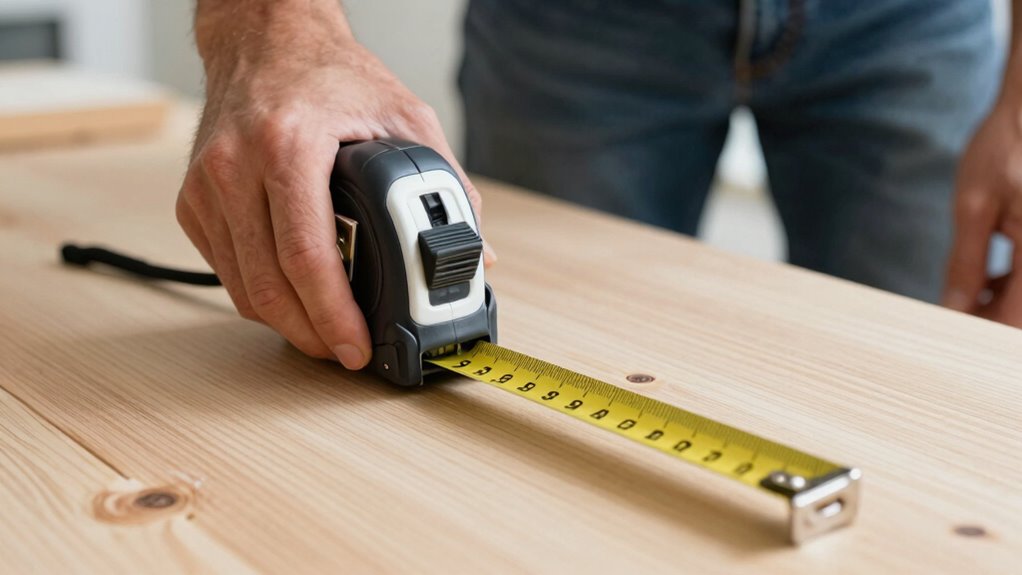
Accurate measurements are the foundation of a reliable layout, and moving your tape measure correctly is essential to achieving precise results. When you handle your tape measure properly, you significantly improve measuring accuracy, reducing errors that can throw off your entire project. One of the most effective ways to ensure this is by paying close attention to how you move and read your tape. Instead of rushing through measurements, focus on steady, deliberate motions. Keep the tape straight and snug against the surface you’re measuring without pulling too tight, which can lead to overstated measurements. This simple practice helps prevent common mistakes caused by slack or kinks in the tape, ensuring your readings are as accurate as possible. Regularly inspecting your tools and understanding tool calibration can also help maintain long-term measurement reliability. tool calibration plays a big role in maintaining measurement accuracy over time. While tape measures are generally reliable, they can stretch or become damaged, especially after heavy use or if stored improperly. Regularly checking your tape measure against a known standard or a certified measuring device can help identify if it’s still providing accurate readings. If you notice discrepancies, replacing or recalibrating your tape becomes necessary. Proper tool calibration ensures that your measurements stay precise, preventing errors that could compromise your layout. When you calibrate your tools regularly, you build confidence in your measurements, knowing they reflect true distances rather than inaccuracies introduced by worn or damaged tools. Moving your tape measure correctly also involves understanding the importance of consistent starting points. Always start measuring from the same edge or mark on your tape, and be sure that the hook at the end of the tape is secure before extending. Many people overlook the slight play in the hook, which can lead to inaccuracies if not accounted for. By anchoring the hook properly and pulling the tape smoothly, you avoid unnecessary slack and distortion. This attention to detail helps you maintain measurement consistency, especially when taking multiple readings or transferring measurements from one part of your project to another. Additionally, practicing measuring techniques can help you develop greater accuracy and confidence in your measurements. Developing good technique consistency is key to reducing measurement errors over time. Properly handling your tape measure also means being mindful of measurement stability, which involves maintaining steady pressure and position during each measurement to avoid fluctuations. Remember, a disciplined approach to moving your tape measure supports better measuring practices overall. Take your time to double-check measurements, especially when marking critical points. Use a level or square to verify that your measurements are straight and aligned, further boosting your layout’s reliability. Incorporating consistent measuring methods into your routine can significantly improve overall accuracy. Remember, the key to a dependable layout lies in consistent, precise measurement techniques—starting with how you move and handle your tape. When you prioritize measuring accuracy and regularly calibrate your tools, you set yourself up for success, minimizing errors and ensuring your project turns out exactly as planned.
digital tape measure for accurate measurements
As an affiliate, we earn on qualifying purchases.
As an affiliate, we earn on qualifying purchases.
Frequently Asked Questions
What Types of Tape Measures Are Best for Layout Work?
For layout work, you should choose tape measures with durable materials like fiberglass or steel, which withstand wear and tear. An ergonomic design is essential for comfort and precision during extended use. Look for a tape measure with a sturdy, lockable blade and clear, easy-to-read markings. These features guarantee accuracy and reliability, making your layout work more efficient and less prone to mistakes.
How Do I Calibrate My Tape Measure for Accuracy?
Did you know that even high-quality tape measures can lose accuracy over time? To calibrate yours, measure a known standard, like a precise 10-foot length, and compare the reading. If it’s off, note the discrepancy and adjust your measuring techniques accordingly. Regular calibration tips include checking against certified standards and marking your tape at accurate points. This guarantees your measurements stay reliable, making your layout work precise and consistent.
Can This Technique Be Used With Digital Measuring Tools?
Yes, you can apply this technique with digital measuring tools to enhance measurement precision. Digital integration allows you to calibrate your devices more accurately by verifying readings against a known standard, just like with traditional tape measures. By periodically checking and adjusting your digital tools, you guarantee consistent, reliable measurements, which improves overall layout accuracy. This method makes your digital tools more dependable, especially for precise construction or woodworking projects.
What Are Common Mistakes to Avoid When Using This Move?
When using this move, avoid common mistakes like not securing the tape measure properly, which can compromise measurement precision. Always double-check measurements before marking or cutting to prevent errors. Keep safety in mind by handling tools carefully, especially around sharp edges. Don’t rush; precision takes patience. By focusing on accuracy and user safety, you guarantee reliable results and prevent injuries, making your layout process smoother and more dependable.
How Does Tape Tension Affect Measurement Accuracy?
Tape tension markedly impacts measurement accuracy because tape elasticity varies with how tightly you pull it. If you pull too hard, the tape stretches, leading to longer measurements and reduced measurement consistency. Conversely, too little tension can cause slack and inaccurate readings. To guarantee precise measurements, maintain consistent tension when pulling the tape, and avoid over-tightening or loosening, which can compromise the tape’s accuracy.
Conclusion
Next time you’re working on a project, try the tape measure move—it’s like tightening a loose screw; once you do it right, everything else lines up perfectly. I once watched a friend double-check his measurements with this trick, and his entire project came together smoothly, saving him hours of rework. It’s a small step that can transform your layout from shaky to steady, making your craftsmanship more reliable and your results more satisfying.
Fall Picks
fall essentials
As an affiliate, we earn on qualifying purchases.