Lubrication helps some tools by reducing friction, preventing wear, and keeping machinery running smoothly, which extends their lifespan. However, if you use the wrong type or apply too much, it can trap moisture, attract dirt, and cause corrosion or damage. Improper lubrication may lead to overheating or tool failure over time. To keep your tools in top shape, understanding proper lubrication techniques is essential—keep exploring to learn how to get it just right.

Get business pricing on tools and workshop supplies
- Business-only prices and quantity discounts
- Tax-exempt purchasing
- Multiple users, one account, clear invoices
Key Takeaways
- Proper lubrication reduces friction and wear, extending the lifespan of tools designed for smooth operation.
- Inappropriate lubrication can trap moisture, leading to rust and corrosion on some tools.
- Dusty or humid environments can cause lubricants to attract debris or moisture, damaging certain tools.
- Correct lubricant selection prevents chemical reactions that may harm sensitive or precision tools.
- Over-lubrication or improper application can create debris buildup, increasing failure risk for some tools.
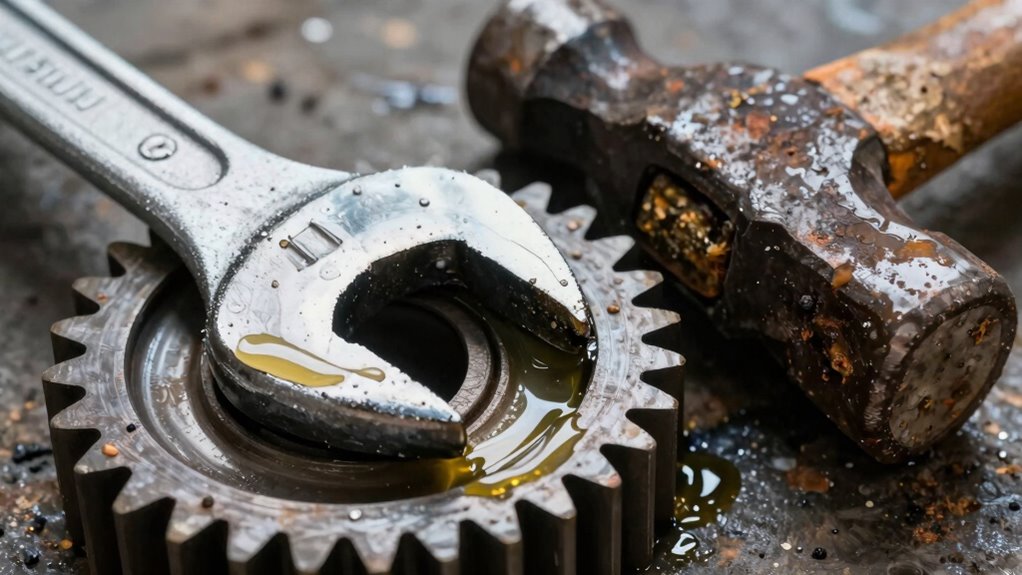
Lubrication can be a double-edged sword for tools: while it reduces friction and wear in some, it can cause problems in others. When you apply lubricant properly, it creates a film that minimizes the direct contact between moving parts, leading to friction reduction. This not only makes the tool operate more smoothly but also considerably extends its lifespan by preventing excessive wear. For example, machinery with rotating shafts or sliding components benefits from lubrication because it keeps the parts moving quietly and efficiently. By reducing friction, you lessen the heat generated during operation, which further protects the tool from thermal damage and deformation. Proper lubrication techniques are crucial to ensure the right amount is used and applied correctly.
Proper lubrication reduces friction and heat, extending tool life and ensuring smooth, efficient operation.
However, lubrication isn’t always an unqualified benefit. In certain tools or environments, applying lubricant can inadvertently cause issues, especially related to corrosion prevention. If you use the wrong type of lubricant or fail to maintain it properly, moisture can become trapped between the lubricated surfaces. This creates a breeding ground for rust and corrosion, which can weaken the tool over time. For instance, electrical contacts or precision instruments that are exposed to humid conditions may suffer from corrosion if lubricants attract moisture or aren’t resistant to environmental factors. When corrosion sets in, it can compromise the integrity of the tool, making it more prone to failure rather than protecting it. Proper corrosion prevention measures are vital in humid or outdoor conditions to avoid such issues. Additionally, understanding lubricant compatibility is essential to prevent chemical reactions that may damage the tool’s surface or components.
Another factor to think about is the nature of the tool and its working environment. For tools that operate in dusty or dirty settings, excess lubricant can attract debris, leading to abrasion and faster deterioration. In such cases, applying too much lubricant or using inappropriate types can do more harm than good, clogging mechanisms and reducing efficiency. You need to choose lubricants designed for specific conditions and applications to strike a balance between friction reduction and corrosion prevention. For example, dry lubricants or those with corrosion inhibitors might be better suited for outdoor or high-moisture environments. Additionally, understanding the lubrication requirements of your tools can help prevent over-application and related issues. Regular maintenance and cleaning are also vital to ensure the lubricant remains effective and doesn’t become a trap for dirt or moisture.
Furthermore, selecting the correct lubricant type for your tool’s specific material and operational needs is essential to avoid unintended chemical reactions or surface damage.
In essence, lubrication can be highly beneficial when tailored to the tool’s needs and operating conditions. Proper application reduces friction, minimizes wear, and helps prevent corrosion, thereby improving performance and longevity. But if misapplied or chosen incorrectly, it can trap moisture or debris, accelerating corrosion and causing damage. You must understand your tools and environment to decide when and how to lubricate effectively, ensuring that it serves as a protective measure rather than a source of trouble.
As an affiliate, we earn on qualifying purchases.
Frequently Asked Questions
How Do I Choose the Right Lubricant for My Tool?
To select the appropriate lubricant for your tool, first consider the lubricant types suitable for its material and use, like oil, grease, or dry lubricants. Next, apply it using proper techniques—clean the surface first, then evenly spread or dab the lubricant. Always follow the manufacturer’s recommendations to guarantee peak performance, prevent damage, and extend your tool’s lifespan. Proper selection and application make all the difference.
Can Over-Lubrication Damage My Tools?
Over-lubrication can damage your tools by causing buildup, attracting dirt, and leading to corrosion. Using the wrong lubricant types, like thick greases on delicate parts, worsens this issue. Follow proper maintenance routines by applying the right amount of lubricant for each tool. Less is often more; excessive lubrication can hinder performance and shorten your tools’ lifespan. Always clean and inspect your tools regularly to prevent damage.
Which Tools Should Never Be Lubricated?
You should never lubricate electrical tools, motors, or pneumatic devices. Lubrication can cause rust, which damages electrical components, and may lead to noise issues or overheating. These tools often require specific maintenance methods for rust prevention and noise reduction. Instead, keep them clean and dry, and use manufacturer-recommended products for proper care. Avoid over-lubrication to prevent buildup that can interfere with their proper functioning.
How Often Should I Lubricate My Tools?
You should lubricate your tools based on their usage and manufacturer recommendations. Typically, follow a regular schedule for lubrication as part of your tool maintenance routines—generally every few months or after heavy use. If you notice squeaking, rust, or stiffness, it’s time to lubricate. Proper lubrication frequency guarantees smooth operation, prevents rust, and extends your tools’ lifespan. Always check specific guidelines for each tool type for best results.
Does Lubrication Affect Tool Lifespan?
Lubrication can extend your tool’s lifespan by reducing wear, preventing corrosion, and ensuring smoother operation. Don’t fall for lubrication myths that suggest over-lubricating harms tools; proper, consistent lubrication protects against rust and corrosion, ultimately prolonging their life. Think of lubrication as a shield, a buffer, a protector—keeping your tools resilient and reliable for years to come. Proper care, timely lubrication, and awareness of myths make all the difference.
Conclusion
In the dance of tools and lubrication, remember it’s not a one-size-fits-all rhythm. Sometimes, adding oil is like a gentle breeze that guides a sailboat smoothly across calm waters. Other times, it’s a slippery slope that causes chaos, like rain turning a path into a treacherous slip-and-slide. So, listen closely to each tool’s unique song—what helps it glide may just be what makes it slide out of control. Choose your lubrication wisely; your tools will thank you.
Fall yard work Picks
leaf blowers
As an affiliate, we earn on qualifying purchases.