To build a maintenance checklist you’ll actually use, start by customizing tasks to match your equipment’s specific needs, reviewing manufacturer guides and past records. Keep it simple, clear, and easy to understand, breaking tasks into daily, weekly, and monthly routines. Incorporate technological advances like predictive maintenance and industry standards to stay ahead of issues. Regularly update your checklist based on equipment conditions and lessons learned to guarantee it stays relevant and effective. If you keep going, you’ll discover more expert tips.
Key Takeaways
- Customize the checklist based on specific equipment, manufacturer guidelines, and past maintenance records.
- Keep tasks simple, clear, and organized into daily, weekly, and monthly routines.
- Incorporate technological advancements and industry standards for up-to-date, effective maintenance.
- Focus on proactive inspections that detect early signs of wear to prevent major issues.
- Regularly review and update the checklist based on equipment condition and feedback.
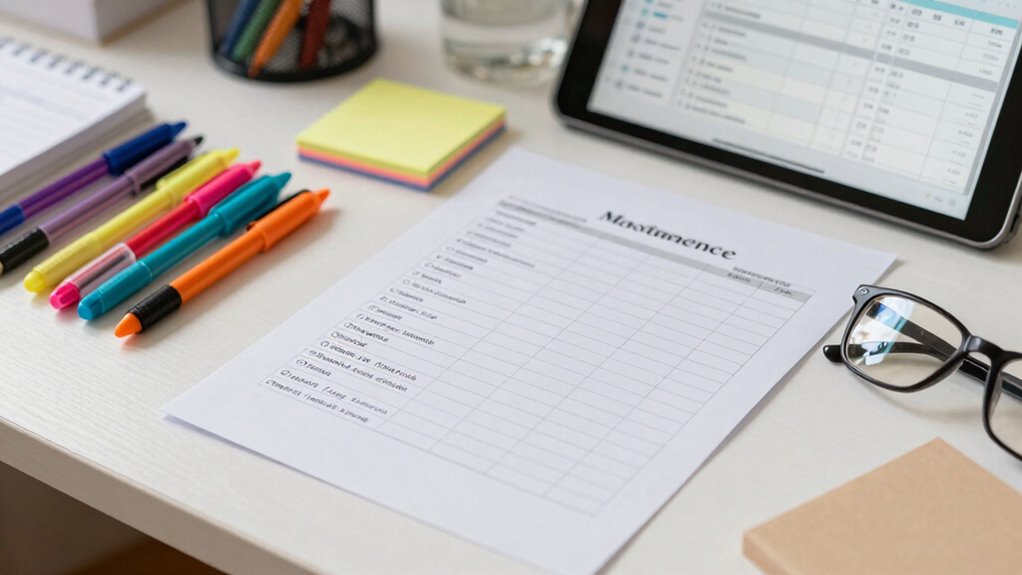
Creating a maintenance checklist might seem straightforward, but many people struggle to stick with it over time. The key to making it effective is understanding how to incorporate preventive strategies that keep your equipment running smoothly and how to customize your checklist to fit your specific needs. Preventive strategies involve identifying potential issues before they become major problems, which means your checklist should focus on routine inspections and timely replacements. Instead of waiting for equipment to fail, you proactively address small issues to prevent costly repairs or downtime later. This approach not only saves money but also extends the lifespan of your assets, making your maintenance efforts more efficient.
When building your checklist, avoid a one-size-fits-all approach. Instead, prioritize checklist customization. You need to tailor your maintenance tasks to the particular machinery or facilities you’re responsible for. For example, the maintenance needs of HVAC systems differ considerably from those of manufacturing equipment. Customization ensures that you’re not wasting time on irrelevant checks and that every task has a purpose. To do this effectively, review manufacturer guidelines, consult with experienced technicians, and analyze past maintenance records. This way, you create a targeted list that addresses the most vital components and functions of your equipment. Incorporating preventive maintenance strategies into your routines can significantly reduce unexpected breakdowns and improve overall efficiency. Additionally, staying informed about technological advancements can help optimize your maintenance approach over time. Regularly updating your knowledge about emerging maintenance practices can lead to more innovative and effective solutions. Keeping up with industry standards also ensures your maintenance remains compliant and effective. Moreover, implementing predictive maintenance techniques can help you anticipate failures before they happen, further increasing your system’s reliability. To improve adherence, keep your checklist clear and manageable. Overloading it with too many tasks can be overwhelming and lead to neglect. Break down maintenance routines into daily, weekly, and monthly tasks, and specify exactly what needs to be checked or replaced. Use simple language and clear instructions to avoid confusion. Incorporate preventive strategies by emphasizing inspections that catch early signs of wear, such as unusual noises or temperature fluctuations, rather than just reacting to failures. Regularly review and update your checklist based on the actual condition of your equipment and any new insights you gain over time. This ongoing review process ensures your maintenance remains relevant and effective.
As an affiliate, we earn on qualifying purchases.
Frequently Asked Questions
How Often Should I Update My Maintenance Checklist?
You should update your maintenance checklist regularly, ideally every 6 to 12 months, depending on equipment usage and conditions. Schedule routine checklist reviews to account for any changes in maintenance needs or operational patterns. Keeping your checklist current guarantees you catch potential issues early, improve maintenance frequency, and maintain equipment reliability. Regular updates help you stay proactive rather than reactive, ultimately saving time and costs in the long run.
Can I Customize Checklists for Different Equipment Types?
Yes, you can definitely customize checklists for different equipment types. Equipment customization allows you to tailor each checklist to specific machinery’s needs, ensuring thorough maintenance. Checklist tailoring helps you focus on critical tasks unique to each piece of equipment, saving time and preventing oversight. By customizing checklists, you improve maintenance accuracy and efficiency, making sure your team addresses all necessary maintenance points without unnecessary steps.
What Tools Are Best for Tracking Maintenance Tasks?
You should use tools with digital integration and mobile accessibility to track maintenance tasks effectively. Apps like UpKeep or Fiix let you update, assign, and monitor checklists in real-time from your phone or tablet. These tools streamline communication, reduce manual errors, and guarantee you stay on top of maintenance schedules. By choosing systems that integrate with your existing digital infrastructure, you make tracking tasks more efficient and accessible anytime, anywhere.
How Do I Ensure Team Adherence to the Checklist?
To guarantee your team adheres to the checklist, foster team accountability by setting clear expectations and regularly monitoring progress. Use communication strategies like regular meetings and updates to keep everyone informed and engaged. Encourage open feedback, address concerns promptly, and recognize adherence efforts. When your team understands the importance of the checklist and feels responsible, compliance improves naturally, leading to more effective maintenance routines.
What Are Common Mistakes to Avoid When Creating a Checklist?
To avoid priority errors and oversight pitfalls, don’t make your checklist overly complicated or too vague. You might miss vital tasks if you neglect to prioritize essential items, so clearly mark high-priority tasks. Also, avoid assuming you’re done once you’ve listed tasks; regularly review and update your checklist to catch overlooked details. Keep it simple, specific, and adaptable to guarantee it’s effective and consistently used.
Conclusion
By crafting a maintenance checklist that’s clear and practical, you’re planting seeds for smoother operations and fewer surprises. Think of it as a roadmap guiding you through a well-tended garden—each task a blooming flower, every item checked off a step toward harmony. When you build it with purpose and simplicity, you turn chaos into order, and your upkeep into a masterpiece you’ll actually want to follow. After all, a well-maintained garden flourishes with careful tending.