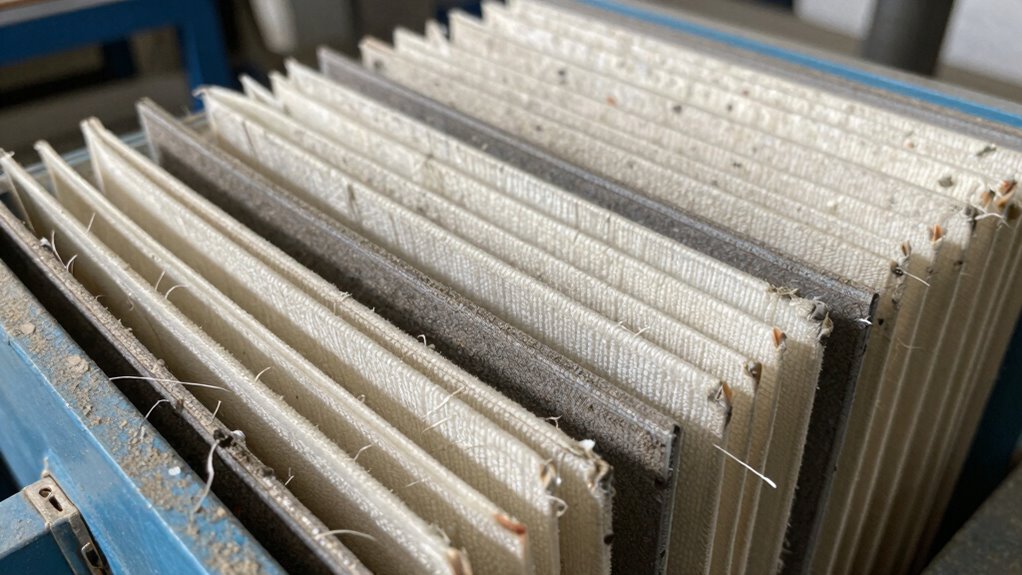
Cleaning your dust collector filters helps remove dust, debris, and buildup that can clog airflow and reduce filter efficiency. However, over-cleaning or using harsh methods, like aggressive scrubbing or high-pressure air, can damage the delicate fibers, causing tears and lowering filtration performance. To keep filters working well, follow manufacturer guidelines and use gentle techniques. If you want to learn more about ideal cleaning practices and when to avoid them, keep exploring this topic.
Key Takeaways
- Regular cleaning removes dust buildup, maintaining airflow and filter efficiency without damaging the media.
- Use gentle brushing or manufacturer-approved methods; avoid harsh scrubbing or high-pressure air that can tear filters.
- Over-cleaning can weaken filter fibers, reduce filtration effectiveness, and shorten filter lifespan.
- Clean filters based on system performance indicators, such as airflow drops, to prevent clogging and system stress.
- Follow manufacturer guidelines to balance cleaning frequency, ensuring filters are maintained effectively without damage.
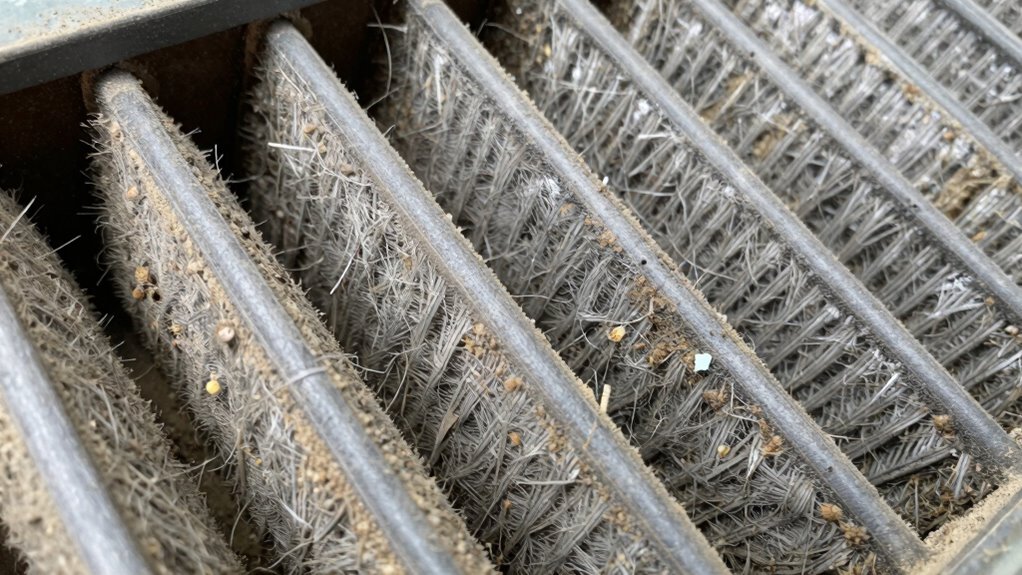
Dust collector filters are vital components that help keep your workspace clean and safe by capturing airborne particles generated during manufacturing or woodworking processes. Without proper filtration, these tiny airborne particles can circulate through the air, posing health risks and reducing overall air quality. Your goal is to guarantee that the filters operate efficiently for as long as possible, maximizing their filter lifespan. The key to this is understanding when regular cleaning benefits your filters and when it might actually cause damage.
Proper filter maintenance extends lifespan and ensures cleaner, safer workspaces by balancing cleaning frequency and technique.
When you clean your dust collector filters, you remove accumulated dust, debris, and other airborne particles that can clog the filter media. This process helps maintain airflow, prevents excessive strain on the system, and extends the filter’s working life. Proper cleaning techniques—like gentle brushing or using compressed air—can considerably improve filter lifespan, guaranteeing they continue capturing airborne particles effectively. Regular maintenance prevents buildup, which can lead to a drop in filtration efficiency and force you to replace filters prematurely. Additionally, understanding the filter media composition can help you choose the appropriate cleaning method to avoid damage.
However, there’s a fine line between cleaning your filters and damaging them. Over-cleaning or using harsh methods can compromise the integrity of the filter media. For example, aggressive scrubbing or high-pressure air can tear or weaken the filter fibers, reducing their effectiveness. When filters become damaged, they may allow airborne particles to escape back into the workspace, defeating their purpose and putting your health at risk. Also, frequent cleaning can sometimes accelerate wear, especially if you’re handling filters made from delicate materials. It’s essential to follow manufacturer guidelines regarding cleaning intervals and techniques to avoid unintentionally shortening the filter lifespan.
Another concern is the timing of cleaning. If you clean your filters too often, you might interfere with their design for capturing particles, which often involves a certain amount of dust loading that helps trap airborne particles more efficiently. Conversely, waiting too long to clean can cause clogging, reduce airflow, and put unnecessary stress on your dust collection system. Striking the right balance means paying attention to performance indicators: if airflow drops noticeably or your system’s suction weakens, it’s time to clean or replace the filters.
Ultimately, maintaining your dust collector filters involves understanding their role in trapping airborne particles and knowing when cleaning helps versus when it risks damage. Proper, gentle cleaning at appropriate intervals can extend filter lifespan and keep your workspace healthier. But be mindful not to over-clean or use damaging methods, as that can shorten your filters’ effectiveness and jeopardize your air quality. Staying informed and following best practices ensures your dust collection system stays efficient, protecting both your health and your investment.
dust collector filter cleaning tools
As an affiliate, we earn on qualifying purchases.
As an affiliate, we earn on qualifying purchases.
Frequently Asked Questions
How Often Should I Replace Dust Collector Filters?
You should replace your dust collector filters based on their filter material and your maintenance schedule. Typically, inspect filters monthly; if they show signs of damage or excessive wear, replace them promptly. For peak performance, follow the manufacturer’s recommended replacement interval, usually every 6 to 12 months. Regular maintenance helps prevent filter damage and ensures efficient dust collection, so stick to your maintenance schedule and monitor filter condition regularly.
Can Cleaning Filters Extend Their Lifespan Significantly?
Yes, cleaning your filters can considerably extend their lifespan if you maintain proper cleaning frequency based on the filter material. Regularly removing dust and debris prevents clogging, reducing wear and tear. However, avoid excessive cleaning, which can damage delicate filter media. Always follow manufacturer guidelines for cleaning intervals and methods. Proper maintenance ensures your filters stay effective longer, saving you money and reducing downtime.
What Are the Signs of a Damaged Dust Collector Filter?
If your dust collector filter shows signs of damage like tears, holes, or frayed edges, it’s time to replace it. Unusual cleaning signs, such as persistent dust buildup or reduced airflow, can also indicate filter damage. These issues compromise filtration efficiency and may lead to system failure. Regularly inspect your filters for physical damage and cleaning signs, and replace them promptly to maintain peak performance and protect your equipment.
Are There Different Cleaning Methods for Various Filter Types?
Cleaning your filters is like tending a garden—you need different tools for each plant. You should use specific cleaning techniques based on your filter type, such as compressed air for cartridge filters or gentle washing for fabric ones. Proper filter maintenance involves understanding these methods to avoid damage while keeping airflow ideal. Always follow manufacturer instructions to ensure you’re applying the right cleaning techniques and prolonging your filter’s life.
How Does Improper Cleaning Impact Overall System Performance?
Improper cleaning can substantially harm your system’s performance by compromising filter integrity and reducing airflow efficiency. When you misuse cleaning methods, you risk damaging the filter media, leading to tears or deformation. This allows dust to bypass the filter, decreasing overall efficiency and increasing wear on your equipment. To keep your system running smoothly, always follow manufacturer guidelines, ensuring thorough cleaning without damaging the filter’s structure.
Conclusion
Remember, your dust collector filters are like the lungs of your workspace, catching every speck of dust to keep the air clean. When you clean them properly, you’re giving these filters a gentle gust of fresh life, ensuring they breathe easy and work efficiently. But too harsh or frequent cleaning can damage their delicate fibers, like tearing fragile fabric. Treat your filters with care, and they’ll serve you well, turning your shop into a safe, breathable haven.