Drawer problems typically start with alignment issues caused by material movement, not hardware faults. Changes in temperature and humidity make materials like wood, plastic, or metal expand and contract, which can cause sticking, wobbling, or misalignment over time. Small manufacturing tolerances also contribute to these shifts. Hardware may seem fine but often isn’t the root cause. If you’re curious about how to prevent or fix these issues, there’s more to discover below.

Get business pricing on tools and workshop supplies
- Business-only prices and quantity discounts
- Tax-exempt purchasing
- Multiple users, one account, clear invoices
Key Takeaways
- Material expansion and contraction due to environmental changes cause dimensional shifts that lead to misalignment.
- Small manufacturing tolerances can result in slight size discrepancies that worsen over time.
- Hardware remains functional; misalignment often stems from material movement, not hardware failure.
- Seasonal variations affect wood, plastic, and metal, altering drawer fit and causing alignment issues.
- Correcting alignment involves adjustments like sanding or realigning, rather than solely replacing hardware.
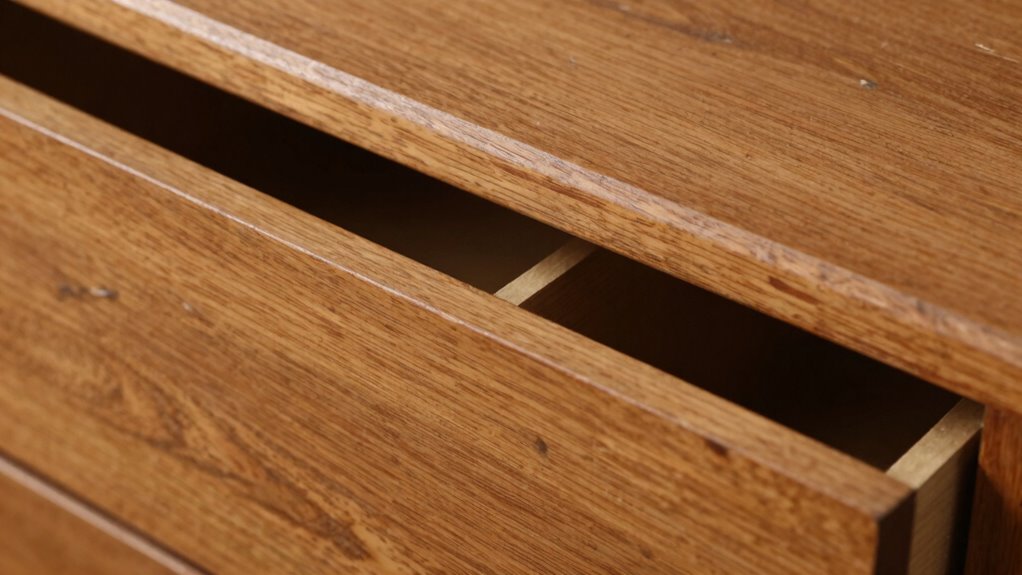
Many drawer problems begin with misalignment, which can cause difficulty opening or closing the drawer, or lead to damage over time. While it’s tempting to blame the hardware—like slides or handles—you might find that the real culprit is the way your drawer is aligned. Several factors contribute to this, and understanding them can save you time and frustration. One key aspect is material expansion; wood, plastic, and metal all expand and contract with temperature and humidity changes. Over time, this movement can cause the drawer or its components to shift slightly out of alignment. Even a small change in dimensions can make the drawer stick, wobble, or refuse to close properly. Recognizing the importance of material behavior can help you anticipate and prevent future alignment issues. Manufacturing tolerances also play a significant role in alignment issues. When drawers are produced, they are made within specific specifications—called tolerances—that allow for minor variations. Sometimes, these tolerances are tighter, but in many cases, slight discrepancies are inevitable. If a drawer is slightly larger or smaller than the slot it’s meant to fit into, it can lead to misalignment. Over time, these small differences become more noticeable as materials expand or contract. The result is a drawer that’s not perfectly square or aligned with the cabinet opening, causing it to bind or misalign when opened or closed. You might notice that your drawer problems worsen during certain seasons or temperature changes. That’s because materials like wood and metal respond to environmental conditions, expanding or contracting accordingly. For example, in humid weather, wood drawers tend to swell, making them tighter in their slots. Conversely, in dry seasons, they shrink slightly, which can cause looseness or misalignment. This constant shifting can lead to uneven wear on the slides or runners, further compounding the problem. Hardware itself may be perfectly fine, but if the overall alignment is off due to material movement, it’s only a matter of time before you start experiencing trouble. Addressing these issues often requires more than just tightening screws or replacing hardware. You need to think about how materials are reacting over time and whether the initial manufacturing tolerances allowed for slight misalignments. Sometimes, adjusting or realigning the drawer is enough. Other times, you might need to plane or sand parts of the drawer or cabinet to restore proper alignment. Being aware of material expansion and contraction can help you better plan for seasonal adjustments and prevent recurring issues. Additionally, implementing seasonal adjustments can be an effective way to maintain proper alignment and prevent future problems. Recognizing that misalignment is often rooted in Manufacturing tolerances and material movement helps you approach the problem more effectively, avoiding unnecessary hardware replacements and focusing on the real cause of the trouble.
As an affiliate, we earn on qualifying purchases.
Frequently Asked Questions
How Can I Tell if My Drawer Is Misaligned?
You can tell if your drawer is misaligned if it squeaks when pulled or pushed, and if the handle feels loose or wobbly. Check if the drawer doesn’t close smoothly or sits unevenly. Misalignment often causes squeaks and handle looseness because the drawer isn’t fitting properly in the frame. Adjust the tracks or slides first, as alignment issues are usually the root cause, not hardware problems.
What Tools Are Needed to Fix Drawer Alignment?
Fixing drawer alignment is easier than you think—armed with just a few tools, you can master it! You’ll need a screwdriver for hinge adjustments and possibly a measuring tape to guarantee perfect placement. If your drawer uses guides, check for looseness or misalignment, then tighten or adjust them accordingly. With these tools and a little patience, you can restore smooth, seamless operation and keep your furniture looking sharp.
Can Drawer Alignment Issues Cause Damage Over Time?
Yes, drawer alignment issues can cause damage over time. Misalignment effects, like uneven weight distribution and constant rubbing, can lead to drawer damage, such as warped sides or broken joints. When drawers aren’t properly aligned, you might notice sticking or sagging, which worsens with use. Addressing alignment early helps prevent these problems, ensuring your drawers stay functional and look good longer, saving you from costly repairs later on.
How Often Should I Check Drawer Alignment?
You should check your drawer alignment at least once every six months to prevent minor issues from turning into major damage. Regularly inspecting guarantees hardware upgrades and design considerations stay effective, keeping your drawers smooth and functional. Don’t wait for chaos—monitoring frequently helps avoid frustration and costly repairs later. Consistent checks keep your drawers in perfect harmony, ensuring they operate flawlessly and last for years to come.
Are There Different Types of Drawer Alignment Problems?
Yes, there are different types of drawer alignment problems. You might notice drawer sag, where it dips or tilts, often caused by worn or loose hardware. Misalignment can also mean the drawer isn’t flush or opens unevenly. To fix these issues, you’ll need to make hardware adjustments, like tightening screws or realigning slides. Identifying the specific problem helps you target the right solution and restore smooth operation.
Conclusion
So, next time your drawer refuses to cooperate, remember—it’s probably not the hardware’s fault. Misalignment can turn a simple slide into a battlefield, making you question your sanity. Don’t let a tiny shift ruin your day or your furniture! Fixing alignment is like performing magic—suddenly, everything slides smoothly again, and you’ll wonder how you ever lived with the chaos. Take control, check that alignment, and restore peace to your drawers today!
Fall yard work Picks
leaf blowers
As an affiliate, we earn on qualifying purchases.