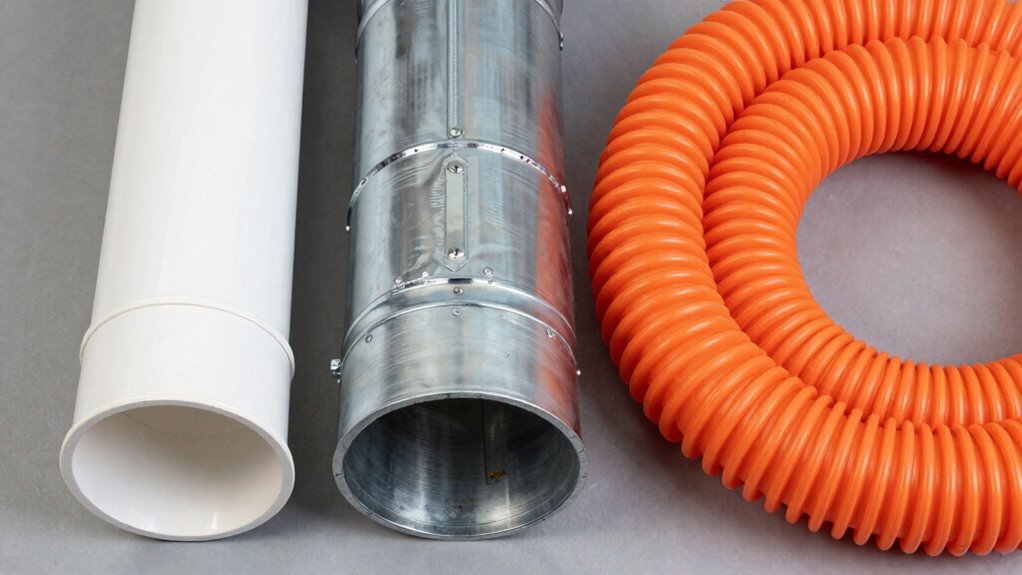

When choosing duct material for your dust collection system, consider durability, installation ease, and safety. PVC offers affordability, resistance to corrosion, and easy handling but can crack under impact or heat. Metal ducts provide high durability and better airflow but are heavier and pricier, and require maintenance to prevent rust. Flexible hoses are simple to install in tight spaces but less durable and can reduce airflow efficiency. Exploring each option further helps you make the best choice.

Get tools and workshop supplies delivered free — and shop member deals
- Fast, free delivery on millions of items
- Access to Prime Big Deal Days deals on October 6–7
- Prime Video, Amazon Music and more included
Key Takeaways
- PVC ducts are lightweight, affordable, and easy to install but may crack under extreme impacts or high temperatures.
- Metal ducts offer superior durability, smooth airflow, and resistance to heat but are heavier and more costly to install.
- Flexible hoses are simple to maneuver and install in tight spaces but tend to reduce airflow efficiency and are prone to wear.
- PVC resists rust and corrosion, making it suitable for outdoor or moist environments, unlike uncoated metal which needs maintenance.
- Metal ducts are fire-resistant and safer in high-temperature or hazardous settings, whereas PVC emits harmful fumes when exposed to heat or fire.

Choosing the right material for your dust collection duct is essential to guarantee safety, durability, and effective air flow. When considering duct installation, you need to prioritize materials that can withstand the rigors of collecting dust and debris without compromising performance. Material durability plays a key role here—your duct needs to resist wear, corrosion, and damage over time to keep your system running smoothly and safely. Additionally, selecting a material with outdoor resilience ensures long-term performance even if exposed to environmental elements or accidental impacts. PVC ducts are a popular choice for their affordability and ease of installation. They’re lightweight, which makes handling and connecting sections simpler, especially if you’re working alone. PVC doesn’t rust or corrode, so it’s highly durable in environments where moisture might be an issue. However, PVC can be prone to cracking under extreme impacts or high temperatures, and it may emit harmful fumes if exposed to heat or fire. Despite these limitations, PVC’s chemical resistance and low cost make it a practical option for many workshop setups, especially where safety and maintenance are concerns.
Metal ducts, typically made of galvanized steel or aluminum, excel in material durability. They’re robust, resistant to impacts, and can handle high temperatures without warping or melting. This makes them ideal for heavy-duty dust collection systems, especially in industrial or workshop environments where fire risk or heat buildup is a concern. Metal ducts also tend to have smoother interior surfaces, reducing air resistance and improving airflow efficiency. The downside is that metal can be heavier and more difficult to install, requiring more effort and precise connections to prevent leaks. Plus, metal is susceptible to rust if not properly treated or maintained, which can compromise the duct’s integrity over time.
Flexible hoses offer a different set of advantages and disadvantages. They’re incredibly easy to install, especially in tight or awkward spaces, because you can bend and maneuver them around obstacles. This flexibility makes them ideal for connecting fixed duct runs to tools or equipment. However, their material durability isn’t as high as rigid ducting—they’re more prone to punctures, tears, and wear from constant movement or abrasion. Over time, flexible hoses can accumulate dust and debris inside, reducing airflow and efficiency. They’re best used for short runs or connections rather than primary duct systems.
As an affiliate, we earn on qualifying purchases.
Frequently Asked Questions
How Does Duct Material Affect Overall Dust Collection System Efficiency?
Choosing the right duct material impacts your dust collection system’s efficiency by influencing airflow resistance and maintenance needs. Metal ducts typically offer low airflow resistance, ensuring better suction, but require regular cleaning to prevent buildup. PVC ducts are lightweight and easy to maintain but may have higher airflow resistance if improperly installed. Flex hoses are flexible and quick to install, though they can increase airflow resistance and need occasional cleaning for ideal performance.
Are There Environmental Concerns With Using PVC or Metal Ducts?
You might find it surprising, but both PVC and metal ducts come with environmental concerns. PVC can release health risks like dioxins during manufacturing or disposal, and it’s less recyclable, impacting sustainability. Metal ducts are more recyclable but require energy to produce and can corrode, releasing particles. Consider these factors to minimize health risks and choose materials aligned with your eco-friendly goals.
What Is the Typical Lifespan of Different Duct Materials?
You’ll find that PVC ducts typically last around 10-15 years, but their durability can be affected by UV exposure and chemical wear. Metal ducts, especially galvanized steel, usually last 20-30 years thanks to their high durability and resistance to material corrosion. Flex hoses have a shorter lifespan, often around 5-10 years, due to wear and tear from frequent movement and flexible material fatigue.
Can Duct Material Influence Indoor Air Quality?
Yes, duct material can influence indoor air quality. For airborne particle filtration, smooth materials like PVC reduce particle buildup, helping maintain cleaner air. Conversely, metal ducts may corrode over time, releasing particles into your environment, which can worsen air quality. Flex hoses might trap debris or mold if not cleaned regularly. Choosing the right duct material guarantees minimal corrosion and better filtration, ultimately supporting healthier indoor air.
How Do Cost and Durability Compare Across Duct Materials?
You notice that choosing duct material impacts your budget and longevity. Metal ducts often cost more upfront but offer superior durability, resisting damage over time. PVC is usually cheaper initially but may crack or degrade faster, requiring replacements. Flex hoses are affordable and flexible, yet less durable. Your decision hinges on balancing cost comparison and durability factors, knowing that investing in sturdy materials can save money and hassle later.
Conclusion
Choosing the right dust collection duct material is like picking the perfect tool for your woodworking symphony. PVC offers affordability and corrosion resistance, metal provides durability and heat resistance, while flex hoses give you flexibility and ease of installation. Think of your setup as a well-tuned instrument—select the material that harmonizes best with your workshop’s needs. When you match the right ducting to your projects, your dust collection system will sing smoothly, keeping your workspace clean and your craft thriving.
Halloween Picks
halloween
As an affiliate, we earn on qualifying purchases.