
To make sustainability in woodworking practical, you should focus on recycling scraps, using eco-friendly finishes, and sourcing responsibly. Proper tool maintenance and energy-efficient practices help reduce waste and lower your environmental impact. Planning projects carefully minimizes excess materials, while combining these techniques creates a holistic, effective approach. When you implement these simple, mindful steps, sustainability becomes part of your routine. Keep exploring how each effort can make your woodworking more eco-friendly and impactful.
Key Takeaways
- Implementing recycling techniques reduces waste and maximizes the use of leftover materials effectively.
- Choosing eco-friendly finishes and sustainable wood sources minimizes environmental impact.
- Proper tool maintenance and energy-efficient practices decrease resource consumption and extend equipment lifespan.
- Mindful material planning prevents excess and promotes responsible procurement from well-managed forests.
- Integrating these practical strategies creates a comprehensive, impactful approach to sustainable woodworking.

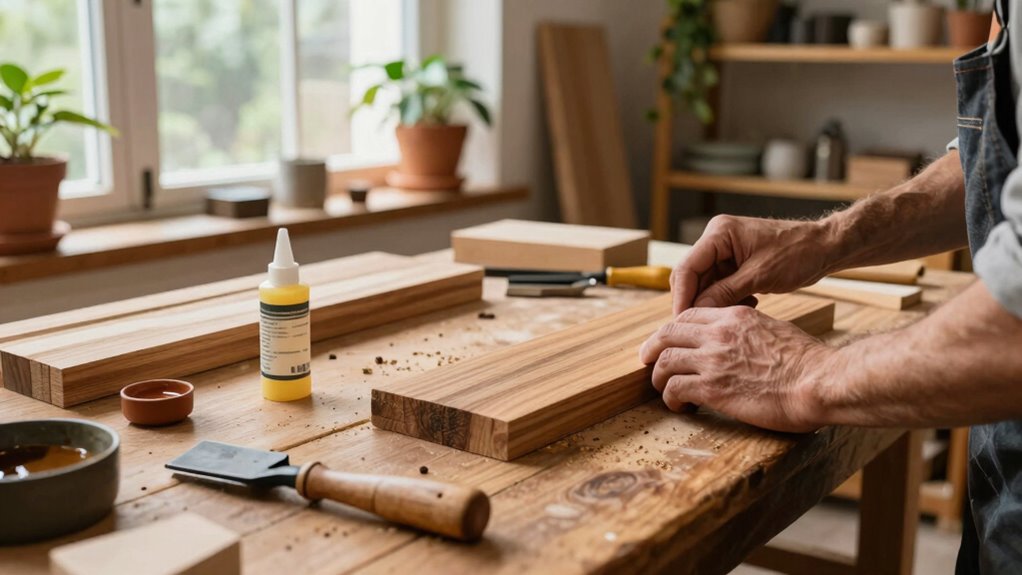
Sustainability has become an essential consideration in woodworking, as more craftspeople and enthusiasts seek eco-friendly practices. When you focus on practical steps, sustainability transforms from a vague ideal into achievable, impactful actions. One of the most straightforward ways to make your woodworking more sustainable is by adopting recycling techniques. Instead of discarding scraps and offcuts, you can repurpose them into new projects, reducing waste and conserving resources. For example, small pieces of wood can become inlay accents or turned into dowels, while larger scraps might serve as kindling or be used for smaller projects. Recycling techniques not only minimize waste but also save you money, making your practice more economical and environmentally friendly.
Recycling wood scraps reduces waste, conserves resources, and saves money in your woodworking projects.
In addition to recycling, choosing eco-friendly finishes plays an essential role in practical sustainability. Conventional finishes often contain volatile organic compounds (VOCs) that harm the environment and your health. Opting for water-based or natural finishes, like beeswax or plant-based oils, helps you reduce the chemical footprint of your projects. These finishes are often easier to apply and clean up, making them accessible for hobbyists and professionals alike. By incorporating environmentally conscious finishes, you guarantee your work remains durable and beautiful without compromising sustainability. This shift can be simple—just swap out solvent-based varnishes for eco-friendly finishes, and you’ll immediately reduce the environmental impact of your woodworking. Additionally, selecting sustainably sourced wood supports responsible forestry and helps protect natural habitats. Being mindful of the materials you choose ensures your projects contribute to a more sustainable industry. Incorporating certified wood sources can further ensure your materials come from well-managed forests that prioritize ecological health. Using sustainable forestry practices as part of your sourcing process can also contribute to maintaining biodiversity and healthy ecosystems. Practicing responsible forestry not only benefits the environment but also ensures the longevity and quality of your woodworking materials.
Getting practical also means being mindful of your tools and materials. Using sustainably sourced wood guarantees that your projects don’t contribute to deforestation or habitat destruction. You can verify certifications like FSC or PEFC to confirm responsible forestry practices. Additionally, maintaining your tools well extends their lifespan and performance, preventing unnecessary replacements and waste. When you plan your projects carefully, you minimize excess material use, avoiding over-ordering or surplus stock that might end up discarded. Moreover, choosing energy-efficient equipment and practices can significantly reduce your workshop’s carbon footprint, aligning with your sustainability goals. Embracing energy-efficient tools and practices can make a notable difference in the overall environmental impact of your workshop.
Furthermore, adopting energy-efficient practices is another key aspect of practical sustainability. Using hand tools when appropriate, or investing in power tools with energy-saving features, helps cut down on electricity consumption. Properly insulating your workspace or workshop can also reduce energy costs, making your efforts more sustainable in the long run. The combination of recycling techniques, eco-friendly finishes, responsible sourcing, and energy-conscious choices creates a holistic approach that makes sustainability a seamless part of your woodworking routine. When you make these steps practical, sustainability isn’t just a lofty goal—it becomes an integral, achievable part of your craft.
As an affiliate, we earn on qualifying purchases.
Frequently Asked Questions
How Can Small Workshops Implement Sustainable Practices Effectively?
You can implement sustainable practices by recycling wood scraps into new projects or composting unusable pieces. Use eco-friendly finishes to reduce harmful chemicals and environmental impact. Keep your workspace organized to minimize waste and optimize material use. Educate yourself on sustainable sourcing, and consider installing energy-efficient tools. These steps make your small workshop more eco-conscious, helping you contribute positively to the environment while maintaining quality craftsmanship.
What Are the Hidden Costs of Sustainable Woodworking Materials?
The hidden costs of sustainable materials can feel like a mountain of hidden fees. Eco-friendly sourcing might mean higher prices or longer shipping times, while waste reduction efforts often demand more labor and careful planning. These hidden costs can stretch your budget and patience, making you wonder if sustainability’s worth the extra effort. Yet, by balancing these costs, you protect the environment and craft with integrity, creating woodworking that truly lasts.
How Does Sustainability Impact the Durability of Woodworking Projects?
Sustainability enhances your woodworking projects’ durability when you choose eco-friendly finishes and renewable resources. Eco-friendly finishes protect wood while reducing harmful chemicals, guaranteeing your project lasts longer. Using renewable resources like responsibly sourced wood minimizes environmental impact and promotes stronger, resilient structures. By prioritizing these sustainable choices, you ensure your projects remain durable over time, benefiting both the environment and your craftsmanship.
Can Traditional Woodworking Techniques Be More Sustainable Than Modern Methods?
A stitch in time saves nine, and traditional craftsmanship often proves more sustainable than modern methods. You can rely on time-tested techniques, using locally sourced, eco-friendly finishes that reduce environmental impact. These methods emphasize durability and minimal waste, making them inherently more sustainable. By choosing traditional woodworking, you embrace craftsmanship that values longevity and eco-conscious practices, proving that sometimes, old ways are the best ways to be kinder to the planet.
What Certifications Should Consumers Look for in Sustainable Woodworking Products?
You should look for certifications like FSC (Forest Stewardship Council) and PEFC (Programme for the Endorsement of Forest Certification) to guarantee sustainability. Also, check if the products use eco-friendly finishes and recycled materials, which reduce environmental impact. These certifications and features show that the woodworking products are responsibly sourced and environmentally conscious, helping you make better choices that support sustainable practices in woodworking.
Conclusion
By embracing practical sustainability in woodworking, you turn tradition into innovation, blending old-world craftsmanship with modern eco-consciousness. Every choice, from sourcing to finishing, becomes a step toward preserving our planet’s forests and resources—like a modern-day Robin Hood, safeguarding nature’s bounty. When your work isn’t just beautiful but responsible, you prove that sustainability isn’t just a trend, but a timeless practice. So keep forging ahead—because in this craft, every practical step makes history.