TL;DR

Get business pricing on tools and workshop supplies
- Business-only prices and quantity discounts
- Tax-exempt purchasing
- Multiple users, one account, clear invoices
Apartment Therapy published professional organizer Mary Cornetta’s advice for sorting and storing old physical photos without treating every image as a keepsake. Her approach starts with gathering and organizing the collection, then considering discards such as blurry shots and duplicates while asking relatives about uncertain family pictures.
Professional organizer Mary Cornetta has published guidance on sorting old photographs, recommending that people gather their pictures in one place before deciding what to keep and consider letting go of blurry images, duplicates and unidentified shots. The Apartment Therapy report addresses a common obstacle to clearing photo collections: the emotional weight of memories combined with the scale of the task.
Cornetta advises postponing photo sorting until after a broader home-organizing project, if one is underway. In the meantime, people can collect pictures they find in a single box, then bring the full set together before making decisions. She recommends setting up a clear work surface, enlisting relatives when the images matter to them, and using labels or index cards to track groups organized by year, place, person, event or theme.
For discarding, Cornetta suggests starting with images that are easier to assess: pictures so blurry that the people cannot be recognized, awkwardly cropped shots and duplicate prints. She also recommends reviewing near-identical images with an eye toward keeping the strongest version rather than every similar frame. Her suggestions are presented as options, not rules; the decision depends on what the owner values and can identify.
Unidentified family photographs may warrant a pause before disposal. Cornetta advises asking relatives whether they recognize the people or places. She also suggests offering relevant pictures to family members who appear in them, but says to ask first rather than handing someone a pile to sort. For images tied to former relationships, she allows for keeping a small number in a personal memory box while separating them from current family collections.
A Manageable Way to Sort Memories
The advice offers a practical way to reduce a large collection without treating every photograph as equally meaningful. Gathering pictures first gives people a better view of what they own, while categories and labels can make a difficult project feel more bounded. Asking relatives before discarding uncertain images can also help prevent the loss of photographs another family member might recognize or want.
The guidance is relevant to households with boxes of prints that are hard to browse or identify. Sorting can make photographs easier to enjoy and share, but the article does not claim that one method suits everyone or that people should discard images simply to meet a target. It frames decluttering as a personal process in which keeping a selected set is as important as deciding what can go.
Products Worth Considering

Levoit Vital 100S-P Air Purifier with Washable Pre-Filter
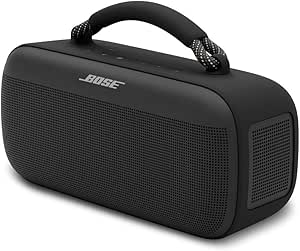
Bose SoundLink Max Bluetooth Speaker

Dyson Ball Animal 3 Upright Vacuum
As an affiliate, we earn on qualifying purchases.
From Boxes to Organized Collections
The source is an Apartment Therapy organizing article by Mary Cornetta, a professional organizer and founder of Sort and Sweet Inc., with contributions by senior lifestyle editor Quinn Fish. Cornetta describes working with clients who have large physical-photo collections and notes that reviewing them can bring up joy, nostalgia and sadness. She also says the volume of pictures can quickly make the task feel overwhelming.
The article’s stated scope is practical: prepare before sorting, decide which images may be removed, and organize the photographs that remain. In the supplied material, the organization section introduces photo albums as one option, particularly for people who want to flip through pictures or share them with guests. The provided excerpt ends during that discussion and does not include the full list of six storage methods mentioned in its heading.
Storage Guidance Not Fully Included
The source material provided for this article cuts off partway through its discussion of photo albums. Although the article heading refers to six ways to organize physical photographs, the supplied excerpt does not identify all six methods or give detailed guidance on archival materials, digitization, storage conditions or preservation. No specific products or technical storage recommendations can be verified from the excerpt.
Which images should be kept is also subjective. Cornetta’s suggestions do not establish that an unknown or unflattering photograph has no value; family members may recognize it, and owners may have personal reasons to retain it. The report does not provide a standard for determining whether a photograph has historical significance.
Sort First, Then Choose Storage
Readers following Cornetta’s approach can start by collecting pictures from around the home and setting aside a clear surface for sorting. They can label groups, check uncertain family images with relatives, and separate photographs to keep from duplicates or other pictures they have decided to release. The remaining collection can then be arranged in a format that suits how it will be viewed; the excerpt specifically describes albums as an option for browsing and sharing.
The source does not announce a follow-up date or a new development beyond the published advice. Further storage choices should be based on the full article or other reliable preservation guidance, since the excerpt supplied here does not contain the complete set of organizing methods.
Key Questions
What should I do before sorting old photos?
Gather them in one place so you can see the collection together. Cornetta also recommends a clear sorting surface, labels or index cards, and asking relatives to help when the photographs matter to them.
Which photographs does the organizer suggest considering for removal?
Her examples include unrecognizable blurry pictures, awkwardly cropped images, duplicate prints and near-identical shots. These are suggestions for consideration, not a requirement to discard every image in those categories.
Should I throw away unidentified family photographs?
Cornetta advises checking with relatives first, since they may recognize the people or places. The source does not set a rule for when an unidentified photograph should be discarded.
How can I offer photographs to relatives?
Ask whether a relative wants the pictures before passing them on. Cornetta specifically warns against giving someone a pile of photographs and leaving them to do the sorting.
What storage methods does the article recommend?
The supplied excerpt introduces photo albums as a way to make images easy to browse and share. It refers to six organizing methods, but the excerpt does not include the full list or detailed preservation advice.
Source: apartmenttherapy.com