To choose better wood for your kitchen, consider how durable and moisture-resistant the species is, especially for high-traffic areas. Hardwoods like maple or cherry last longer and resist dents, while softwoods like pine require proper treatment. Focus on sustainable options with certifications like FSC or PEFC to support eco-friendly practices. Think about the wood’s hue and grain to match your style, and discuss treatments with suppliers for added durability. Keep going for more tips to make your choice even smarter.

Get business pricing on tools and workshop supplies
- Business-only prices and quantity discounts
- Tax-exempt purchasing
- Multiple users, one account, clear invoices
Key Takeaways
- Select durable hardwoods like maple or cherry for high-traffic areas and countertops to ensure longevity.
- Consider the wood’s moisture resistance based on kitchen humidity and exposure to water or steam.
- Prioritize sustainably harvested woods with FSC or PEFC certification to support eco-friendly practices.
- Match the wood’s aesthetic qualities, such as hue and grain, to your kitchen’s design style and desired look.
- Ensure proper treatment, sealing, and finishing to enhance durability, moisture resistance, and appearance over time.
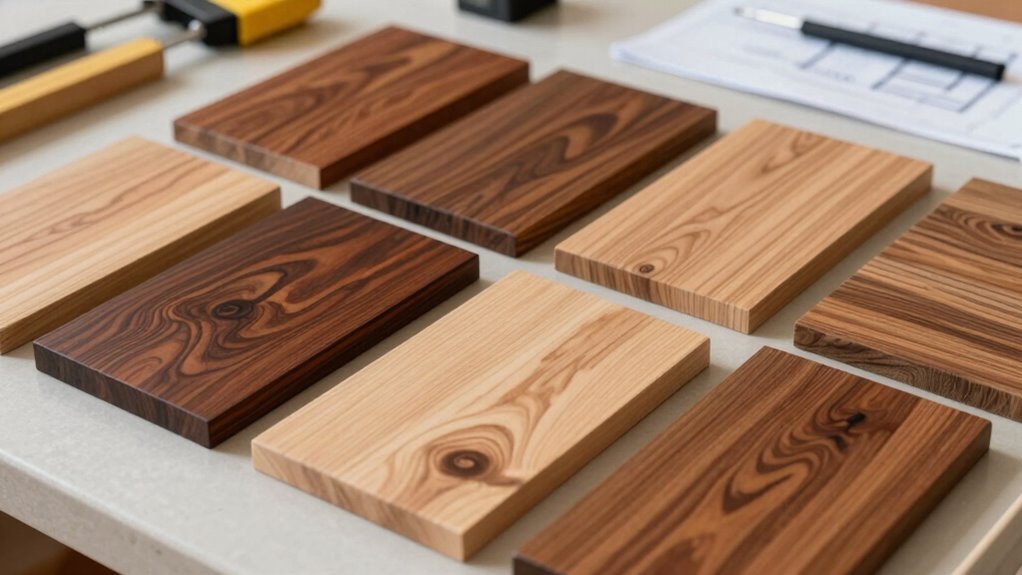
Have you ever wondered how selecting the right wood species can impact the durability and appearance of your project? When you’re working on a kitchen, where moisture, heat, and daily wear are constant challenges, choosing the right wood is essential. The type of wood you pick influences not only how long your cabinets or countertops will last but also how they look over time. One key factor you should consider is wood treatment. Proper wood treatment enhances resistance to moisture and pests, which is vital in a kitchen environment. Treatments like sealing, staining, or applying protective finishes can extend the lifespan of your wood, keeping it looking fresh and preventing warping or cracking. However, beyond treatment, you should also think about sustainability practices. Opting for sustainably harvested wood guarantees you’re making an eco-conscious choice, reducing environmental impact, and supporting responsible forestry. Many suppliers now offer certifications like FSC or PEFC, so you can confirm your wood comes from well-managed sources. When selecting a wood species, consider its natural properties. For example, hardwoods like maple or cherry are durable and resistant to dents, making them ideal for countertops and high-traffic areas. Softwoods like pine can work well for cabinetry, provided they’re properly treated and finished, but they’re generally less resistant to moisture. You should also think about the wood’s appearance. Some woods have a rich, warm hue that adds character to your kitchen, while others offer a sleek, modern look. Your choice depends on your aesthetic preferences and the style you want to achieve. Keep in mind that some woods are more receptive to finishing than others. If you prefer a smooth, polished surface, look for woods that accept stains and finishes evenly. Additionally, consider the environmental conditions of your kitchen. If you frequently cook and generate steam or humidity, choosing a moisture-resistant species or applying extra wood treatment will help preserve its integrity over time. It’s also wise to discuss with suppliers about sustainable practices they follow. This might include using eco-friendly wood treatment products or sourcing from forests that follow strict sustainability standards. Being aware of wood treatment options can significantly extend the life of your wood surfaces. Moreover, understanding the natural properties of different woods can guide you toward choices that suit your specific needs and conditions. An awareness of sustainable harvesting practices can also help you make more environmentally responsible decisions. By making informed choices about wood species, treatment methods, and sustainability, you’re not only creating a beautiful and durable kitchen but also supporting environmentally responsible practices. Taking the time to research and select the right wood guarantees your project remains functional, attractive, and eco-conscious for years to come.
As an affiliate, we earn on qualifying purchases.
Frequently Asked Questions
How Does Wood Moisture Content Affect Durability in Kitchen Projects?
Wood moisture content greatly impacts durability in your kitchen projects. When wood has high moisture, its wood grain and surface texture can warp, swell, or crack over time, weakening its structure. Keeping moisture levels balanced ensures the surface stays smooth and maintains its integrity. Properly dried wood resists damage from humidity changes, preserving the beauty and functionality of your kitchen surfaces. Always choose wood with appropriate moisture content for lasting durability.
Are Certain Wood Species More Resistant to Staining and Liquids?
You might find it surprising, but certain wood species resist staining and liquids better, especially those with tight wood grain patterns and less color variation. Hardwoods like maple and hickory are naturally more resistant because their dense grain prevents liquids from seeping in easily. When choosing wood for kitchen projects, look for species with uniform grain patterns and consistent coloration, which help minimize staining and make cleanup easier.
Which Wood Finishes Best Complement Specific Wood Types?
You should choose a wood finish that highlights the wood grain and minimizes color variation. Clear finishes like polyurethane are great for showcasing natural grain while providing protection. For woods with more color variation, a stain or oil finish can enhance the unique patterns. Matte or satin finishes soften the look, emphasizing texture over shine. Ultimately, consider the wood’s natural characteristics and your desired aesthetic when selecting the best finish.
How Environmentally Sustainable Are Different Wood Species?
You can think of eco-friendly harvesting as nurturing a garden rather than stripping a forest. Many wood species come from renewable sources, meaning they’re harvested sustainably without harming the environment. Species like bamboo and cork grow rapidly, making them some of the most environmentally sustainable choices. By choosing these, you’re planting seeds of hope, supporting forests that flourish for generations, and ensuring your kitchen projects leave a light footprint on our planet.
Can Different Wood Species Be Mixed in a Single Kitchen Project?
Yes, you can mix different wood species in a single kitchen project, but you should consider the wood grain and color variation. Combining species with complementary grain patterns creates visual harmony, while contrasting grains can add interest. Be mindful of color differences to avoid clashing. Select woods that age similarly and maintain durability. Proper planning guarantees your kitchen looks cohesive, highlighting unique textures and tones without overwhelming the space.
Conclusion
Choosing the right wood species isn’t just about durability or appearance—it’s about creating a space that feels right for you. Sometimes, the perfect wood comes along when you least expect it, just like finding a missing piece that completes your puzzle. Trust your instincts, and consider how each species resonates with your needs and style. After all, the best choice is one that turns your kitchen into a place where memories are made and stories unfold.
Halloween Picks
halloween
As an affiliate, we earn on qualifying purchases.