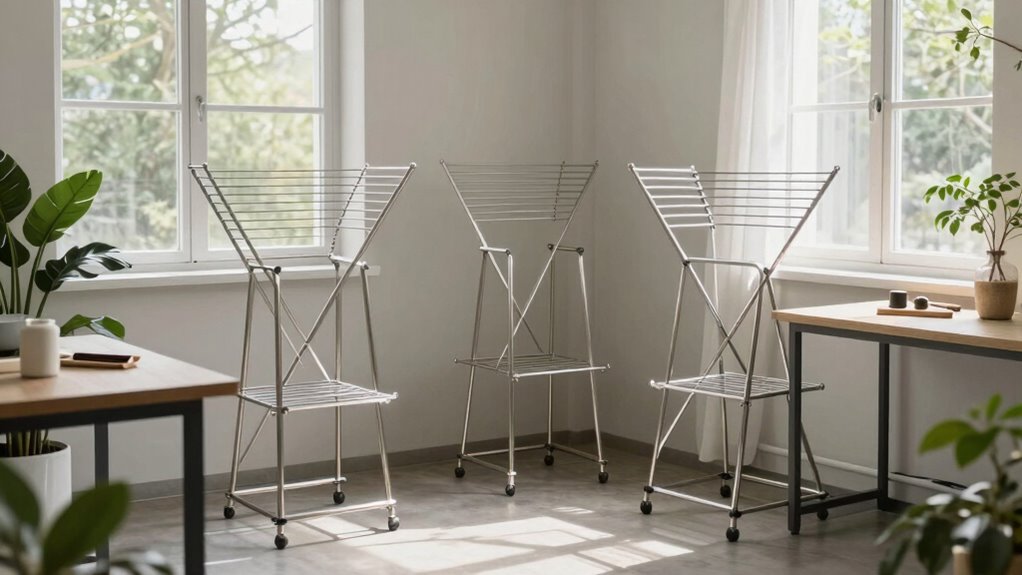

To build a smarter finishing station, start by selecting durable, lightweight materials for your drying racks. Position them to enhance airflow, perhaps adding fans for better circulation. Keep your workspace organized with labeled tools nearby, ensuring efficiency. Prioritize safety by regularly checking the stability of racks and using non-toxic materials. By focusing on these key elements, you’ll create an efficient drying process. Stick around to find additional tips on optimizing your workstation further.

Get business pricing on tools and workshop supplies
- Business-only prices and quantity discounts
- Tax-exempt purchasing
- Multiple users, one account, clear invoices
Key Takeaways
- Select lightweight, durable materials for drying racks that resist humidity and solvents, ensuring long-term functionality and minimal maintenance.
- Optimize rack placement to enhance airflow, using fans or ventilation to promote even drying and prevent stagnant air.
- Organize tools and materials near the drying area, implementing labeling and color coding for quick access and streamlined workflow.
- Ensure drying racks are stable and comply with safety standards, conducting regular inspections to maintain equipment integrity and prevent accidents.
- Prioritize indoor air quality and consistent airflow management to improve both workspace conditions and the quality of the finishes.
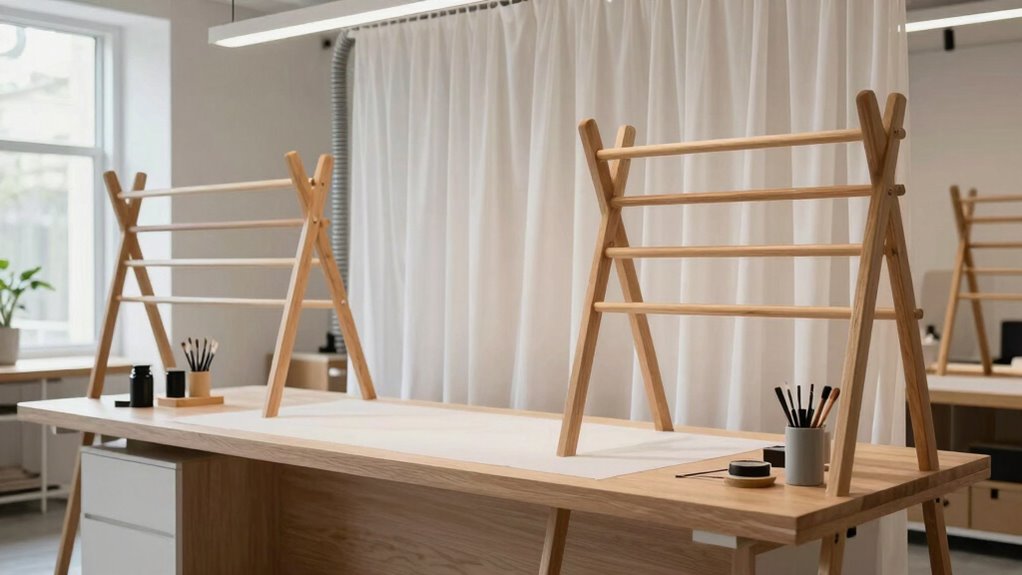
In today’s fast-paced manufacturing environment, building a smarter finishing station can greatly enhance your workflow. One key area to focus on is the integration of drying racks and efficient airflow. By optimizing these elements, you can markedly improve the drying process and workspace organization, which ultimately leads to better productivity.
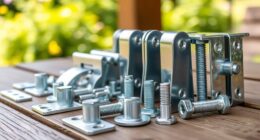
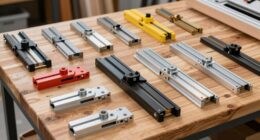
Start by selecting the right materials for your drying racks. Consider options that are durable yet lightweight, guaranteeing they can hold various products without sagging or warping. Metal racks often provide the strength needed, while materials like wood can be aesthetically pleasing but may require more maintenance. Whichever you choose, make sure they can withstand the conditions of your workspace, including exposure to solvents or humidity.
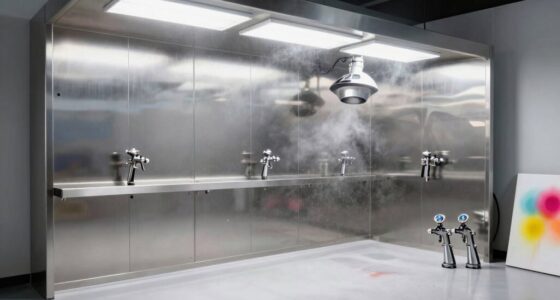
Next, think about airflow. Efficient airflow is essential for drying techniques, as stagnant air can lead to uneven drying and longer wait times. Position your drying racks in a way that maximizes air circulation. You might want to incorporate fans or ventilation systems that help distribute air evenly around the drying area. This not only speeds up the drying process but also helps maintain a consistent environment, which is critical for high-quality finishes. Ensuring proper airflow management can significantly impact drying efficiency. Incorporating proper ventilation can further optimize the environment for faster drying times. Additionally, understanding the importance of air circulation can help you design a more effective drying setup. Paying attention to airflow patterns can prevent buildup of stale air and improve overall drying results. Incorporating sensors to monitor and adjust airflow can also enhance control and efficiency.
Efficient airflow is crucial for optimal drying; position racks strategically and consider fans to enhance circulation and consistency.
Workspace organization also plays a fundamental role in your finishing station’s efficiency. Arrange your drying racks in a logical flow, placing them near the finishing area to minimize the distance products must travel. Confirm that tools and materials are easily accessible, reducing the time you spend searching for items. Consider using labels and color codes to streamline organization further, making it easier for you and your team to locate what you need quickly.
Safety considerations shouldn’t be overlooked. Verify your drying station complies with all relevant safety standards. Use non-toxic materials where possible and ensure that your drying racks are stable to prevent accidents. Regularly inspect your equipment for wear and tear, and implement maintenance tips that keep everything in top shape. This not only safeguards your team but also prolongs the life of your drying equipment.
Finally, keep in mind that a well-organized and efficient finishing station can be a game-changer. By focusing on airflow, material selection, and safety while maintaining a tidy workspace, you can create an environment that supports faster, more effective drying techniques. Embracing indoor air quality solutions such as proper ventilation and sensors can further enhance your workspace conditions. With these strategies, you’ll certainly see improvement in both your workflow and product quality.
lightweight durable drying racks for workshop
As an affiliate, we earn on qualifying purchases.
As an affiliate, we earn on qualifying purchases.
Frequently Asked Questions
What Materials Are Best for Constructing Drying Racks?
For constructing drying racks, you’ll want to use natural materials like wood or bamboo for durability and aesthetics. Look for adjustable designs that let you modify the height and spacing, ensuring ideal airflow around your items. These features not only enhance functionality but also make it easier to accommodate various projects. By choosing the right materials and designs, you can create an efficient and visually pleasing drying station that meets your needs.
How Can Humidity Affect the Drying Process?
Humidity levels can greatly slow down your drying process, and it’s frustrating when you’re keen to see results. When the air’s saturated with moisture, it hampers evaporation, reducing drying efficiency. You might notice longer wait times or uneven finishes. To combat this, consider improving airflow around your workspace or using dehumidifiers. By managing humidity, you can enhance your drying effectiveness and achieve the quality you’re aiming for without unnecessary delays.
What Safety Precautions Should I Take When Finishing?
When finishing, always prioritize safety. Make sure you use proper protective gear like gloves, masks, and goggles to shield yourself from harmful fumes and dust. Install effective ventilation systems to keep the air clean and reduce the risk of inhaling toxic substances. Keep your workspace clutter-free to avoid accidents, and always read product labels for specific safety instructions. By taking these precautions, you’ll create a safer environment for your finishing projects.
Can I Use Fans to Enhance Airflow Safely?
Absolutely, you can use fans to enhance airflow safely! Think of your workspace as a well-tuned orchestra; every fan placement and airflow direction plays a crucial role. Position the fans to create a cross-breeze, directing fresh air toward your project while pushing fumes away. Just make sure you’re not blowing dust onto your finish. With the right setup, you’ll enjoy a safer, more efficient working environment. Keep those fans humming!
How Do I Clean and Maintain My Drying Racks?
To clean and maintain your drying racks, start by wiping down the rack materials with a damp cloth to remove dust and debris. For tougher stains, use a mild detergent. Regularly inspect for any wear or damage, as this can affect drying efficiency. Make certain your racks are stored in a dry area to prevent rust or mold. A little upkeep goes a long way in keeping your racks in top shape!
Conclusion
Incorporating efficient drying racks and optimized airflow can transform your finishing station into a powerhouse of productivity. Did you know that proper airflow can reduce drying time by up to 50%? By implementing these strategies, you’re not just speeding up the process; you’re enhancing the quality of your finishes. So, take the time to build a smarter station. The benefits you’ll reap in efficiency and results will make it all worth it.
Fall yard work Picks
leaf blowers
As an affiliate, we earn on qualifying purchases.