
Food-safe finishes can be confusing because labels often use vague or misleading terms like “non-toxic” or “food-grade,” making it hard to tell what’s truly safe. Many finishes differ in durability, appearance, and safety, and understanding these differences isn’t straightforward. Certifications and industry standards don’t always seem clear, leading to second-guessing. If you keep exploring, you’ll discover how to choose the right finishes confidently and keep your projects safe and beautiful.

Get business pricing on tools and workshop supplies
- Business-only prices and quantity discounts
- Tax-exempt purchasing
- Multiple users, one account, clear invoices
Key Takeaways
- Ambiguous terminology like “food-safe” and “non-toxic” leads to misunderstandings about finish safety and durability.
- The wide variety of finishes with different properties complicates choosing the right, safe option.
- Labels often lack clear information about curing times, ingredients, and certifications, causing confusion.
- Some finishes enhance wood grain appearance but may not be safe for food contact or withstand kitchen conditions.
- Lack of knowledge about standards and certifications makes it hard for DIYers to identify truly food-safe products.

When you’re creating or refinishing wooden items that will come into contact with food, choosing the right finish is essential for safety. Many DIYers get overwhelmed because there’s a confusing array of options, each claiming to be food-safe. The challenge is understanding the differences between finishes and knowing which ones won’t pose health risks. It’s no surprise that this leads to hesitation—after all, you want your projects to be both beautiful and safe for everyday use.
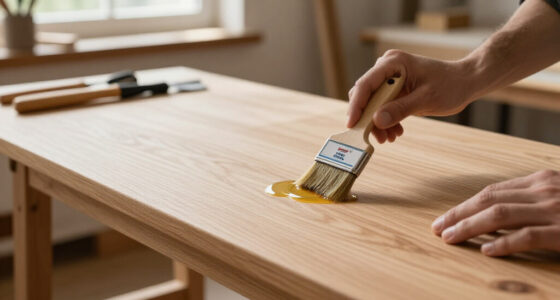
One common source of confusion lies in how finishes interact with wood grain. Some finishes penetrate deeply into the wood, enhancing the natural beauty and allowing the wood grain to shine through. Others form a surface layer that sits on top, which can obscure the grain or change its appearance. As you select a finish, you have to keep in mind how it affects the look of the wood and whether it provides a protective barrier. Many DIYers mistakenly assume that all finishes are similar and focus only on appearance, but the impact on the wood grain and the food safety aspect are equally important.
Finishes vary: some penetrate deeply, enhancing wood grain, while others form a surface layer that can obscure it.
Another reason why food-safe finishes trip up DIYers is the misunderstanding of finish durability. You want a finish that resists scratches, moisture, and regular cleaning, but many products marketed as “food-safe” aren’t necessarily durable enough for kitchenware or cutting boards. Conversely, some finishes that are highly durable may contain chemicals or solvents that aren’t safe for food contact. Balancing finish durability with safety is a tricky compromise, especially when labels and product descriptions aren’t always clear. Additionally, understanding how different finishes cure and set can influence their safety and longevity, which adds another layer of complexity. Educating yourself on food-safe standards can help you identify truly safe options and avoid misleading labels. Knowing the composition of finishes can also assist in making safer choices for food-contact surfaces. Moreover, paying attention to application methods can ensure that the finish is applied correctly and safely for food contact.
Many DIY enthusiasts also struggle with the technical jargon used to describe finishes. Terms like “non-toxic,” “food-grade,” “food-safe,” and “FDA-approved” are often used interchangeably, but they actually mean different things. Without a clear understanding, it’s easy to pick a product that isn’t truly safe for food contact, or to overlook the importance of curing times and application methods that ensure safety. This lack of clarity fuels the confusion and often leads to second-guessing.
Finally, the wide variety of finishes available—oil, wax, polyurethane, mineral oil, and more—adds to the puzzle. Each has unique properties, benefits, and limitations. As a DIYer, you need to take into account how each finish interacts with wood grain, affects finish durability, and meets safety standards. Without thorough research, it’s easy to choose the wrong product, risking safety or compromising the look of your project. Learning about certifications and standards can help you identify truly safe options and avoid misleading labels.
Gaining a clear understanding of food-safe finishes, including their composition and certifications, can help you make more informed decisions. In the end, understanding the nuances of food-safe finishes requires effort, but it’s worth it. When you take the time to learn about how each finish interacts with wood grain, its durability, and safety standards, you can confidently create beautiful, safe items that stand up to everyday use.
food safe wood finish for cutting boards
As an affiliate, we earn on qualifying purchases.
As an affiliate, we earn on qualifying purchases.
Frequently Asked Questions
Are All Polyurethane Finishes Food-Safe Once Cured?
Not all polyurethane finishes are food-safe once cured. While some water-based polyurethanes are considered safe after curing, many oil-based versions may still pose risks due to chemical leaching. Finish durability varies, but even a durable finish isn’t necessarily food-safe if it releases harmful chemicals. Always check product labels and select finishes specifically labeled as food-safe to guarantee safety for your projects.
Can Food-Safe Finishes Be Used on Cutting Boards?
Yes, food-safe finishes can be used on cutting boards, but you need to cut through food safety myths first. Not all finishes are equal; some may lack finish durability or proper food safety certification. Look for mineral oil, beeswax, or food-grade mineral oil-based products. These options form a safe, durable barrier, protecting your board without risking health. Always verify the label for food-safety approval to keep your kitchen safe and your boards beautiful.
How Long Should Food-Safe Finishes Cure Before Use?
You should wait at least 7 to 14 days for food-safe finishes to cure before use. During this curing time, chemical reactions take place that solidify the finish, ensuring it’s safe for food contact. Rushing the process can prevent complete curing, risking contamination or damage. Be patient and follow the manufacturer’s instructions precisely, as proper curing guarantees your cutting board remains safe and durable for everyday use.
Are Natural Oils Considered Food-Safe Finishes?
Think of natural oils as gentle guardians for your wood, offering a warm embrace that’s often considered food-safe. Yes, natural oils like mineral, tung, or linseed are generally deemed food-safe when properly applied and cured. They penetrate deeply, creating a barrier that’s safe for food contact. Just remember, though, that not all oils are created equal—some may need careful curing to guarantee food safety and durability.
How Do I Test if a Finish Is Truly Food-Safe?
To test if a finish is truly food-safe, you should check the manufacturer’s label or safety data sheet for explicit food safety claims. Be wary of food safety myths that suggest all natural oils are safe; confirm their safety through reputable sources. Use proper finishing techniques, like allowing adequate curing time, and avoid applying finishes with harmful chemicals. Testing in small, inconspicuous areas can also help ensure safety before full use.
Conclusion
Finding your way through food-safe finishes can be confusing, but it’s worth the effort—after all, nearly 70% of DIYers want their projects to be both beautiful and safe for food contact. Understanding the differences and choosing the right finish guarantees your creations are not only stylish but also healthy for your loved ones. Remember, taking the time to research and select the proper finish protects your family and keeps your DIY projects safe and lasting.
Halloween Picks
halloween
As an affiliate, we earn on qualifying purchases.