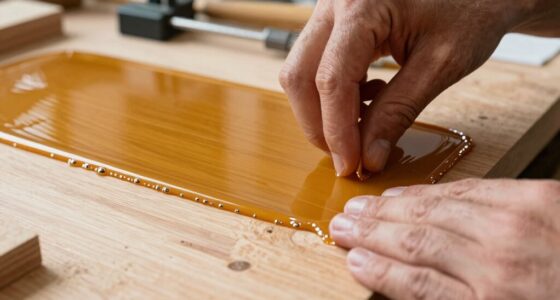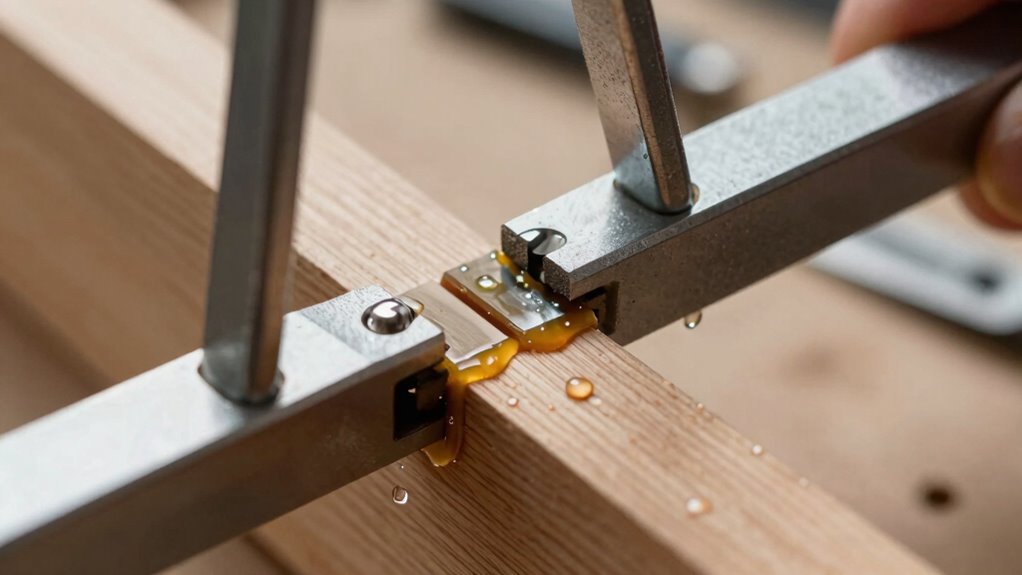

When you use parallel clamps for glue-ups, you get consistent pressure that keeps your joints aligned and strong. They help you avoid misalignment and reduce the risk of damage to delicate pieces. Plus, quick adjustments save you time, letting you focus on other details of your project. With their versatility, parallel clamps work for any size assembly, enhancing your results. Stick around to discover how they can elevate your woodworking game even further!

Get business pricing on tools and workshop supplies
- Business-only prices and quantity discounts
- Tax-exempt purchasing
- Multiple users, one account, clear invoices
Key Takeaways
- Parallel clamps provide even pressure, ensuring secure adhesive bonds during glue-ups for stronger joints.
- Their consistent width allows for better alignment, reducing misalignment risks during the gluing process.
- Quick adjustments and ease of use save time, speeding up the glue-up process significantly.
- Proper clamp positioning maximizes effectiveness, facilitating optimal glue techniques without damaging delicate pieces.
- Stability during glue setting minimizes the need for constant checks on joint shifts, enhancing efficiency.
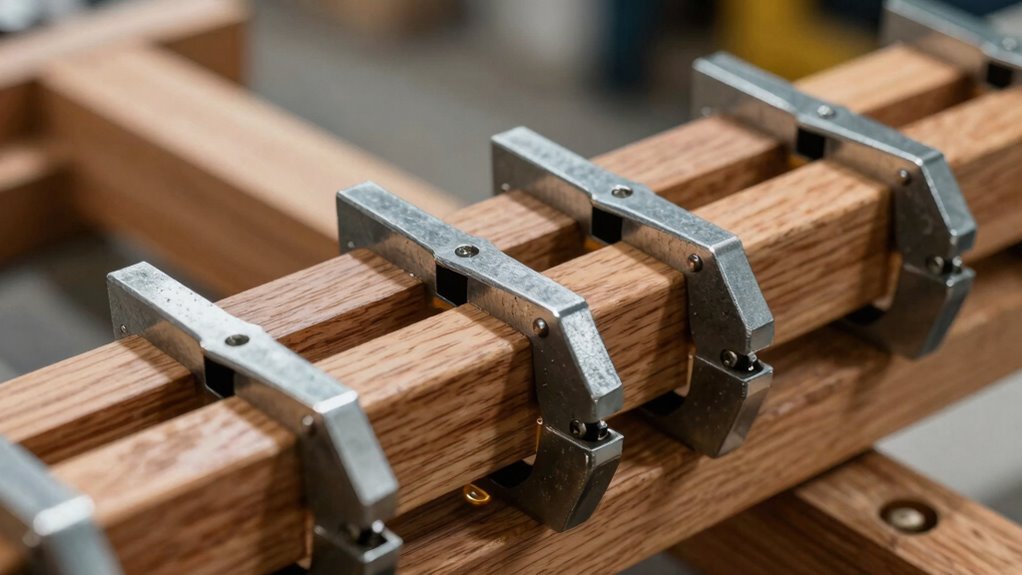
When tackling woodworking projects, a parallel clamp is your best friend. These clamps excel in providing even pressure across your joints, making them essential for glue-ups. Unlike other clamp types, parallel clamps maintain a consistent width, allowing for better alignment and reducing the risk of misalignment during the gluing process. When you’re focused on achieving a perfect joint, the last thing you want is for your pieces to shift or bow under pressure.
Using effective glue techniques is vital in woodworking, and parallel clamps help you achieve that. They apply pressure uniformly, ensuring that the adhesive bonds securely across all surfaces. This even pressure distribution not only enhances the strength of your joints but also speeds up the curing time of the glue. When the pressure is consistent, you can be confident that every part of the joint is getting the attention it needs to form a solid bond. Proper clamp positioning also plays a crucial role in maximizing the benefits of parallel clamps. Additionally, understanding clamping pressure helps you avoid over-tightening, which can damage delicate pieces or cause misalignment.
Moreover, woodworking efficiency greatly increases when you rely on parallel clamps. Their design allows for quick adjustments, so you can easily reposition your workpieces without losing focus on your project. This saves you valuable time, enabling you to move through your tasks more swiftly. You’ll find that the ease of use offered by parallel clamps makes them a go-to tool in your workshop. Additionally, their adjustability allows for precise control over the clamping force, which is crucial for delicate projects. Incorporating features like quick-release mechanisms can further streamline the process, especially during repetitive tasks.
Joint alignment is another area where parallel clamps shine. They provide stability while you’re working, ensuring that your pieces stay in line as the glue sets. With their ability to hold everything in place, you can dedicate your attention to other aspects of your project, like tool maintenance or prepping the next steps. Proper clamp placement and the right technique are crucial to achieving optimal results, especially when working on complex assemblies. You won’t be constantly checking to see if your joints have shifted, allowing you to maintain your flow.
Incorporating parallel clamps into your woodworking routine not only enhances the quality of your projects but also simplifies the process. Their versatility means they can handle various tasks from small assemblies to larger builds. Whether you’re a beginner or an experienced woodworker, having a solid set of parallel clamps will certainly elevate your work. So next time you’re preparing for a glue-up, remember that the advantage of parallel clamps can show up in your results fast, making every project smoother and more satisfying.
Products Worth Considering

Ring Battery Doorbell and Chime (3rd Gen), Satin Nickel

Ring Battery Doorbell Plus (2nd Gen) and Indoor Cam Plus Bundle, Nickel Silver and White

Dyson Ball Animal 3 Extra Upright Vacuum
As an affiliate, we earn on qualifying purchases.
Frequently Asked Questions
What Materials Are Best Suited for Parallel Clamps?
You’ll find that parallel clamps work best with materials like hardwood, plywood, and MDF. These materials respond well to wood glue, ensuring a strong bond. When you apply even pressure distribution, it helps maintain clamp alignment, which is essential for your project’s success. For larger projects, the ability of parallel clamps to handle various sizes without warping makes them an invaluable tool in your woodworking arsenal.
How Do I Maintain My Parallel Clamps?
To maintain your parallel clamps, start with regular cleaning techniques. Wipe down the bars with a damp cloth to remove sawdust and glue residue. Inspect the clamps for any rust and use a light oil to lubricate moving parts. Tighten any loose screws or bolts to guarantee stability. Store them in a dry place, avoiding damp environments. Following these maintenance tips will keep your clamps in top shape for all your projects.
Can Parallel Clamps Replace Other Types of Clamps?
Absolutely, parallel clamps can replace other types of clamps, acting like a trusty Swiss Army knife in your toolbox. Their clamp versatility shines in various projects, allowing you to tackle multiple tasks efficiently. You’ll find that they distribute pressure evenly, enhancing your project efficiency while minimizing the risk of damage. So, next time you’re reaching for a clamp, consider how a parallel clamp could simplify your workflow and elevate your craftsmanship.
What Size Parallel Clamps Should I Buy for My Projects?
When choosing parallel clamps, consider the sizes based on your project types. For smaller projects like boxes or frames, 12-inch clamps work well. If you’re tackling larger projects, like tabletops or cabinets, opt for 24-inch or even 36-inch clamps. Having a variety of sizes allows you to tackle different tasks efficiently. Don’t forget to invest in at least a couple of each size to guarantee you’ve got what you need when inspiration strikes!
Are There Any Safety Tips for Using Parallel Clamps?
When you’re wrestling with parallel clamps, think of it as a dance—precision and care lead to a smooth performance. For clamp safety, always check for wear and tear before use. Verify your hands are dry to prevent slipping, and never over-tighten, as it can lead to accidents. Proper handling means keeping your workspace clear and knowing how to release the tension safely. Remember, a cautious approach makes for a successful project!
Conclusion
In the end, the parallel clamp advantage isn’t just about holding pieces together; it’s about releasing your creativity. Picture that moment when you tighten the clamps, and the wood transforms, coming together seamlessly. You can almost feel the tension in the air as you wait for the glue to set. With each passing minute, your project inches closer to perfection. So, grab those clamps and watch your vision come to life—because the best creations often emerge from a simple squeeze.