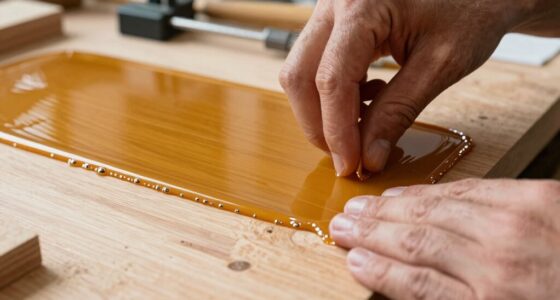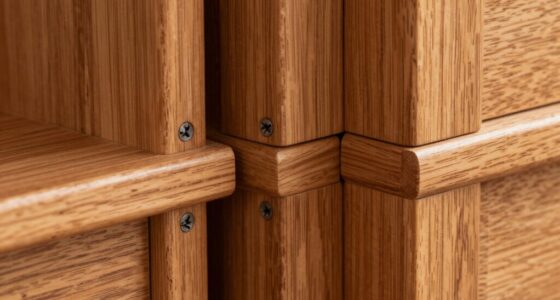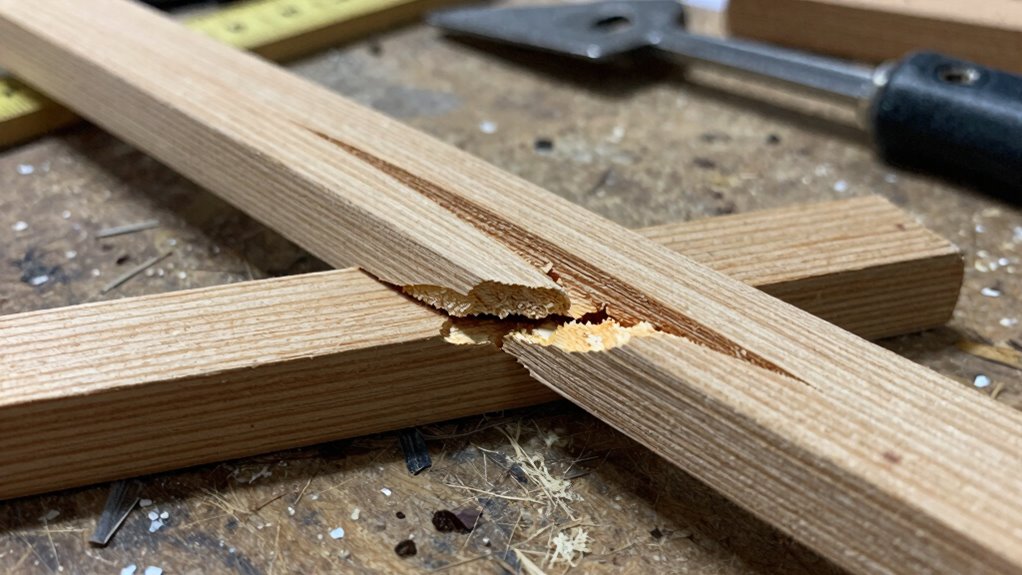

You’ll find that dowel failures often happen because of poor layout rather than their strength. If dowels aren’t placed correctly, stress concentrates in certain areas, causing joints to loosen or crack over time. Proper positioning ensures even load distribution and reduces stress points. Material compatibility and environmental factors also influence performance, but layout remains key. If you want to discover how to optimize dowel placement and prevent failures, there’s more you need to understand.

Get business pricing on tools and workshop supplies
- Business-only prices and quantity discounts
- Tax-exempt purchasing
- Multiple users, one account, clear invoices
Key Takeaways
- Poor dowel placement causes stress concentration, leading to failure despite sufficient material strength.
- Incorrect layout results in uneven load distribution, increasing joint stress and risk of failure.
- Inadequate positioning can cause joint gaps, loosening, and material deterioration over time.
- Proper layout prevents stress hotspots that weaken dowels under load.
- Material performance issues are exacerbated by improper dowel placement and joint design.
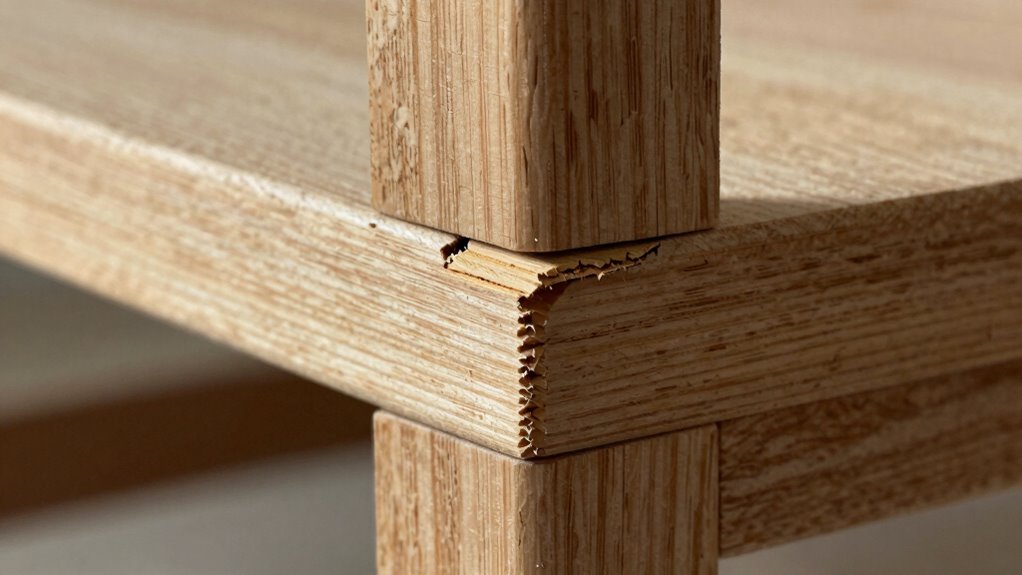
While dowels are often praised for their strength, most failures occur not because of the material’s limits but due to poor layout choices. The way you position and install dowels plays a crucial role in their performance. If you ignore proper layout principles, even the strongest dowels can fail under load or over time. It’s not just about choosing the right size or type of dowel; it’s about understanding how they fit within the overall design and how they interact with other materials.
Proper dowel placement and layout are key to preventing failure and ensuring long-lasting, durable joints.
Material compatibility is a key factor you should always consider. Different materials expand, contract, and respond to stress in unique ways. For example, wooden dowels used with hardwoods may perform differently than those paired with softwoods or engineered composites. If the materials aren’t compatible, the dowel can loosen, crack, or cause joint failure. You need to select dowels that match the physical properties of the surrounding materials. This means considering factors like moisture content, density, and thermal expansion, which directly influence how well the dowels hold up over time. Recognizing material behavior is essential for predicting how joints will perform in different conditions. Additionally, proper joint design can help distribute stresses more evenly and reduce the risk of failure. Properly considering load distribution can significantly extend the longevity of your joints.
Environmental influences also significantly impact how dowels perform. Changes in humidity, temperature, or exposure to moisture can weaken the bond or cause the materials to shift. For instance, in high-humidity environments, wooden dowels might swell and loosen, leading to joint failure. Conversely, in dry conditions, they might shrink, creating gaps and reducing strength. You have to plan for these environmental factors when designing your projects. Proper sealing, choosing durable materials, or adding reinforcement can mitigate these issues. Ignoring environmental influences often results in failures that seem to happen suddenly but are actually the outcome of gradual deterioration caused by external conditions. Recognizing how environmental factors affect material performance is essential for long-lasting results. Additionally, understanding the interaction between materials helps in selecting the appropriate dowel type and layout for specific applications.
As an affiliate, we earn on qualifying purchases.
Frequently Asked Questions
How Can I Improve Dowel Layout Accuracy During Installation?
To improve dowel layout accuracy during installation, focus on precise dowel positioning and careful measurement. Use a high-quality template or jig to guide your drilling, ensuring consistent spacing and alignment. Double-check your markings before drilling, and employ proper installation techniques—such as pre-drilling and steady hand control—to minimize errors. These steps help maintain alignment, prevent dowel failure, and guarantee a strong, durable connection.
Are There Specific Tools Recommended for Precise Dowel Placement?
You’ll want to invest in specialized installation tools like dowel jigs and alignment guides to guarantee precise dowel placement. These tools help maintain perfect dowel alignment, making your job smoother and reducing errors. Using a drill press or calibrated handheld drill can also improve accuracy during installation. With the right tools, you’ll find it easier to achieve consistent, professional results, improving overall project quality and reducing the risk of dowel failure.
What Common Mistakes Lead to Poor Dowel Alignment?
You often misalign dowels by rushing surface preparation or choosing incompatible dowel material. Failing to sand or clean the surface properly can cause misplacement, while using the wrong dowel material may compromise stability. To avoid these mistakes, double-check measurements, make sure surfaces are smooth and clean, and select the appropriate dowel material for your project. Precise layout and proper surface prep are key to perfect dowel alignment.
How Does Wood Grain Orientation Affect Dowel Performance?
Have you ever noticed how wood grain orientation impacts dowel performance? Proper grain alignment guarantees the dowel bears load efficiently, reducing the risk of splitting or loosening. When the grain runs parallel to the dowel, it provides better strength and stability. Conversely, incorrect wood orientation can weaken the joint. Always pay attention to grain direction; aligning the grain with the dowel maximizes strength and longevity in your woodworking projects.
Can Dowel Failure Be Prevented With Different Joint Designs?
Yes, you can prevent dowel failure by exploring alternative joint methods and dowel reinforcement techniques. Using corner or box joints, mortise and tenon, or biscuit joints spreads out stress more evenly, reducing dowel load. Additionally, incorporating reinforcement techniques like metal pins, glue, or mechanical fasteners strengthens the connection. These strategies improve joint durability, lessen the likelihood of failure, and enhance overall structural integrity in woodworking projects.
Conclusion
Think of your dowels as the unsung heroes holding a fragile bridge together. When the layout falters, it’s like misplacing the stones in that bridge’s foundation—destined to crack, not because of weakness, but because of poor planning. Your craftsmanship is the architect’s vision; layout is the blueprint. When you respect both, your dowels will stand strong, symbolizing a sturdy path built on careful design—where failure is a distant echo, replaced by resilient strength.
Fall yard work Picks
leaf blowers
As an affiliate, we earn on qualifying purchases.