To think about clamps as a system, start by recognizing their unique types and functions. Coordinate their use for stability and secure materials effectively, which improves your project’s quality. Make certain to place them properly to distribute pressure evenly and enhance safety. Organize storage areas for quick access, and maintain your clamps regularly to guarantee they perform well. With these strategies, you’ll find that each clamp plays its role in a cohesive system. There’s more to discover!
Listen free for 30 days with Audible
Thousands of audiobooks and originals — cancel anytime.
As an affiliate, we earn on qualifying purchases.
Key Takeaways
- Categorize clamps by type and function to streamline access and enhance project efficiency.
- Combine different clamp types to improve stability and achieve better results in your work.
- Implement strategic clamp placement for even pressure distribution and consistent outcomes in projects.
- Designate specific storage areas and label them to maintain organization and prolong clamp lifespan.
- Regularly inspect and clean clamps to ensure optimal performance and longevity in your toolkit.
When you think about clamps, it’s easy to see them as just simple tools. However, if you shift your perspective, you can recognize that they function as part of a larger system that enhances your workflow. Understanding clamps in this way opens up a domain of possibilities for improving your usage efficiency and overall project outcomes.
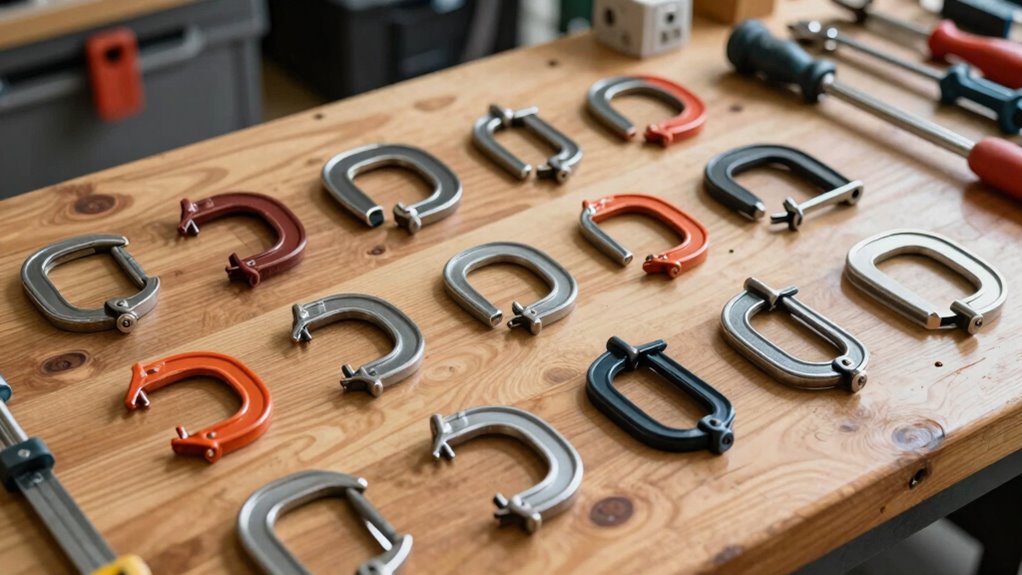
First, consider the various clamp types available, each serving a unique purpose. Whether you’re using bar clamps, C-clamps, or pipe clamps, each type plays a role in different tasks. By categorizing your clamps based on their specific functions, you can easily access the right tool for the job. This organization strategy not only saves you time but also reduces frustration, allowing you to focus on the task at hand.
Consider categorizing your clamps by type for quick access, saving time and reducing frustration during your projects.
Next, think about how these clamp types can work together as a system. For instance, using a combination of different clamps can provide greater stability and support for your projects. By integrating multiple clamps into your setup, you can secure materials more effectively, which can lead to cleaner cuts and better-fitting joints. This coordinated approach enhances the system benefits, as the combined effectiveness of various clamps contributes to a more streamlined workflow. Additionally, understanding the clamp system can help you troubleshoot issues and optimize your setup for different project types. A well-designed system also considers clamp placement, ensuring even pressure distribution and safety during use. Employing a systematic approach to clamp placement ensures consistent results across different projects.
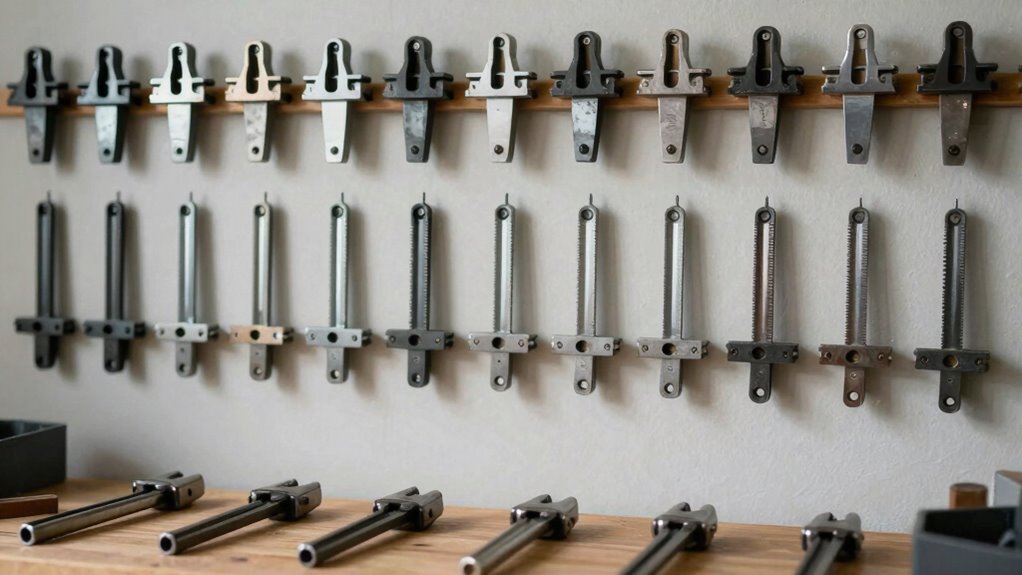
You can also adopt organization strategies that maximize your clamp system. Designate a specific storage area for each type of clamp, ensuring they’re easy to locate when you need them. Consider labeling your storage so you can find the right clamp at a glance. This simple adjustment can considerably improve your usage efficiency, reducing the time spent searching through a disorganized pile of tools. Additionally, incorporating proper organization techniques can prevent damage and prolong the lifespan of your clamps.
Moreover, think about how you can maintain your clamps. Regularly inspect them for wear and tear, and keep them clean. A well-maintained clamp not only performs better but also lasts longer, contributing to your overall system’s longevity. Proper clamp organization and maintenance are essential for keeping your system functioning optimally and avoiding unnecessary replacements. Investing a little time in upkeep pays off in the long run.
As an affiliate, we earn on qualifying purchases.
Frequently Asked Questions
What Types of Clamps Are Best for Woodworking Projects?
For woodworking projects, bar clamp options are fantastic for their versatility and ease of use. They provide even pressure on larger surfaces, making them ideal for panel gluing. Pipe clamps, on the other hand, offer great benefits for heavy-duty tasks, as they can be easily customized in length and are highly durable. By combining these types, you can effectively tackle a wide range of woodworking challenges with confidence and efficiency.
How Do I Maintain My Clamps for Longevity?
To maintain your clamps for longevity, regularly clean them and check for rust. Use a soft cloth and mild detergent to wipe down the clamp materials. For metal clamps, apply a light coat of oil to prevent rust. Store them in a dry place, hanging or organized, to avoid damage. Also, inspect the pads and threads, replacing or repairing as needed. Following these maintenance tips will keep your clamps in great shape for years.
Can Clamps Be Used for Non-Woodworking Applications?
Yes, clamps can definitely be used for non-woodworking applications! Their versatile clamp designs make them perfect for various tasks, like holding fabric while sewing, securing objects during repairs, or even stabilizing items for painting. You’ll find that different types of clamps, such as spring or C-clamps, adapt well to various materials beyond wood. So, don’t hesitate to explore how clamps can assist you in your next project outside of woodworking!
What Safety Precautions Should I Take When Using Clamps?
When using clamps, think of them as a double-edged sword—great for your projects but potentially dangerous without caution. Always wear safety glasses to protect your eyes and guarantee your work area is clear of obstructions. Check your clamps for wear and tear before use, as faulty gear can lead to accidents. By prioritizing clamp safety, you’re taking a solid step toward injury prevention, keeping both you and your workspace safe.
Are There Any Alternatives to Traditional Clamps?
Yes, there are several alternatives to traditional clamps. You might consider suction cups for smooth surfaces, as they provide a strong hold without marring the material. Magnetic clamps are great for metal projects, offering quick adjustments. Toggle clamps deliver easy one-handed operation and secure gripping, while pipe clamps excel at holding cylindrical objects tightly. Each option can enhance your project’s efficiency, so explore them based on your specific needs and materials.
Conclusion
When you view clamps as a cohesive system rather than just a random pile, you release their true potential. Like pieces of a puzzle, each clamp has a unique role, working together to create efficiency and precision in your projects. Embrace this mindset, and you’ll not only streamline your workflow but also elevate your craftsmanship. So, don’t let your clamps gather dust—organize them into a powerful team ready to tackle any challenge you throw their way!
NFL season / tailgating Picks
team gear
As an affiliate, we earn on qualifying purchases.