TL;DR

Get tools and workshop supplies delivered free — and shop member deals
- Fast, free delivery on millions of items
- Access to Prime Big Deal Days deals on October 6–7
- Prime Video, Amazon Music and more included
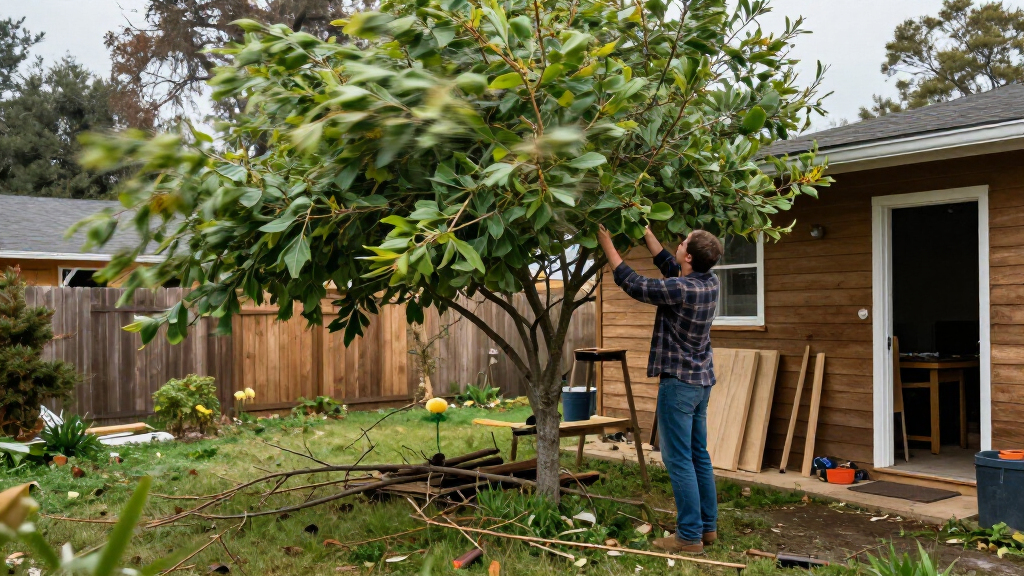
Trees can face added wind stress when storms arrive before deciduous trees have shed their leaves. A full canopy catches more wind, and saturated soil may make roots less secure, raising the potential for broken limbs or uprooting. Tree condition and species also affect the risk.
Fall windstorms can place added stress on trees that still have their leaves, according to a Family Handyman report, because a full canopy catches wind while rain-soaked soil may provide weaker support for roots. The combination can contribute to broken branches, leaning or uprooting, though the risk depends on the tree’s condition and other factors.
Leaves and branches increase the surface area that wind pushes against. Tree professionals sometimes describe this as a “windsail effect”: a dense canopy catches gusts and transmits force through the crown and limbs. The report cites research published in an International Society of Arboriculture journal indicating that the structure of a red maple’s crown affects the wind load it experiences.
Trees can respond to some wind pressure: leaves may turn or cluster, and branches can bend. Those movements do not eliminate the risk. An eight-year study of street trees in Rochester, New York, cited by Family Handyman found that most branch failures occurred while trees were in leaf. That finding describes the trees and period studied; it does not establish that every leafy tree is likely to fail in a storm.
Rain can compound the stress. The U.S. Forest Service says saturated soil and shallow roots can make trees more vulnerable to windthrow, or uprooting. Penn State Extension says trees may lean or uproot when wet soil cannot hold their root systems securely. Raised soil around roots can be a sign that a tree is moving, but a professional assessment may be needed to determine the extent of damage.
How Canopy and Soil Combine
The risk is relevant to residents because a tree failure can damage homes, vehicles, roads and power lines, as well as injure people. A leafy crown can catch wind at the same time that saturated ground makes the root system less secure. That pairing helps explain why some autumn storms may cause serious damage even before winter weather begins.
It is not a prediction that any particular tree will fall. Species, root depth, decay, damaged roots, weak branches and previous storm damage all affect how a tree responds. A tree with a dense canopy may withstand a storm, while a damaged or poorly anchored tree may be more vulnerable. The report’s practical point is to recognize the combination of conditions, not to treat leaves alone as proof of danger.
After a storm, people should stay away from trees showing new leaning, lifted soil, cracked limbs or hanging branches. Penn State Extension recommends professional assessment when damage could threaten people or property. Do not approach unstable trees or limbs to inspect or remove them yourself.
As an affiliate, we earn on qualifying purchases.
Why Fall Storms Can Catch Trees
Deciduous trees lose their leaves as the seasons change, but the timing varies. A windstorm can arrive while a tree still has a full or substantial canopy. If heavy or prolonged rain has also saturated the ground, the canopy and root-zone factors may occur together.
Family Handyman points to studies published by the International Society of Arboriculture on crown structure, pruning and tree failures. The report also cites guidance from the U.S. Forest Service and Penn State Extension on windthrow and leaning trees. These sources describe contributing conditions, not a single formula that can determine whether an individual tree will fail.
The report cautions against heavily thinning a tree simply to prepare for a storm. Pruning needs depend on species and condition, and major pruning decisions are best made with a qualified arborist. Removing foliage is not a general-purpose storm-safety measure.
“Saturated soil and shallow roots can make trees more vulnerable to being uprooted by wind.”
— U.S. Forest Service, as summarized by Family Handyman
What Determines a Tree’s Risk
The report does not give a probability that a particular tree will fail in a storm, nor does it identify a wind speed or rainfall threshold at which the combination becomes dangerous. The Rochester study’s finding about branch failures applies to its specific study period and street trees; the report does not provide enough detail to generalize its rate to all species or locations.
Risk also depends on factors that cannot be judged from foliage alone, including root condition, decay, species, prior damage and soil conditions. Whether a leaning or damaged tree can be stabilized, pruned or must be removed requires an assessment of that tree and its surroundings. The source does not describe a new warning, regulation or forecast tied to a particular storm.
What to Check After a Storm
Once conditions are safe, watch for new leaning, raised soil near the trunk, cracked limbs or branches hanging overhead. Keep people clear of a tree or limb that could fall, and seek help from a qualified arborist when it could threaten a building, people or property. Do not attempt to cut or pull down unstable branches.
Before future storms, homeowners can ask a qualified arborist to assess trees with visible defects or a history of damage. The source does not recommend routine heavy pruning as a response to wind risk; any pruning should reflect the tree’s species and condition. The timing and severity of future storms, and which individual trees may be affected, remain uncertain.
Key Questions
Why can a tree with leaves catch more wind?
Leaves and branches create more surface for gusts to push against. Tree professionals sometimes call this a “windsail effect.”
How does rain make wind damage more likely?
After heavy or prolonged rain, saturated soil may hold roots less securely. The U.S. Forest Service and Penn State Extension describe wet ground as a factor that can make leaning or uprooting more likely, particularly when roots are shallow or the tree is otherwise vulnerable.
Should I prune a tree heavily before a storm?
No general recommendation for heavy pre-storm pruning is given in the report. Pruning needs vary by species and tree condition; consult a qualified arborist about major work.
What signs of storm damage should I watch for?
Look for new leaning, raised soil around roots, cracked limbs or hanging branches. Stay clear of trees or limbs that may fall and contact a qualified arborist if they could threaten people or property.
Source: rss
Halloween Picks
halloween
As an affiliate, we earn on qualifying purchases.