
You might overlook how water-based finishes are not only eco-friendly but also produce fewer harmful fumes, making them safer for indoor use. They dry faster, allowing you to complete projects quicker, and are easier to clean up with soap and water. Plus, they contribute to reducing pollution and support sustainability. If you keep exploring, you’ll discover even more benefits about making environmentally responsible choices that improve your work environment and protect the planet.
Key Takeaways
- Water-based finishes often have faster drying times, enabling quicker project completion than commonly recognized.
- Their lower VOC emissions contribute significantly to indoor air quality, yet this benefit is frequently underestimated.
- Easy cleanup with soap and water simplifies application, a convenience often overlooked compared to solvent-based options.
- They produce fewer fumes and odors, making them safer for indoor use, but this advantage is sometimes undervalued.
- Using water-based finishes supports sustainable, eco-friendly projects, a key environmental benefit often underappreciated.
Water-based finishes have gained popularity because they offer a range of advantages over traditional oil-based options. One of the most significant benefits is their reduced environmental impact. Unlike oil-based finishes, which contain volatile organic compounds (VOCs) that can harm air quality and contribute to smog, water-based finishes emit fewer harmful fumes. This means you’re not only protecting your indoor air but also helping to lessen the overall pollution burden on the environment. Since they produce less odor during application and curing, you can work comfortably in enclosed spaces without risking your health or that of others nearby. This environmental advantage makes water-based finishes a responsible choice for eco-conscious projects.
Water-based finishes are eco-friendly, low-odor, and safer for indoor use, making them ideal for sustainable projects.
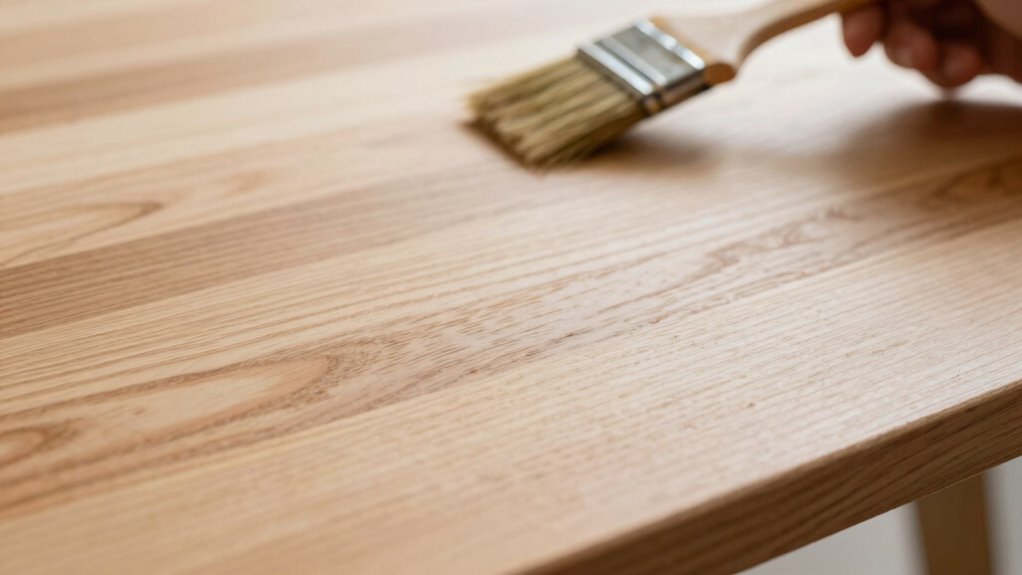
When it comes to application techniques, water-based finishes are generally easier to use than their oil-based counterparts. They dry faster, allowing you to complete projects more quickly without sacrificing quality. You can often apply multiple coats in a single day, which speeds up the entire process. Because they are more forgiving during application, you’re less likely to encounter issues like streaks or uneven finishes, as long as you follow the recommended techniques. Proper surface preparation is essential; guarantee your wood is clean and smooth before applying, and use high-quality brushes or rollers designed for water-based products. Thin coats are preferable to avoid runs or drips, and lightly sanding between coats can help achieve a smooth, professional look. Additionally, understanding VOC levels and how they impact your environment can help you make more responsible choices. Being aware of application conditions such as temperature and humidity can further improve your results and ensure the finish cures properly. Proper ventilation during application not only helps dissipate fumes but also reduces the risk of fumes accumulation, creating a safer workspace. Incorporating proper ventilation during application can also help dissipate fumes and promote better curing, especially in enclosed spaces.
Another application technique worth noting is the importance of maintaining proper tools and workspace. Water-based finishes are easier to clean up with just soap and water, which means you won’t need harsh solvents that add to environmental concerns. This ease of cleanup not only benefits the environment but also simplifies your workflow. You should also pay attention to temperature and humidity during application; ideal conditions help the finish cure properly and prevent issues like cloudiness or tackiness. Additionally, understanding the environmental impact of your materials can help you make more informed choices and further reduce your ecological footprint. Making conscious decisions about your materials and methods supports sustainable living practices that benefit biodiversity and the health of our planet. By choosing water-based finishes, you’re aligning your projects with environmentally responsible practices that contribute to a healthier home and planet.

Varathane Water-Based Ultimate Satin Polyurethane
- Indoor wood surface protection: Protects furniture, windows, cabinets, trim
- Water-based formula: Dries quickly, easy soap and water cleanup
- Fast drying time: Touch dry in 30 minutes, recoat in 2 hours
As an affiliate, we earn on qualifying purchases.
As an affiliate, we earn on qualifying purchases.
Frequently Asked Questions
How Long Does a Water-Based Finish Typically Last?
A water-based finish usually lasts around 2 to 5 years, depending on durability concerns and application techniques. If you apply it properly—using thin coats and allowing ample drying time—it can extend its lifespan. Regular maintenance, like cleaning and occasional re-coating, also helps. Don’t rush the application, and guarantee good ventilation, to maximize durability and keep your finish looking fresh longer.
Can Water-Based Finishes Be Used Outdoors Effectively?
Yes, water-based finishes can be used outdoors effectively if you choose ones with strong outdoor durability and UV resistance. They dry quickly, resist yellowing, and are environmentally friendly. To maximize their lifespan, apply multiple coats and guarantee the surface is properly prepared. With the right product, you’ll enjoy a clear, protective finish that withstands weather elements and keeps your outdoor surfaces looking fresh longer.
Are Water-Based Finishes Suitable for All Wood Types?
Think of water-based finishes as a versatile painter’s brush—capable of enhancing many wood types, but not all. When applied, they highlight the natural wood grain beautifully and provide good finish durability. However, some dense or oily woods may resist adherence, risking uneven finishes. So, while suitable for most woods, you should consider specific wood grain characteristics to guarantee the finish’s longevity and beauty.
How Do Water-Based Finishes Impact Indoor Air Quality?
Water-based finishes improve indoor air quality by releasing fewer VOC emissions compared to solvent-based options, making your space healthier. They help reduce indoor allergens linked to chemical fumes, creating a safer environment for family members and pets. Plus, they dry quickly and emit a milder odor, so you can enjoy your beautifully finished wood without worrying about lingering fumes or air pollution.
What Is the Best Way to Remove a Water-Based Finish?
You should start by chemically removing the water-based finish with a suitable stripper, following all safety instructions. Afterward, use sanding techniques—begin with medium-grit sandpaper to strip the remaining layers and then switch to fine grit for a smooth surface. This combination guarantees thorough removal without damaging the underlying material. Always work in a well-ventilated area and wear protective gear to keep the process safe and effective.
Conclusion
Next time you’re choosing a finish, think of water-based options as a clear stream flowing through a bustling forest. Just like that stream refreshes and sustains the vibrant life around it, water-based finishes offer a clean, eco-friendly choice that preserves the beauty of your project. Don’t overlook this quiet powerhouse — it’s the gentle current that keeps your craftsmanship thriving, bright, and lasting for years to come. Choose water-based, and let your work flow effortlessly.